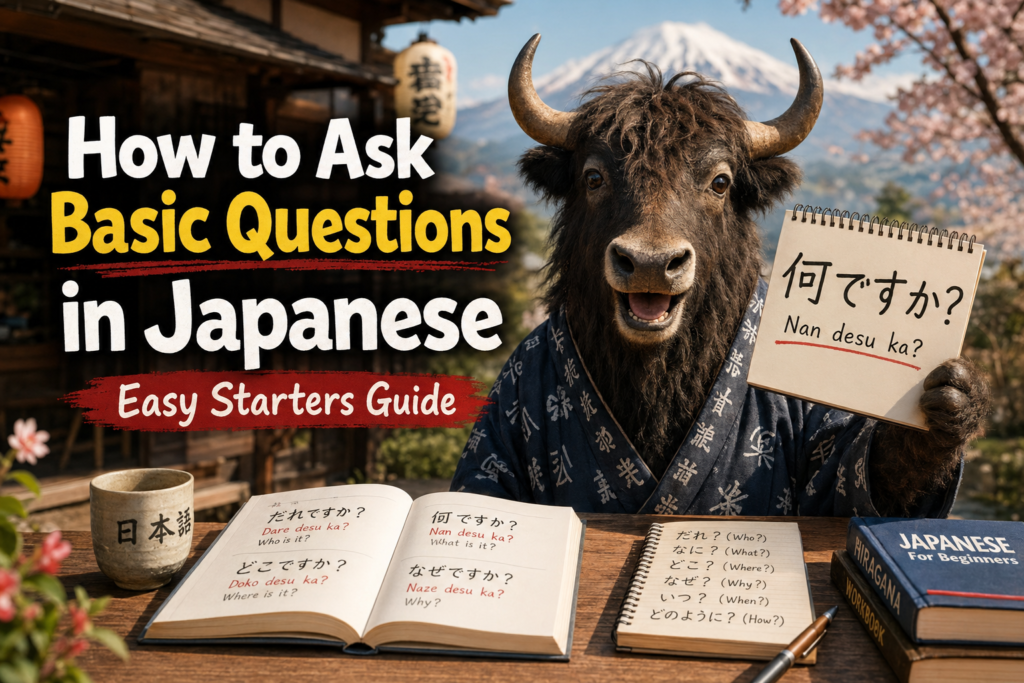
Start asking real Japanese questions without sounding like a lost robot.
If you only learn statements in Japanese, you can say things like “This is tea” and “I am tired,” which is fine, but not exactly thrilling conversation. Questions are where things get useful. Questions get directions, food, train help, names, prices, and the truth about whether that mystery snack is fish-flavored. Again.
A lot of beginners think Japanese questions must be wildly complicated. Good news: many of them are surprisingly tidy. Often, you can turn a sentence into a question just by using か ka, changing your tone, or dropping in a question word like “what” or “where.” Neat, efficient, and much less dramatic than English. If you are also juggling more than one language at once, you might want a break with Spanish lessons here later. Your brain loves chaos.
The Quick Idea Behind Japanese Questions
Japanese basic questions usually work in one of three simple ways:
- Add か ka at the end in polite Japanese.
- Use a question word like 何 nani or どこ doko.
- In casual speech, sometimes just raise your intonation and skip か ka.
Example:
- 日本人です。 Nihonjin desu. — I am Japanese.
- 日本人ですか。 Nihonjin desu ka. — Are you Japanese?
Japanese question order is usually calmer than English. You do not need to shuffle the whole sentence around every time.
The Most Useful Question Words First
These are the heavy hitters. Learn them early and you can survive a lot of everyday situations.
What — 何
何 nani / nan — what
Example: これは何ですか。 Kore wa nan desu ka. — What is this?
Small trap: 何 can be read as nani or nan depending on what comes next. Beginners do not need to panic about this. You will hear both patterns a lot.
Where — どこ
どこ doko — where
Example: トイレはどこですか。 Toire wa doko desu ka. — Where is the toilet?
Who — 誰
誰 dare — who
Example: あの人は誰ですか。 Ano hito wa dare desu ka. — Who is that person?
When — いつ
いつ itsu — when
Example: 日本へいつ行きますか。 Nihon e itsu ikimasu ka. — When are you going to Japan?
Why — なぜ / どうして
なぜ naze — why
Example: なぜ勉強しますか。 Naze benkyou shimasu ka. — Why do you study?
どうして doushite — why / how come
Example: どうして遅れましたか。 Doushite okuremashita ka. — Why were you late?
どうして feels more common in everyday chat. なぜ can sound a bit more formal or direct.
How — どう
どう dou — how
Example: 気分はどうですか。 Kibun wa dou desu ka. — How are you feeling?
Which — どれ / どの
どれ dore — which one
Example: どれがあなたのかばんですか。 Dore ga anata no kaban desu ka. — Which one is your bag?
どの dono — which, used before a noun
Example: どの電車ですか。 Dono densha desu ka. — Which train is it?
How Much — いくら
いくら ikura — how much
Example: これはいくらですか。 Kore wa ikura desu ka. — How much is this?
How Many / How Old — いくつ
いくつ ikutsu — how many / how old
Example: りんごはいくつありますか。 Ringo wa ikutsu arimasu ka. — How many apples are there?
Example: お子さんはおいくつですか。 Okosan wa oikutsu desu ka. — How old is your child?
Basic Question Patterns You Can Use Right Away
Pattern: Statement + か
This is the clean, polite beginner pattern.
- 学生です。 Gakusei desu. — I am a student.
- 学生ですか。 Gakusei desu ka. — Are you a student?
Example sentence: 先生ですか。 Sensei desu ka. — Are you a teacher?
Pattern: Topic + Question Word + ですか
This is one of the most common polite forms.
- お名前は何ですか。 Onamae wa nan desu ka. — What is your name?
- 出身はどこですか。 Shusshin wa doko desu ka. — Where are you from?
Pattern: Verb + か
Very useful when asking about actions.
Example: 日本語を話しますか。 Nihongo o hanashimasu ka. — Do you speak Japanese?
Example: 明日来ますか。 Ashita kimasu ka. — Will you come tomorrow?
Pattern: Casual Rising Tone
In casual speech, friends often skip か ka.
- 何してる? Nani shiteru? — What are you doing?
- どこ行くの? Doko iku no? — Where are you going?
Super common, but do not throw casual forms at everyone on day one. Shop staff, teachers, strangers, and older people usually deserve the polite version first.
Useful Phrases And Real-Life Sentences
Here are practical basic questions you can actually use. Not just textbook gems like “Where is Tanaka’s pencil?” though yes, bless that pencil.
- お名前は何ですか。 Onamae wa nan desu ka. — What is your name?
私のお名前はメイです。 Watashi no onamae wa Mei desu. — My name is Mei. - どちらから来ましたか。 Dochira kara kimashita ka. — Where did you come from?
カナダから来ました。 Kanada kara kimashita. — I came from Canada. - 出身はどこですか。 Shusshin wa doko desu ka. — Where are you from?
出身は大阪です。 Shusshin wa Oosaka desu. — I am from Osaka. - これは何ですか。 Kore wa nan desu ka. — What is this?
これは日本のお菓子です。 Kore wa Nihon no okashi desu. — This is a Japanese snack. - 今何時ですか。 Ima nanji desu ka. — What time is it now?
今は三時です。 Ima wa sanji desu. — It is three o’clock now. - トイレはどこですか。 Toire wa doko desu ka. — Where is the toilet?
トイレはあそこです。 Toire wa asoko desu. — The toilet is over there. - これはいくらですか。 Kore wa ikura desu ka. — How much is this?
これは千円です。 Kore wa sen en desu. — This is 1,000 yen. - 英語を話せますか。 Eigo o hanasemasu ka. — Can you speak English?
少し話せます。 Sukoshi hanasemasu. — I can speak a little. - 日本語で何と言いますか。 Nihongo de nan to iimasu ka. — How do you say it in Japanese?
日本語で「水」と言います。 Nihongo de “mizu” to iimasu. — In Japanese, you say “water.” - どうして日本語を勉強していますか。 Doushite Nihongo o benkyou shiteimasu ka. — Why are you studying Japanese?
アニメが好きだからです。 Anime ga suki dakara desu. — Because I like anime. - いつ日本へ行きますか。 Itsu Nihon e ikimasu ka. — When are you going to Japan?
来年行きます。 Rainen ikimasu. — I will go next year. - 誰と行きますか。 Dare to ikimasu ka. — Who are you going with?
友だちと行きます。 Tomodachi to ikimasu. — I am going with a friend. - どの電車に乗りますか。 Dono densha ni norimasu ka. — Which train will you take?
この電車に乗ります。 Kono densha ni norimasu. — I will take this train. - 何を食べますか。 Nani o tabemasu ka. — What will you eat?
ラーメンを食べます。 Raamen o tabemasu. — I will eat ramen. - 週末は何をしますか。 Shuumatsu wa nani o shimasu ka. — What will you do on the weekend?
家で休みます。 Ie de yasumimasu. — I will rest at home.
Question Words Table
| Kanji | Rōmaji | Meaning | Example (JP) | Example (Rōmaji) | Translation (EN) |
|---|---|---|---|---|---|
| 何 | nani / nan | what | 何を読みますか。 | Nani o yomimasu ka. | What will you read? |
| どこ | doko | where | 駅はどこですか。 | Eki wa doko desu ka. | Where is the station? |
| 誰 | dare | who | 誰が来ますか。 | Dare ga kimasu ka. | Who is coming? |
| いつ | itsu | when | いつ帰りますか。 | Itsu kaerimasu ka. | When will you go home? |
| なぜ | naze | why | なぜ笑っていますか。 | Naze waratteimasu ka. | Why are you laughing? |
| どう | dou | how | どう思いますか。 | Dou omoimasu ka. | What do you think? |
Everyday Questions Table
| Kanji | Rōmaji | Meaning | Example (JP) | Example (Rōmaji) | Translation (EN) |
|---|---|---|---|---|---|
| いくら | ikura | how much | この本はいくらですか。 | Kono hon wa ikura desu ka. | How much is this book? |
| いくつ | ikutsu | how many / how old | りんごをいくつ買いましたか。 | Ringo o ikutsu kaimashita ka. | How many apples did you buy? |
| どれ | dore | which one | どれが好きですか。 | Dore ga suki desu ka. | Which one do you like? |
| どの | dono | which + noun | どの映画を見ますか。 | Dono eiga o mimasu ka. | Which movie will you watch? |
| どうして | doushite | why / how come | どうして来ないのですか。 | Doushite konai no desu ka. | Why are you not coming? |
| 何時 | nanji | what time | 会議は何時ですか。 | Kaigi wa nanji desu ka. | What time is the meeting? |
Polite Vs Casual Question Variants
You do not need every casual form immediately, but seeing the pairs helps a lot.
| Type | Kanji | Rōmaji | Meaning | Example (JP) | Example (Rōmaji) | Translation (EN) |
|---|---|---|---|---|---|---|
| Polite | 何ですか。 | Nan desu ka. | What is it? | これは何ですか。 | Kore wa nan desu ka. | What is this? |
| Casual | 何? | Nani? | What? | これ何? | Kore nani? | What is this? |
| Polite | どこですか。 | Doko desu ka. | Where is it? | 駅はどこですか。 | Eki wa doko desu ka. | Where is the station? |
| Casual | どこ? | Doko? | Where? | 駅どこ? | Eki doko? | Where is the station? |
| Polite | 行きますか。 | Ikimasu ka. | Will you go? | 明日行きますか。 | Ashita ikimasu ka. | Will you go tomorrow? |
| Casual | 行く? | Iku? | Going? | 明日行く? | Ashita iku? | Are you going tomorrow? |
Common Beginner Mistakes
- Forgetting か in polite questions
これは何です。 Kore wa nan desu. sounds like a statement, not a question.
Use: これは何ですか。 Kore wa nan desu ka. — What is this? - Using casual questions too early
どこ? Doko? is fine with friends, but can sound abrupt with strangers.
Use: どこですか。 Doko desu ka. for a safer start. - Mixing up どれ and どの
どれ dore stands alone: どれですか。 Dore desu ka. — Which one is it?
どの dono needs a noun: どの店ですか。 Dono mise desu ka. — Which shop is it? - Using あなた too much
English loves “you.” Japanese often skips it.
Instead of あなたは何を食べますか。 Anata wa nani o tabemasu ka., just say 何を食べますか。 Nani o tabemasu ka. — What will you eat?
Mini Practice
Try reading these out loud. Mouth practice matters. Silent study is nice, but your future self in a real train station will want actual sound.
- これは何ですか。 Kore wa nan desu ka. — What is this?
- 駅はどこですか。 Eki wa doko desu ka. — Where is the station?
- 誰と話しましたか。 Dare to hanashimashita ka. — Who did you speak with?
- いつ始まりますか。 Itsu hajimarimasu ka. — When does it start?
- どうしてそれを買いましたか。 Doushite sore o kaimashita ka. — Why did you buy that?
- どうやって行きますか。 Douyatte ikimasu ka. — How do you go there?
Now swap the topic:
- トイレはどこですか。 Toire wa doko desu ka. — Where is the toilet?
- コンビニはどこですか。 Konbini wa doko desu ka. — Where is the convenience store?
- ホテルはどこですか。 Hoteru wa doko desu ka. — Where is the hotel?
A Curious Bit About か
In very polite Japanese, か ka is the classic question marker. In modern casual conversation, people often leave it out completely and rely on tone or structures like の no.
Example: 何をしているの? Nani o shiteiru no? — What are you doing?
You do not need to master every nuance right away. Start with polite ですか desu ka and ますか masu ka. They work, they are safe, and they do not make you sound like you learned Japanese from a suspicious action movie subtitle file.
Quick Reference Summary
- か ka turns polite statements into questions.
- 何 nani / nan = what
- どこ doko = where
- 誰 dare = who
- いつ itsu = when
- なぜ / どうして naze / doushite = why
- どう dou = how
- どれ / どの dore / dono = which
- いくら ikura = how much
- いくつ ikutsu = how many / how old
Yak Takeaway
If you can ask what, where, who, when, why, and how in Japanese, you stop being stuck in memorized sentence land and start having actual conversations. That is the good stuff. Keep your first questions polite, repeat them out loud, and use them in tiny real situations every day. One clean トイレはどこですか。 Toire wa doko desu ka. can do more for your confidence than fifty fancy grammar notes sitting quietly in a notebook.
More Japanese to explore
The Spider’s Thread: A2 Elementary Japanese Story with Audio

Golden Boy in Japanese: A1 Beginner Story with Audio, Tap-to-Translate Help & Free Lesson Notes

Learn Japanese with The Tale of the Bamboo Cutter – An A2 Graded Reader with Audio