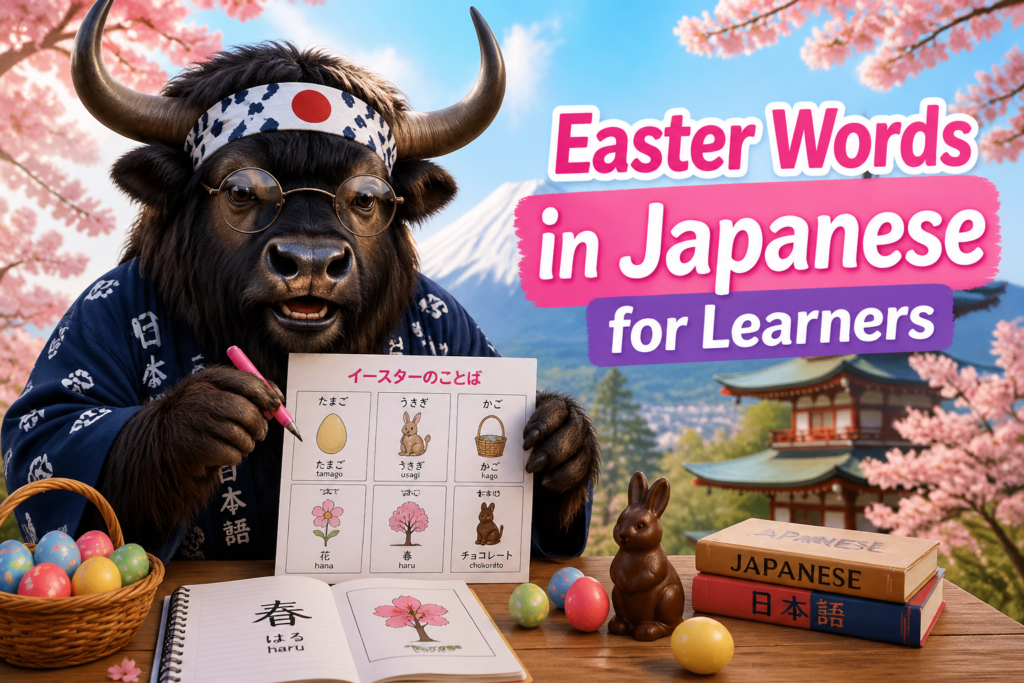
If you want to talk about Easter in Japanese, the good news is that you do not need a giant pile of sacred vocabulary to get started. The slightly annoying news is that many Easter words in Japanese are borrowed from English, so the spelling can look familiar but still behave like a sneaky little language lesson.
In Japan, Easter is not as big a holiday as it is in many English-speaking countries, but you will still hear the word イースター (Īsutā) in stores, cafés, and seasonal promotions. That makes it a fun topic for learners: useful, seasonal, and just weird enough to stick in your memory.
For a broader look at Japanese learning resources, you can also check the main Japanese learning hub.
Essential Easter Words
| Kanji / Japanese | Rōmaji | English Meaning | Example Sentence |
|---|---|---|---|
| イースター | Īsutā | Easter | イースターは春のイベントです。 Īsutā wa haru no ibento desu. Easter is a spring event. |
| 復活祭 | Fukkatsusai | Resurrection festival; Easter | 復活祭はキリスト教の大切な日です。 Fukkatsusai wa Kirisutokyō no taisetsu na hi desu. Easter is an important day in Christianity. |
| 春 | Haru | Spring | 春になると、花がきれいです。 Haru ni naru to, hana ga kirei desu. When spring comes, the flowers are beautiful. |
| 卵 | Tamago | Egg | 卵はイースターのよくあるシンボルです。 Tamago wa Īsutā no yoku aru shinboru desu. Eggs are a common Easter symbol. |
| ウサギ | Usagi | Rabbit; bunny | ウサギは子どもに人気があります。 Usagi wa kodomo ni ninki ga arimasu. Rabbits are popular with children. |
| イースターエッグ | Īsutā eggu | Easter egg | イースターエッグを飾りました。 Īsutā eggu o kazarimashita. I decorated Easter eggs. |
| カラフル | Karafuru | Colorful | カラフルな卵が並んでいます。 Karafuru na tamago ga narande imasu. Colorful eggs are lined up. |
| 飾る | Kazaru | To decorate | 部屋をイースター用に飾ります。 Heya o Īsutā-yō ni kazarimasu. I decorate the room for Easter. |
| 探す | Sagasu | To look for; to search | 子どもたちは卵を探します。 Kodomotachi wa tamago o sagashimasu. The children look for eggs. |
| 春休み | Haruyasumi | Spring vacation | 春休みに家族で旅行します。 Haruyasumi ni kazoku de ryokō shimasu. During spring break, the family travels. |
Useful Easter Phrases
These are the kind of phrases that make your Japanese sound ready for seasonal chat, event signs, or a festive caption that does not embarrass you later. A rare victory, frankly.
| Kanji / Japanese | Rōmaji | English Meaning | Example Sentence |
|---|---|---|---|
| イースターのイベント | Īsutā no ibento | Easter event | デパートでイースターのイベントがあります。 Depāto de Īsutā no ibento ga arimasu. There is an Easter event at the department store. |
| 卵探し | Tamago sagashi | Egg hunt | 子どもたちは卵探しが大好きです。 Kodomotachi wa tamago sagashi ga daisuki desu. Children love egg hunts. |
| お菓子 | Okashi | Sweets; candy | イースターのお菓子を買いました。 Īsutā no okashi o kaimashita. I bought Easter candy. |
| プレゼント | Purezento | Present; gift | 小さなプレゼントを用意しました。 Chiisana purezento o yōi shimashita. I prepared a small present. |
| 家族 | Kazoku | Family | 家族でイースターを楽しみます。 Kazoku de Īsutā o tanoshimimasu. The family enjoys Easter together. |
| 子ども | Kodomo | Child; children | 子どもが卵を見つけました。 Kodomo ga tamago o mitsukemashita. The child found an egg. |
| 見つける | Mitsukeru | To find | 庭でウサギの飾りを見つけました。 Niwa de usagi no kazari o mitsukemashita. I found a rabbit decoration in the garden. |
| 飾り | Kazari | Decoration | 机に春の飾りを置きました。 Tsukue ni haru no kazari o okimashita. I put spring decorations on the table. |
| 春らしい | Haru-rashii | Spring-like | 春らしい色がきれいですね。 Haru-rashii iro ga kirei desu ne. Spring-like colors are pretty, aren’t they? |
| にぎやか | Nigiyaka | Lively; bustling | イースターの売り場はにぎやかです。 Īsutā no uriba wa nigiyaka desu. The Easter display area is lively. |
| 特別 | Tokubetsu | Special | 今日は少し特別な日です。 Kyō wa sukoshi tokubetsu na hi desu. Today is a slightly special day. |
| 祝う | Iwau | To celebrate | みんなでイースターを祝います。 Minna de Īsutā o iwaimasu. Everyone celebrates Easter together. |
More Easter Vocabulary With Real-Life Sentences
| Kanji / Japanese | Rōmaji | Meaning | Example | Translation |
|---|---|---|---|---|
| 教会 | Kyōkai | Church | 教会で特別な礼拝があります。 Kyōkai de tokubetsu na reihai ga arimasu. | There is a special service at the church. |
| 礼拝 | Reihai | Worship service | 礼拝に参加しました。 Reihai ni sanka shimashita. | I attended the service. |
| 祭り | Matsuri | Festival | 春の祭りは楽しいです。 Haru no matsuri wa tanoshii desu. | The spring festival is fun. |
| 春色 | Haru-iro | Spring color | 春色の服を買いました。 Haru-iro no fuku o kaimashita. | I bought spring-colored clothes. |
| 花 | Hana | Flower | 花がたくさん咲いています。 Hana ga takusan saite imasu. | Many flowers are blooming. |
| 庭 | Niwa | Garden | 庭で子どもたちが遊びます。 Niwa de kodomotachi ga asobimasu. | The children play in the garden. |
| かご | Kago | Basket | 卵をかごに入れます。 Tamago o kago ni iremasu. | Put the eggs in the basket. |
| 入れる | Ireru | To put in | お菓子を箱に入れました。 Okashi o hako ni iremashita. | I put the sweets in the box. |
| 色 | Iro | Color | いろいろな色があります。 Iroiro na iro ga arimasu. | There are many colors. |
| かわいい | Kawaii | Cute | このウサギはかわいいです。 Kono usagi wa kawaii desu. | This rabbit is cute. |
| 人気 | Ninki | Popularity; popular | イースターの飾りは人気があります。 Īsutā no kazari wa ninki ga arimasu. | Easter decorations are popular. |
| 季節 | Kisetsu | Season | 春は明るい季節です。 Haru wa akarui kisetsu desu. | Spring is a bright season. |
Quick Nuance Notes
Japanese Easter vocabulary is a little mixed. Some words are native Japanese, some are borrowed, and some are religious terms you may only see in church-related contexts. Language loves a costume change.
イースター (Īsutā) is the most natural modern word for “Easter.” 復活祭 (Fukkatsusai) sounds more formal and religious. If you are reading signs in Japan, イースター is the word you will see most often.
卵 (tamago) means “egg,” but イースターエッグ (Īsutā eggu) is the Easter-specific phrase. If you say just 卵, people will think of ordinary eggs for cooking. Shocking, I know.
In Japanese, the borrowed word is often the everyday word. The formal Japanese word is there too, but the little katakana version usually shows up where people are actually shopping, decorating, and posting photos.
Grammar-Ready Phrase Patterns
| Pattern | Meaning | Example | Rōmaji | English |
|---|---|---|---|---|
| 〜のイベント | Event about / for ~ | イースターのイベント | Īsutā no ibento | Easter event |
| 〜を探す | To search for ~ | 卵を探す | Tamago o sagasu | To look for eggs |
| 〜を飾る | To decorate with ~ | 部屋を飾る | Heya o kazaru | To decorate a room |
| 〜が人気 | ~ is popular | ウサギが人気 | Usagi ga ninki | Rabbits are popular |
| 〜らしい | Typical of; -like | 春らしい色 | Haru-rashii iro | Spring-like colors |
Practice Sentences
- イースター (Īsutā) — I heard there is an Easter event in the mall.
- 復活祭 (Fukkatsusai) — This word sounds more religious and formal.
- 卵 (Tamago) — Eggs are a classic Easter symbol.
- ウサギ (Usagi) — Rabbits are cute and very Easter-friendly.
- 卵探し (Tamago sagashi) — An egg hunt is a fun activity for children.
- 飾る (Kazaru) — You can decorate your room with spring colors.
- 探す (Sagasu) — The children search for hidden eggs.
- 春休み (Haruyasumi) — Easter often happens during spring break.
- プレゼント (Purezento) — Small gifts are common at seasonal events.
- 祝う (Iwau) — Families celebrate the holiday together.
Try saying each sentence out loud with the rōmaji first, then look at the Japanese. That tiny extra step can save you from the classic learner move of “I know this word” followed by total silence in real life.
Common Mistakes And Easy Fixes
| Common Mistake | Better Choice | Why |
|---|---|---|
| Using only 卵 for Easter every time | Use イースターエッグ when talking about the holiday | 卵 is just a normal egg |
| Thinking 復活祭 is the everyday word | Use イースター in modern casual contexts | 復活祭 is more formal and religious |
| Leaving out rōmaji when learning new words | Read Japanese + rōmaji together | It helps pronunciation and memory |
| Forgetting particles in example sentences | Use を, に, が, and の properly | Japanese sentence structure needs them |
| Translating “cute” with the wrong feeling | かわいい (kawaii) | This is the standard word for “cute” |
For contrast with another seasonal vocabulary set, see Halloween in Japanese. It is a nice reminder that Japanese holiday vocabulary loves borrowed words almost as much as it loves seasonal packaging.
Extra Seasonal Words You May See
| Kanji / Japanese | Rōmaji | Meaning | Example Sentence |
|---|---|---|---|
| イベント | Ibento | Event | 駅で春のイベントがあります。 Eki de haru no ibento ga arimasu. There is a spring event at the station. |
| 商店街 | Shōtengai | Shopping street | 商店街にかわいい飾りがありました。 Shōtengai ni kawaii kazari ga arimashita. There were cute decorations on the shopping street. |
| 店 | Mise | Shop; store | 店でイースターグッズを見ました。 Mise de Īsutā guzzu o mimashita. I saw Easter goods in the store. |
| 商品 | Shōhin | Product; item | 新しい春の商品が並びます。 Atarashii haru no shōhin ga narabimasu. New spring products are displayed. |
| 限定 | Gentei | Limited edition | 限定デザインの卵があります。 Gentei dezain no tamago ga arimasu. There are limited-edition egg designs. |
| デザイン | Dezain | Design | このデザインはとても春らしいです。 Kono dezain wa totemo haru-rashii desu. This design feels very spring-like. |
| 明るい | Akarui | Bright | 明るい色が目立ちます。 Akarui iro ga medachimasu. Bright colors stand out. |
| 目立つ | Medatsu | To stand out | ウサギの飾りが目立ちます。 Usagi no kazari ga medachimasu. The rabbit decoration stands out. |
Mini Review Quiz
- Which word means “Easter”? — イースター (Īsutā)
- Which word sounds more formal and religious? — 復活祭 (Fukkatsusai)
- What is “egg” in Japanese? — 卵 (Tamago)
- What do you call an Easter egg? — イースターエッグ (Īsutā eggu)
- What verb means “to decorate”? — 飾る (Kazaru)
- What verb means “to search for”? — 探す (Sagasu)
- What word means “spring”? — 春 (Haru)
- What word means “rabbit”? — ウサギ (Usagi)
If you want a more playful vocabulary set after this one, fantasy adventure vocabulary in Japanese is a nice next stop. Different theme, same useful habit: collect words by topic, and your brain stops sulking quite so much.
Easter words in Japanese are a neat mix of everyday nouns, seasonal phrases, and borrowed terms that show up in real signs and real conversations. If you remember just a few core words like イースター, 復活祭, 卵, ウサギ, and 飾る, you already have enough to understand seasonal messages and talk about Easter without doing linguistic acrobatics.
That is the sweet spot for learning vocabulary: enough to use it, not so much that your notebook starts to look like it filed for retirement.