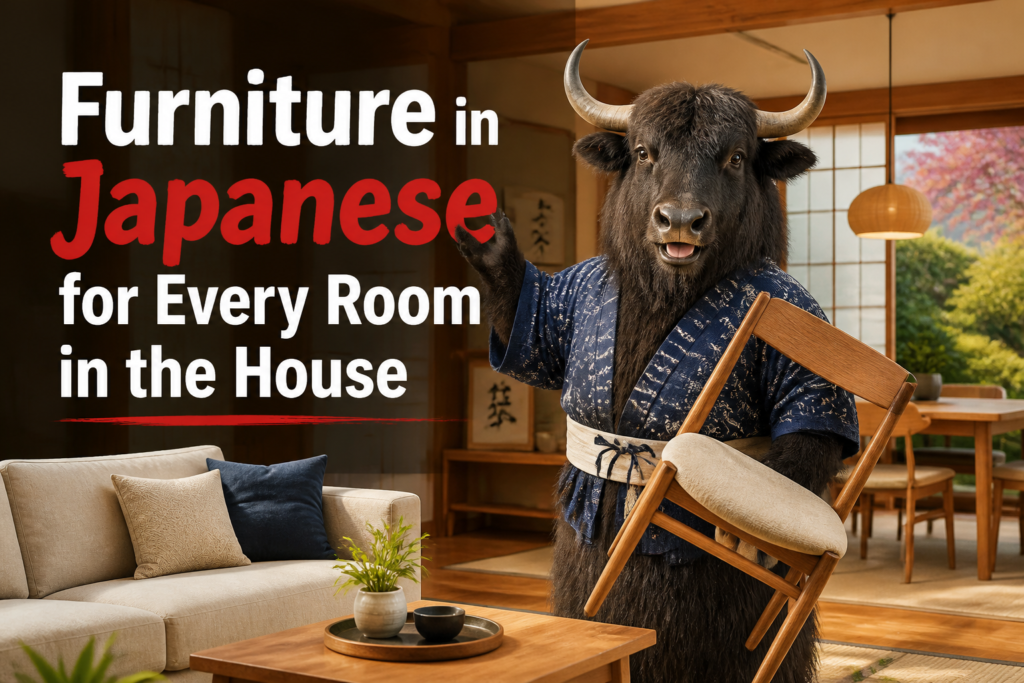
家具 kagu means furniture in Japanese. Nice and tidy, right? A word that looks simple on paper, then suddenly your brain meets a sofa, a shelf, a bed, and a dining table all at once. The good news: Japanese furniture words are very learnable once you group them by room and use them in real sentences. For room-by-room vocabulary, review house words in Japanese alongside these items.
This guide keeps things practical. You will learn everyday furniture words, simple phrases, and example sentences you can actually use. If you want more house vocabulary after this, the related house guide is here: house words in Japanese. Clean little vocabulary ecosystems. Very efficient. Very Japanese.
For a quick general overview of furniture as a concept, this boring-but-useful reference is fine: Furniture. Now let’s get into the words people actually say.
Basic Furniture Words You Will See Everywhere
Start with the common words first. These are the furniture basics that show up in homes, stores, and simple conversations.
| Kanji | Rōmaji | Meaning | Example |
|---|---|---|---|
| 家具 | kagu | furniture | この家具は新しい。 kono kagu wa atarashii. This furniture is new. |
| 机 | tsukue | desk | 机で勉強します。 tsukue de benkyō shimasu. I study at the desk. |
| 椅子 | isu | chair | 椅子に座ってください。 isu ni suwatte kudasai. Please sit on the chair. |
| ソファ | sofa | sofa | ソファで休みます。 sofa de yasumimasu. I rest on the sofa. |
| ベッド | bedddo | bed | ベッドは寝室にあります。 beddo wa shinshitsu ni arimasu. The bed is in the bedroom. |
| 棚 | tana | shelf | 棚に本があります。 tana ni hon ga arimasu. There are books on the shelf. |
| 本棚 | hondana | bookshelf | 本棚の上に写真があります。 hondana no ue ni shashin ga arimasu. There is a photo on top of the bookshelf. |
| テーブル | tēburu | table | テーブルで食べます。 tēburu de tabemasu. I eat at the table. |
| タンス | tansu | chest of drawers / dresser | タンスに服を入れます。 tansu ni fuku o iremasu. I put clothes in the dresser. |
| 戸棚 | todana | cupboard / cabinet | 戸棚を開けてください。 todana o akete kudasai. Please open the cabinet. |
| 鏡 | kagami | mirror | 鏡で髪を見ます。 kagami de kami o mimasu. I look at my hair in the mirror. |
| 照明 | shōmei | lighting / light fixture | 照明が明るいです。 shōmei ga akarui desu. The lighting is bright. |
Living Room Furniture
The living room is where Japanese furniture vocabulary starts feeling very real. This is the room for relaxing, watching TV, and pretending you will “just sit for five minutes.”
| Kanji | Rōmaji | Meaning | Example |
|---|---|---|---|
| ソファ | sofa | sofa | ソファでテレビを見ます。 sofa de terebi o mimasu. I watch TV on the sofa. |
| 座椅子 | zaisu | floor chair | 座椅子は便利です。 zaisu wa benri desu. The floor chair is convenient. |
| テレビ台 | terebi-dai | TV stand | テレビ台の上に花があります。 terebi-dai no ue ni hana ga arimasu. There are flowers on the TV stand. |
| 棚 | tana | shelf | 棚にゲームがあります。 tana ni gēmu ga arimasu. There are games on the shelf. |
| ローテーブル | rō tēburu | low table | ローテーブルでお茶を飲みます。 rō tēburu de ocha o nomimasu. I drink tea at the low table. |
| 本棚 | hondana | bookshelf | 本棚に漫画があります。 hondana ni manga ga arimasu. There are manga on the bookshelf. |
Useful sentence: ソファの横に本棚があります。 sofa no yoko ni hondana ga arimasu. There is a bookshelf next to the sofa.
Bedroom Furniture
The bedroom vocabulary is mostly calm and practical. Nothing dramatic. Just beds, closets, and the eternal search for where you put your socks.
| Kanji | Rōmaji | Meaning | Example |
|---|---|---|---|
| ベッド | bedddo | bed | ベッドで寝ます。 beddo de nemasu. I sleep in the bed. |
| 寝室 | shinshitsu | bedroom | 寝室は静かです。 shinshitsu wa shizuka desu. The bedroom is quiet. |
| タンス | tansu | dresser / chest of drawers | タンスにTシャツがあります。 tansu ni T-shatsu ga arimasu. There are T-shirts in the dresser. |
| クローゼット | kurōzetto | closet | クローゼットは広いです。 kurōzetto wa hiroi desu. The closet is spacious. |
| 鏡台 | kyōdai | dressing table | 鏡台の前で準備します。 kyōdai no mae de junbi shimasu. I get ready in front of the dressing table. |
| サイドテーブル | saidotēburu | side table / nightstand | サイドテーブルに時計があります。 saidotēburu ni tokei ga arimasu. There is a clock on the side table. |
Dining Room And Kitchen Furniture
Meals need furniture too, sadly. Japanese homes often use compact layouts, so you will see words for tables, chairs, cabinets, and storage that keep things organized instead of turning the room into a chaos museum.
| Kanji | Rōmaji | Meaning | Example |
|---|---|---|---|
| 食卓 | shokutaku | dining table | 食卓で朝ごはんを食べます。 shokutaku de asagohan o tabemasu. I eat breakfast at the dining table. |
| 椅子 | isu | chair | 椅子を二つください。 isu o futatsu kudasai. Please give me two chairs. |
| 食器棚 | shokkidana | dish cabinet | 食器棚に皿があります。 shokkidana ni sara ga arimasu. There are plates in the dish cabinet. |
| 戸棚 | todana | cabinet / cupboard | 戸棚にコップがあります。 todana ni koppu ga arimasu. There are cups in the cabinet. |
| 棚 | tana | shelf | 棚に調味料があります。 tana ni chōmiryō ga arimasu. There are seasonings on the shelf. |
| カウンター | kauntā | counter | カウンターで料理します。 kauntā de ryōri shimasu. I cook at the counter. |
Bathroom And Entryway Furniture
Not every item in these areas is “furniture” in the strictest sense, but in daily Japanese conversation, they often get grouped together as part of the home setup. Translation does love a little flexibility. Very rude of it, honestly.
| Kanji | Rōmaji | Meaning | Example |
|---|---|---|---|
| 鏡 | kagami | mirror | 鏡の前でネクタイを直します。 kagami no mae de nekutai o naoshimasu. I fix my tie in front of the mirror. |
| 棚 | tana | shelf | 棚にタオルがあります。 tana ni taoru ga arimasu. There are towels on the shelf. |
| 下駄箱 | getabako | shoe cabinet | 下駄箱に靴を入れます。 getabako ni kutsu o iremasu. I put shoes in the shoe cabinet. |
| 傘立て | kasatate | umbrella stand | 傘立ては玄関にあります。 kasatate wa genkan ni arimasu. The umbrella stand is in the entrance. |
| 玄関 | genkan | entryway / entrance | 玄関はいつもきれいです。 genkan wa itsumo kirei desu. The entryway is always clean. |
Common Furniture Verbs And Useful Phrases
Furniture words become much easier when you pair them with verbs like “put,” “sit,” “open,” and “move.” That is where real Japanese starts sounding natural instead of like a flashcard parade.
- 置く oku — to put / place
テーブルの上に本を置きます。 tēburu no ue ni hon o okimasu. I put the book on the table. - 座る suwaru — to sit
椅子に座ってください。 isu ni suwatte kudasai. Please sit on the chair. - 寝る neru — to sleep / lie down
ベッドで寝ます。 beddo de nemasu. I sleep in bed. - 開ける akeru — to open
戸棚を開けます。 todana o akemasu. I open the cabinet. - 入れる ireru — to put in
服をタンスに入れます。 fuku o tansu ni iremasu. I put clothes in the dresser. - 並べる naraberu — to arrange
椅子を並べます。 isu o narabemasu. I arrange the chairs. - 移動する idō suru — to move / relocate
ソファを窓の近くに移動します。 sofa o mado no chikaku ni idō shimasu. I move the sofa near the window. - 飾る kazaru — to decorate
棚に写真を飾ります。 tana ni shashin o kazarimasu. I decorate the shelf with photos. - 片付ける katazukeru — to tidy up
部屋の家具を片付けます。 heya no kagu o katazukemasu. I tidy up the room furniture. - 買う kau — to buy
新しい家具を買います。 atarashii kagu o kaimasu. I buy new furniture.
Furniture Phrases For Real Life
These are the kind of phrases that help you describe a room, shop for furniture, or answer simple questions without freezing like a confused mannequin.
- この家具は大きいです。 kono kagu wa ōkii desu. This furniture is big.
- 新しい机がほしいです。 atarashii tsukue ga hoshii desu. I want a new desk.
- 椅子が三つあります。 isu ga mittsu arimasu. There are three chairs.
- 本棚はどこですか。 hondana wa doko desu ka. Where is the bookshelf?
- ソファの色は青いです。 sofa no iro wa aoi desu. The sofa color is blue.
- ベッドの横にテーブルがあります。 beddo no yoko ni tēburu ga arimasu. There is a table next to the bed.
- 部屋に棚を置きます。 heya ni tana o okimasu. I put a shelf in the room.
- タンスに服をしまいます。 tansu ni fuku o shimaimasu. I put clothes away in the dresser.
- 玄関に傘立てがあります。 genkan ni kasatate ga arimasu. There is an umbrella stand in the entrance.
- 食卓で家族と話します。 shokutaku de kazoku to hanashimasu. I talk with my family at the dining table.
- 家具屋で椅子を見ます。 kaguya de isu o mimasu. I look at chairs at the furniture store.
- この棚は安いです。 kono tana wa yasui desu. This shelf is cheap.
Common Confusion Notes
Some Japanese furniture words overlap in meaning a little. That is normal. Japanese, like every language, enjoys making learners do a tiny bit of detective work.
椅子 isu can mean a normal chair. 座椅子 zaisu is a chair without legs, usually for sitting on the floor. So yes, one chair stands, one chair lounges. Very polite system.
棚 tana is a general shelf word. 本棚 hondana is a bookshelf. 食器棚 shokkidana is for dishes. 戸棚 todana is a cabinet or cupboard. Same family, different jobs.
家具 kagu means furniture as a category, not one single item. If you say 家具を買います kagu o kaimasu, you mean “I buy furniture,” not “I buy a furniture.” English, as usual, makes that sound extra weird.
Room-By-Room Quick Reference
| Room | Common Furniture Words | Example Sentence |
|---|---|---|
| Living Room | ソファ sofa, テレビ台 terebi-dai, 本棚 hondana, ローテーブル rō tēburu | ソファの横に本棚があります。 sofa no yoko ni hondana ga arimasu. There is a bookshelf next to the sofa. |
| Bedroom | ベッド beddo, タンス tansu, クローゼット kurōzetto, サイドテーブル saidotēburu | ベッドのそばにサイドテーブルがあります。 beddo no soba ni saidotēburu ga arimasu. There is a side table near the bed. |
| Dining Area | 食卓 shokutaku, 椅子 isu, 食器棚 shokkidana, カウンター kauntā | 食卓のまわりに椅子があります。 shokutaku no mawari ni isu ga arimasu. There are chairs around the dining table. |
| Entryway | 下駄箱 getabako, 傘立て kasatate, 鏡 kagami, 棚 tana | 玄関に下駄箱があります。 genkan ni getabako ga arimasu. There is a shoe cabinet in the entrance. |
Practice: Swap The Furniture Word
Try replacing the furniture word in each sentence. That small change is how vocabulary sticks instead of politely escaping your brain five minutes later.
- テーブルを買います。tēburu o kaimasu. I buy a table.
- 机を買います。tsukue o kaimasu. I buy a desk.
- 椅子に座ります。isu ni suwarimasu. I sit on the chair.
- ソファに座ります。sofa ni suwarimasu. I sit on the sofa.
- 本棚に本があります。hondana ni hon ga arimasu. There are books on the bookshelf.
- 棚にお皿があります。tana ni osara ga arimasu. There are plates on the shelf.
Extra Useful Words For Furniture Shopping
If you shop for furniture in Japanese, these words help you describe size, color, and style. Because yes, furniture stores love making everything sound “simple,” right before you face twenty versions of the same chair.
| Kanji | Rōmaji | Meaning | Example |
|---|---|---|---|
| 大きい | ōkii | big | 大きい机がほしいです。 ōkii tsukue ga hoshii desu. I want a big desk. |
| 小さい | chiisai | small | 小さい椅子があります。 chiisai isu ga arimasu. There is a small chair. |
| 新しい | atarashii | new | 新しいソファを買います。 atarashii sofa o kaimasu. I will buy a new sofa. |
| 古い | furui | old | 古い棚があります。 furui tana ga arimasu. There is an old shelf. |
| 安い | yasui | cheap | 安い家具を見ます。 yasui kagu o mimasu. I look at cheap furniture. |
| 高い | takai | expensive / high | 高いベッドです。 takai beddo desu. It is an expensive bed. |
| 便利 | benri | convenient | この棚は便利です。 kono tana wa benri desu. This shelf is convenient. |
| きれい | kirei | clean / beautiful | きれいな机ですね。 kirei na tsukue desu ne. It is a nice clean desk, isn’t it? |
Common Mistakes And Easy Fixes
- Mistake: Using 家具 kagu for one chair.
Fix: Use 椅子 isu for a chair and 家具 for furniture in general. - Mistake: Forgetting the room word when needed.
Fix: Add location words like 寝室 shinshitsu or 玄関 genkan for clarity. - Mistake: Mixing up 棚 tana and 本棚 hondana.
Fix: Use 本棚 when it is clearly for books. - Mistake: Using English-style word order too rigidly.
Fix: Follow Japanese patterns like テーブルの上に tēburu no ue ni and 〜があります 〜ga arimasu. - Mistake: Writing examples without romaji.
Fix: Keep Japanese text and Rōmaji together so the sentence stays readable.
Quick Summary
- 家具 kagu = furniture
- 机 tsukue = desk
- 椅子 isu = chair
- ソファ sofa = sofa
- ベッド beddo = bed
- 棚 tana = shelf
- 本棚 hondana = bookshelf
- タンス tansu = dresser
- 食卓 shokutaku = dining table
- 下駄箱 getabako = shoe cabinet
Furniture vocabulary in Japanese is mostly about learning the room, the object, and one useful verb. That is the whole trick. Once you have the core words, you can describe a home, shop for items, and understand simple conversations without sweating through the sofa cushions. Keep going, and the words will start feeling like part of the room instead of random furniture-shaped noise.
If you want to keep building your house vocabulary, continue with the main Japanese learning hub at Learn Japanese, or jump to more home words with house words in Japanese. For another handy related lesson, try this Yak Yacker guide.