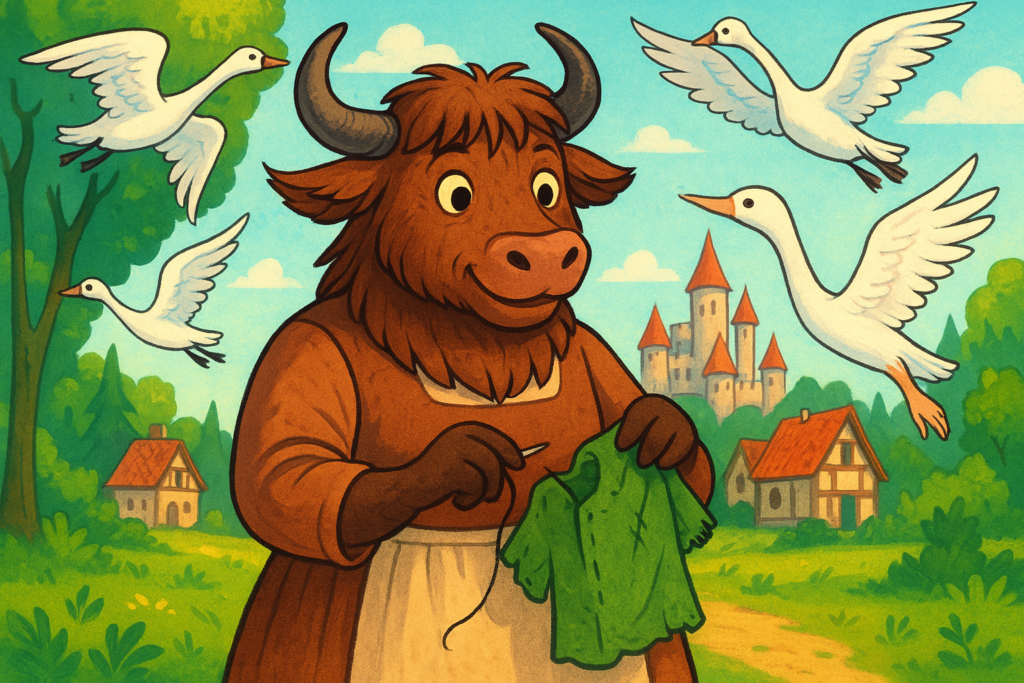
This A2 Elementary retelling of Die sechs Schwäne keeps the plot clear for learners while still giving the story some atmosphere and momentum. Er hatte sieben Kinder: sechs Söhne und eine Tochter. Eines Tages verirrte sich der König im Wald.
This version teaches German through English and includes clickable word help inside the story, full story audio, and lesson notes after the reading. It is free to use on Yak Yacker and is designed to feel natural, readable, and manageable for learners.
Es war einmal ein König. Er hatte sieben Kinder: sechs Söhne und eine Tochter. Seine Frau war tot.
Eines Tages sich der König im Wald. Eine alte Hexe ihm. „Ich zeige dir den Weg, aber du musst meine Tochter heiraten", sagte sie. Der König hatte Angst und sagte Ja.
Die neue Königin war . Sie gab den sechs Söhnen weiße Hemden. Aber die Hemden waren ! Die Brüder wurden zu Schwänen und .
Die kleine Schwester weinte. Sie lief in den Wald und fand ihre Brüder. „Wir sind verwunschen", sagten sie. „Du musst sechs Hemden aus Brennnesseln nähen. Sechs Jahre darfst du nicht sprechen und nicht lachen."
Das Mädchen Brennnesseln. Ihre Hände , aber sie nähte. Ein junger König fand sie. „Komm mit mir auf mein Schloss", sagte er. Sie nickte, aber sprach nicht.
Die Mutter des Königs war . „Diese Frau spricht nie. Sie ist eine Hexe!", sagte sie. Aber der König seine stille Frau.
Das Mädchen bekam ein Baby. Die böse Mutter nahm das Kind weg und versteckte es. Das passierte noch zweimal. Die Königin konnte nichts sagen.
Das Volk : „Verbrennt die Hexe!" Am Tag der warf das Mädchen die sechs fertigen Hemden über die Schwäne. Sofort wurden sie wieder zu Menschen! Nur ein Bruder hatte einen Schwanenflügel, denn das letzte Hemd war nicht ganz fertig.
Die Königin : „Ich bin unschuldig!" Der König glaubte ihr. Die böse Mutter wurde , und alle lebten glücklich bis ans Ende.
Once upon a time there was a king. He had seven children: six sons and a daughter. His wife was dead.
One day the king got lost in the forest. An old witch helped him. "I'll show you the way, but you must marry my daughter," she said. The king was afraid and said yes.
The new queen was evil. She gave the six sons white shirts. But the shirts were enchanted! The brothers turned into swans and flew away.
The little sister cried. She ran into the forest and found her brothers. "We are enchanted," they said. "You must sew six shirts from stinging nettles. For six years you must not speak or laugh."
The girl gathered stinging nettles. Her hands burned, but she sewed. A young king found her. "Come with me to my castle," he said. She nodded, but did not speak.
The king's mother was suspicious. "This woman never speaks. She is a witch!" she said. But the king loved his silent wife.
The girl had a baby. The evil mother took the child away and hid it. This happened two more times. The queen could not say anything.
The people shouted: "Burn the witch!" On the day of execution, the girl threw the six finished shirts over the swans. Immediately they became human again! Only one brother had a swan wing, because the last shirt was not quite finished.
The queen finally spoke: "I am innocent!" The king believed her. The evil mother was punished, and they all lived happily ever after.
Let’s look at some important words from the fairy tale. These will help you understand not just this story but many others in German.
Pay attention to the nouns’ articles: der, die, das. They tell you if a word is masculine, feminine, or neuter.
- die Hexe – the witch. Example: -Die alte Hexe half ihm.-
- der Schwan – the swan. Plural: die Schwäne. The brothers became swans.
- verzaubert – enchanted, spelled. Past participle of verzaubern.
- unschuldig – innocent. The queen finally says: -Ich bin unschuldig!-
You probably noticed that the story doesn’t use the present tense very much. Instead, it relies on the simple past (Präteritum), the classic tense for telling stories in German.
Here are some common verbs from the text and their simple past forms. Try to spot them when you read Märchen online.
- sein → war (was): -Es war einmal ein König.-
- haben → hatte (had): -Er hatte sieben Kinder.-
- geben → gab (gave): -Sie gab den Söhnen Hemden.-
- laufen → lief (ran): -Sie lief in den Wald.-
Small connecting words like und, aber, denn, and dass appear again and again. They link ideas and make the story flow.
Noticing how they work will improve your reading and help you write longer sentences yourself.
- und (and): -Der König hatte Angst und sagte Ja.-
- aber (but): -Die Königin war böse, aber der König liebte sie.-
- denn (because): -Die Hemden waren verzaubert, denn die Hexe war böse.-
- dass (that): -Das Volk rief, dass sie eine Hexe sei.-
You’ve just read a classic German fairy tale! Now you know some key words and how the past tense works in stories.
Why not write one sentence about the tale in your own words? For example: -Die Schwester nähte sechs Hemden.- Or search for -Grimm Märchen- online and read another short Märchen.
Die sechs Schwäne comes from an older public-domain story tradition and is best known as a public_domain_fairy_tale_retelling. This Yak Yacker article is an original learner retelling based on public-domain source material, so the wording here is simplified for modern learners rather than copied from one old edition.
Older printings, translations, and retellings of this story can vary quite a bit. This version is adapted for A2 Elementary learners studying German.
If you want to keep going, browse more in our German section and review the Goethe A2 German Vocabulary. After that, try Essential German Grammar Words for another useful next step.