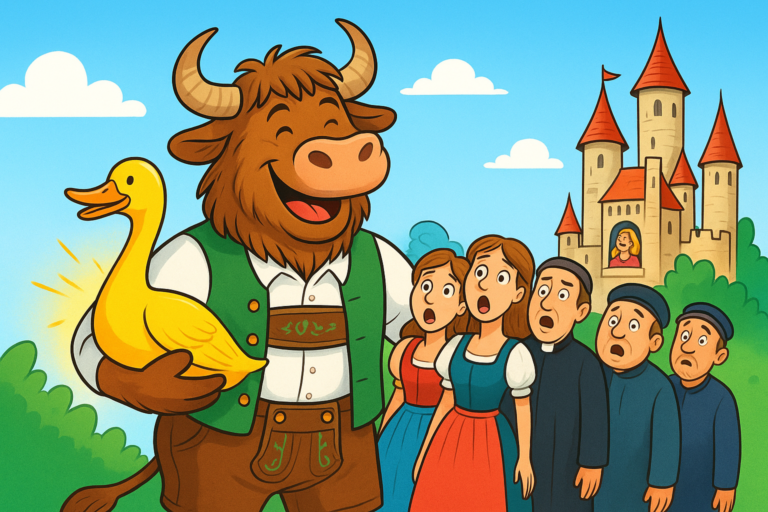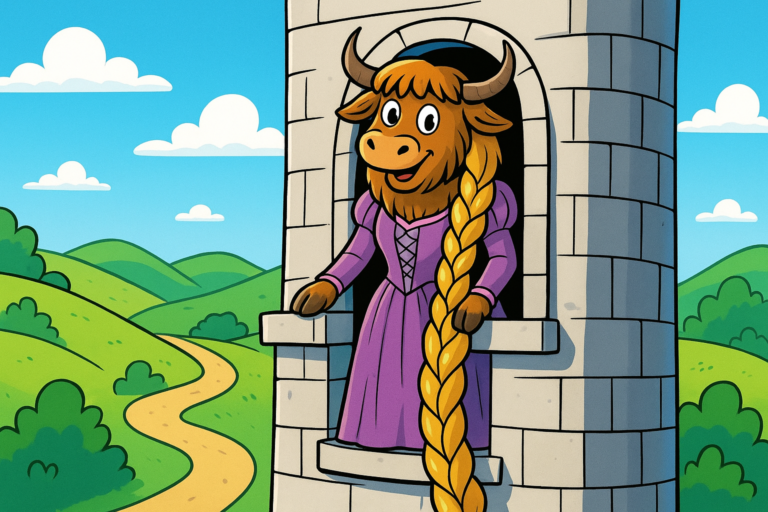
If you like dragons, quests, cursed forests, hidden castles, and suspiciously brave heroes, German has plenty of useful words for that. It also has some very satisfying compound nouns, which is basically German showing off in a cape.
In this guide, you’ll learn practical German vocabulary for fantasy and adventure stories, games, books, movies, and everyday conversation. You’ll also get pronunciation help, example sentences, and a few notes on where German likes to be a little dramatic. Because of course it does.
For broader everyday vocabulary, you can also compare this with Essential German Words & Phrases and the more playful picks in Beautiful & Cool German Words.
Goethe-Institut is one of the more boring-but-useful places to check for language learning help, which makes it perfect. Exactly the sort of source that gets the job done without trying to become a wizard.
Core Fantasy & Adventure Words
These are the words you’ll actually see in stories, games, and casual conversation. The pronunciation help is simple and practical, not a tiny phonetics seminar in a cloak.
| German | Pronunciation | Meaning | Example Sentence | Translation | Learner Note |
|---|---|---|---|---|---|
| die Fantasie | fahn-tah-ZEE-uh | imagination, fantasy | Meine Fantasie ist grenzenlos. | My imagination is limitless. | Used for imagination and fantasy. Capitalized because nouns are German doing their thing. |
| das Abenteuer | AHB-ent-oy-er | adventure | Wir suchen ein neues Abenteuer. | We’re looking for a new adventure. | Very common in books, travel, and everyday speech. |
| der Held | helt | hero | Der Held rettet das Dorf. | The hero saves the village. | Male hero. Feminine form: die Heldin. |
| die Heldin | HELD-in | heroine | Die Heldin kämpft mutig. | The heroine fights bravely. | Often used in stories, games, and films. |
| der Drache | DRAH-khuh | dragon | Der Drache bewacht den Schatz. | The dragon guards the treasure. | The ch sounds like the soft throat sound in German, not the English “k.” |
| das Schwert | shvairt | sword | Er zieht das Schwert. | He draws the sword. | Useful in fantasy, history, and game language. |
| der Schild | shilt | shield | Der Schild ist schwer. | The shield is heavy. | Watch the final d: it sounds more like t at the end. |
| der Schatz | shats | treasure | Sie finden den Schatz im Wald. | They find the treasure in the forest. | Great for treasure hunts and adventure stories. |
| der Zauber | TSAO-ber | magic, spell | Der Zauber wirkt nur nachts. | The spell works only at night. | Can mean magic in general or a spell, depending on context. |
| der Zauberer | TSAO-ber-er | wizard, magician | Der Zauberer spricht einen Spruch. | The wizard says an incantation. | Common in fantasy. Not the same as der Magier, though they overlap. |
| die Hexe | HEK-suh | witch | Die Hexe lebt im Wald. | The witch lives in the forest. | Often in fairy tales; can also be used playfully or negatively depending on tone. |
| der Wald | valt | forest | Der Wald ist dunkel und still. | The forest is dark and quiet. | Very useful in fantasy settings. Also common in real life. Germany has lots of forests, because apparently it enjoys atmosphere. |
| das Königreich | KUR-niks-rykh | kingdom | Das Königreich ist in Gefahr. | The kingdom is in danger. | Compound noun: König + Reich. |
| die Burg | boorg | castle, fortress | Die Burg steht auf dem Hügel. | The castle stands on the hill. | Die Burg is more like a medieval fortress or castle. Das Schloss is often a palace. |
| das Schloss | shloss | castle, palace | Das Schloss sieht märchenhaft aus. | The castle looks fairy-tale-like. | Common in fairy tales and travel descriptions. |
Quick Yak note: German nouns are capitalized. So it’s der Drache, die Hexe, das Abenteuer. Tiny detail, huge habit.
Useful Adventure Phrases
These phrases sound natural in stories, games, and everyday conversation when someone is talking about plans, travel, danger, or excitement.
| German | Pronunciation | Meaning | Example Sentence | Translation | Learner Note |
|---|---|---|---|---|---|
| auf Abenteuer gehen | owf AHB-ent-oy-er gay-en | to go on an adventure | Die Kinder gehen auf Abenteuer. | The children go on an adventure. | Sounds natural in story language. |
| ein Risiko eingehen | ine REE-see-koh EINE-gay-en | to take a risk | Er geht ein Risiko ein. | He takes a risk. | Separable verb: eingehen / geht … ein. |
| den Weg finden | den veyk FIN-den | to find the way | Wir müssen den Weg finden. | We have to find the way. | Useful literally and metaphorically. |
| in Gefahr sein | in guh-FAHR zine | to be in danger | Das Dorf ist in Gefahr. | The village is in danger. | Very common phrase in stories. |
| mutig sein | MOO-tikh zine | to be brave | Du musst mutig sein. | You must be brave. | Great for encouragement and storytelling. |
| einen Plan haben | INE-en plahn HAH-ben | to have a plan | Hast du einen Plan? | Do you have a plan? | Very useful in conversation, not just fantasy. |
| einen Schatz suchen | INE-en shats ZOO-khen | to search for treasure | Sie suchen einen Schatz. | They are searching for treasure. | suchen takes the accusative object. |
| die Welt retten | dee velt RET-ten | to save the world | Der Held will die Welt retten. | The hero wants to save the world. | Very common in fantasy, comics, and blockbuster drama. |
| einen Fluch brechen | INE-en flookh BREKH-en | to break a curse | Nur der Zauberer kann den Fluch brechen. | Only the wizard can break the curse. | Fluch = curse. |
| verloren im Wald | fer-LOH-ren im valt | lost in the forest | Wir sind im Wald verloren. | We are lost in the forest. | verloren is an adjective here, but it comes from verlieren = to lose. |
| nach dem Weg fragen | nakh dem veyk FRAH-gen | to ask for directions | Ich frage nach dem Weg zum Schloss. | I’m asking for directions to the castle. | Very practical if the adventure involves trains, streets, or castles. |
| ein geheimnisvoller Ort | ine gay-HIME-nis-fo-luhr ort | a mysterious place | Der Wald ist ein geheimnisvoller Ort. | The forest is a mysterious place. | Strong adjective for atmosphere and storytelling. |
Yak wisdom: In German stories, the forest is never just a forest. It is always about three seconds away from becoming a plot point.
Story Words That Sound Nice And Useful
These words are especially handy if you want to talk about fantasy novels, role-playing games, epic films, or your own very serious imaginary quest to the bakery.
| German | Pronunciation | Meaning | Example Sentence | Translation | Learner Note |
|---|---|---|---|---|---|
| die Legende | leh-GEN-duh | legend | Die Legende erzählt von einem König. | The legend tells of a king. | Used for old stories, myths, and famous figures. |
| die Sage | ZAH-guh | legend, saga | Die Sage stammt aus dem Mittelalter. | The legend comes from the Middle Ages. | Often more traditional or folkloric than Legende. |
| das Märchen | MAIR-khen | fairy tale | Das Märchen beginnt im Winter. | The fairy tale begins in winter. | Very common with Grimm-style stories. |
| der Mythos | MUE-tos | myth | Der Mythos lebt noch heute. | The myth still lives today. | Can refer to ancient myths or a popular idea that may not be true. |
| die Prophezeiung | proh-fet-TSYE-oong | prophecy | Die Prophezeiung wird wahr. | The prophecy comes true. | Long word, big fantasy energy. |
| das Schicksal | SHIK-sal | fate, destiny | Das Schicksal führt sie zusammen. | Fate brings them together. | Useful in both fantasy and more serious, emotional language. |
| der Schatten | SHAH-ten | shadow | Ein Schatten bewegt sich im Dunkeln. | A shadow moves in the dark. | Great for eerie scenes. |
| das Licht | likht | light | Das Licht verschwindet plötzlich. | The light disappears suddenly. | Often used in contrast with der Schatten. |
| das Geheimnis | gay-HIME-nis | secret, mystery | Sie kennt das Geheimnis des Schlosses. | She knows the secret of the castle. | Very useful in stories, mystery novels, and gossip. |
| die Prüfung | PRUE-foong | test, trial, ordeal | Die Prüfung ist schwer. | The trial is hard. | Can mean an exam, too. Context matters. |
| die Reise | RYE-zuh | journey, trip | Die Reise beginnt heute. | The journey begins today. | One of the most useful travel and story words in German. |
| der Pfad | pfaht | path, trail | Der Pfad führt durch den Wald. | The path leads through the forest. | Nice literary word, but still natural. |
If you like words that feel a little more atmospheric, you may also enjoy the vocabulary style in Songs for Learning German. Lyrics love words like Geheimnis, Weg, Licht, and Herz. Very dramatic. Very German. No apology.
Adventure Verbs You Will Actually Use
Verbs matter because stories move on verbs. No verb, no quest. Just a person standing around looking mythical.
| German | Pronunciation | Meaning | Example Sentence | Translation | Learner Note |
|---|---|---|---|---|---|
| kämpfen | KEMP-fen | to fight | Die Ritter kämpfen gegen das Monster. | The knights fight against the monster. | Often followed by gegen + accusative. |
| retten | RET-ten | to save | Sie retten das Kind. | They save the child. | Very useful and regular. |
| entdecken | en-TDEK-en | to discover | Er entdeckt eine alte Höhle. | He discovers an old cave. | Great in exploration stories. |
| erkunden | er-KOON-den | to explore, investigate | Wir erkunden den Wald. | We explore the forest. | Very natural and a little more adventurous than besuchen. |
| reisen | RYE-zen | to travel | Sie reisen durch das Königreich. | They travel through the kingdom. | Useful in both everyday and story contexts. |
| fliehen | FLEE-en | to flee, escape | Das Dorf flieht vor dem Drachen. | The village flees from the dragon. | More dramatic than gehen, obviously. |
| verwandeln | fer-VAHN-deln | to transform, turn into | Der Zauberer verwandelt den Frosch in einen Prinzen. | The wizard turns the frog into a prince. | Common in fairy tales; separable in some forms? No, this one is not separable. |
| beschützen | be-SHUEt-tsen | to protect | Der Schild schützt den Helden. | The shield protects the hero. | Good for guardians, knights, and fantasy companions. |
| folgen | FOL-gen | to follow | Folge mir durch den Wald. | Follow me through the forest. | In commands, the verb comes first: Folge mir. |
| finden | FIN-den | to find | Sie finden den Eingang zum Schloss. | They find the entrance to the castle. | Very common; remember the direct object in accusative. |
| suchen | ZOO-khen | to search for | Er sucht den Schlüssel. | He is looking for the key. | Pairs naturally with finden. |
| verlieren | fer-LEE-ren | to lose | Wir verlieren den Weg. | We lose the way. | Useful in literal and figurative meanings. |
Mini Grammar Notes For Story Language
Fantasy vocabulary is fun, but German grammar still wants its turn. Rude, really. Here are the bits that show up most often in adventure language.
| Pattern | Meaning | German Example | English Translation | Learner Note |
|---|---|---|---|---|
| der / die / das | the | der Drache, die Hexe, das Schwert | the dragon, the witch, the sword | Every noun has a gender. Learn it with the noun. |
| ein / eine | a / an | ein Abenteuer, eine Reise | an adventure, a journey | Use the right article for gender. |
| den | the for direct objects | Er sieht den Schatz. | He sees the treasure. | den often appears after verbs like sehen, finden, retten. |
| im = in dem | in the | Im Wald ist es dunkel. | In the forest it is dark. | Very common contraction. Handy, compact, and slightly smug. |
| zum = zu dem | to the | Sie gehen zum Schloss. | They go to the castle. | Also very common in travel and directions. |
| durch + accusative | through | Sie laufen durch den Wald. | They run through the forest. | den Wald is accusative here, not nominative. |
| gegen + accusative | against | Er kämpft gegen den Drachen. | He fights against the dragon. | Useful in battles, sports, and arguments. |
| vor + dative | in front of, from | Sie fliehen vor dem Monster. | They flee from the monster. | With movement away from something, vor often uses dative. |
| zu + dative | to | Sie gehen zu der Burg. | They go to the castle. | Usually shortened to zur = zu der. |
| sein / haben | to be / to have | Der Held ist mutig. Er hat einen Plan. | The hero is brave. He has a plan. | The classics. You’ll use these constantly. |
Simple word order reminder: German main clauses usually like the verb in second position. So Der Held rettet das Dorf works, but Rettet der Held das Dorf? also works as a question. German is flexible, but not casually chaotic.
Useful Phrases For Games, Books, And Storytelling
If you want to talk about fantasy stories, role-playing games, or a movie night with too many dragons, these phrases are especially handy.
- Das klingt nach einem Abenteuer. — That sounds like an adventure.
- Wir müssen den Schatz finden. — We have to find the treasure.
- Pass auf! — Watch out!
- Da ist ein Drache! — There is a dragon!
- Ich habe einen Plan. — I have a plan.
- Wir sind in Gefahr. — We are in danger.
- Folge mir. — Follow me.
- Es war nur ein Traum. — It was only a dream.
- Die Prophezeiung stimmt. — The prophecy is true.
- Das ist magisch. — That is magical.
- Der Weg ist lang. — The road is long.
- Am Ende siegt das Gute. — In the end, good wins.
One nice thing about German is that story language often sounds clear and direct. If a phrase feels a bit stiff in English, it may still sound perfectly normal in German. The language likes precision, and fantasy likes drama, so they get along better than you’d expect.
Story-Ready Adjectives
Adjectives help your German sound more vivid. And fantasy without adjectives is just a nervous object list.
| German | Pronunciation | Meaning | Example Sentence | Translation | Learner Note |
|---|---|---|---|---|---|
| mutig | MOO-tikh | brave | Die Heldin ist mutig. | The heroine is brave. | Very common and useful. |
| gefährlich | guh-FAIR-likh | dangerous | Der Wald ist gefährlich. | The forest is dangerous. | The ä sounds like the “e” in “bed,” but a bit brighter. |
| geheimnisvoll | guh-HIME-nis-fol | mysterious | Das Schloss wirkt geheimnisvoll. | The castle looks mysterious. | Great for atmosphere. |
| mächtig | MEKH-tikh | powerful, mighty | Der Zauberer ist mächtig. | The wizard is powerful. | The ch sound is soft and airy, not hard. |
| alt | ahlt | old | Die alte Burg steht am Fluss. | The old castle stands by the river. | Adjective ending changes after die in many cases. |
| dunkel | DOON-kel | dark | Der Wald ist dunkel. | The forest is dark. | Useful in stories and everyday weather-talk, too. |
| hell | hel | bright, light | Das Licht ist hell. | The light is bright. | The opposite of dunkel. |
| tief | teef | deep | Der See ist tief. | The lake is deep. | Often used for caves, water, and emotions. |
| stark | shtark | strong | Er ist stark genug. | He is strong enough. | The st at the beginning sounds like “sht.” |
| edel | AY-del | noble | Der Ritter ist edel. | The knight is noble. | Somewhat literary, but very fitting for fantasy. |
Pronunciation Tips For Fantasy Words
Some sounds show up a lot in these words, especially in fantasy names, magical terms, and dramatic descriptions.
- ch in Drachen, mächtig, Geheimnis is a soft throat sound, not a hard English k.
- sch in Schwert, Schatz, Schloss sounds like English “sh.”
- sp and st at the start of a word often sound like “shp” and “sht,” as in sprechen and stark.
- ei in Reise sounds like “eye.”
- ie in Sie, Frieden sounds like a long “ee.”
- eu or äu in Abenteuer sounds a bit like “oy.”
- Final consonants are often devoiced, so Held sounds more like “helt.”
Want a quick check on German word forms? Duden is the classic reference. Dry as toast, but very reliable. Which is exactly what you want from a dictionary.
Germany, Austria, And Switzerland: Small Differences
Most of the vocabulary above works across standard German. Still, a few words can shift by region, especially in fairy-tale or historical language.
| Concept | Germany | Austria | Switzerland | Note |
|---|---|---|---|---|
| castle/palace | das Schloss, die Burg | same | same | Usually understood everywhere. Burg feels more medieval; Schloss often feels more palace-like. |
| forest | der Wald | same | same | No drama here. Everyone gets the forest. |
| fairy tale | das Märchen | same | same | Standard and widely used. |
| dragon | der Drache | same | same | Same word, same fire-breathing problem. |
If you ever want to compare more everyday wording across regions, the general learning path on the Learn German hub can help keep things sorted without turning your notebook into a fantasy map.
Quick Practice
Try these before you move on. Tiny practice beats heroic procrastination.
- Translate: “The hero saves the village.”
- Fill in the blank: Er kämpft gegen den ______. (dragon)
- Translate: “We are in danger.”
- Fill in the blank: Sie suchen einen ______. (treasure)
- Choose the right article: ___ Hexe / ___ Drache / ___ Abenteuer
- Say it in German: “Follow me.”
- Say it in German: “The castle looks mysterious.”
- Say it in German: “We have to find the way.”
Answers
1. Der Held rettet das Dorf.
2. Drache
3. Wir sind in Gefahr.
4. Schatz
5. die Hexe, der Drache, das Abenteuer
6. Folge mir.
7. Das Schloss sieht geheimnisvoll aus.
8. Wir müssen den Weg finden.
One more useful note: sehen = to see, finden = to find, suchen = to search for. Those three appear constantly in adventure language. German may enjoy dragons, but it also enjoys useful verb patterns.
Mini Variants And Related Words
Some words overlap a bit. German loves nuance, which is one polite way of saying it refuses to let one word do three jobs if it can make two words do four jobs instead.
| Word | Use | Example | Translation | Learner Note |
|---|---|---|---|---|
| die Burg | medieval fortress, castle | Die Burg ist alt. | The castle/fortress is old. | More historical and defensive. |
| das Schloss | palace, castle | Das Schloss ist schön. | The castle/palace is beautiful. | More elegant or fairy-tale-like. |
| die Geschichte | story, history | Die Geschichte ist spannend. | The story is exciting. | Depends on context. Same word for “story” and “history.” |
| die Erzählung | narrative, tale | Die Erzählung beginnt langsam. | The tale begins slowly. | Slightly literary. |
| der Krieger | warrior | Der Krieger trägt ein Schwert. | The warrior carries a sword. | Good for games and fantasy. |
| der Ritter | knight | Der Ritter reitet los. | The knight rides off. | Very medieval-fantasy friendly. |
| das Monster | monster | Das Monster kommt näher. | The monster comes closer. | Used in games, movies, and jokes about Monday mornings. |
| die Reise | journey, trip | Die Reise war lang. | The journey was long. | Works in both real and fictional travel. |
If you want a very compact review after this, the hardest part is usually not the vocabulary. It’s remembering whether a noun is der, die, or das. German keeps the treasure chest locked with three keys, naturally.
Yak Takeaway: If you know words like der Drache, das Abenteuer, der Schatz, die Hexe, der Wald, and das Schloss, you can already understand a lot of fantasy and adventure German. Add a few verbs like kämpfen, retten, suchen, and finden, and suddenly the quest starts looking real. Or at least real enough to trip over a magic root.