Read this story on Yak Yacker with clickable word help, full story audio, and lesson notes below the text.
This version is written for English-speaking learners who want a friendly reading experience in English.
I live in a by the sea. My name is Jim Hawkins. One day, a comes to our inn. He carries a . He is very afraid of a man with one leg. He tells me, 'Call me Captain. Watch out for a sailor with one leg!'
The captain is . He . I am very scared. But then I and find a map! It is a . I show it to Dr. Livesey and Squire Trelawney. 'This is Captain Flint's treasure!' says the squire. 'We must find it!'
We go to Bristol. We , the Hispaniola. Squire Trelawney a cook. His name is Long John Silver. He has one leg! But he is a very nice man. He and says, 'Ah, Jim! I will cook the best food for you.'
I like Silver. But one night, I am in an . I hear Silver . He says, 'We will . Then we find the treasure. And we the captain and the others.' My heart beats fast. Silver is a !
We get to the island. I from the pirates. In the forest, I meet a . He looks . 'I am Ben Gunn,' he says. 'I was on Flint's ship. I know where the treasure is. I can .'
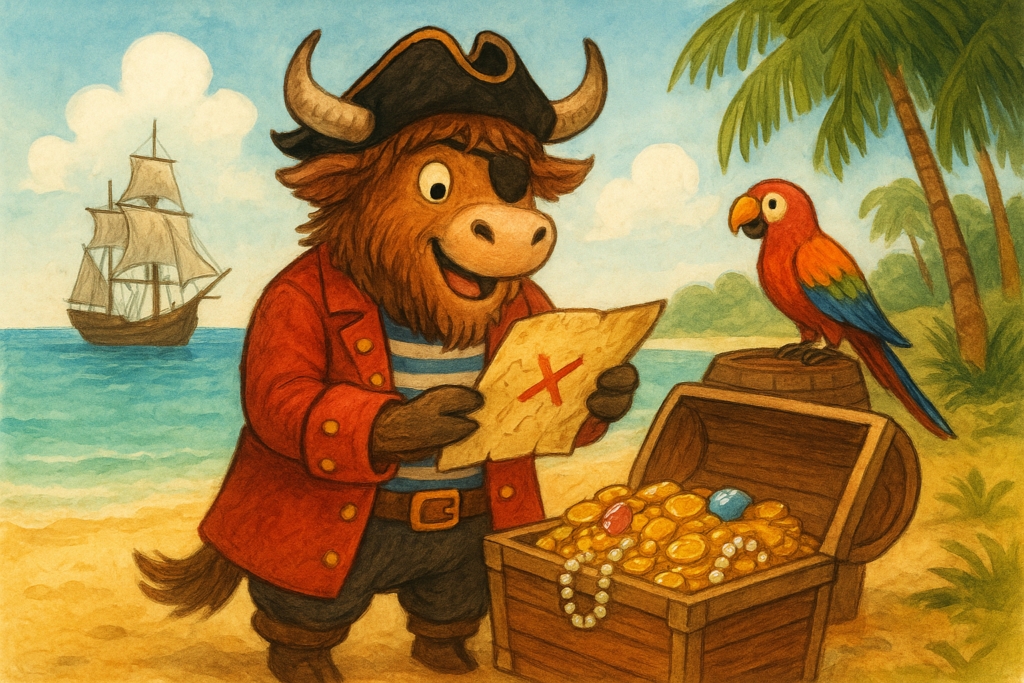
Silver and his men want the map. We . There is a . But Ben Gunn shows us a . The treasure is there! Gold coins, jewels, shiny things. We all , 'Hooray! We found it!'
We take the treasure. We leave some pirates on the island. Silver . We sail home. The Hispaniola is full of gold. I am happy. But I still remember the . And sometimes, I .
I live in a small hotel near the ocean. My name is Jim Hawkins. A large, tough man arrives one day. He has a heavy box. He fears a one-legged man. He says, "Call me Captain. Beware of a sailor with one leg!"
The captain gets ill and dies. I am frightened. Then I open his chest and discover a map. It is a map to treasure. I show Dr. Livesey and Squire Trelawney. The squire says, "This is Captain Flint's treasure! We must go find it!"
We travel to Bristol and purchase a ship called the Hispaniola. The squire hires a cook named Long John Silver. He has only one leg but seems kind. He smiles and tells me, "Jim, I'll make you the best meals."
I trust Silver at first. However, one night I hide in an apple barrel. I overhear Silver plotting. He says, "We'll seize the ship, then find the treasure, and kill the captain and the others." I realize Silver is a pirate.
We reach the island. I escape from the pirates and meet a wild-looking man in the woods. He says, "I'm Ben Gunn. I sailed with Flint. I know the treasure's location. I can assist you."
Silver and his crew demand the map. We clash in a fight. Ben Gunn leads us to a hidden cave. Inside is the treasure: gold, gems, and bright objects. We cheer, "Hooray! We've discovered it!"
We load the treasure and abandon some pirates. Silver gets away. We sail back with the ship full of gold. I feel joy but recall the journey. Occasionally, I dream of the ocean.
Jim's story is full of useful words. An inn is a small hotel where travellers can sleep and eat. A chest is a strong wooden box, often with a lock. Of course, a treasure map shows where gold and jewels are hidden!
Can you use these words to describe the story? For example, 'Jim lives in an inn by the sea.' Try making your own sentences with the new words.
- inn - a small hotel or pub with rooms
- chest - a large, strong box (like a pirate's chest!)
- treasure map - a paper that shows hidden gold and jewels
- pirate - a person who attacks ships and steals things
Jim's adventure is a story from the past, so he uses the past simple tense. Many verbs add -ed: I open the chest → I opened the chest. But some verbs are irregular, like see → saw, hear → heard, run → ran.
Look at these examples from the story: 'I heard Silver speak.' 'We found the treasure!' Can you find other past verbs? Try telling your own short story using the past simple.
- Regular past: open → opened, show → showed, shout → shouted
- Irregular past: come → came, die → died, fight → fought, go → went
- Tip: The verb 'be' changes to was/were. 'I am scared' → 'I was scared.'
Jim feels many emotions during the adventure. He is scared when the captain dies, excited when he finds the map, and happy when they find the treasure. We can use short phrases to express these feelings.
You can also give warnings or share excitement with friends. Try these phrases when you tell your own stories!
- I'm scared. / I was very afraid.
- My heart beats fast. (= I am nervous or excited)
- Hooray! / We found it! (= to show happiness)
- Watch out! / Look out! (= a warning, like 'be careful!')
Now it's your turn! Can you think of a small adventure from your life? Maybe a trip to a new place, a surprise event, or a fun day with friends. Use the past simple to tell your story.
You can start like Jim: 'I live…' → 'I lived…' or 'One day, I went to…'. Don't worry about mistakes-just have fun sharing! You could even imagine finding a treasure map. What would you do next?
- Tell a partner or write a short paragraph.
- Use 5-6 past simple verbs (regular or irregular).
- Describe how you felt: scared, excited, happy?
- Use one warning or exclamation from today's lesson!
Treasure Island comes from an older public-domain story tradition and is best known as a public_domain_story_retelling. This Yak Yacker article is an original learner retelling based on public-domain source material, so the wording here is simplified for modern learners rather than copied from one old edition.
Older printings, translations, and retellings of this story can vary quite a bit. This version is adapted for A2 Elementary learners studying English.
If you want to keep going, browse more in our English section and review the A2 English Vocabulary List. After that, try 1,200 English Phrases and Expressions for another useful next step.