This A2 Elementary retelling of Thumbelina keeps the plot clear for learners while still giving the story some atmosphere and momentum. A woman wanted a little child. The next day, a beautiful flower grew.
This version is written for English-speaking learners and includes clickable word help inside the story, full story audio, and lesson notes after the reading. It is free to use on Yak Yacker and is designed to feel natural, readable, and manageable in English.
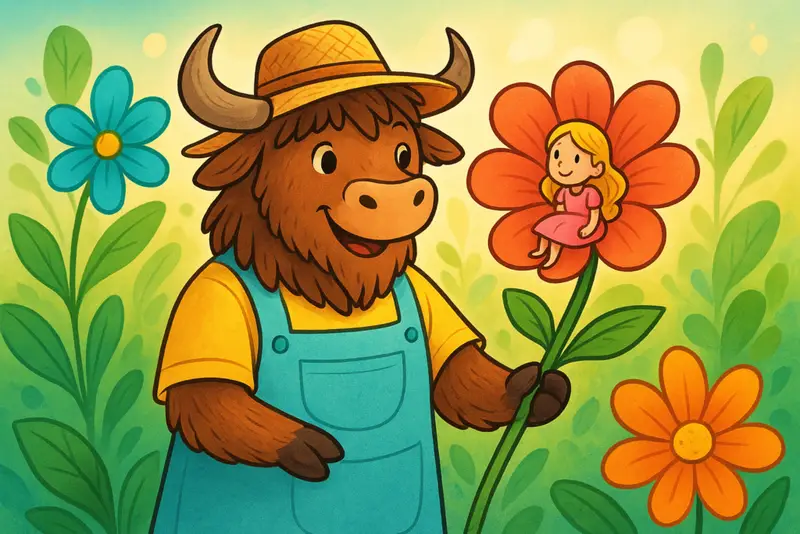
A woman wanted a little child. She planted a . The next day, a grew. Inside the flower sat a . 'Oh, you are so small!' said the woman. 'I will call you Thumbelina.'
One night, a big toad came. She Thumbelina in her sleep. 'You will my son!' the toad said. Thumbelina woke up on a . She cried and cried. 'I don't want to marry a toad!'
Little fish heard her cry. They the lily stem. The leaf down the river. A butterfly her with a string. 'Thank you, friend!' said Thumbelina. But a beetle saw her. He her and carried her away.
The beetle took her to his tree. But other beetles said, 'She has only two legs! She is !' The beetle didn't want her anymore. He . Thumbelina was sad. She lived by herself in the .
Winter came. It was cold and snowy. Thumbelina found a mouse's house. 'Come in, poor child,' said the mouse. 'You can stay. But you must and .' The mouse had a friend, a mole. 'Marry him,' said the mouse. 'He is rich and has a .' But Thumbelina did not like the .
In the tunnel, she found a swallow. He was . 'Poor bird,' she whispered. She him all winter. When spring came, the swallow was strong. 'Thank you, dear child,' he said. 'I must to the sunny land. Come with me!'
Thumbelina went with the swallow. They fields and flowers. In a sunny land, the swallow put her on a big flower. Inside was a tiny prince. 'You are beautiful,' he said. 'Will you ?' Thumbelina smiled. 'Yes, I will!' They lived in the flowers.
A woman wanted a small child. She planted a special seed. The next day, a pretty flower grew. Inside was a very small girl. The woman said, "You are so tiny! I will name you Thumbelina."
One night, a large toad came and took Thumbelina while she slept. The toad said, "You will marry my son!" Thumbelina woke up on a lily leaf. She cried a lot and said, "I do not want to marry a toad!"
Small fish heard her crying. They bit the lily stem. The leaf floated away on the river. A butterfly used a string to pull her. Thumbelina said, "Thank you, friend!" Then a beetle saw her, grabbed her, and took her away.
The beetle took her to his tree. Other beetles said, "She only has two legs! She is ugly!" So the beetle did not want her. He left her. Thumbelina was sad and lived alone in the forest.
Winter arrived, cold and snowy. Thumbelina found a mouse's home. The mouse said, "Come in, poor child. You can stay, but you must clean and tell stories." The mouse had a mole friend. She said, "Marry the mole. He is rich with a warm home." But Thumbelina did not like the dark tunnel.
In the tunnel, she found a hurt swallow. She whispered, "Poor bird," and took care of him all winter. In spring, the swallow was better. He said, "Thank you, dear child. I must fly to the warm land. Come with me!"
Thumbelina flew with the swallow over fields and flowers. In a sunny land, he placed her on a big flower. Inside was a tiny prince. He said, "You are beautiful. Will you marry me?" She smiled and said, "Yes!" They lived happily among the flowers.
Let's look at some useful words from Thumbelina's adventure. These are words you can use in everyday English.
Notice how many nature words appear, like flower, seed, river, and woods. Thumbelina's world is full of tiny things!
- seed - a small thing you plant to grow a plant
- lily pad - a big flat leaf on water
- swallow - a bird that flies south in winter
- tunnel - a path under the ground
The story uses the past simple to tell what happened. We add -ed to regular verbs (planted, floated), but many common verbs are irregular.
Try to spot the past forms as you read. Here are some from the story:
- Regular: wanted → wanted, planted → planted, floated → floated (but note: cry → cried)
- Irregular: grow → grew, take → took, come → came, say → said, leave → left
- When you retell a story, remember to change the verb to past. 'She wakes up' becomes 'She woke up.'
Adjectives help us see and feel the story. Thumbelina is tiny, beautiful, sad, and later happy. The toad is big, the mouse is kind, the mole's tunnel is dark.
You can use adjectives before a noun ('a tiny girl') or after the verb 'be' ('She is small').
- small / tiny → very little
- beautiful → very nice to look at
- rich → having a lot of money or comfort
- warm → not cold, cozy
Now it's your turn! Try retelling the story in your own words. Don't worry about being perfect-just use the past simple and some of the new words.
You might also imagine a different ending. What if Thumbelina stayed with the mouse? What if she met another tiny friend? Play with the story, and make it yours.
Thumbelina comes from the Danish / Andersen tradition and is best known as a literary fairy tale. This Yak Yacker article is an original learner retelling based on Andersen, 1835; public domain, so the wording here is simplified for modern learners rather than copied from one old edition.
Older printings, translations, and retellings of this story can vary quite a bit. The original audience was usually kids, but this version is adapted for A2 Elementary learners studying English. Good small-world adventure.
If you want to look into the source tradition, start with Project Gutenberg.
If you want to keep going, browse more in our English section and review the A2 English Vocabulary. After that, try Adjectives & Adverbs for another useful next step.