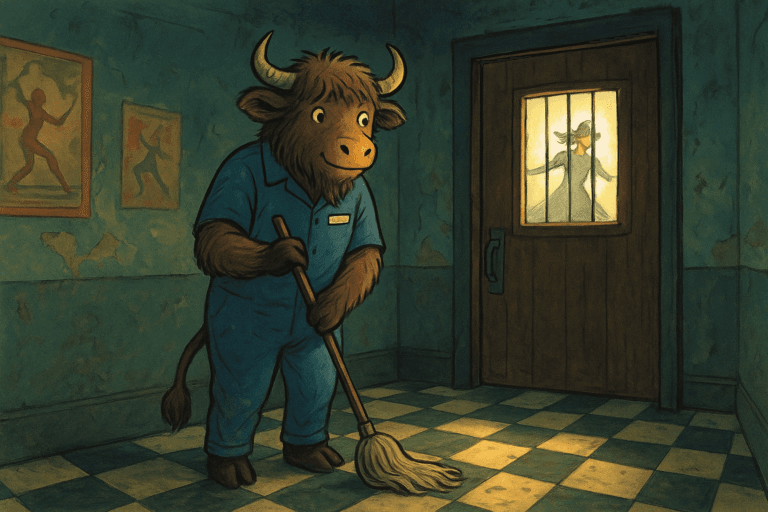
Welcome to this free English reading experience! Today, we're sharing the classic fairy tale of The Pied Piper of Hamelin, retold in clear, B1 intermediate English. A strange musician arrives in a town full of rats. With his magical pipe, he creates a powerful sound that leads to fury and chaos-but also teaches an important lesson about promises and trust.
In this interactive reader, you can click on any word you don't know to see its meaning instantly. Listen to the story audio as you read, and check the lesson notes after the story to learn new vocabulary and grammar. Whether you're studying alone or with a teacher, this graded reader makes learning English fun and easy.
The town of Hamelin had a . Rats were everywhere-in the kitchens, the bedrooms, even the mayor's soup. The people were and . 'If only we could these awful creatures!' they cried.
One sunny morning, a stranger at the town gate. He was tall and thin, with bright, colorful clothes and a little wooden pipe in his hand. His eyes were calm but . 'I can your rat problem,' he said softly.
The mayor to meet him. 'If you really can help us, I'll give you a thousand gold coins!' he promised. The piper smiled. 'It's a . Listen carefully.' He lifted his pipe to his lips.
A magical floated through the air. It was like whispering birdsong mixed with dancing sunlight. Everyone in the square stopped to listen. The piper was playing with his eyes , as if he were dreaming.
Soon, another sound joined the music-the of tiny feet. Rats were pouring out of every house, their ears twitching. They were leaving their hiding places, completely by the tune.
The piper walked slowly toward the river, still playing. The rats followed him in a huge, river of fur. When he reached the water's edge, he played one high, sharp note. The rats jumped in and beneath the surface.
The town was . People laughed and cheered. They hugged each other in the street. But when the piper returned for his payment, the mayor's face turned . 'A thousand gold coins? Don't be ridiculous! Here, take fifty. That's more than enough.'
The piper's expression became . His eyes flashed like lightning. 'You ,' he said in a quiet, dangerous voice. 'If you don't give me what we agreed, you will feel my anger.' The mayor just shrugged and walked away.
That evening, the piper stood in the empty square. He played a new melody-sadder and more than before. It was like the sound of forgotten dreams. Soon, doors began to open. The children of Hamelin stepped out, their eyes wide with .
One by one, they the piper, laughing and spinning. The music their hearts, and they couldn't resist. 'Where are we going?' a little girl asked. 'To a place where promises are kept,' the piper replied, still playing.
The children danced out of the town gate and into the hills. The piper them toward a great, shining mountain. As they got closer, a hidden door opened in the rock, and the music them inside. The door closed with a deep boom.
Back in Hamelin, the parents were and full of . 'Where are our children?' they screamed at the mayor. 'This is your fault! If you had kept your word, none of this would have happened!' The mayor turned pale and began to tremble.
He quickly gathered the full payment and ran to the mountain. He fell on his knees and cried, 'Please me! I was and foolish. Take the gold and bring back our children!' There was a long silence. Then the mountain door opened again.
The piper appeared, no longer angry. He saw the mayor's real regret. 'I will play a happy tune now,' he said. 'If you learn to always keep your promises, the children will follow me home.' And so they did, dancing joyfully back to their families.
The town of Hamelin had a big rat problem. Rats were everywhere, even in the mayor's soup. The people were disgusted and wanted them gone.
A tall, thin stranger with colorful clothes and a pipe arrived at the town gate. He said he could solve the rat problem.
The mayor promised a thousand gold coins if the piper helped. The piper agreed and began to play.
The piper played a magical melody that sounded like birdsong and sunlight. Everyone in the square stopped to listen.
Rats came out of every house, enchanted by the music. They scurried toward the piper.
The piper walked to the river, still playing. The rats followed and jumped into the water when he played a sharp note.
The town celebrated, but when the piper asked for payment, the mayor refused to pay the full amount and offered only fifty coins.
The piper became furious. He warned the mayor to keep his promise, but the mayor walked away.
In the evening, the piper played a sad, enchanting tune. The children of Hamelin came out, wide-eyed.
The children followed the piper, dancing and laughing. He said they were going where promises are kept.
They went out of the town and into the hills. A hidden door opened in a mountain, and they went inside before it closed.
The parents were terrified and blamed the mayor for not keeping his word. The mayor turned pale.
The mayor brought the full payment to the mountain, begged for forgiveness, and asked for the children back.
The piper saw the mayor's regret and played a happy tune. The children danced back home, and the piper said that promises must always be kept.
This story is really about trust. The mayor makes a promise, then tries to pay less than agreed, and that choice causes a much bigger problem. In English, this kind of lesson often appears in stories about fairness, honesty, and consequences.
When you read or tell a story like this, notice how one small broken promise can change everything. That is a useful idea in real life too: words matter, especially when other people are depending on them.
- A promise is a serious agreement.
- Broken promises can damage trust quickly.
- Stories often show consequences through dramatic events.
The story uses vivid words to make the scene feel alive. Words like disgusted, frightened, furious, and overjoyed show strong feelings very clearly. Verbs like scurrying, pouring out, and vanished help you picture movement in a lively way.
Try learning vocabulary in groups. For example, calm and sharp describe the piper's eyes, while enchanted and irresistible describe the effect of the music. These words are useful because they add color, not just information.
- disgusted = strongly unhappy with something unpleasant
- furious = extremely angry
- enchanted = deeply charmed or under a spell
- vanished = disappeared suddenly
This story is a great example of how English uses past tenses to build a scene. The simple past moves the story forward: the piper appeared, the mayor promised, the rats followed. The past continuous adds background action: the piper was playing, the rats were pouring out, the children were dancing.
You also see past perfect ideas in the background of the story, especially when the narrator explains what had already happened before another moment. This helps the reader understand the order of events. A good storytelling pattern is: simple past for main events, past continuous for ongoing action, and past perfect when you need to show something earlier.
- Simple past = finished actions in the story
- Past continuous = actions in progress
- Use time order carefully so the story feels clear
- Mix tenses to make the scene more vivid
The story sounds almost like a song because the writer uses rhythm, repetition, and strong images. Phrases like a huge, wriggling river of fur or like whispering birdsong mixed with dancing sunlight make the scene feel magical and memorable. This is a classic storytelling trick: use comparisons to help the reader feel the moment.
If you want to write or retell a story in English, try adding one or two strong images instead of many weak ones. A simple sentence can become much more powerful with a clear detail, especially when you want to show mood, movement, or emotion.
- Use comparisons to create atmosphere
- Choose one strong image instead of several plain ones
- Sound words can make a story feel more alive
The ending gives a clear message: keep your word, especially when other people trust you. That makes the story easy to remember and useful for everyday English, because promises, apologies, and consequences come up in real conversations too.
As you review the story, try retelling it in your own words using past tense verbs and a few vivid adjectives. Small choices like that will help you sound more natural, and a little more like a storyteller with a very sharp pipe.
- Retell the story in 5 to 7 sentences
- Use at least three past tense verbs
- Add one vivid adjective or comparison
The Pied Piper: Sound and Fury comes from the American / William Faulkner tradition and is best known as a modernist novel. This Yak Yacker article is an original learner retelling based on William Faulkner, 1929; public domain in U.S., so the wording here is simplified for modern learners rather than copied from one old edition.
Older printings, translations, and retellings of this story can vary quite a bit. The original audience was usually adult, but this version is adapted for B1 Intermediate learners studying English. Very hard original; retell plot only.
If you want to look into the source tradition, start with Project Gutenberg.
If you want to keep going, browse more in our English section and review the B1 English Vocabulary List. After that, try 1,200 English Phrases and Expressions for another useful next step.