Read this story on Yak Yacker with clickable word help, full story audio, and lesson notes below the text.
This version is written for English-speaking learners who want a friendly reading experience in English.
A crowd stood in the of Boston. It was a in the 1600s. The people were waiting for a young woman named Hester Prynne.
Hester came out of the . She held a baby in her arms. On her chest was a bright red letter 'A'. The crowd and at her.
"Look at the !" a woman said. "She must stand on the for three hours. She is an ." Hester looked at the crowd. She saw a strange man with one shoulder higher than the other. It was her husband, who she thought was lost at sea.
The asked a man, "Who is that woman?" The man answered, "She is Hester Prynne. Her husband sent her here but never came. Now she has a baby, and she won't say who the father is." The young minister Arthur Dimmesdale spoke to Hester. "Tell us the ," he said softly.
Hester shook her head. "My baby must have a , because she does not have an one," she said.
Later, in the prison, Hester was visited by the . He was a doctor and called himself Roger Chillingworth. "I will find the man who us," he told her. "But you must not tell anyone I am your husband."
Hester promised to keep the . After leaving prison, she lived in a small cottage near the town. She made beautiful . Many people still her.
Years passed. Her daughter Pearl grew into a bright and child. She often asked, "Why do you wear the letter, Mother?" Hester replied, "I wear it for a you will understand when you are older."
The minister Dimmesdale became very sick. Chillingworth moved in with him as his doctor. He seemed to enjoy the minister's pain. He saw something hidden in Dimmesdale's .
One night, Dimmesdale went to the where Hester had stood. He cried out in . Hester and Pearl passed by and joined him. Pearl asked, "Will you stand here with us tomorrow?" Dimmesdale said, "Not tomorrow, but one day I will."
A meteor lit up the sky. It looked like the letter 'A'. At that moment, they saw Chillingworth them with a .
Hester decided to help Dimmesdale. She told him that Chillingworth was her husband. "We must here," she said. "Take a ship to Europe. You can be free."
They planned to leave after the . But Chillingworth discovered their plan and booked a ticket on the same ship.
On the great holiday, Dimmesdale gave the most sermon of his life. The crowd cheered. But he looked very weak.
He walked from the church to the . He called Hester and Pearl to him. "I must ," he said to the crowd. "I am the father of this child!" He tore open his shirt. On his chest, or so people said, was a scarlet letter.
He fell down. Pearl kissed him. "I am dying," he said. "God had on me." Then he died. Hester and Pearl left Boston. Many years later, Hester returned alone, still wearing the scarlet letter. She was buried next to Dimmesdale, and their grave shared one stone with the letter 'A'.
A crowd gathered in Boston's marketplace on a summer morning in the 1600s. They were waiting for a young woman, Hester Prynne.
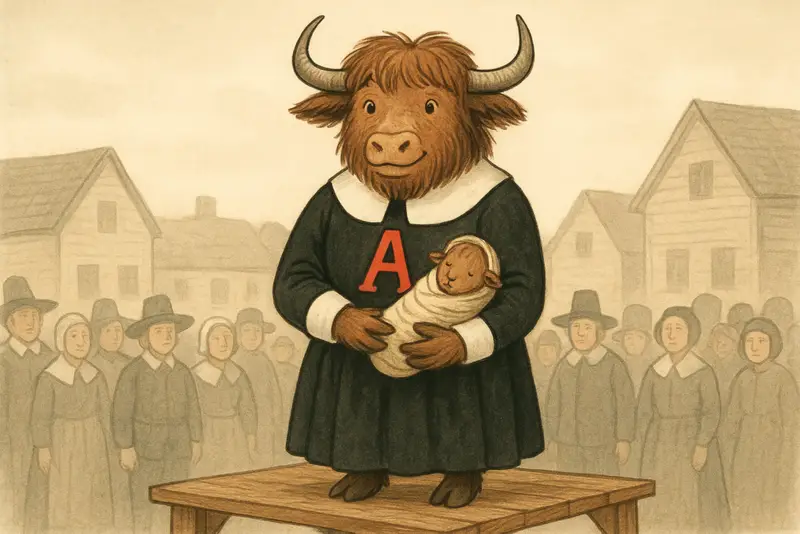
Hester came out of the prison door holding a baby. On her chest was a bright red letter 'A'. The crowd whispered and pointed at her.
A woman said, "Look at the scarlet letter! She must stand on the scaffold for three hours. She is an adulteress." Hester looked at the crowd and saw a strange man with uneven shoulders-her husband, whom she thought was lost at sea.
The stranger asked a man, "Who is that woman?" The man replied, "She is Hester Prynne. Her husband sent her here but never arrived. Now she has a baby and won't name the father." The young minister, Arthur Dimmesdale, softly asked Hester to tell the father's name.
Hester shook her head and said, "My baby must have a heavenly father, since she has no earthly one."
Later, in prison, the strange man visited Hester. He was a doctor calling himself Roger Chillingworth. He told her, "I will find the man who wronged us. But you must not tell anyone I am your husband."
Hester promised to keep the secret. After leaving prison, she lived in a small cottage near town and made beautiful needlework. Many people still looked down on her.
Years passed. Her daughter Pearl grew into a bright, wild child. Pearl often asked, "Why do you wear the letter, Mother?" Hester replied, "I wear it for a reason you'll understand when you're older."
Minister Dimmesdale became very sick. Chillingworth moved in as his doctor and seemed to enjoy watching the minister's pain. He sensed a hidden guilt in Dimmesdale.
One night, Dimmesdale went to the scaffold where Hester had stood. He cried out in pain. Hester and Pearl passed by and joined him. Pearl asked, "Will you stand here with us tomorrow?" Dimmesdale said, "Not tomorrow, but one day I will."
A meteor lit up the sky, shaping like the letter 'A'. At that moment, they saw Chillingworth watching them with a dark smile.
Hester decided to help Dimmesdale. She told him Chillingworth was her husband and said, "We must leave here. Take a ship to Europe; you can be free."
They planned to leave after the election sermon. But Chillingworth discovered their plan and booked a ticket on the same ship.
On the great holiday, Dimmesdale gave his most powerful sermon. The crowd cheered, but he looked very weak.
He walked from the church to the scaffold, calling Hester and Pearl to him. He told the crowd, "I must confess. I am the father of this child!" He tore open his shirt, and people said there was a scarlet letter on his chest.
He fell, and Pearl kissed him. He said, "I am dying. God had mercy on me," then died. Hester and Pearl left Boston. Many years later, Hester returned alone, still wearing the scarlet letter. She was buried next to Dimmesdale, and their grave shared a stone marked with the letter 'A'.
This classic story is full of powerful words. Let's look at some key vocabulary you'll meet again and again.
Learning these will help you understand the story deeply and add richness to your own English.
- scaffold (n.) - a raised wooden platform used for public punishment. In the story, Hester must stand on it while people stare at her. "The crowd watched Hester climb onto the scaffold."
- adulteress (n.) - an old-fashioned word for a married woman who has a relationship with a man who isn't her husband. Nowadays, we just say 'committed adultery'. "The townspeople called Hester an adulteress, but she refused to name the father."
- needlework (n.) - decorative sewing. Hester was an artist with needle and thread, creating beautiful designs even though people judged her. "She supported herself and Pearl by doing fine needlework for the townspeople."
- meteor (n.) - a bright streak of light in the sky caused by a rock from space. Dimmesdale, Hester, and Pearl see one shaped like an 'A'. "That night, a meteor lit up the sky, looking exactly like the letter 'A'."
To tell a good story, you need both past continuous and past simple. The story uses them together to paint a picture and move the action forward.
Past continuous (was/were + -ing) describes something that was happening when another shorter action occurred. It gives background and atmosphere. Past simple shows the main events, one after another.
- Background (past continuous): "A crowd was standing in the marketplace… The people were waiting for Hester Prynne." → This sets the scene before the action starts.
- Main event (past simple): "Hester came out of the prison door." → This is the key action that breaks into the scene.
- Mixed: "While Hester was standing on the scaffold, she saw a strange man." → The standing continues; the seeing happens suddenly.
The story uses some beautiful and dramatic expressions. Knowing these will help you express emotions more vividly in English.
Many of these phrases are still common today, even if the language is a little old-fashioned. They add colour to your speech and writing.
- look down on (phrasal verb) - to think you are better than someone. "Many people looked down on Hester because of her past." We still use this today: "Don't look down on people who are different from you."
- cry out in pain - to shout suddenly because you are hurting. "Dimmesdale cried out in pain on the scaffold at night." You can also cry out in fear, surprise, or anger.
- have mercy on (someone) - to show kindness or forgiveness, especially when you could punish them. "Dimmesdale said, 'God had mercy on me' before he died."
- tear open - to pull apart quickly and roughly. "He tore open his shirt to reveal a scarlet letter on his chest." You can tear open a letter, a package, or even your heart.
Stories like this are perfect for making language your own. Use the words, grammar, and expressions you've just learned to retell, discuss, or even change the ending.
You don't need to be perfect-just play with the language. That's the best way to remember it.
- Retell the story in your own words. Start with: "It was a summer morning in the 1600s…"
- Imagine you are Pearl as an adult. Write a short paragraph about why your mother always wore the letter 'A'.
- Discuss: Why did Hester choose to protect Dimmesdale for so long? Use at least one new phrase, like 'look down on' or 'have mercy on'.
The Scarlet Letter comes from an older public-domain story tradition and is best known as a public_domain_story_retelling. This Yak Yacker article is an original learner retelling based on public-domain source material, so the wording here is simplified for modern learners rather than copied from one old edition.
Older printings, translations, and retellings of this story can vary quite a bit. This version is adapted for B1 Intermediate learners studying English.
If you want to keep going, browse more in our English section and review the B1 English Vocabulary List. After that, try 1,200 English Phrases and Expressions for another useful next step.