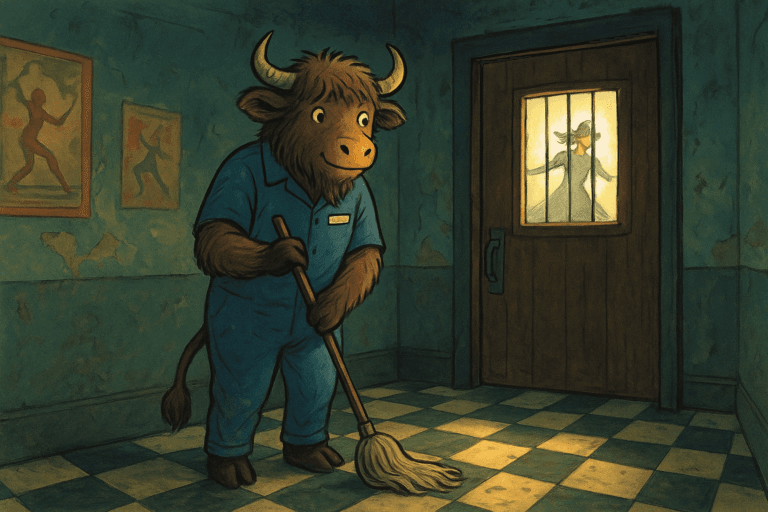
This B1 Intermediate retelling of The Murder of Roger Ackroyd keeps the plot clear for learners while still giving the story some atmosphere and momentum. I live in the quiet English village of King's Abbot with my sister Caroline. She was very ill and weak.
This version is written for English-speaking learners and includes clickable word help inside the story, full story audio, and lesson notes after the reading. It is free to use on Yak Yacker and is designed to feel natural, readable, and manageable in English.
My name is Dr. Sheppard. I live in the English village of King's Abbot with my sister Caroline. She loves .
One day, I Mrs. Ferrars. She was very and . A few days later, she died. People said it was an accident, but I knew it was . She had been very unhappy.
Soon after, I went to see Mr. Roger Ackroyd. He was a man and a good friend. He had Mrs. Ferrars and wanted to her.
"Dr. Sheppard," he said, his voice . "I know who made Mrs. Ferrars . Someone was her. Tonight, I will finally learn the name."
He showed me a . "This is from Mrs. Ferrars. It the blackmailer. I will it later, when I am alone." He looked very serious.
I left Fernly Park, his big house, and walked home through the woods. The night was quiet, and the moon was .
At home, I sat in my study. Then, the telephone . It was the butler from Fernly Park. "Dr. Sheppard! Mr. Ackroyd is !" he cried.
I back to the house. In the study, Mr. Ackroyd was sitting in his chair, a knife in his neck. He was dead. The was gone.
The police arrived. They looked for Ralph Paton, Mr. Ackroyd's stepson. He had . Everyone in the house was a .
Then, a small, man with a large moustache appeared. It was Hercule Poirot, a famous . He was in our village.
"I will find the ," Poirot said quietly. He began . He spoke to the secretary, the butler, the housekeeper, and me.
Poirot found interesting . The telephone call came from the study after the murder. A chair was . And on a table, the letter had left a .
He looked at me one day and smiled. "You are a doctor, my friend. You know about . And you knew Mrs. Ferrars very well." "Tell me, Dr. Sheppard," he asked, "why did you go back to Fernly Park that night?" I felt my hands become .
Poirot gathered everyone in the . He explained everything. "The blackmailer was Dr. Sheppard. He blackmailed Mrs. Ferrars, and when Mr. Ackroyd was about to learn the truth, he him."
"I am sorry, my friend," Poirot said to me. "You are a man, but you made a ." I knew he was right. I had left a clue.
That night, I am writing this. Tomorrow, they will me. But I will not go to prison. I have the same that killed Mrs. Ferrars. This is my last story.
In this story, you met some important crime-related words. Understanding them will help you follow similar mysteries.
Let's look at a few key terms and how they were used.
- blackmail (v./n.): when someone demands money or favors by threatening to reveal a secret. E.g., 'Someone was blackmailing her.'
- suicide (n.): the act of killing oneself intentionally. E.g., 'But I knew it was suicide.'
- suspect (n.): a person thought to be guilty of a crime. E.g., 'Everyone in the house was a suspect.'
- clue (n.): a piece of evidence that helps solve a mystery. E.g., 'Poirot found interesting clues.'
The story uses the past perfect to show events that happened before the main timeline. This helps readers understand the sequence of events.
For example, 'He had loved Mrs. Ferrars' tells us his love happened earlier. 'I had left a clue' reveals a crucial past mistake.
- Form: had + past participle (e.g., had loved, had disappeared).
- Use: to talk about an action that was completed before another past moment.
- Notice how the past perfect often appears in detective stories to reveal hidden facts.
Agatha Christie builds tension through pacing and surprise. Short, sharp sentences make the action feel immediate.
Direct speech, like 'Dr. Sheppard! Mr. Ackroyd is dead!', shocks both the character and the reader. The missing letter and the midnight phone call keep you guessing.
- Short sentences speed up the story and raise your heartbeat.
- Unanswered questions (who called? where is the letter?) create suspense.
- The first-person narrator hides his own guilt, making the ending a twist.
Now that you've seen the mystery unfold, why not try some creative writing? Imagine you are Poirot explaining the case to a friend.
Or, read the original novel to enjoy the full depth of the characters and clues. You're ready for more!
- Write a short paragraph in past perfect: 'Before the murder, I had noticed something strange...'
- Watch a film adaptation and compare the language.
- Explore another Agatha Christie story to meet more fascinating vocabulary.
The Murder of Roger Ackroyd comes from the English / Agatha Christie tradition and is best known as a mystery novel. This Yak Yacker article is an original learner retelling based on Agatha Christie, 1926; public domain in U.S., so the wording here is simplified for modern learners rather than copied from one old edition.
Older printings, translations, and retellings of this story can vary quite a bit. The original audience was usually adult/general, but this version is adapted for B1 Intermediate learners studying English. Famous twist; avoid spoilers in title maybe.
If you want to look into the source tradition, start with Project Gutenberg.
If you want to keep going, browse more in our English section and review the B1 English Vocabulary List. After that, try 1,200 English Phrases and Expressions for another useful next step.