This B1 Intermediate retelling of The Machine Stops keeps the plot clear for learners while still giving the story some atmosphere and momentum. In the future, people lived underground. The Machine gave them everything: food, music, light.
This version is written for English-speaking learners and includes clickable word help inside the story, full story audio, and lesson notes after the reading. It is free to use on Yak Yacker and is designed to feel natural, readable, and manageable in English.
In the future, people lived underground. gave them everything: . No one needed to go outside. Everyone talked to each other through .
Vashti was a woman who loved her room. She had a round chair, books, and a . One day, her son Kuno on the screen.
Kuno said, 'Mother, I want to .' Vashti laughed. 'You can see me on the screen,' she said. 'No,' said Kuno. 'I want to see you with my eyes. Not through the .'
Vashti was . 'That is silly. The Machine brings us . Why would you want to ?' 'Because I have something to tell you,' Kuno said. 'Please come.'
Vashti did not want to go. Travel was and . But Kuno was her son. So, she took an to his room.
The air-ship was small and . Vashti did not like to other people. She covered her face and waited. After many hours, she .
Kuno was waiting. He looked . His face was . 'Thank you for coming, Mother,' he said. 'I have to .' He held her hand and led her to a wall.
He pointed to a small in the wall. 'I went out there,' he said. 'I walked on the of the Earth.' Vashti stepped back. 'You broke the law! The Machine says the outside is .'
Kuno smiled. 'The air was . I saw the sun and the sky. It was . The Machine wants us to forget the .' Vashti shook her head. 'The Machine takes care of us. It knows best.'
They talked for hours. Kuno said the Machine was getting old and might one day. Vashti did not him. Then she went back to her own room. She was happy to be home.
Months passed. One day, the music stopped wrong. Then the lights . People called each other, . 'The Machine will fix it,' they said. But it did not.
Then, the worst happened. The Machine stopped completely. Darkness. Silence. Vashti cried out, but no one answered. She could not her chair. She could not .
In the dark, she remembered Kuno's words. 'He was right,' she thought. She got up and felt her way along the . She found the door and .
The halls were full of people. Vashti walked and walked. Finally, she found Kuno. He took her hand. 'We are now,' he said.
They looked up and saw a small . It was a in the ceiling. Fresh air came in. 'Maybe we can live ,' Kuno said. Vashti held his hand tight. 'Yes, together.'
In the future, people lived underground. A big Machine gave them food, music, and light. They never had to go outside. They talked to each other on screens.
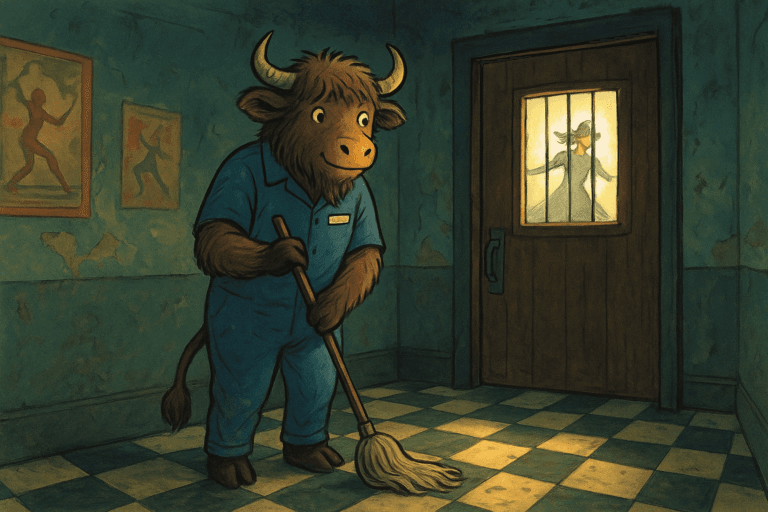
Vashti loved her room. She had a round chair, books, and a screen. One day, her son Kuno called her on the screen.
Kuno said he wanted to see his mother in person. Vashti laughed and said he could see her on the screen. Kuno explained he wanted to see her with his own eyes, not through the Machine.
Vashti thought it was silly to travel because the Machine connects them. Kuno said he had something important to tell her and asked her to come.
Vashti didn't want to go because travel was hard. But Kuno was her son, so she took an air-ship to visit him.
The air-ship was small and cold. Vashti didn't like being near strangers. She covered her face and waited. After a long time, she got there.
Kuno looked brighter and different. He thanked her and said he had something to show her. He held her hand and led her to a wall.
He pointed to a hole in the wall and said he went outside and walked on the Earth's surface. Vashti was shocked because it was against the law; the Machine said outside was dangerous.
Kuno said the air was fresh, he saw the sun and sky, and it was beautiful. He said the Machine wants them to forget the real world. Vashti disagreed, thinking the Machine takes care of them and knows best.
They argued for hours. Kuno warned the Machine was old and might stop. Vashti didn't believe it. She returned home, happy to be back in her room.
Months later, the music stopped weirdly, and the lights flickered. People worried but said the Machine would fix it. But it didn't.
Then the Machine completely stopped. It was dark and silent. Vashti screamed, but no one heard. Her chair wouldn't move, and she couldn't call for help.
In the dark, she remembered Kuno was right. She got up, felt along the wall, found the door, and pushed it open.
The halls were full of frightened people. Vashti kept walking until she found Kuno. He held her hand and said they were together now.
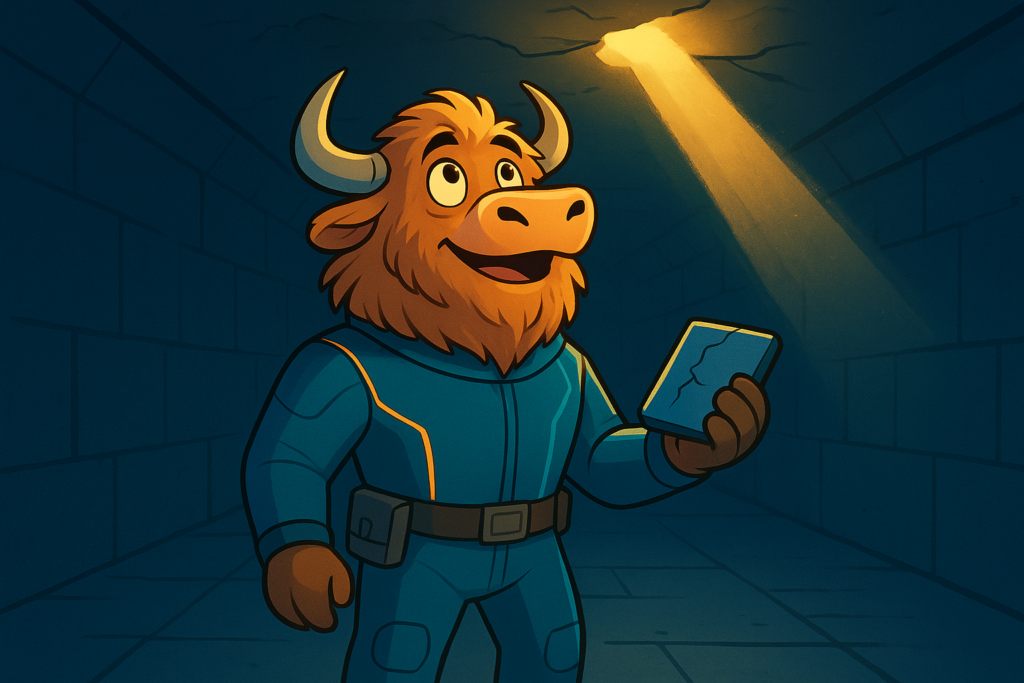
They saw a crack of light in the ceiling with fresh air. Kuno thought they might live outside. Vashti held his hand tightly and agreed, together.
Let's look at some useful words that appeared in the story. First, a 'surface' is the outside or top layer of something. Kuno walked on the surface of the Earth - the ground above the underground city. A 'crack' is a thin opening or line where something has broken slightly. At the end, they see a crack in the ceiling, letting in light and air.
When lights 'flicker', they go on and off in an unsteady way. The flickering lights in the story showed the Machine was failing. If something happens 'completely', it happens in every way or totally - the Machine didn't just slow down, it stopped completely.
- surface = the top or outside part of something
- crack = a thin line or space where something is broken
- flicker = to shine in an unsteady, on-off way
- completely = in every way; totally
Prepositions like 'through' and 'with' can be tricky. In the story, people talked 'through' screens. 'Through' here means using something as a medium or channel - they didn't see each other face-to-face, but via the Machine. Another example: 'I watched the movie through a telescope.' It means the telescope was the tool.
Compare that with 'with'. When Kuno said 'I want to see you with my eyes', he meant using his own eyes directly, not through a screen. 'With' can express the instrument you use. So, 'I cut bread with a knife' uses a knife as the tool. Sometimes 'through' and 'with' overlap, but 'through' often suggests an indirect method.
- 'through' often means by way of, or using a medium
- 'with' often points to the direct instrument or body part
- Example: She smiled at me through the window. / She wrote the note with a pen.
- Think: Is the action direct or indirect?
When Vashti remembered the past, she might think: 'We used to trust the Machine.' 'Used to' is great for talking about past habits or states that are no longer true. For example, 'People used to live underground' means they once lived there, but not anymore. The structure is: subject + used to + base verb.
Questions and negatives can feel formal: 'Did you use to believe the Machine would last?' or 'She didn't use to worry.' But in casual speech, many people just say 'used to' for all. Remember: after 'used to', the verb is always in the base form. So not 'I used to went', but 'I used to go'.
- Form: subject + used to + base verb
- Meaning: a past habit or state that is finished
- Example: They used to live underground, but now they want to go outside.
- Negative/Question: didn't use to / Did you use to?
You've read the story and picked up new words and grammar. Why not try retelling the story in your own words? Pay attention to when the characters use 'through' or 'with', and whether they talk about past habits with 'used to'.
Imagine you are Vashti or Kuno. How would you describe the Machine to someone who's never seen it? Would you say 'We used to depend on it completely'? Practice makes these phrases feel natural, and soon you'll use them without thinking.
The Machine Stops comes from the English / E. M. Forster tradition and is best known as a science-fiction short story. This Yak Yacker article is an original learner retelling based on E. M. Forster, 1909; public domain, so the wording here is simplified for modern learners rather than copied from one old edition.
Older printings, translations, and retellings of this story can vary quite a bit. The original audience was usually general/adult, but this version is adapted for B1 Intermediate learners studying English. Surprisingly modern tech dystopia.
If you want to look into the source tradition, start with Project Gutenberg.
If you want to keep going, browse more in our English section and review the B1 English Vocabulary List. After that, try 1,200 English Phrases and Expressions for another useful next step.