In the heart of a city stands a beautiful statue of the Happy Prince, covered in gold and jewels. One night, a little swallow stops to rest at his feet. The swallow discovers that the prince is sad because he can see the suffering of the poor people in the city. Together, they decide to help them, giving away the prince's riches. This touching story by Oscar Wilde teaches us about kindness, friendship, and sacrifice.
This A2 elementary English version of The Happy Prince makes the classic tale easy to understand. You can read along, listen to the story audio, and click on words for instant help. There are also lesson notes to support your learning. Enjoy this free interactive reading experience and improve your English naturally.
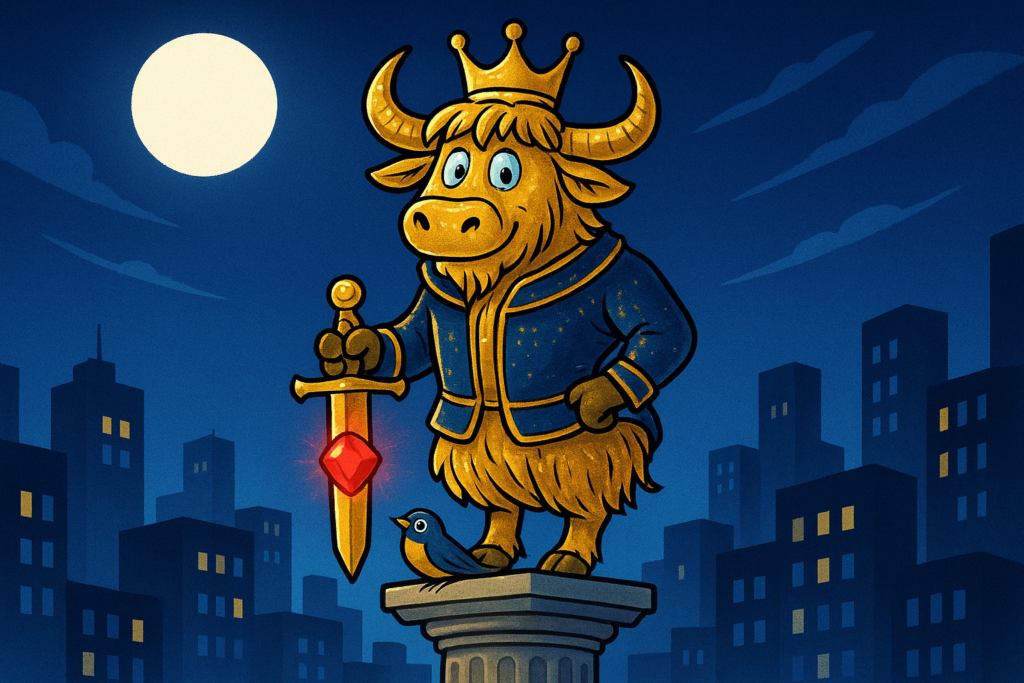
High above the city, on a tall column, stood the statue of the Happy Prince. He was covered all over with thin leaves of fine gold. For eyes he had two bright blue sapphires, and a large red ruby glowed on his sword.
One cold autumn night, a little arrived. He was flying to Egypt, but he stopped to at the feet of the statue. The Swallow was and happy to find a golden place to sleep.
Suddenly, a large drop of water fell on the Swallow. He looked up and saw that the Happy Prince was . "Why are you crying?" asked the Swallow. "I am the Happy Prince, but I am not happy now," said the statue. "From up here, I can see all the in the city. My heart is full of tears, but I cannot ."
"Far away, in a little street, there is a poor woman. Her child is sick and asking for oranges. Swallow, little Swallow, will you take the ruby from my sword to them?" The Swallow was cold, but he felt the Prince's . "My friends are waiting in Egypt," he said. "But I will one night and help you."
The Swallow took the great red ruby and to the poor house. He placed it on the table. The next day, the Prince said, "Swallow, I see a young writer in a cold room. He is so . Please take one of my sapphire eyes to him." The Swallow cried, "Dear Prince, I cannot do that!" But the Prince was so kind, and the Swallow .
Then the Prince said, "In the square, a little match-girl is crying. Her matches fell in the mud. Take my other eye to her." "But then you will be blind!" said the Swallow. "Do it, little Swallow," said the Prince. "I can still see with my heart." The Swallow took the other sapphire and gave it to the girl.
Now the Prince was blind, and the Swallow loved him. He decided to stay forever. "Prince," he said, "I will not you." The Prince answered, "I cannot see, but I feel the cold. Many people are hungry. Take the gold from my body and give it to the poor." Every day, the Swallow a thin piece of gold and gave it away. The people in the city became warmer and happier.
Winter came with snow and ice. The little Swallow grew . He knew he was dying. He flew up to the Prince's shoulder and said, "Goodbye, dear Prince. Can I kiss your hand?" "I am glad you are going to Egypt, little Swallow," said the Prince. "It is not Egypt I am going to," said the Swallow. He kissed the Happy Prince and fell down dead at his feet. In that moment, there was a strange sound inside the statue- The Prince's lead heart broke into two.
Next morning, the Mayor and Town Councillors walked past. "What an ugly statue!" they said. "And a dead bird!" They pulled down the statue, melted it, and threw away the broken heart and the dead bird. But God said to an angel, "Bring me the two most precious things in the city." The angel brought the broken lead heart and the little dead bird. "You have chosen well," said God. "The little Swallow will sing forever in my garden of , and the Happy Prince will be truly ."
The Happy Prince is full of beautiful gems and special metals. Let's learn some words for these treasures-and a few more that will help you describe the story.
- precious (adjective): something very valuable or much loved. In the story, the angel looks for 'the most precious things'.
- sapphire (noun): a bright blue gem. The Prince uses these as eyes.
- ruby (noun): a red gem. The Prince's sword has a big red ruby that glows.
- lead (noun): a heavy, gray metal. The Prince's heart is made of lead.
The Prince and the Swallow don't just talk-they do kind things. The verbs they use show action, not just words. In English, we often use the simple past to tell a finished story. Look at these examples from the tale:
- The Swallow gave the ruby to the poor mother.
- He peeled off a piece of gold from the statue.
- The Prince asked, and the Swallow obeyed.
- They helped many hungry people.
Why does the Prince give away everything, even his eyes? He sees sadness and wants to help. The Swallow chooses to stay, even when winter comes. Their actions show that kindness is more important than gold or beauty.
At the end, God says the broken heart and the dead bird are precious. The story tells us that true love and sacrifice make something truly valuable.
- Kind actions can change lives.
- Helping others brings real happiness.
- Love is more precious than riches.
The story shows that small, kind acts can make the world warmer. Now it's your turn! Think of a kind thing you can do today-maybe share a smile, help a friend, or give something to someone in need.
- Describe your kind act using the simple past: e.g., 'I gave my old coat to a cold man.'
- Try using one of the new words: precious, ruby, or peeled off.
- Remember: actions, not just words, create happiness.
The Happy Prince comes from the Irish / Oscar Wilde tradition and is best known as a literary fairy tale. This Yak Yacker article is an original learner retelling based on Oscar Wilde, 1888; public domain, so the wording here is simplified for modern learners rather than copied from one old edition.
Older printings, translations, and retellings of this story can vary quite a bit. The original audience was usually kids/general, but this version is adapted for A2 Elementary learners studying English. Beautiful but sad; A2/B1 bridge.
If you want to look into the source tradition, start with Project Gutenberg.
If you want to keep going, browse more in our English section and review the A2 English Vocabulary List. After that, try 1,200 English Phrases and Expressions for another useful next step.