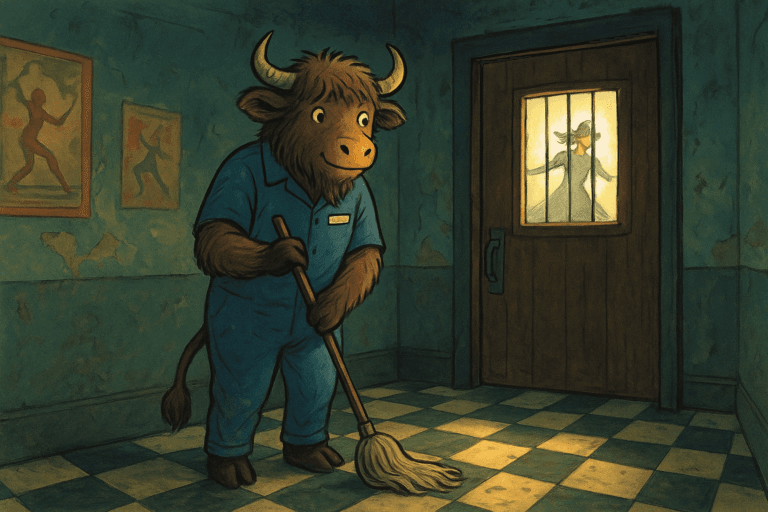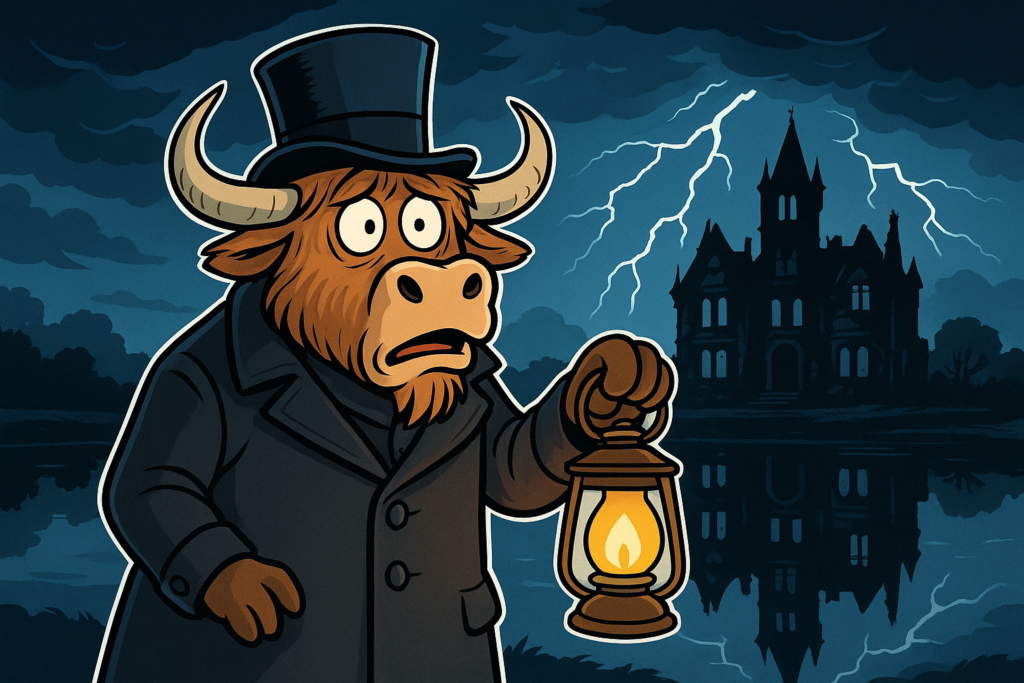
Welcome to our free graded reader version of Edgar Allan Poe's classic gothic tale, 'The Fall of the House of Usher'. In this mysterious and suspenseful story, the narrator visits his childhood friend Roderick Usher, who lives in a strange and decaying mansion. Roderick is suffering from a 'nervous disorder' that makes him sensitive to light, sound, and texture. His twin sister Madeline also suffers from a mysterious illness that seems to mirror the house's slow collapse. Their dark, isolated world is filled with ominous signs and a growing sense of dread.
In this B1 intermediate English retelling, you can enjoy the full audio version while reading. Click on any difficult word to see its translation instantly, and study with our free lesson notes. Whether you are learning English or just love a good ghost story, this interactive reader will help you improve your vocabulary and comprehension without needing a dictionary. Start reading now and let the haunting atmosphere pull you into one of literature's most unforgettable houses.
One dark autumn day, I arrived at the to visit my friend Roderick. The house stood beside a black lake, its walls gray and its windows like empty eyes. A deep filled me as I approached.
Roderick welcomed me with a . He looked very and , and his bright eyes burned with .
"The house is a for my ," he whispered.
He was a . He believed the old stone walls held a terrible that slowly his family. Every day he painted and played sad songs on a strange guitar.
His twin sister, Madeline, was also ill. She was a figure who never spoke and walked like a .
One day she fell into a that looked like death. "She is dead," Roderick said.
We placed her body in a tomb under the house. The heavy iron door closed with a .
After that, Roderick grew more . A broke over the house, with wind that and rain that beat against the windows.
That night, he came to my room, . "Do you hear something?" he cried.
"I hear ! The house is alive with !" I tried to him, but then I heard a strange, slow noise.
"We !" he screamed. "I heard her in the tomb, but I was too afraid to help!"
Suddenly, the heavy door of the room . There stood Madeline, her dress stained with .
She her brother, and they both . I ran from the house in .
Outside, the storm grew . I saw the black lake . The House of Usher , then with a great crash it fell into the dark water, disappearing forever.
On a gloomy autumn day, I went to the House of Usher to see my ill friend Roderick. The old mansion was by a dark lake, with gray walls and windows like hollow eyes. I felt very sad as I got closer.
Roderick greeted me with a frail smile. He was thin and pale, with frightened, shining eyes.
"This house traps my soul," he said softly.
He was trapped by his own thoughts. He thought the old house had a curse that was destroying his family. He spent days making wild drawings and playing sad music on an odd guitar.
His twin sister Madeline was sick too. She was pale and quiet, moving like someone in a trance.
Eventually, she fell into a deep sleep that seemed like death. Roderick said, "She is dead."
We put her body in a chilly, wet vault underneath the house. The heavy iron door shut with a bang.
Afterward, Roderick became more upset. A violent storm hit the house, with howling wind and rain lashing the windows.
That night, he came to my room, trembling. "Can you hear that?" he cried.
"I hear noises from downstairs! The house is full of anger!" I tried to soothe him, but then I heard a strange, dragging sound.
"We buried her alive!" he screamed. "I heard her moving in the tomb, but I was too scared to help!"
All of a sudden, the room door burst open. There was Madeline, her clothing bloody.
She collapsed onto her brother, and they both fell dead. Terrified, I fled from the house.
Outside, the storm got worse. I saw the black lake swell. The House of Usher cracked apart, and then with a huge crash it fell into the dark water, gone forever.
In this dark tale, the author uses rich words to create a spooky atmosphere. Let's explore some of the key terms that paint the gloomy picture of the House of Usher.
These words help describe settings, weather, and a general sense of decay. Try to imagine each scene as you learn them.
- ancient: very old, often with a mysterious past
- damp: slightly wet in an uncomfortable way
- ghostly: like a ghost; pale or faint
- tomb: a stone room for a dead body, often underground
The characters in the story are trapped by fear and mental anguish. Learning these emotional words will help you talk about strong feelings in English.
Notice how the verbs and adjectives intensify the horror as the story progresses.
- fear (n.) / fearful (adj.): a strong feeling of being scared
- terror (n.) / terrified (adj.): extreme fear
- disturbed: not calm; mentally upset
- shake with terror: to tremble because of great fear
The writer doesn't just tell us it's a scary house; he shows us through vivid details. This technique is called 'show, don't tell,' and it's powerful for building suspense.
Look at how adjectives like 'wild,' 'dark,' and 'empty' are paired with strong nouns and active verbs to make the scene feel alive and menacing.
- Use sensory adjectives (sight, sound, touch) to engage the reader.
- Combine them with dynamic verbs (screamed, cracked, burst open) for energy.
- Short, dramatic sentences can increase tension.
Now that you've experienced the fall of the Usher house, why not create your own short spooky scene? You can use the vocabulary and style we explored.
Start with a dark setting, add a nervous character, and let something mysterious happen. Keep it simple and focus on atmosphere.
- Describe an old building using at least two new words (e.g., ancient, damp).
- Show a character's fear without saying 'scared' (e.g., 'Her hands trembled, and her breath came in quick gasps.').
- End with a sudden event that leaves the reader wondering.
The Fall of the House of Usher comes from the American / Edgar Allan Poe tradition and is best known as a gothic short story. This Yak Yacker article is an original learner retelling based on Edgar Allan Poe, 1839; public domain, so the wording here is simplified for modern learners rather than copied from one old edition.
Older printings, translations, and retellings of this story can vary quite a bit. The original audience was usually adult/general, but this version is adapted for B1 Intermediate learners studying English. Mood-heavy; simplify vocabulary.
If you want to look into the source tradition, start with Project Gutenberg.
If you want to keep going, browse more in our English section and review the B1 English Vocabulary List. After that, try English Adjectives and Adverbs for another useful next step.