Dive into the classic Greek myth of Perseus and Medusa! In this exciting story, brave Perseus takes on a dangerous task: to bring back the head of Medusa, a monster with snakes for hair and a deadly gaze that turns anyone to stone. With help from the gods-winged sandals, a cap that makes him invisible, and a mirrored shield-Perseus must use cleverness and courage to succeed. It's a timeless tale of adventure and quick thinking.
This Yak Yacker graded reader retells the myth in simple English at an A2 Elementary level. You can read or listen to the story with our clear audio narration. As you read, click on any word for instant definitions and examples. Plus, you'll get helpful lesson notes to boost your vocabulary and grammar. It's a fun, free way to improve your English while enjoying a classic story.
Perseus was a young hero. A king said, "Bring me the head of Medusa!" Medusa was a terrible monster. She had snakes for hair. One look at her face turned people to stone. Perseus said, "I will do it."
First, the goddess Athena came to help. She gave Perseus a shiny shield. "Use this shield as a mirror," she said. "Never look directly at Medusa. You will see her in the shield." Perseus took the shield. "Thank you," he said. Then he went to the cave.
Next, Perseus walked into the . He saw everywhere. They were people who looked at Medusa. "I must not look at her," Perseus thought. He held the shield up like a mirror. In the , he saw Medusa sleeping.
The monster had on her head. They moved and hissed. Perseus felt , but he moved closer. He did not look up. He only looked at the . "I can see you, monster," he whispered.
Then, Perseus took out his . He held the shield . Medusa opened her eyes, but she only saw the shield. Perseus looked at the mirror and . He cut off her head! The snakes fell silent. The monster was dead.
Perseus put the head in a . He did not look at it. He went out of the cave. He was a . Later, he used the head to save a princess. He showed the head to a big sea monster, and it turned to stone!
Finally, Perseus went home. He gave Medusa's head to Athena. The goddess put it on her shield. Perseus was happy. His was over, and he was a hero forever.
Perseus was a young hero. A king told him to bring Medusa's head. Medusa was a scary monster with snake hair. Looking at her turned people to stone. Perseus agreed.
The goddess Athena helped. She gave Perseus a shiny shield to use as a mirror. She said not to look at Medusa directly, only in the shield. Perseus thanked her and went to the cave.
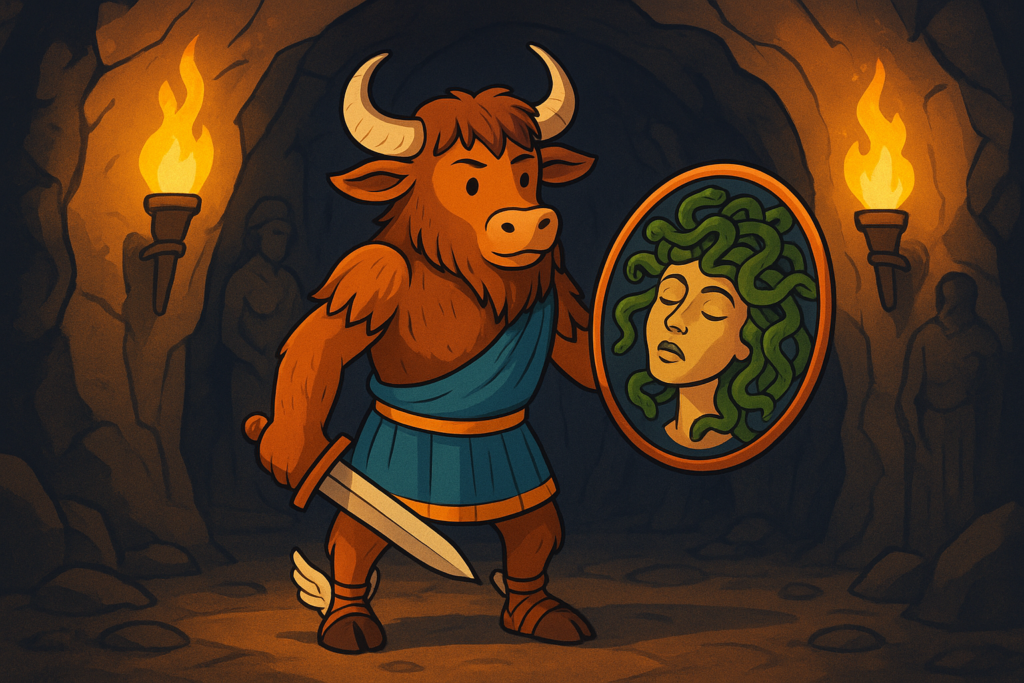
Perseus entered the dark cave. He saw many stone statues, people who had looked at Medusa. He used the shield like a mirror and saw Medusa sleeping.
Medusa had green snakes on her head that moved and hissed. Perseus was scared but moved closer, only looking at the shield. He whispered that he could see her.
Perseus took out his sword, still holding the shield. Medusa opened her eyes but only saw the shield. Looking in the mirror, Perseus swung his sword and cut off her head. The snakes stopped hissing. Medusa was dead.
Perseus put the head in a bag without looking. He left the cave. He was a hero. Later, he used the head to save a princess from a sea monster by turning it to stone.
Perseus went home and gave the head to Athena, who put it on her shield. Perseus was happy, his adventure over, and he remained a hero.
This story uses strong character words to help you follow the adventure. Perseus is a hero, Medusa is a monster, and Athena is a goddess who helps him.
A few useful words are "shield," "cave," "statue," and "sword." A shield protects you, a cave is a dark place in the ground, a statue is something hard and still like stone, and a sword is a long weapon.
- "hero" = a brave person
- "monster" = a scary creature
- "shield" = something you hold to protect yourself
- "turned to stone" = became hard and unmoving
This myth is told mostly in the past tense, because the events already happened. You can spot verbs like "was," "had," "said," "went," "saw," and "took."
When you tell a story in English, past tense helps the listener know the action is finished. For example: "Perseus went to the cave" and "Athena gave him a shield."
- Use past tense for finished actions
- "go" becomes "went"
- "see" becomes "saw"
- "take" becomes "took"
The story moves clearly because it uses sequencing words. These words show the order of events, like "first," "then," "next," "later," and "finally."
You can use them to retell the myth in a simple way: "First, Athena helped Perseus. Then he went to the cave. Next, he looked in the shield. Finally, he defeated Medusa."
- "first" = the beginning
- "then" / "next" = the following step
- "later" = after some time
- "finally" = the last event
A good story retelling is short, clear, and in order. You do not need every detail. Just keep the main events and use past tense verbs with sequencing words.
Try saying the story in 4 steps: who the hero was, what help he got, what he did in the cave, and how the adventure ended. That is a strong story shape for English learners.
- Say the main events in order
- Use simple past tense verbs
- Add one sequencing word to each step
- Keep your voice calm and confident
Perseus and Medusa comes from the Greek / mythology tradition and is best known as a greek myth. This Yak Yacker article is an original learner retelling based on Ancient Greek myth; public domain, so the wording here is simplified for modern learners rather than copied from one old edition.
Older printings, translations, and retellings of this story can vary quite a bit. The original audience was usually kids/general, but this version is adapted for A2 Elementary learners studying English. Adventure/monster story; simplify names.
If you want to look into the source tradition, start with Project Gutenberg.
If you want to keep going, browse more in our English section and review the A2 English Vocabulary List. After that, try English Adjectives and Adverbs for another useful next step.