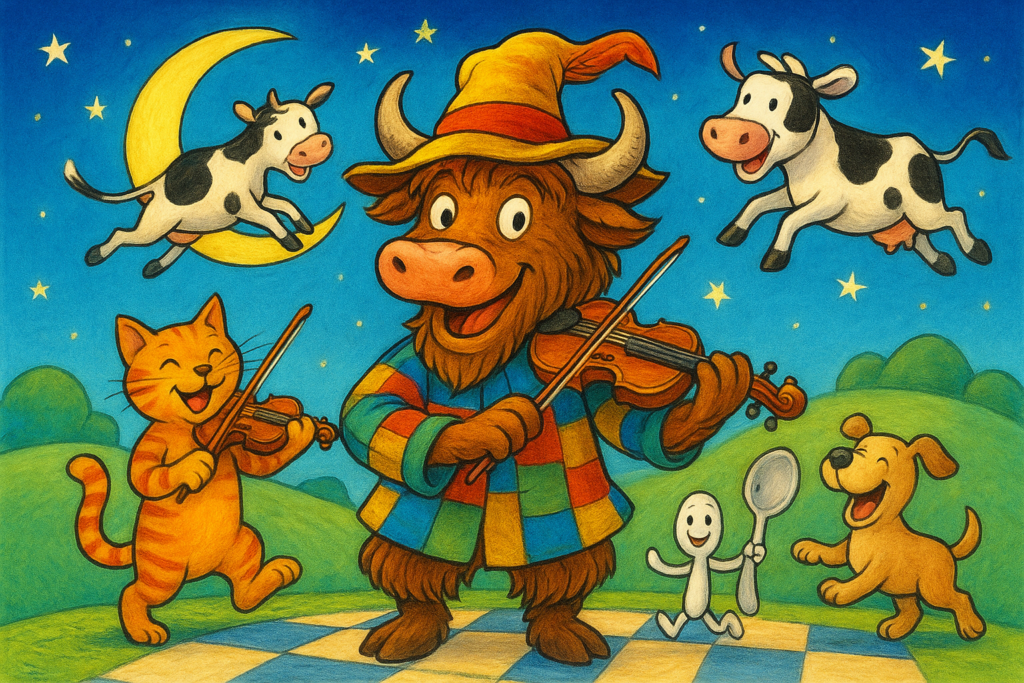
This A1 Beginner retelling of Hey Diddle Diddle keeps the plot clear for learners while still giving the story some atmosphere and momentum. The cow jumps over the moon.
This version is written for English-speaking learners and includes clickable word help inside the story, full story audio, and lesson notes after the reading. It is free to use on Yak Yacker and is designed to feel natural, readable, and manageable in English.
The cat plays the .
"Hey diddle diddle!" sings the cat.
The cow jumps over the moon.
"Look at me!" she says.
A little dog laughs. "Ha ha ha!"
A dish with a spoon.
"Come with me!" says the dish.
The cat plays a violin.
The cat sings a nonsense song.
The cow jumps above the moon.
She says, "Look at me!"
A small dog laughs and says, "Ha ha ha!"
A plate runs away with a spoon.
The plate says, "Come with me!"
This story uses a few fun nouns and action words. They are easy to spot because the pictures in your mind are so silly.
Try to remember the words for the animals and objects. They help you follow the little rhyme.
- cat, cow, dog
- fiddle, moon, dish, spoon
- plays, jumps, laughs, runs away
The story is full of simple present tense actions. This tense is great for telling what happens in a story or what someone does now.
Notice the verbs: plays, jumps, laughs, and runs away. They make the story feel lively and fast.
- The cat plays the fiddle.
- The cow jumps over the moon.
- The dog laughs.
- The dish runs away with the spoon.
The story uses short sentences and direct speech. That means the characters speak for themselves, which makes the rhyme feel playful.
Look for quotation marks. They show the exact words a character says, like "Look at me!" and "Come with me!"
- Use short sentences for easy storytelling.
- Quotation marks show spoken words.
- Exclamation marks add energy and surprise.
You do not need to understand every silly detail to enjoy the rhyme. Just follow the animals, the actions, and the spoken lines.
Read it again and try to say the key words aloud. A little rhythm helps the story stick.
- Name the characters.
- Say the action verbs.
- Listen for the rhyme and rhythm.
Hey Diddle Diddle comes from the English / nursery rhyme tradition and is best known as a nursery rhyme. This Yak Yacker article is an original learner retelling based on Traditional nursery rhyme; public domain, so the wording here is simplified for modern learners rather than copied from one old edition.
Older printings, translations, and retellings of this story can vary quite a bit. The original audience was usually kids, but this version is adapted for A1 Beginner learners studying English. Excellent absurd animal story.
If you want to look into the source tradition, start with Wikisource.
If you want to keep going, browse more in our English section and review the A1 English Vocabulary List. After that, try English Question Words for another useful next step.