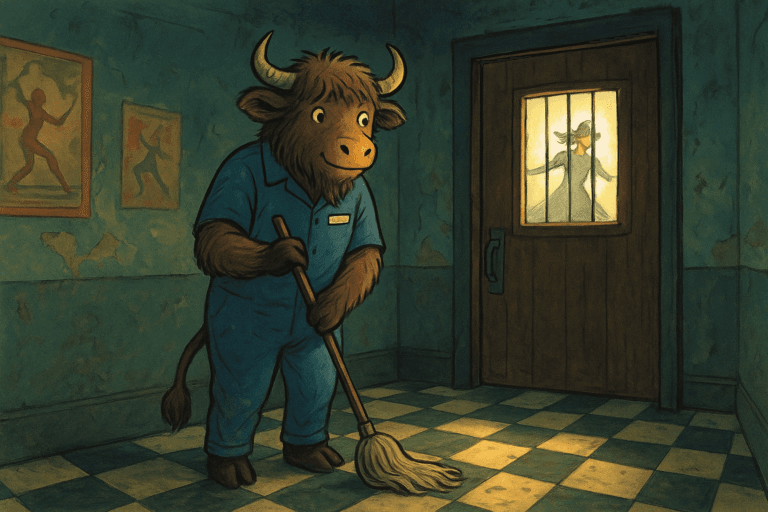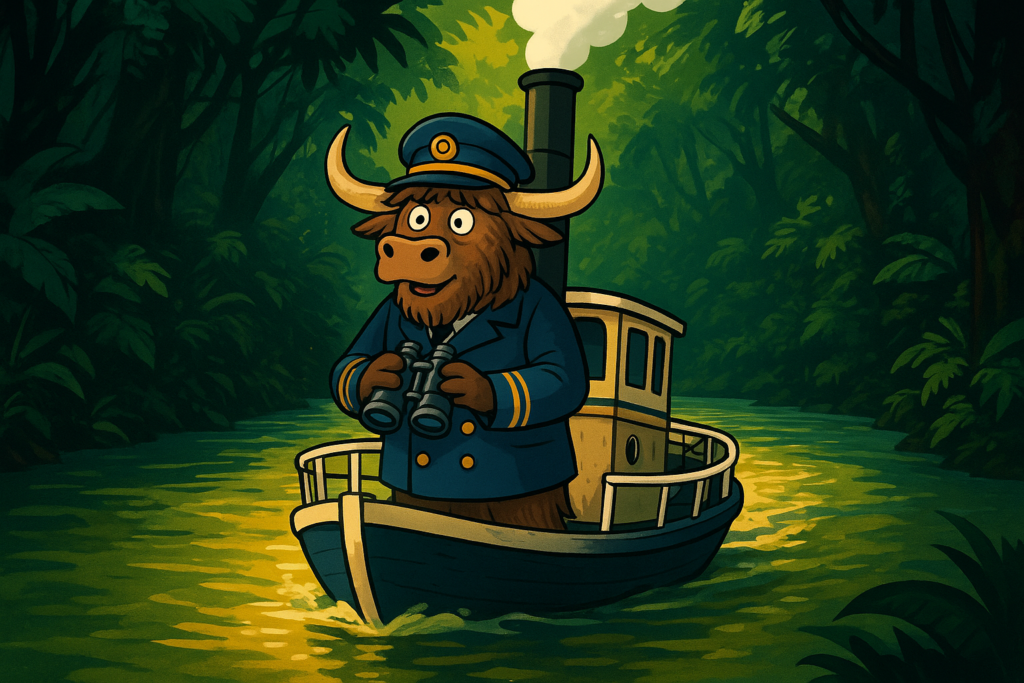
Welcome to our free interactive retelling of Joseph Conrad's classic tale, Heart of Darkness, written especially for intermediate English learners (CEFR B1). Follow the experienced sailor, Marlow, as he travels down a mighty river into the heart of Africa. His mission is to find the mysterious ivory trader, Mr. Kurtz, but what he discovers changes him forever. This story is a journey into the unknown, exploring themes of colonialism, power, and human nature.
In this graded reader, you will encounter useful vocabulary related to exploration and the natural world, while the narrative is presented in clear, straightforward English. As you read, simply click on any bold word to see its definition and hear its pronunciation. You can also listen to the complete story audio, making it easy to improve your listening skills. Every chapter comes with interactive exercises and lesson notes, so you can check your understanding and learn new grammar naturally.
It was a evening on the . The sun was setting, and the water looked like a of gold. Four of us were sitting on a boat called the Nellie. We were all friends, and we were waiting for the .
Marlow, one of the men, looked out over the water. He was not talking much. Then he suddenly said, "And this also has been one of the dark places of the earth."
We all turned to him. "What do you mean?" I asked.
Marlow smiled a little. "I'm thinking of a time when I was a young man. I wanted to to the center of Africa. I wanted to find on a great river."
"That sounds ," someone said. "Tell us about it."
Marlow paused. Then he began his .
"I got a job as a for a . The company bought and sold in Africa. I was very excited."
"But first," Marlow continued, "I had to visit the company's office in a . The building was and strange. Two women were sitting in the waiting room, with black wool. They looked at me, and I felt a cold feeling in my heart. It was like they were the door to something unknown."
"A doctor also examined me. He my head and asked strange questions. He said, 'The changes take place inside, you know.' I did not understand then. But I would understand later."
Marlow's voice became quieter. "I traveled by ship to Africa. When we arrived at the , I saw many things that shocked me. Black men were working hard in the hot sun, while white men in white suits watched. There was , sickness, and everywhere. The company did not care about people. They only cared about ivory."
"I took a small boat up the river to the . The manager there was a tall, thin man with a . He was not happy to see me. My steamboat was broken, and I had to wait for parts to it."
"While I waited, I heard the name 'Kurtz' for the first time. Everyone about him. 'Kurtz is the best we have,' they said. 'He sends more ivory than all the others together.' But they also seemed to him and him."
"Finally, after many months, I the steamboat. I was ready to travel to Kurtz's station, deeper into the . I took some men with me: a few company 'pilgrims' and a crew of . The cannibals were tall, strong men, but they were hungry because we had little food."
"We moved very slowly up the wide, brown river. The jungle was all around us. It was dark green, thick and alive. I felt very small. Sometimes we heard in the distance. The sound was like a . I felt that the trees were watching us. I began to understand how big and the world really is."
"One morning, thick white covered everything. We could not see. Then, suddenly, of the fog! They hit the steamboat. My helmsman, a brave young African man, was killed by a . I was very angry and sad. I blew the steam whistle again and again. The noise was terrible, and the attackers ran away, frightened."
"I threw the helmsman's body into the river. I did not want the others to eat him. Yes, they were so hungry… But I could not think about that. I only wanted to find Kurtz."
"At last, we arrived at Kurtz's station. There we met a strange young Russian. His clothes were full of color, and he talked very fast. He loved Kurtz. 'He has !' he said. 'He is a great man!'"
"But then I saw something that made my blood turn cold. On the tops of tall , all around the house, were . They were facing the station. I understood that Kurtz had done terrible things. He had become a kind of king to the local people, but a one."
"Then they carried Kurtz out on a . He was very thin and very ill. His eyes burned in his pale face, but his voice was still strong. He looked at me and whispered, 'My Intended…'"
"Later that night, Kurtz tried to . I followed him into the dark jungle. I was afraid, but I knew I had to stop him. I caught him as he was through the grass. He was so light, I could carry him back to the boat."
"He was dying. We started the journey back down the river. But Kurtz's life was of him quickly. He looked at me and seemed to see something terrible, something far away. His last words were, 'The horror! The horror!' Then he died."
"I returned to Europe, carrying Kurtz's papers and some letters. I felt empty and tired. I went to see the woman he loved, his 'Intended'. She was beautiful, with fair hair, and her eyes were full of sadness. She was still ."
"She asked me, 'What were his last words?' I looked into her face and I could not tell her the truth. The truth would destroy her. So I lied. I said, 'The last word he spoke was-your name.'"
Marlow stopped talking. He looked at the dark water around our boat. The sky was now very dark, and the river looked deep and . Nobody said anything for a long time. Then the narrator, the man telling this story, thought that the Thames River, and the whole world, seemed to flow into the heart of an immense .
Many words in Marlow's story paint a vivid picture of the jungle, the journey, and the characters' feelings. Paying attention to them helps you follow the atmosphere and deeper meanings.
- Steamboat: a boat powered by a steam engine. Marlow captains one up the river.
- Ivory: the hard white material from elephant tusks, valuable in trade. The company's greed for ivory drives much of the action.
- Jungle: a dense, tropical forest. The Congo jungle is described as dark, thick, and alive-almost a character itself.
- Whisper: to speak very softly. People whispered about Kurtz, showing both admiration and fear.
Joseph Conrad uses a frame story and descriptive language to build tension. Marlow's words are not just facts-they make you feel the mystery, fear, and moral confusion.
Look at how silent pauses, contrasts, and repeated words shape the mood. The story's style is as important as the events themselves.
- The Thames sunset is a "shining ribbon of gold", contrasting sharply with the dark African river later.
- Words like "dark", "black", and "cold" are repeated to strengthen the ominous feeling.
- When Marlow finishes, nobody speaks-the silence mirrors the narrator's thought of an "immense darkness".
The frame narrator uses past simple for the evening on the Thames, but Marlow's tale jumps between tenses. Notice how past perfect and past continuous help you follow what happened earlier or was ongoing.
- Past simple for main actions: "We arrived at the coast. I saw many things."
- Past perfect for events before the main timeline: "He had become a kind of king." (before the narrator met him)
- Past continuous for background or ongoing actions: "The sun was setting."
- Mixing these tenses makes your own storytelling clearer and more natural.
Marlow's journey ends with the chilling words "The horror! The horror!"-but what exactly is the horror? The story asks us to think about civilization, greed, and the darkness inside people.
Re-read a paragraph that stood out to you. Write a short journal entry about what you think the "heart of darkness" really means-or tell a friend about the story in your own words.
Heart of Darkness comes from the Polish-British / Joseph Conrad tradition and is best known as a modernist novella. This Yak Yacker article is an original learner retelling based on Joseph Conrad, 1899; public domain, so the wording here is simplified for modern learners rather than copied from one old edition.
Older printings, translations, and retellings of this story can vary quite a bit. The original audience was usually adult, but this version is adapted for B1 Intermediate learners studying English. Colonial/racist framing; handle with care.
If you want to look into the source tradition, start with Project Gutenberg.
If you want to keep going, browse more in our English section and review the B1 English Vocabulary List. After that, try 1,200 English Phrases and Expressions for another useful next step.