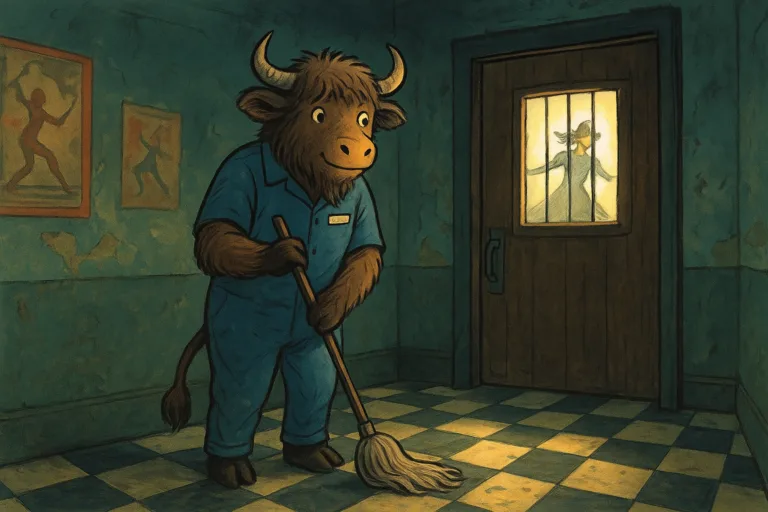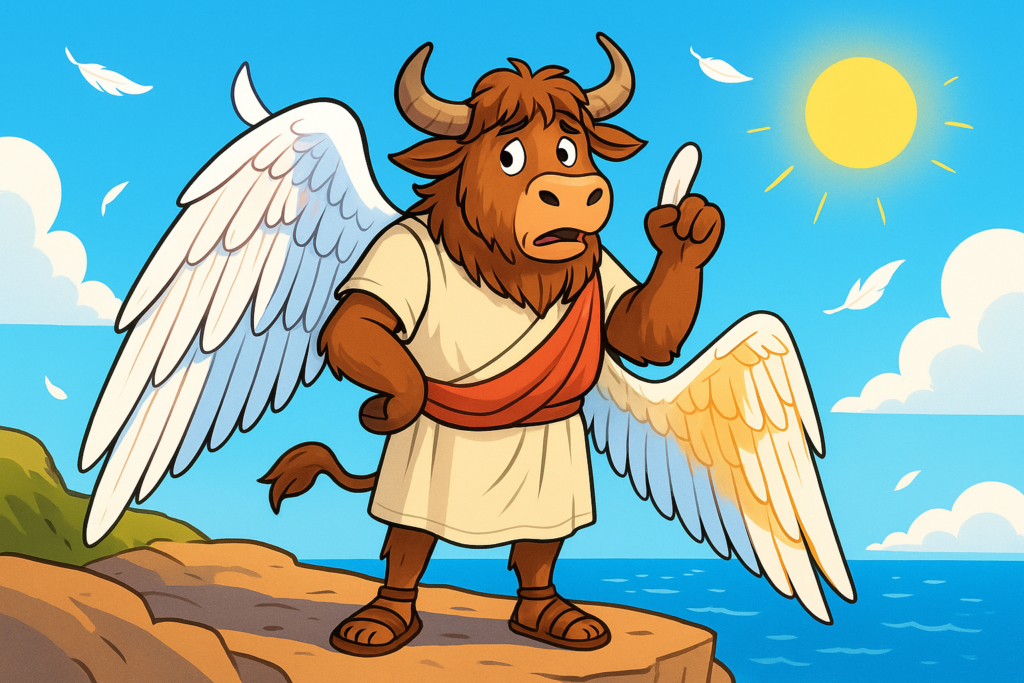
This A2 Elementary retelling of Daedalus and Icarus keeps the plot clear for learners while still giving the story some atmosphere and momentum. Daedalus and his son Icarus are prisoners on the island of Crete. He watches the birds and gets an idea.
This version is written for English-speaking learners and includes clickable word help inside the story, full story audio, and lesson notes after the reading. It is free to use on Yak Yacker and is designed to feel natural, readable, and manageable in English.
Daedalus and his son Icarus are on the island of Crete. King Minos keeps them there. Daedalus is a . He the birds and gets an idea.
Daedalus two pairs of wings. He uses and . He works for many days. Icarus helps him. Daedalus says, "With these wings, we can from Crete."
Before they fly, Daedalus gives Icarus a . "Listen to me, Icarus. Do not fly too . The sun is hot, and it will the wax. Do not fly too . The sea is wet, and it will make the feathers heavy."
They put on the wings. They stand on a . Daedalus says, "Now!" They and their arms. They fly! It is wonderful. Icarus laughs. "I am flying! I am a bird!"
Daedalus flies in front. He looks back at Icarus. Icarus is . He goes . Daedalus shouts, "Icarus, ! Do not fly too high!" But Icarus does not listen.
Icarus flies near the sun. The sun is very hot. The wax gets . The feathers . Icarus cannot fly anymore. He shouts, "Father! Help me!" But Daedalus cannot him. Icarus falls into the sea.
Daedalus is very sad. He flies down to the . He sees the feathers. He calls Icarus, but there is no . He knows Icarus is gone. He flies on to a . He names the sea the Icarian Sea, after his son.
Daedalus and his son Icarus are trapped on Crete. King Minos holds them. Daedalus is clever. He sees birds and has an idea.
Daedalus builds two sets of wings from feathers and wax. He works a long time. Icarus helps. Daedalus says, 'These wings will let us fly from Crete.'
Before flying, Daedalus warns Icarus: 'Do not fly too high, or the sun's heat will melt the wax. Do not fly too low, or the sea's wetness will weigh down the feathers.'
They wear the wings and stand on a tall rock. Daedalus says, 'Go!' They jump and flap. They fly! Icarus laughs, 'I'm flying like a bird!'
Daedalus leads. He sees Icarus rising higher for fun. He yells, 'Come down! Not too high!' But Icarus ignores him.
Icarus nears the sun. The heat softens the wax. Feathers drop. Icarus can't fly. He cries, 'Father, help!' But Daedalus can't save him. Icarus plunges into the sea.
Daedalus is heartbroken. He flies down, sees feathers, calls Icarus-no reply. He knows Icarus is dead. He flies to safety and names the sea Icarian, for his son.
Let's look at some important words from the story. These words help you understand what Daedalus and Icarus did and felt.
- wings (noun): parts that birds use to fly. Daedalus made wings for himself and Icarus.
- feathers (noun): the soft things that cover a bird's body. The wings were made of feathers and wax.
- wax (noun): a soft material that melts when it gets hot. Daedalus used wax to stick the feathers together.
- melt (verb): to become soft or liquid because of heat. The sun made the wax melt.
- warn (verb): to tell someone about possible danger. Daedalus warned Icarus not to fly too high.
In the story, Daedalus gives Icarus important warnings. He uses short sentences to tell him what to do and what not to do. This is called the imperative form. We use imperatives for instructions, commands, or warnings.
For positive commands, we start with the base form of the verb. For negative commands, we use 'Do not' + base form.
- Positive: 'Listen to me!' (from the story)
- Negative: 'Do not fly too high.' (warning)
- Another example: 'Do not go near the sun.'
- More friendly: 'Please come down!' But in warnings, we often skip 'please' for urgency.
Now you know the story of Icarus and some useful English. Next time you want to give a warning, remember Daedalus! Can you think of a warning for a friend? Maybe 'Do not run near the pool!' Practice with the vocabulary: describe something made of wax or feathers. Keep flying high with your English!
Daedalus and Icarus comes from the Greek / mythology tradition and is best known as a greek myth. This Yak Yacker article is an original learner retelling based on Ancient Greek myth; public domain, so the wording here is simplified for modern learners rather than copied from one old edition.
Older printings, translations, and retellings of this story can vary quite a bit. The original audience was usually kids/general, but this version is adapted for A2 Elementary learners studying English. Good cautionary adventure.
If you want to look into the source tradition, start with Project Gutenberg.
If you want to keep going, browse more in our English section and review the A2 English Vocabulary List. After that, try 1,200 English Phrases and Expressions for another useful next step.