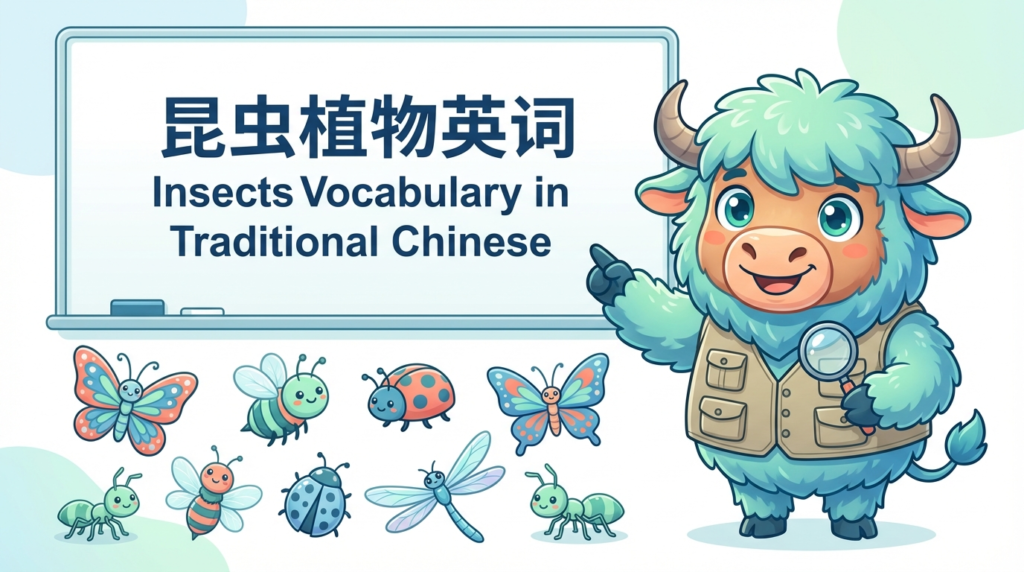
Traditional Chinese Insects Vocabulary: 100+ Easy Words (No Bug Panic)
Learn bug words with characters, pinyin, and real sentences. 繁體中文:昆蟲詞彙
This is your practical, real-life bug list: Traditional Chinese characters, pinyin (tone marks), and short example sentences you can actually use.
You’ll be ready to complain about mosquitoes, identify cute butterflies, and politely request that someone else deals with the cockroach. (We’re all brave in theory.)
Yak Snark
If you can say “There’s a bug” and “Please remove it,” you’re basically fluent in 80% of summer conversations.
The “I See It In My House” Starter Cards
Tap 🔊 to hear the Hanzi. Pinyin is there so your tones don’t wander off and join the ants.
蚊子
mosquito
昨晚我被蚊子叮了。
Zuówǎn wǒ bèi wénzi dīng le.
“I got bitten by a mosquito last night.”
蟑螂
cockroach
廚房有一隻蟑螂。
Chúfáng yǒu yì zhī zhāngláng.
“There’s a cockroach in the kitchen.”
螞蟻
ant
桌上有螞蟻。
Zhuō shàng yǒu mǎyǐ.
“There are ants on the table.”
蒼蠅
fly
蒼蠅一直在嗡嗡叫。
Cāngying yìzhí zài wēngwēng jiào.
“The fly keeps buzzing.”
蜜蜂
bee
花園裡有蜜蜂。
Huāyuán lǐ yǒu mìfēng.
“There are bees in the garden.”
蝴蝶
butterfly
我看到一隻蝴蝶。
Wǒ kàn dào yì zhī húdié.
“I saw a butterfly.”
小蟲
small bug (generic)
燈一開就有小蟲飛來。
Dēng yì kāi jiù yǒu xiǎochóng fēi lái.
“As soon as the light is on, little bugs fly over.”
害蟲
pest (harmful insect)
這些害蟲會吃葉子。
Zhèxiē hàichóng huì chī yèzi.
“These pests eat leaves.”
Useful Bug Phrases People Actually Say
These are copy-paste lines for real life: home, park, “why is it flying at my face,” etc.
快關窗,有蚊子!
Kuài guān chuāng, yǒu wénzi!
Close the window—there are mosquitoes!
我被蚊子叮了。
Wǒ bèi wénzi dīng le.
I got bitten by a mosquito.
別讓蟑螂跑掉!
Bié ràng zhāngláng pǎo diào!
Don’t let the cockroach get away!
幫我抓蟑螂。
Bāng wǒ zhuā zhāngláng.
Help me catch the cockroach.
這裡好多螞蟻。
Zhèlǐ hǎo duō mǎyǐ.
There are so many ants here.
牠在牆上爬。
Tā zài qiáng shàng pá.
It’s crawling on the wall.
小心,會叮人。
Xiǎoxīn, huì dīng rén.
Careful—it stings/bites people.
我對蜜蜂過敏。
Wǒ duì mìfēng guòmǐn.
I’m allergic to bees.
牠飛進來了!
Tā fēi jìn lái le!
It flew inside!
開燈會招蟲。
Kāi dēng huì zhāo chóng.
Turning on the light attracts bugs.
這是益蟲,不是害蟲。
Zhè shì yìchóng, bú shì hàichóng.
It’s a beneficial insect, not a pest.
外面在叫的是蟬。
Wàimiàn zài jiào de shì chán.
The sound outside is cicadas.
A tiny language note (because your brain will ask anyway)
In everyday Chinese, people often use 蟲 like “bug/creepy-crawly,” even when it’s not technically an insect. That’s why you’ll hear things like 蜘蛛 (spider) in “bug talk.” Science class can relax; real life is messy.
More Insect Vocabulary
Tables are grouped so you don’t get hit with one giant wall of nope.
Table Home & apartment “visitors”
| Traditional | Pinyin | Meaning (EN) | Example (ZH + pinyin) | Translation (EN) | 🔊 |
|---|---|---|---|---|---|
| 昆蟲 | kūnchóng | insect | 我不太敢碰昆蟲。 Wǒ bù tài gǎn pèng kūnchóng. | I don’t really dare touch insects. | |
| 益蟲 | yìchóng | beneficial insect | 瓢蟲通常是益蟲。 Piáochóng tōngcháng shì yìchóng. | Ladybugs are usually beneficial insects. | |
| 果蠅 | guǒyíng | fruit fly | 水果放久了會有果蠅。 Shuǐguǒ fàng jiǔ le huì yǒu guǒyíng. | Leave fruit out too long and you’ll get fruit flies. | |
| 白蟻 | báiyǐ | termite | 木頭怕白蟻。 Mùtou pà báiyǐ. | Wood is vulnerable to termites. | |
| 臭蟲 | chòuchóng | bedbug | 旅館最怕遇到臭蟲。 Lǚguǎn zuì pà yùdào chòuchóng. | The worst thing at a hotel is running into bedbugs. | |
| 跳蚤 | tiàozǎo | flea | 這隻狗可能有跳蚤。 Zhè zhī gǒu kěnéng yǒu tiàozǎo. | This dog might have fleas. | |
| 蝨子 | shīzi | louse | 小朋友容易互相傳蝨子。 Xiǎopéngyǒu róngyì hùxiāng chuán shīzi. | Kids can easily pass lice to each other. | |
| 蟎 | mǎn | mite | 塵蟎會讓人打噴嚏。 Chénmǎn huì ràng rén dǎ pēntì. | Dust mites can make people sneeze. | |
| 蜱 | pí | tick | 去草地要小心蜱。 Qù cǎodì yào xiǎoxīn pí. | Be careful of ticks in grassy areas. | |
| 衣魚 | yīyú | silverfish | 衣魚喜歡潮濕的地方。 Yīyú xǐhuān cháoshī de dìfāng. | Silverfish like damp places. | |
| 蠼螋 | qúsōu | earwig | 我在浴室看到蠼螋。 Wǒ zài yùshì kàn dào qúsōu. | I saw an earwig in the bathroom. | |
| 蜘蛛 | zhīzhū | spider (often called a “bug”) | 角落有一隻蜘蛛。 Jiǎoluò yǒu yì zhī zhīzhū. | There’s a spider in the corner. | |
| 蜈蚣 | wúgōng | centipede | 門口爬過一隻蜈蚣。 Ménkǒu pá guò yì zhī wúgōng. | A centipede crawled past the doorway. | |
| 馬陸 | mǎlù | millipede | 下雨後容易看到馬陸。 Xiàyǔ hòu róngyì kàn dào mǎlù. | After rain, it’s easy to see millipedes. |
Table Garden & park insects
| Traditional | Pinyin | Meaning (EN) | Example (ZH + pinyin) | Translation (EN) | 🔊 |
|---|---|---|---|---|---|
| 蜻蜓 | qīngtíng | dragonfly | 我看到一隻蜻蜓。 Wǒ kàn dào yì zhī qīngtíng. | I saw a dragonfly. | |
| 豆娘 | dòuniáng | damselfly | 豆娘停在葉子上。 Dòuniáng tíng zài yèzi shàng. | A damselfly is resting on a leaf. | |
| 螢火蟲 | yínghuǒchóng | firefly | 夏天晚上有螢火蟲。 Xiàtiān wǎnshàng yǒu yínghuǒchóng. | There are fireflies on summer nights. | |
| 瓢蟲 | piáochóng | ladybug | 瓢蟲很可愛。 Piáochóng hěn kě’ài. | Ladybugs are cute. | |
| 螳螂 | tángláng | praying mantis | 螳螂在草叢裡。 Tángláng zài cǎocóng lǐ. | A praying mantis is in the grass. | |
| 竹節蟲 | zhújiéchóng | stick insect | 竹節蟲很會偽裝。 Zhújiéchóng hěn huì wěizhuāng. | Stick insects are great at camouflage. | |
| 蟬 | chán | cicada | 蟬叫得很大聲。 Chán jiào de hěn dàshēng. | The cicadas are really loud. | |
| 蟋蟀 | xīshuài | cricket | 晚上聽得到蟋蟀。 Wǎnshàng tīng de dào xīshuài. | You can hear crickets at night. | |
| 蚱蜢 | zhàměng | grasshopper | 蚱蜢會跳得很遠。 Zhàměng huì tiào de hěn yuǎn. | Grasshoppers can jump far. | |
| 蝗蟲 | huángchóng | locust | 蝗蟲會吃掉農作物。 Huángchóng huì chī diào nóngzuòwù. | Locusts can eat up crops. | |
| 毛毛蟲 | máomáochóng | caterpillar | 我在葉子上看到毛毛蟲。 Wǒ zài yèzi shàng kàn dào máomáochóng. | I saw a caterpillar on a leaf. | |
| 甲蟲 | jiǎchóng | beetle | 這隻甲蟲顏色很亮。 Zhè zhī jiǎchóng yánsè hěn liàng. | This beetle is very bright-colored. | |
| 獨角仙 | dújiǎoxiān | rhinoceros beetle | 小朋友很愛獨角仙。 Xiǎopéngyǒu hěn ài dújiǎoxiān. | Kids really love rhinoceros beetles. | |
| 鍬形蟲 | qiāoxíngchóng | stag beetle | 鍬形蟲的夾子很明顯。 Qiāoxíngchóng de jiāzi hěn míngxiǎn. | The stag beetle’s pincers are obvious. | |
| 天牛 | tiānniú | longhorn beetle | 天牛的觸角很長。 Tiānniú de chùjiǎo hěn cháng. | Longhorn beetles have very long antennae. | |
| 象鼻蟲 | xiàngbíchóng | weevil | 象鼻蟲的嘴像小鼻子。 Xiàngbíchóng de zuǐ xiàng xiǎo bízi. | A weevil’s mouth looks like a tiny nose. | |
| 蜉蝣 | fúyóu | mayfly | 蜉蝣的生命很短。 Fúyóu de shēngmìng hěn duǎn. | Mayflies have short lives. | |
| 水黽 | shuǐmǐn | water strider | 水黽可以在水面上走。 Shuǐmǐn kěyǐ zài shuǐmiàn shàng zǒu. | Water striders can walk on the water’s surface. | |
| 蚜蟲 | yáchóng | aphid | 蚜蟲會吸植物的汁。 Yáchóng huì xī zhíwù de zhī. | Aphids suck sap from plants. | |
| 蟻巢 | yǐcháo | ant nest | 草地裡有蟻巢。 Cǎodì lǐ yǒu yǐcháo. | There’s an ant nest in the grass. |
Table Bees & stingers
| Traditional | Pinyin | Meaning (EN) | Example (ZH + pinyin) | Translation (EN) | 🔊 |
|---|---|---|---|---|---|
| 黃蜂 | huángfēng | wasp | 我看到一隻黃蜂。 Wǒ kàn dào yì zhī huángfēng. | I saw a wasp. | |
| 馬蜂 | mǎfēng | hornet | 馬蜂看起來比較大。 Mǎfēng kàn qǐlái bǐjiào dà. | Hornets look bigger. | |
| 蜂巢 | fēngcháo | beehive/wasp nest | 那棵樹上有蜂巢。 Nà kē shù shàng yǒu fēngcháo. | There’s a nest on that tree. | |
| 蜂后 | fēnghòu | queen bee | 蜂后負責產卵。 Fēnghòu fùzé chǎnluǎn. | The queen bee is responsible for laying eggs. | |
| 工蜂 | gōngfēng | worker bee | 工蜂會採花蜜。 Gōngfēng huì cǎi huāmì. | Worker bees collect nectar. | |
| 雄蜂 | xióngfēng | drone bee | 雄蜂沒有螫針。 Xióngfēng méiyǒu zhēzhēn. | Drone bees don’t have stingers. | |
| 蜂蜜 | fēngmì | honey | 我喜歡蜂蜜檸檬水。 Wǒ xǐhuān fēngmì níngméngshuǐ. | I like honey lemon water. | |
| 毒針 | dúzhēn | stinger | 牠的毒針在尾巴。 Tā de dúzhēn zài wěibā. | Its stinger is on its tail. | |
| 毒液 | dúyè | venom | 被叮後可能會有毒液反應。 Bèi dīng hòu kěnéng huì yǒu dúyè fǎnyìng. | After a sting, you might react to the venom. | |
| 叮咬 | dīngyǎo | bite/sting | 昆蟲叮咬會很癢。 Kūnchóng dīngyǎo huì hěn yǎng. | Insect bites can be very itchy. | |
| 蜂螫 | fēngzhē | bee/wasp sting | 他被蜂螫到手。 Tā bèi fēngzhē dào shǒu. | He got stung on the hand. | |
| 過敏 | guòmǐn | allergy | 他對蜂螫會過敏。 Tā duì fēngzhē huì guòmǐn. | He’s allergic to stings. |
Table Life cycle
| Traditional | Pinyin | Meaning (EN) | Example (ZH + pinyin) | Translation (EN) | 🔊 |
|---|---|---|---|---|---|
| 卵 | luǎn | egg | 昆蟲會在葉子上產卵。 Kūnchóng huì zài yèzi shàng chǎn luǎn. | Insects lay eggs on leaves. | |
| 蟲卵 | chóngluǎn | insect eggs | 這些小點點是蟲卵。 Zhèxiē xiǎo diǎndiǎn shì chóngluǎn. | These tiny dots are insect eggs. | |
| 卵鞘 | luǎnqiào | egg case | 蟑螂會留下卵鞘。 Zhāngláng huì liú xià luǎnqiào. | Cockroaches can leave egg cases. | |
| 幼蟲 | yòuchóng | larva | 幼蟲和成蟲長得不一樣。 Yòuchóng hé chéngchóng zhǎng de bù yíyàng. | Larvae look different from adults. | |
| 蛹 | yǒng | pupa | 牠現在是蛹。 Tā xiànzài shì yǒng. | It’s a pupa right now. | |
| 繭 | jiǎn | cocoon | 毛毛蟲會結繭。 Máomáochóng huì jié jiǎn. | Caterpillars make cocoons. | |
| 成蟲 | chéngchóng | adult insect | 成蟲會開始飛。 Chéngchóng huì kāishǐ fēi. | The adult insect will start flying. | |
| 變態 | biàntài | metamorphosis | 蝴蝶的變態很神奇。 Húdié de biàntài hěn shénqí. | Butterfly metamorphosis is amazing. | |
| 蛻皮 | tuìpí | molt (shed skin) | 牠長大時會蛻皮。 Tā zhǎngdà shí huì tuìpí. | It molts as it grows. | |
| 孵化 | fūhuà | hatch | 蟲卵快孵化了。 Chóngluǎn kuài fūhuà le. | The eggs are about to hatch. |
Table Body parts
| Traditional | Pinyin | Meaning (EN) | Example (ZH + pinyin) | Translation (EN) | 🔊 |
|---|---|---|---|---|---|
| 觸角 | chùjiǎo | antennae | 牠的觸角一直在動。 Tā de chùjiǎo yìzhí zài dòng. | Its antennae keep moving. | |
| 翅膀 | chìbǎng | wings | 蝴蝶的翅膀很漂亮。 Húdié de chìbǎng hěn piàoliang. | A butterfly’s wings are beautiful. | |
| 腹部 | fùbù | abdomen | 牠的腹部一節一節的。 Tā de fùbù yì jié yì jié de. | Its abdomen is segmented. | |
| 胸部 | xiōngbù | thorax | 昆蟲的腳長在胸部。 Kūnchóng de jiǎo zhǎng zài xiōngbù. | An insect’s legs attach to the thorax. | |
| 頭部 | tóubù | head | 牠的頭部有複眼。 Tā de tóubù yǒu fùyǎn. | Its head has compound eyes. | |
| 腿 | tuǐ | leg | 牠的腿很細。 Tā de tuǐ hěn xì. | Its legs are thin. | |
| 六隻腳 | liù zhī jiǎo | six legs | 昆蟲通常有六隻腳。 Kūnchóng tōngcháng yǒu liù zhī jiǎo. | Insects usually have six legs. | |
| 複眼 | fùyǎn | compound eyes | 蒼蠅有很大的複眼。 Cāngying yǒu hěn dà de fùyǎn. | Flies have big compound eyes. | |
| 口器 | kǒuqì | mouthparts | 不同昆蟲的口器不一樣。 Bùtóng kūnchóng de kǒuqì bù yíyàng. | Different insects have different mouthparts. | |
| 大顎 | dà’è | mandibles | 甲蟲會用大顎夾東西。 Jiǎchóng huì yòng dà’è jiā dōngxi. | Beetles use mandibles to grip things. |
Table Sounds, movement & pest control
| Traditional | Pinyin | Meaning (EN) | Example (ZH + pinyin) | Translation (EN) | 🔊 |
|---|---|---|---|---|---|
| 爬行 | páxíng | crawl | 牠在地上爬行。 Tā zài dìshàng páxíng. | It’s crawling on the floor. | |
| 飛行 | fēixíng | fly (movement) | 牠靠飛行逃走了。 Tā kào fēixíng táozǒu le. | It escaped by flying. | |
| 跳躍 | tiàoyuè | jump | 蚱蜢會跳躍。 Zhàměng huì tiàoyuè. | Grasshoppers jump. | |
| 嗡嗡聲 | wēngwēng shēng | buzzing sound | 我聽到嗡嗡聲。 Wǒ tīng dào wēngwēng shēng. | I heard buzzing. | |
| 夜行性 | yèxíngxìng | nocturnal | 有些昆蟲是夜行性。 Yǒuxiē kūnchóng shì yèxíngxìng. | Some insects are nocturnal. | |
| 群聚 | qúnjù | swarm/gather | 牠們會群聚在燈旁。 Tāmen huì qúnjù zài dēng páng. | They gather around the light. | |
| 偽裝 | wěizhuāng | camouflage | 竹節蟲很會偽裝。 Zhújiéchóng hěn huì wěizhuāng. | Stick insects camouflage well. | |
| 發光 | fāguāng | glow | 螢火蟲會發光。 Yínghuǒchóng huì fāguāng. | Fireflies glow. | |
| 蛀洞 | zhùdòng | bore hole (wormhole in wood) | 木頭上有蛀洞。 Mùtou shàng yǒu zhùdòng. | There are bore holes in the wood. | |
| 殺蟲劑 | shāchóngjì | insecticide | 我用殺蟲劑噴了一下。 Wǒ yòng shāchóngjì pēn le yíxià. | I sprayed some insecticide. | |
| 驅蚊液 | qūwén yè | mosquito repellent | 出門前擦驅蚊液。 Chūmén qián cā qūwén yè. | Put on repellent before going out. | |
| 蚊香 | wénxiāng | mosquito coil | 晚上點蚊香比較安心。 Wǎnshàng diǎn wénxiāng bǐjiào ānxīn. | Lighting a coil at night feels safer. | |
| 捕蚊燈 | bǔwén dēng | mosquito trap lamp | 客廳放一台捕蚊燈。 Kètīng fàng yì tái bǔwén dēng. | Put a mosquito trap lamp in the living room. | |
| 電蚊拍 | diànwén pāi | electric mosquito swatter | 我用電蚊拍打蚊子。 Wǒ yòng diànwén pāi dǎ wénzi. | I used an electric swatter on a mosquito. | |
| 黏蟲板 | niánchóng bǎn | sticky trap | 角落放黏蟲板。 Jiǎoluò fàng niánchóng bǎn. | Put a sticky trap in the corner. | |
| 紗窗 | shāchuāng | screen window | 有紗窗比較不會進蟲。 Yǒu shāchuāng bǐjiào bú huì jìn chóng. | With window screens, fewer bugs get in. |
Optional variants: measure words & slang
Because saying “one mosquito” without a measure word feels… unfinished.
| Use it like this | Meaning | Example (ZH + pinyin) | 🔊 |
|---|---|---|---|
| 一隻 + 昆蟲 | “one” for most insects | 我看到一隻蚊子。 Wǒ kàn dào yì zhī wénzi. | |
| 一條 + 毛毛蟲 | “one” for long/wormy bugs | 葉子上有一條毛毛蟲。 Yèzi shàng yǒu yì tiáo máomáochóng. | |
| 一群 + 昆蟲 | a swarm/group | 燈旁邊有一群昆蟲。 Dēng pángbiān yǒu yì qún kūnchóng. | |
| 小強 | Taiwan slang for “cockroach” (yes, really) | 我家剛剛出現一隻小強。 Wǒ jiā gānggāng chūxiàn yì zhī xiǎoqiáng. |
Yak Snark (again)
Congrats. You can now identify bugs, describe their crimes, and request backup. That’s basically an action movie—but smaller.
If you want, you can tell me your level (beginner / intermediate) and I’ll re-sort this list into “must-know first” vs. “nature documentary vibes.”