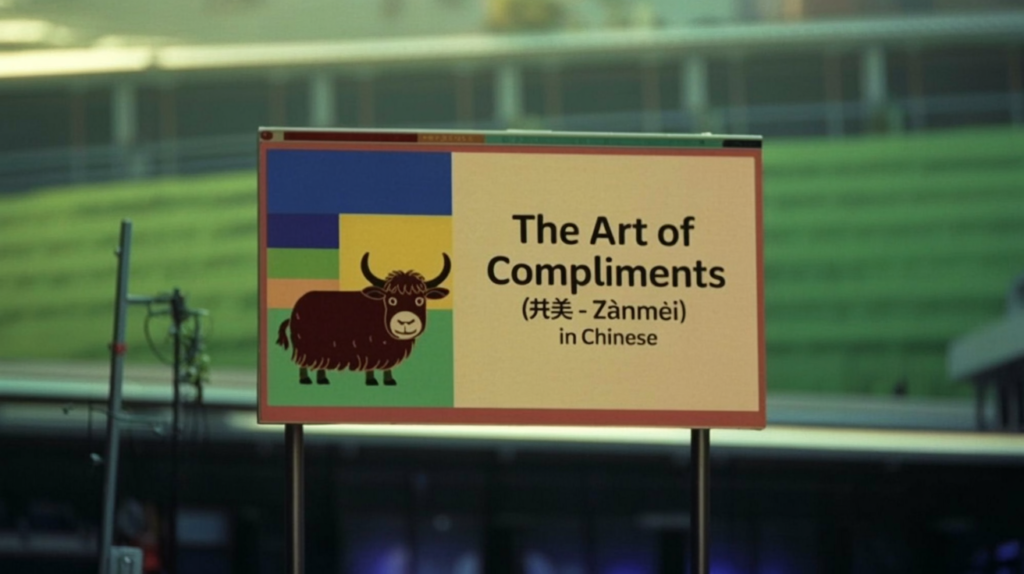
If there is one social lubricant that works faster than a cold Taiwan Beer on a humid Taipei night, it’s a well-placed compliment. In Mandarin Chinese, the art of 讚美 (zànměi – complimenting) is about more than just saying nice things; it’s a dance of humility, face-saving, and sincere observation.
Whether you want to tell your language exchange partner that their English is cracked (in a good way) or tell the bubble tea shop staff that their service is lightning fast, you need the right words. And no, just repeating “Hǎo” (Good) isn’t going to cut it.
Here is your guide to dishing out praise like a local in Taiwan, from safe everyday phrases to the slang that will make you sound like you grew up in Kaohsiung.
The Classics: Safe & Effective
These are your bread-and-butter compliments. You can use these with your boss, your teacher, or that auntie who just gave you a pineapple cake.
For Skills & Ability
The golden word in Taiwan is 厲害 (lìhài). It literally means “formidable” or “fierce,” but in conversation, it means “awesome” or “impressive.”
- 你很厲害!
nǐ hěn lìhài!
You’re awesome! / You’re so good at this! - 你中文說得很好。
nǐ Zhōngwén shuō de hěn hǎo.
You speak Chinese very well. (Expect this one often!) - 你好專業喔!
nǐ hǎo zhuānyè ō!
You’re so professional! (Great for service situations).
For Appearance
Keep it simple. Note that in Taiwan, commenting on someone’s “spirit” or “energy” is a very common and polite way to say they look good.
- 你今天氣色不錯。
nǐ jīntiān qìsè búcuò.
You look glowing/healthy today. (Literally: “Your ‘color of breath’ is not bad.”) - 這件衣服很適合你。
zhè jiàn yīfú hěn shìhé nǐ.
This outfit really suits you. - 你剪頭髮了嗎?很好看!
nǐ jiǎn tóufǎ le ma? hěn hǎokàn!
Did you get a haircut? It looks great!
The Taiwan Touch: Slang & Local Flavor
Want to sound like you didn’t just walk out of a textbook? Sprinkle these into your vocab.
1. 水喔 (shuì ō)
This is a loanword from Taiwanese Hokkien (where “sui” means beautiful), but it’s used constantly in Taiwan Mandarin. It’s not just for looks; it’s used like “Nice!” when someone does something cool, like sinking a basketball shot or fixing a bug in code.
- Situation: Friend sinks a paper ball into the trash can from across the room.
- You say: 水喔! (Shuì ō!)
2. 超強 (chāo qiáng)
Literally “super strong.” Use this when someone is incredibly skilled or dominates a task.
- Usage: 這家店的排骨飯超強。 (zhè jiā diàn de páigǔfàn chāo qiáng.) – This shop’s pork chop rice is god-tier.
3. 很有 sense (hěn yǒu sense)
Yes, Taiwanese people use the English word “sense” here. It implies someone has good taste, social awareness, or just “gets it.”
- Usage: 你選這首歌很有 sense 耶。 (nǐ xuǎn zhè shǒu gē hěn yǒu sense ye.) – You have great taste picking this song.
The Dance: How to Receive a Compliment
In Western culture, we say “Thank you.” In traditional Chinese culture, we deny, deny, deny. Accepting a compliment too eagerly can be seen as arrogant. However, younger Taiwanese people are shifting this trend.
The Traditional Deflection
- 哪裡,哪裡。 (nǎlǐ, nǎlǐ.) – “Where? Where?” (Implying: Where is this ‘good’ quality you speak of? It doesn’t exist!).
- 沒有啦,運氣好而已。 (méiyǒu la, yùnqì hǎo éryǐ.) – “No way, just good luck, that’s all.”
The Modern Humble-Accept
Younger people (under 40) might accept it but immediately downplay it to stay humble.
- 謝謝,是你過獎了。 (xièxie, shì nǐ guòjiǎng le.) – Thanks, you flatter me.
- 真的嗎?謝謝! (zhēn de ma? xièxie!) – Really? Thanks! (Add a shy smile for effect).
Swap-in Templates
Use these patterns to build your own compliments.
1. The “Exclamation” Pattern
[Subject] + 好 (hǎo – so) + [Adjective] + 喔/耶 (ō/ye – sentence particles)
- 你的點子好棒喔! (nǐ de diǎnzǐ hǎo bàng ō!) – Your idea is so great!
- 這台電腦好快耶! (zhè tái diànnǎo hǎo kuài ye!) – This computer is so fast!
2. The “Action” Pattern
[Subject] + [Verb] + 得 (de) + [Adverb/Compliment]
- 你歌唱得真好聽。 (nǐ gē chàng de zhēn hǎotīng.) – You sing really well.
- 你做飯做得太好吃了。 (nǐ zuòfàn zuò de tài hǎochī le.) – You cook deliciously.
Mini-Dialogues
Dialogue 1: The New Outfit
- A: 哇,你穿這件襯衫很帥耶!
Wā, nǐ chuān zhè jiàn chènshān hěn shuài ye!
(Wow, you look handsome in this shirt!) - B: 真的嗎?這是我在夜市買的,很便宜。
Zhēn de ma? Zhè shì wǒ zài Yèshì mǎi de, hěn piányí.
(Really? I bought this at the Night Market, it was cheap.) - A: 你眼光真好!
Nǐ yǎnguāng zhēn hǎo!
(You have great taste!)
Dialogue 2: The Skill Flex
- A: 你剛剛那個報告做得超強,老闆看起來很滿意。
Nǐ gānggāng nàge bàogào zuò de chāo qiáng, lǎobǎn kànqǐlái hěn mǎnyì.
(That presentation you just did was super strong; the boss looked very satisfied.) - B: 沒有啦,大家幫忙而已。
Méiyǒu la, dàjiā bāngmáng éryǐ.
(No way, everyone helped out.)
Quick Reference Table
| Chinese | Pinyin | Meaning | Context |
| 厲害 | lìhài | Awesome / Impressive | General skills |
| 漂亮 | piàoliang | Beautiful | Appearance (Female/Objects) |
| 帥 | shuài | Handsome | Appearance (Male) |
| 水喔 | shuì ō | Nice! / Sweet! | Casual / Slang |
| 辛苦了 | xīnkǔ le | You’ve worked hard | Appreciation for effort |
| 專業 | zhuānyè | Professional | Work / Service |
| 眼光好 | yǎnguāng hǎo | Good taste | Shopping / Choices |
Yak’s Final Thought
Remember, in Taiwan, the particle at the end of the sentence is half the flavor. Adding a soft “喔” (ō) or enthusiastic “耶” (ye) makes your compliment sound friendly and genuine. If you just say “你很漂亮” (You are pretty) like a robot, it sounds creepy. Say “你今天很漂亮耶!” (Nǐ jīntiān hěn piàoliang ye!) and you’re winning hearts. Go out there and make someone’s day!