


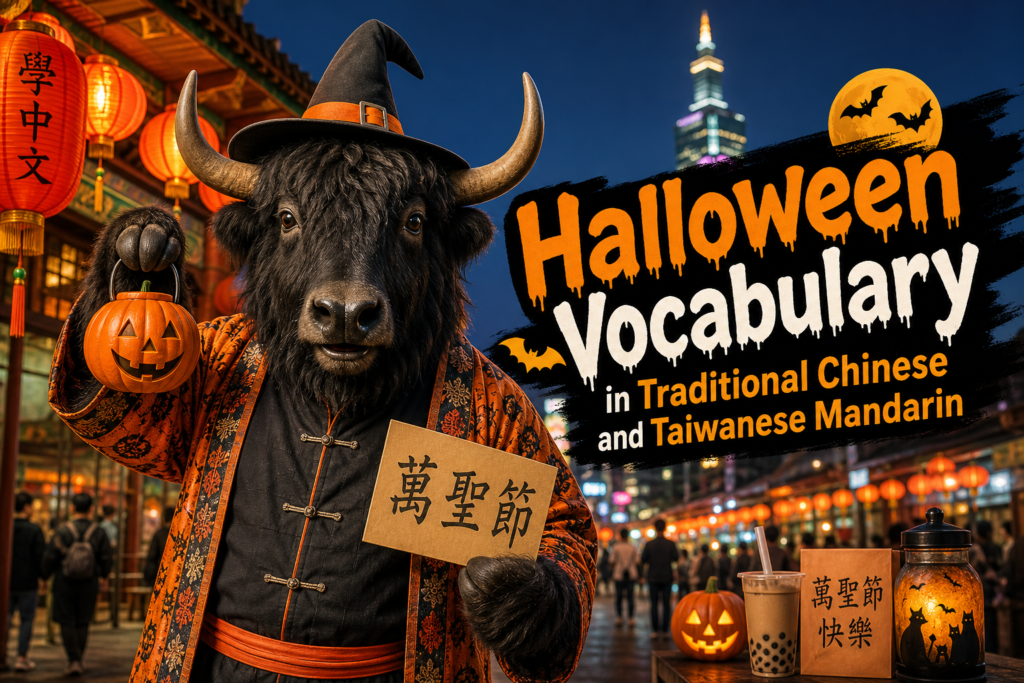
Halloween in Taiwan is not an ancient local festival, but it has become very easy to spot: kids in capes, cafés with fake spiderwebs, pumpkin-shaped candy buckets, and at least one person wearing cat ears because “close enough.”
For the broader learning path, visit our parent guide.
One phrase does most of the heavy lifting: 萬聖節 wàn shèng jié, meaning “Halloween.” By the end of this guide, you will know 100+ useful Halloween words and phrases in Traditional Chinese, with pinyin, English meanings, and real example sentences.
Tiny plastic pumpkins have entered the chat.
If you are building your Traditional Chinese vocabulary, you may also like the main Traditional Chinese vocabulary hub, the fun culture section at Culture and Fun, plus related guides for colors in Traditional Chinese and animal names in Traditional Chinese.
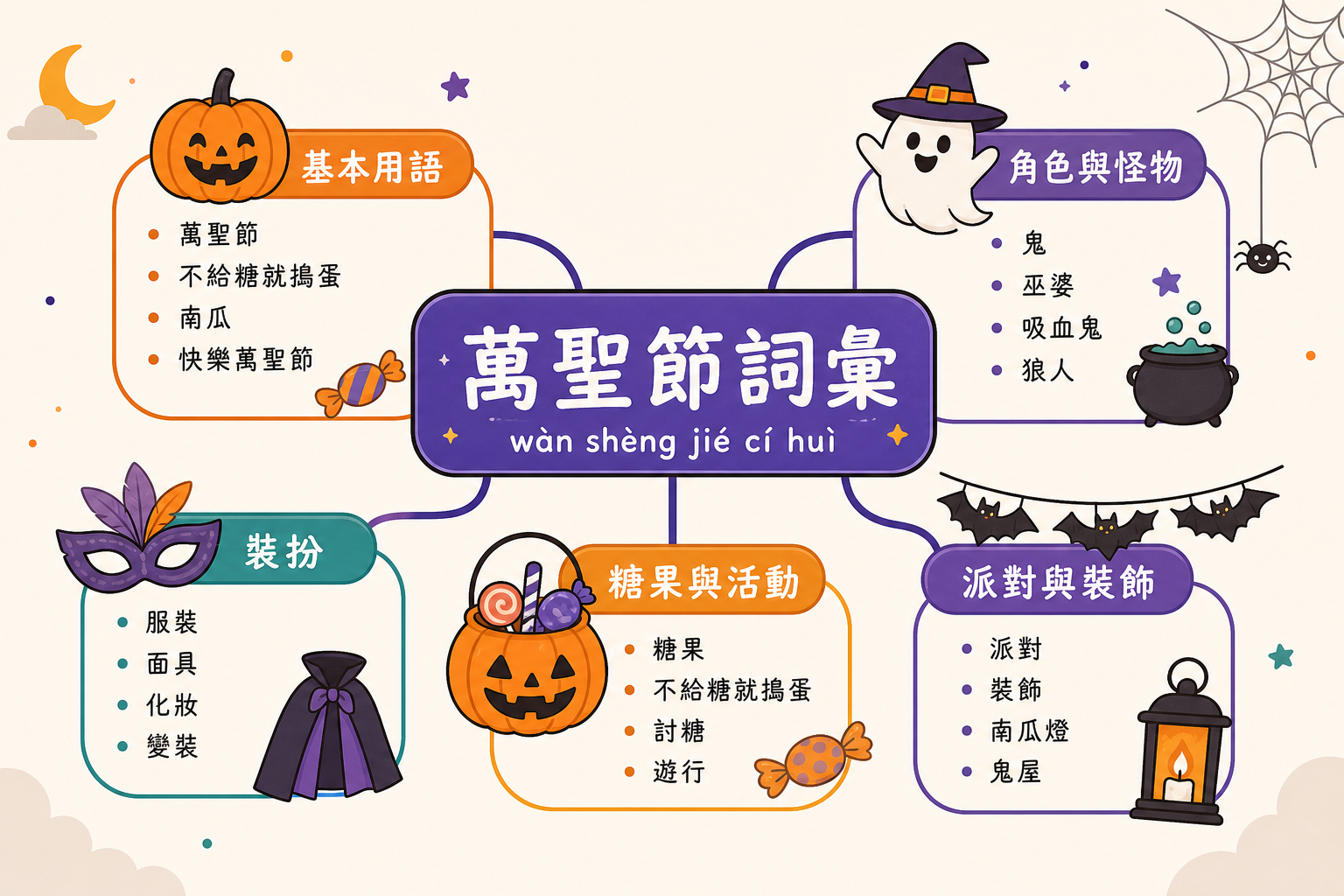
萬聖節 Wàn Shèng Jié Basics
Start here. These are the core Halloween words you will actually hear or see in Taiwan around late October, especially in schools, malls, cafés, and family events.
| Traditional Chinese | Pinyin | Meaning | Example (ZH) | Example (Pinyin) | Translation (EN) |
|---|---|---|---|---|---|
| 萬聖節 | wàn shèng jié | Halloween | 今天是萬聖節。 | Jīntiān shì wàn shèng jié. | Today is Halloween. |
| 萬聖節快樂 | wàn shèng jié kuài lè | Happy Halloween | 萬聖節快樂! | Wàn shèng jié kuài lè! | Happy Halloween! |
| 不給糖就搗蛋 | bù gěi táng jiù dǎo dàn | trick or treat | 小朋友說:「不給糖就搗蛋!」 | Xiǎo péng yǒu shuō: “Bù gěi táng jiù dǎo dàn!” | The kids say, “Trick or treat!” |
| 糖果 | táng guǒ | candy | 我買了很多糖果。 | Wǒ mǎi le hěn duō táng guǒ. | I bought a lot of candy. |
| 南瓜 | nán guā | pumpkin | 這個南瓜很可愛。 | Zhè ge nán guā hěn kě ài. | This pumpkin is cute. |
| 南瓜燈 | nán guā dēng | jack-o’-lantern | 門口有一個南瓜燈。 | Mén kǒu yǒu yí ge nán guā dēng. | There is a jack-o’-lantern by the door. |
| 變裝 | biàn zhuāng | to dress up; costume dress-up | 我們明天要變裝。 | Wǒ men míng tiān yào biàn zhuāng. | We are going to dress up tomorrow. |
| 裝扮 | zhuāng bàn | costume; outfit; styling | 你的裝扮很酷。 | Nǐ de zhuāng bàn hěn kù. | Your costume is cool. |
| 派對 | pài duì | party | 今晚有萬聖節派對。 | Jīn wǎn yǒu wàn shèng jié pài duì. | There is a Halloween party tonight. |
| 活動 | huó dòng | event; activity | 學校有萬聖節活動。 | Xué xiào yǒu wàn shèng jié huó dòng. | The school has a Halloween event. |
| 恐怖 | kǒng bù | scary; horror | 這部電影很恐怖。 | Zhè bù diàn yǐng hěn kǒng bù. | This movie is scary. |
| 可怕 | kě pà | scary; frightening | 那個面具太可怕了。 | Nà ge miàn jù tài kě pà le. | That mask is too scary. |
Yak tip: In Taiwan, 變裝 biàn zhuāng is very common for “dressing up,” especially for parties and school events. It does not have to mean a full movie-level costume. Cat ears count. Apparently.
Costumes And Party Words
These words help you talk about costumes, masks, photos, and all the social pressure of pretending you planned your outfit more than five minutes ago.
| Traditional Chinese | Pinyin | Meaning | Example (ZH) | Example (Pinyin) | Translation (EN) |
|---|---|---|---|---|---|
| 服裝 | fú zhuāng | clothing; costume | 這套服裝很適合你。 | Zhè tào fú zhuāng hěn shì hé nǐ. | This outfit suits you well. |
| 戲服 | xì fú | costume; theatrical clothing | 她租了一套女巫戲服。 | Tā zū le yí tào nǚ wū xì fú. | She rented a witch costume. |
| 面具 | miàn jù | mask | 我忘了帶面具。 | Wǒ wàng le dài miàn jù. | I forgot to bring a mask. |
| 假髮 | jiǎ fǎ | wig | 這頂假髮是紫色的。 | Zhè dǐng jiǎ fǎ shì zǐ sè de. | This wig is purple. |
| 披風 | pī fēng | cape; cloak | 吸血鬼需要黑色披風。 | Xī xuè guǐ xū yào hēi sè pī fēng. | A vampire needs a black cape. |
| 道具 | dào jù | prop | 這把假刀只是道具。 | Zhè bǎ jiǎ dāo zhǐ shì dào jù. | This fake knife is only a prop. |
| 化妝 | huà zhuāng | makeup; to put on makeup | 他今天化妝成殭屍。 | Tā jīn tiān huà zhuāng chéng jiāng shī. | He put on makeup to look like a zombie today. |
| 臉彩 | liǎn cǎi | face paint | 小朋友喜歡畫臉彩。 | Xiǎo péng yǒu xǐ huān huà liǎn cǎi. | Kids like getting face paint. |
| 角色 | jué sè | character; role | 你今天扮演什麼角色? | Nǐ jīn tiān bàn yǎn shén me jué sè? | What character are you playing today? |
| 扮演 | bàn yǎn | to play the role of | 我想扮演魔法師。 | Wǒ xiǎng bàn yǎn mó fǎ shī. | I want to play a wizard. |
| 拍照 | pāi zhào | to take photos | 我們一起拍照吧。 | Wǒ men yì qǐ pāi zhào ba. | Let’s take a photo together. |
| 合照 | hé zhào | group photo; photo together | 可以跟你合照嗎? | Kě yǐ gēn nǐ hé zhào ma? | Can I take a photo with you? |
Monsters And Spooky Creatures
Here come the classics: ghosts, witches, vampires, bats, spiders, and the suspicious skeleton who has clearly been skipping calcium.
| Traditional Chinese | Pinyin | Meaning | Example (ZH) | Example (Pinyin) | Translation (EN) |
|---|---|---|---|---|---|
| 鬼 | guǐ | ghost | 他說他看到了鬼。 | Tā shuō tā kàn dào le guǐ. | He said he saw a ghost. |
| 幽靈 | yōu líng | ghost; spirit | 故事裡有一個幽靈。 | Gù shì lǐ yǒu yí ge yōu líng. | There is a ghost in the story. |
| 女巫 | nǚ wū | witch | 她打扮成女巫。 | Tā dǎ bàn chéng nǚ wū. | She dressed up as a witch. |
| 巫師 | wū shī | wizard; sorcerer | 這位巫師會變魔術。 | Zhè wèi wū shī huì biàn mó shù. | This wizard can do magic. |
| 吸血鬼 | xī xuè guǐ | vampire | 吸血鬼怕太陽。 | Xī xuè guǐ pà tài yáng. | Vampires are afraid of the sun. |
| 狼人 | láng rén | werewolf | 狼人晚上會變身。 | Láng rén wǎn shàng huì biàn shēn. | A werewolf transforms at night. |
| 殭屍 | jiāng shī | zombie; jiangshi | 他走路像殭屍。 | Tā zǒu lù xiàng jiāng shī. | He walks like a zombie. |
| 骷髏 | kū lóu | skeleton | 牆上掛著骷髏裝飾。 | Qiáng shàng guà zhe kū lóu zhuāng shì. | Skeleton decorations are hanging on the wall. |
| 怪物 | guài wù | monster | 這個怪物一點也不可怕。 | Zhè ge guài wù yì diǎn yě bù kě pà. | This monster is not scary at all. |
| 惡魔 | è mó | demon; devil | 他的惡魔角是假的。 | Tā de è mó jiǎo shì jiǎ de. | His demon horns are fake. |
| 蝙蝠 | biān fú | bat | 洞裡有很多蝙蝠。 | Dòng lǐ yǒu hěn duō biān fú. | There are many bats in the cave. |
| 蜘蛛 | zhī zhū | spider | 桌上有一隻假蜘蛛。 | Zhuō shàng yǒu yì zhī jiǎ zhī zhū. | There is a fake spider on the table. |
| 黑貓 | hēi māo | black cat | 那隻黑貓很安靜。 | Nà zhī hēi māo hěn ān jìng. | That black cat is very quiet. |
| 烏鴉 | wū yā | crow | 樹上有一隻烏鴉。 | Shù shàng yǒu yì zhī wū yā. | There is a crow in the tree. |
Want more creature names beyond spooky season? Try the guide to animal names in Traditional Chinese.
Places, Decorations, And Creepy Objects
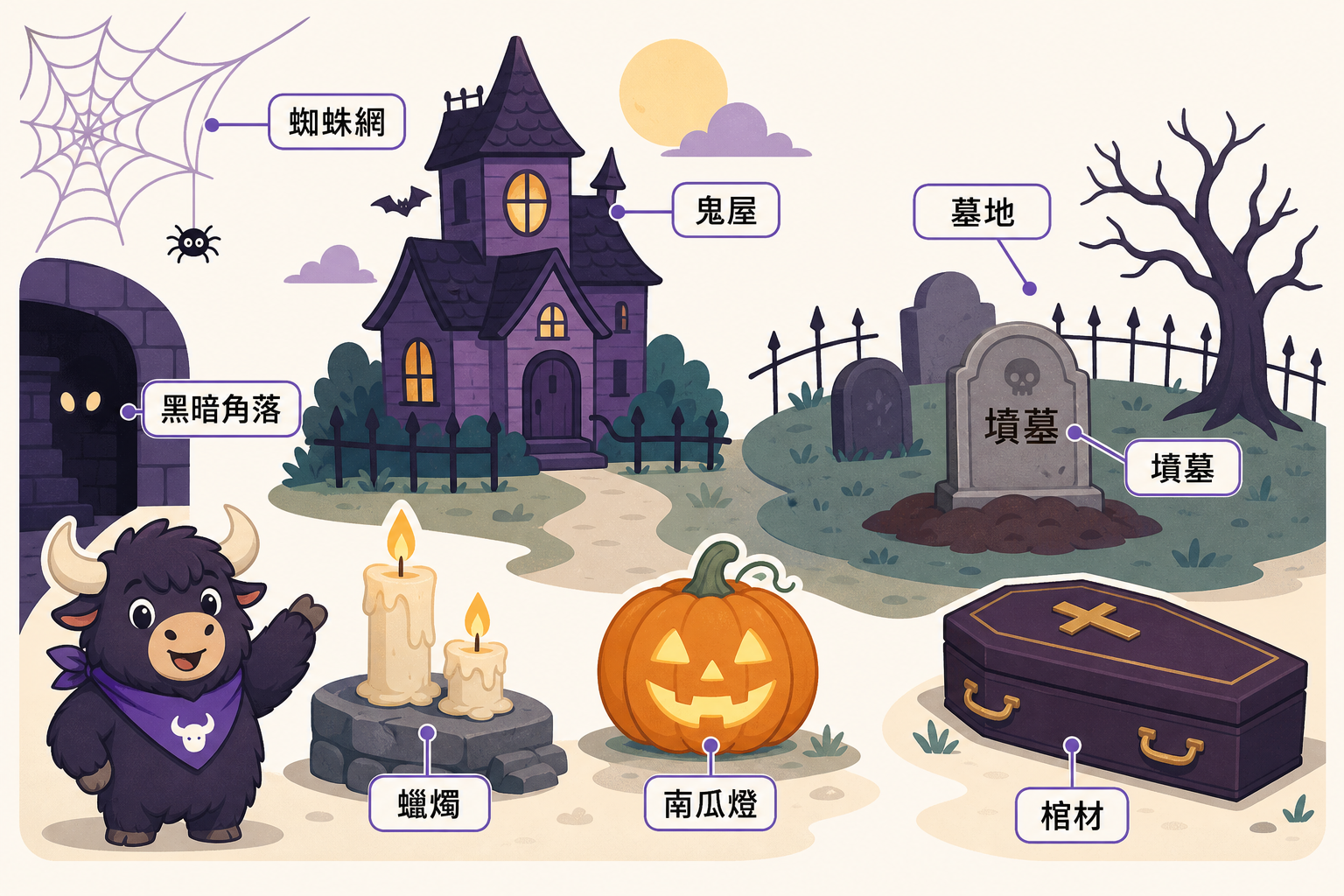
Halloween language is full of locations and props: haunted houses, dark corners, spiderwebs, candles, coffins, and other things nobody wants to step on barefoot.
| Traditional Chinese | Pinyin | Meaning | Example (ZH) | Example (Pinyin) | Translation (EN) |
|---|---|---|---|---|---|
| 鬼屋 | guǐ wū | haunted house | 我們去鬼屋玩吧。 | Wǒ men qù guǐ wū wán ba. | Let’s go to the haunted house. |
| 墓地 | mù dì | graveyard; cemetery | 晚上不要去墓地。 | Wǎn shàng bú yào qù mù dì. | Do not go to the cemetery at night. |
| 墳墓 | fén mù | grave; tomb | 故事從一座墳墓開始。 | Gù shì cóng yí zuò fén mù kāi shǐ. | The story starts from a grave. |
| 棺材 | guān cái | coffin | 鬼屋裡有一個假棺材。 | Guǐ wū lǐ yǒu yí ge jiǎ guān cái. | There is a fake coffin in the haunted house. |
| 蜘蛛網 | zhī zhū wǎng | spMore Traditional Chinese to explore How to Type Traditional Chinese Best graded readers for Traditional Chinese Sima Guang Breaks the Vat: A Beginner Chinese Story with Audio – A1 Level Nezha Conquers the Dragon King: A2 Elementary Traditional Chinese Story with Audio |