Easter Vocabulary in Traditional Chinese: 60+ Words You’ll Actually Use
Say it like a human: Easter words, pinyin, and real sentences. 主題:復活節詞彙
Want to talk about Easter without sounding like you swallowed a hymn book (or a greeting card)? Here are the most useful Easter words and phrases in Traditional Chinese, with pinyin (tone marks) and real-life example sentences.
Audio tip: hit the 🔊 buttons to hear Taiwan Mandarin (zh-TW). The audio uses Hanzi (not pinyin), because your browser is not here for your tone-number era.
Easter vocab is basically: eggs, bunnies, and people arguing about brunch. The good news: Chinese handles all three beautifully.
Section 1: Quick Visual Cards (the “I need this now” list)
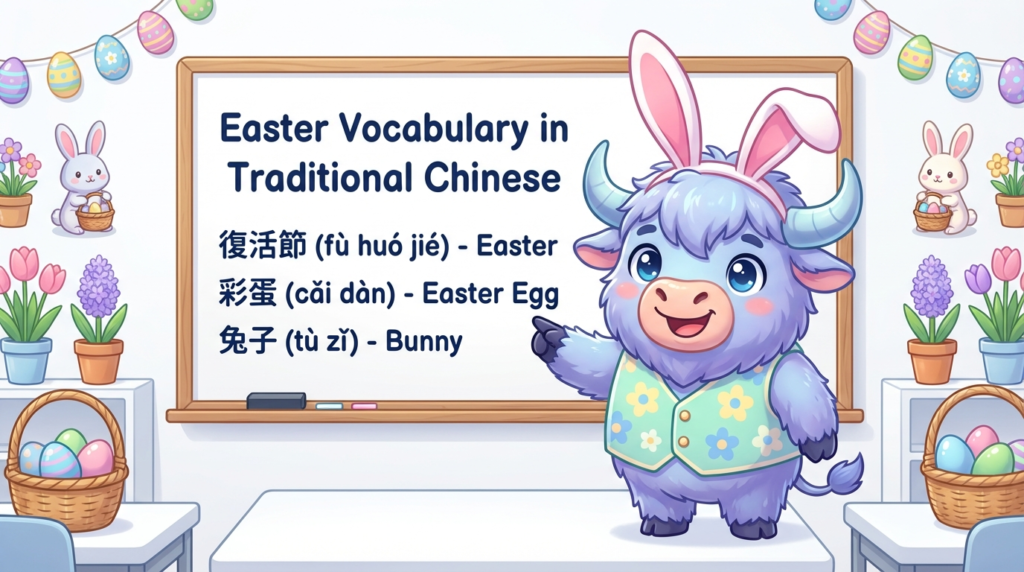
復活節
Easter
復活節快樂
Happy Easter
彩蛋
decorated egg / “Easter egg”
復活節兔子
the Easter Bunny
彩蛋尋寶
egg hunt
巧克力蛋
chocolate egg
教堂
church
早午餐
brunch
Mini examples for the card words (so they don’t float away)
Section 1.01: Ready-to-use phrases and sentences
Copy-paste these into real life. Or at least into a group chat.
Section 1.1: One fun thing about 彩蛋 (it’s not just eggs)
In Chinese, 彩蛋 literally means “colorful egg,” so yes: it’s your classic Easter egg. But modern Chinese also uses 彩蛋 for a hidden bonus in a movie/game/app (a secret cameo, a joke, a hidden button… you get the idea).
Quick contrast:
- 做彩蛋 (zuò cǎi dàn) = decorate Easter eggs
- 電影彩蛋 (diàn yǐng cǎi dàn) = an Easter egg (hidden reference) in a film
Section 2: Table of Words (the full Easter toolkit)
2A) Faith, church, and the Easter timeline
| Traditional Chinese | Pinyin | Meaning (EN) | Example (ZH + pinyin) | Translation (EN) | Audio |
|---|---|---|---|---|---|
| 復活 | fù huó | resurrection | 很多人用復活節紀念耶穌的復活。 hěn duō rén yòng fù huó jié jì niàn yē sū de fù huó. | Many people use Easter to remember Jesus’s resurrection. | |
| 受難 | shòu nàn | suffering; Passion (religious) | 受難的故事在聖週常常被提到。 shòu nàn de gù shì zài shèng zhōu cháng cháng bèi tí dào. | The story of the Passion is often mentioned during Holy Week. | |
| 受難日 | shòu nàn rì | Good Friday | 受難日那天,教堂的氣氛比較莊重。 shòu nàn rì nà tiān, jiào táng de qì fēn bǐ jiào zhuāng zhòng. | On Good Friday, the mood in church is more solemn. | |
| 聖週 | shèng zhōu | Holy Week | 聖週從棕枝主日開始。 shèng zhōu cóng zōng zhī zhǔ rì kāi shǐ. | Holy Week begins with Palm Sunday. | |
| 四旬期 | sì xún qī | Lent | 四旬期有些人會少吃甜食。 sì xún qī yǒu xiē rén huì shǎo chī tián shí. | During Lent, some people eat fewer sweets. | |
| 棕枝主日 | zōng zhī zhǔ rì | Palm Sunday | 棕枝主日很多人會拿棕枝來紀念。 zōng zhī zhǔ rì hěn duō rén huì ná zōng zhī lái jì niàn. | On Palm Sunday, many people hold palm branches to commemorate it. | |
| 十字架 | shí zì jià | cross | 教堂前面有一個很大的十字架。 jiào táng qián miàn yǒu yí gè hěn dà de shí zì jià. | There’s a big cross in front of the church. | |
| 釘十字架 | dīng shí zì jià | crucifixion | 這幅畫描繪了釘十字架的場景。 zhè fú huà miáo huì le dīng shí zì jià de chǎng jǐng. | This painting depicts the scene of the crucifixion. | |
| 耶穌 | yē sū | Jesus | 很多人會在復活節談到耶穌。 hěn duō rén huì zài fù huó jié tán dào yē sū. | Many people talk about Jesus during Easter. | |
| 基督 | jī dū | Christ | 「基督」常出現在宗教歌曲裡。 jī dū cháng chū xiàn zài zōng jiào gē qǔ lǐ. | “Christ” often appears in religious songs. | |
| 基督徒 | jī dū tú | Christian | 我的朋友是基督徒,復活節會去做禮拜。 wǒ de péng yǒu shì jī dū tú, fù huó jié huì qù zuò lǐ bài. | My friend is Christian and goes to church on Easter. | |
| 聖經 | shèng jīng | Bible | 他們在教堂一起讀聖經。 tā men zài jiào táng yì qǐ dú shèng jīng. | They read the Bible together at church. | |
| 禮拜 | lǐ bài | worship service (common) | 復活節禮拜通常人很多。 fù huó jié lǐ bài tōng cháng rén hěn duō. | Easter services are usually crowded. | |
| 彌撒 | mí sà | Mass (Catholic) | 他們一家人會參加復活節彌撒。 tā men yì jiā rén huì cān jiā fù huó jié mí sà. | Their family attends Easter Mass. | |
| 祈禱 | qí dǎo | to pray | 我們吃飯前先祈禱一下。 wǒ men chī fàn qián xiān qí dǎo yí xià. | We pray briefly before eating. | |
| 祝福 | zhù fú | blessing; to bless | 復活節大家互相說祝福。 fù huó jié dà jiā hù xiāng shuō zhù fú. | On Easter, people exchange blessings. | |
| 聖餐 | shèng cān | communion | 有些教會在復活節會舉行聖餐。 yǒu xiē jiào huì zài fù huó jié huì jǔ xíng shèng cān. | Some churches hold communion on Easter. | |
| 洗禮 | xǐ lǐ | baptism | 他在復活節受洗,家人都來了。 tā zài fù huó jié shòu xǐ, jiā rén dōu lái le. | He was baptized on Easter, and his family came. | |
| 平安 | píng ān | peace; safe & sound | 祝你復活節平安,也祝你健康。 zhù nǐ fù huó jié píng ān, yě zhù nǐ jiàn kāng. | Wishing you peace this Easter, and good health too. |
2B) Symbols and decorations (eggs, flowers, sparkly chaos)
| Traditional Chinese | Pinyin | Meaning (EN) | Example (ZH + pinyin) | Translation (EN) | Audio |
|---|---|---|---|---|---|
| 蛋 | dàn | egg | 這顆蛋要拿來染色。 zhè kē dàn yào ná lái rǎn sè. | This egg is for dyeing. | |
| 蛋殼 | dàn ké | eggshell | 蛋殼要輕輕剝,不然會碎。 dàn ké yào qīng qīng bō, bù rán huì suì. | Peel the eggshell gently, or it’ll crack. | |
| 煮蛋 | zhǔ dàn | to boil eggs | 先煮蛋,再開始做裝飾。 xiān zhǔ dàn, zài kāi shǐ zuò zhuāng shì. | Boil the eggs first, then start decorating. | |
| 剝殼 | bō ké | to peel (a shell) | 我剝殼很慢,但很專心。 wǒ bō ké hěn màn, dàn hěn zhuān xīn. | I peel slowly, but with total focus. | |
| 染色 | rǎn sè | to dye (color) | 你想把蛋染色成粉紅色嗎? nǐ xiǎng bǎ dàn rǎn sè chéng fěn hóng sè ma? | Do you want to dye the egg pink? | |
| 顏料 | yán liào | paint; dye (material) | 顏料不要太厚,顏色才會漂亮。 yán liào bú yào tài hòu, yán sè cái huì piào liang. | Don’t apply the paint too thick, so the color looks nice. | |
| 彩繪 | cǎi huì | to paint/decorate (colorfully) | 小朋友最愛彩繪彩蛋。 xiǎo péng yǒu zuì ài cǎi huì cǎi dàn. | Kids love decorating Easter eggs the most. | |
| 貼紙 | tiē zhǐ | sticker | 我用貼紙做出小兔子的臉。 wǒ yòng tiē zhǐ zuò chū xiǎo tù zi de liǎn. | I used stickers to make a bunny face. | |
| 亮粉 | liàng fěn | glitter | 亮粉很美,但會黏到你的人生裡。 liàng fěn hěn měi, dàn huì nián dào nǐ de rén shēng lǐ. | Glitter is pretty, but it sticks to your whole life. | |
| 彩帶 | cǎi dài | ribbon | 把彩帶綁在籃子上就很有節日感。 bǎ cǎi dài bǎng zài lán zi shàng jiù hěn yǒu jié rì gǎn. | Tie ribbon on the basket and it instantly feels festive. | |
| 裝飾 | zhuāng shì | decoration; to decorate | 今年我們用花和蛋來裝飾桌子。 jīn nián wǒ men yòng huā hé dàn lái zhuāng shì zhuō zi. | This year we’re decorating the table with flowers and eggs. | |
| 佈置 | bù zhì | to arrange/set up (decor) | 我花了一小時佈置客廳。 wǒ huā le yì xiǎo shí bù zhì kè tīng. | I spent an hour setting up the living room. | |
| 百合 | bǎi hé | lily | 百合花香香的,很適合春天。 bǎi hé huā xiāng xiāng de, hěn shì hé chūn tiān. | Lilies smell great and fit spring perfectly. | |
| 復活節百合 | fù huó jié bǎi hé | Easter lily | 教堂裡擺了很多復活節百合。 jiào táng lǐ bǎi le hěn duō fù huó jié bǎi hé. | The church displayed many Easter lilies. | |
| 花圈 | huā quān | wreath | 門上掛一個花圈,看起來很溫暖。 mén shàng guà yí gè huā quān, kàn qǐ lái hěn wēn nuǎn. | Hang a wreath on the door and it feels cozy. | |
| 蠟燭 | là zhú | candle | 點蠟燭的時候要注意安全。 diǎn là zhú de shí hou yào zhù yì ān quán. | Be careful when lighting candles. | |
| 鐘聲 | zhōng shēng | bell sound; ringing bells | 我聽到教堂的鐘聲,就知道時間到了。 wǒ tīng dào jiào táng de zhōng shēng, jiù zhī dào shí jiān dào le. | I heard the church bells and knew it was time. | |
| 兔子 | tù zi | rabbit | 那隻兔子好可愛,一直跳來跳去。 nà zhī tù zi hǎo kě ài, yì zhí tiào lái tiào qù. | That rabbit is so cute, hopping around. | |
| 兔耳朵 | tù ěr duo | bunny ears | 她戴著兔耳朵拍照。 tā dài zhe tù ěr duo pāi zhào. | She wore bunny ears for photos. | |
| 兔尾巴 | tù wěi ba | bunny tail | 那個小白球像兔尾巴一樣。 nà gè xiǎo bái qiú xiàng tù wěi ba yí yàng. | That little white pom-pom looks like a bunny tail. | |
| 小雞 | xiǎo jī | chick | 復活節的裝飾常常有小雞圖案。 fù huó jié de zhuāng shì cháng cháng yǒu xiǎo jī tú àn. | Easter decorations often have chick designs. | |
| 小羊 | xiǎo yáng | lamb (little sheep) | 這個故事裡的小羊象徵溫柔。 zhè gè gù shì lǐ de xiǎo yáng xiàng zhēng wēn róu. | The lamb in this story symbolizes gentleness. | |
| 絨毛 | róng máo | fluffy fur; plush | 這個兔子玩偶的絨毛很軟。 zhè gè tù zi wán ǒu de róng máo hěn ruǎn. | This bunny plush is very soft. | |
| 可愛 | kě ài | cute | 你的彩蛋超可愛,我不忍心吃掉。 nǐ de cǎi dàn chāo kě ài, wǒ bù rěn xīn chī diào. | Your Easter egg is so cute I can’t bear to eat it. |
2C) Activities and social plans
| Traditional Chinese | Pinyin | Meaning (EN) | Example (ZH + pinyin) | Translation (EN) | Audio |
|---|---|---|---|---|---|
| 找彩蛋 | zhǎo cǎi dàn | to look for Easter eggs | 小朋友在草地上找彩蛋。 xiǎo péng yǒu zài cǎo dì shàng zhǎo cǎi dàn. | Kids are looking for Easter eggs on the grass. | |
| 藏起來 | cáng qǐ lái | to hide (something) | 把蛋藏起來,不要太明顯。 bǎ dàn cáng qǐ lái, bú yào tài míng xiǎn. | Hide the eggs—don’t make it too obvious. | |
| 找到 | zhǎo dào | to find | 我終於找到最後一顆蛋了! wǒ zhōng yú zhǎo dào zuì hòu yì kē dàn le! | I finally found the last egg! | |
| 籃子 | lán zi | basket | 把糖果放進籃子裡。 bǎ táng guǒ fàng jìn lán zi lǐ. | Put the candy into the basket. | |
| 復活節籃子 | fù huó jié lán zi | Easter basket | 她收到一個滿滿的復活節籃子。 tā shōu dào yí gè mǎn mǎn de fù huó jié lán zi. | She got a packed Easter basket. | |
| 禮物 | lǐ wù | gift | 這個小禮物很適合復活節。 zhè gè xiǎo lǐ wù hěn shì hé fù huó jié. | This little gift is perfect for Easter. | |
| 驚喜 | jīng xǐ | surprise | 盒子裡有一個驚喜,先別偷看。 hé zi lǐ yǒu yí gè jīng xǐ, xiān bié tōu kàn. | There’s a surprise in the box—no peeking yet. | |
| 復活節卡片 | fù huó jié kǎ piàn | Easter card | 我寫了一張復活節卡片給老師。 wǒ xiě le yì zhāng fù huó jié kǎ piàn gěi lǎo shī. | I wrote an Easter card to my teacher. | |
| 問候 | wèn hòu | greeting; to say hello | 我發訊息問候朋友,祝他復活節快樂。 wǒ fā xùn xī wèn hòu péng yǒu, zhù tā fù huó jié kuài lè. | I messaged my friend to greet him and wish him Happy Easter. | |
| 祝賀 | zhù hè | to congratulate; to send wishes | 大家互相祝賀,氣氛很溫馨。 dà jiā hù xiāng zhù hè, qì fēn hěn wēn xīn. | Everyone exchanged good wishes—the vibe was warm. | |
| 聚會 | jù huì | gathering | 週末有復活節聚會,你要來嗎? zhōu mò yǒu fù huó jié jù huì, nǐ yào lái ma? | There’s an Easter get-together this weekend—want to come? | |
| 家庭聚餐 | jiā tíng jù cān | family meal | 我們復活節會有家庭聚餐。 wǒ men fù huó jié huì yǒu jiā tíng jù cān. | We’ll have a family meal for Easter. | |
| 野餐 | yě cān | picnic | 天氣好就去公園野餐。 tiān qì hǎo jiù qù gōng yuán yě cān. | If the weather’s nice, we’ll picnic in the park. | |
| 遊行 | yóu xíng | parade | 有些城市會辦復活節遊行。 yǒu xiē chéng shì huì bàn fù huó jié yóu xíng. | Some cities hold Easter parades. | |
| 手作 | shǒu zuò | DIY; handmade | 我們做手作卡片,送給朋友。 wǒ men zuò shǒu zuò kǎ piàn, sòng gěi péng yǒu. | We made DIY cards to give to friends. | |
| 手工藝 | shǒu gōng yì | handicrafts | 復活節手工藝最常見的是彩蛋和兔子。 fù huó jié shǒu gōng yì zuì cháng jiàn de shì cǎi dàn hé tù zi. | The most common Easter crafts are eggs and bunnies. | |
| 剪紙 | jiǎn zhǐ | paper cutting | 我用剪紙做了小雞的形狀。 wǒ yòng jiǎn zhǐ zuò le xiǎo jī de xíng zhuàng. | I used paper cutting to make a chick shape. | |
| 拍照 | pāi zhào | to take photos | 大家戴著兔耳朵一起拍照。 dà jiā dài zhe tù ěr duo yì qǐ pāi zhào. | Everyone put on bunny ears and took photos together. | |
| 裝扮 | zhuāng bàn | to dress up; costume | 孩子們為了活動特別裝扮。 hái zi men wèi le huó dòng tè bié zhuāng bàn. | The kids dressed up especially for the event. | |
| 穿搭 | chuān dā | outfit/styling (modern) | 她的春天穿搭是粉紅加嫩綠。 tā de chūn tiān chuān dā shì fěn hóng jiā nèn lǜ. | Her spring outfit is pink plus pastel green. | |
| 兔子玩偶 | tù zi wán ǒu | bunny plush/toy | 我拿到一個兔子玩偶當作復活節禮物。 wǒ ná dào yí gè tù zi wán ǒu dāng zuò fù huó jié lǐ wù. | I got a bunny plush as an Easter gift. |
2D) Food and treats (aka “why we’re here”)
| Traditional Chinese | Pinyin | Meaning (EN) | Example (ZH + pinyin) | Translation (EN) | Audio |
|---|---|---|---|---|---|
| 巧克力 | qiǎo kè lì | chocolate | 我最喜歡黑巧克力。 wǒ zuì xǐ huān hēi qiǎo kè lì. | I like dark chocolate the most. | |
| 巧克力兔 | qiǎo kè lì tù | chocolate bunny | 那個巧克力兔太可愛了,捨不得咬。 nà gè qiǎo kè lì tù tài kě ài le, shě bú dé yǎo. | That chocolate bunny is so cute I don’t want to bite it. | |
| 糖果 | táng guǒ | candy | 孩子的籃子裡全是糖果。 hái zi de lán zi lǐ quán shì táng guǒ. | The kid’s basket is full of candy. | |
| 棉花糖 | mián huā táng | marshmallow | 他一口氣吃了三顆棉花糖。 tā yì kǒu qì chī le sān kē mián huā táng. | He ate three marshmallows in one go. | |
| 果凍 | guǒ dòng | jelly; gummy cup | 我把果凍放進復活節籃子當點心。 wǒ bǎ guǒ dòng fàng jìn fù huó jié lán zi dāng diǎn xīn. | I put jelly cups in the Easter basket as snacks. | |
| 蛋糕 | dàn gāo | cake | 我們訂了一個小蛋糕一起分享。 wǒ men dìng le yí gè xiǎo dàn gāo yì qǐ fēn xiǎng. | We ordered a small cake to share. | |
| 杯子蛋糕 | bēi zi dàn gāo | cupcake | 杯子蛋糕上面有彩色糖霜。 bēi zi dàn gāo shàng miàn yǒu cǎi sè táng shuāng. | The cupcakes have colorful icing on top. | |
| 餅乾 | bǐng gān | cookies | 我做了兔子形狀的餅乾。 wǒ zuò le tù zi xíng zhuàng de bǐng gān. | I made bunny-shaped cookies. | |
| 熱十字麵包 | rè shí zì miàn bāo | hot cross bun | 他說復活節一定要吃熱十字麵包。 tā shuō fù huó jié yí dìng yào chī rè shí zì miàn bāo. | He says you have to eat hot cross buns for Easter. | |
| 火腿 | huǒ tuǐ | ham | 早午餐常見的主菜是火腿。 zǎo wǔ cān cháng jiàn de zhǔ cài shì huǒ tuǐ. | A common brunch main dish is ham. | |
| 沙拉 | shā lā | salad | 我想要清爽一點,所以點沙拉。 wǒ xiǎng yào qīng shuǎng yì diǎn, suǒ yǐ diǎn shā lā. | I want something lighter, so I’m getting salad. | |
| 胡蘿蔔 | hú luó bo | carrot | 兔子最愛胡蘿蔔(至少卡通是這樣說)。 tù zi zuì ài hú luó bo (zhì shǎo kǎ tōng shì zhè yàng shuō). | Rabbits love carrots (at least cartoons say so). | |
| 彩色糖霜 | cǎi sè táng shuāng | colored icing | 我用彩色糖霜畫了小花。 wǒ yòng cǎi sè táng shuāng huà le xiǎo huā. | I used colored icing to draw little flowers. | |
| 奶油 | nǎi yóu | cream; butter (context-based) | 杯子蛋糕上面那層奶油太香了。 bēi zi dàn gāo shàng miàn nà céng nǎi yóu tài xiāng le. | The layer of cream on the cupcakes smells amazing. | |
| 果汁 | guǒ zhī | juice | 早午餐配一杯果汁剛剛好。 zǎo wǔ cān pèi yì bēi guǒ zhī gāng gāng hǎo. | A glass of juice with brunch is just right. |
2E) Spring vibes, dates, and “pretty colors”
| Traditional Chinese | Pinyin | Meaning (EN) | Example (ZH + pinyin) | Translation (EN) | Audio |
|---|---|---|---|---|---|
| 春天 | chūn tiān | spring (season) | 春天一到,大家就想出門走走。 chūn tiān yí dào, dà jiā jiù xiǎng chū mén zǒu zǒu. | When spring arrives, everyone wants to go out for a walk. | |
| 春意 | chūn yì | spring vibe; feeling of spring | 這家店的佈置很有春意。 zhè jiā diàn de bù zhì hěn yǒu chūn yì. | This shop’s decor feels very spring-like. | |
| 希望 | xī wàng | hope | 復活節的主題常常是希望。 fù huó jié de zhǔ tí cháng cháng shì xī wàng. | A common Easter theme is hope. | |
| 新生 | xīn shēng | new life; rebirth | 春天讓人覺得充滿新生。 chūn tiān ràng rén jué de chōng mǎn xīn shēng. | Spring makes people feel full of new life. | |
| 假期 | jià qī | holiday/vacation | 如果有假期,我想安排一個小旅行。 rú guǒ yǒu jià qī, wǒ xiǎng ān pái yí gè xiǎo lǚ xíng. | If I have a holiday, I want to plan a short trip. | |
| 春假 | chūn jià | spring break | 春假期間人很多,訂位要早一點。 chūn jià qī jiān rén hěn duō, dìng wèi yào zǎo yì diǎn. | During spring break it’s crowded—reserve earlier. | |
| 週末 | zhōu mò | weekend | 這個週末你想做什麼? zhè gè zhōu mò nǐ xiǎng zuò shén me? | What do you want to do this weekend? | |
| 星期日 | xīng qī rì | Sunday | 星期日早上比較安靜。 xīng qī rì zǎo shàng bǐ jiào ān jìng. | Sunday mornings are quieter. | |
| 復活節星期日 | fù huó jié xīng qī rì | Easter Sunday | 復活節星期日很多餐廳會很難訂位。 fù huó jié xīng qī rì hěn duō cān tīng huì hěn nán dìng wèi. | On Easter Sunday, many restaurants are hard to book. | |
| 復活節週末 | fù huó jié zhōu mò | Easter weekend | 復活節週末我們要去看朋友。 fù huó jié zhōu mò wǒ men yào qù kàn péng yǒu. | We’re visiting friends over Easter weekend. | |
| 日出 | rì chū | sunrise | 今天的日出很漂亮。 jīn tiān de rì chū hěn piào liang. | Today’s sunrise is beautiful. | |
| 日出禮拜 | rì chū lǐ bài | sunrise service | 有些地方會辦日出禮拜。 yǒu xiē dì fāng huì bàn rì chū lǐ bài. | Some places hold a sunrise service. | |
| 晨曦 | chén xī | dawn light | 晨曦的光很柔和。 chén xī de guāng hěn róu hé. | The dawn light is very soft. | |
| 粉紅 | fěn hóng | pink | 我把蛋染成粉紅色。 wǒ bǎ dàn rǎn chéng fěn hóng sè. | I dyed the egg pink. | |
| 淡紫 | dàn zǐ | light purple; lavender | 淡紫色很有春天的感覺。 dàn zǐ sè hěn yǒu chūn tiān de gǎn jué. | Lavender feels very spring-like. | |
| 天藍 | tiān lán | sky blue | 今天的天空是天藍色的。 jīn tiān de tiān kōng shì tiān lán sè de. | The sky is sky-blue today. | |
| 嫩綠 | nèn lǜ | pastel green; fresh green | 嫩綠色很適合復活節的佈置。 nèn lǜ sè hěn shì hé fù huó jié de bù zhì. | Pastel green is great for Easter decor. | |
| 金色 | jīn sè | gold (color) | 大家都在找金色的蛋。 dà jiā dōu zài zhǎo jīn sè de dàn. | Everyone is looking for the golden egg. | |
| 彩虹 | cǎi hóng | rainbow | 我畫了一個彩虹在蛋上面。 wǒ huà le yí gè cǎi hóng zài dàn shàng miàn. | I drew a rainbow on the egg. | |
| 彩蛋梗 | cǎi dàn gěng | “Easter egg” reference (slang) | 這集有一個彩蛋梗,只有老粉看得懂。 zhè jí yǒu yí gè cǎi dàn gěng, zhǐ yǒu lǎo fěn kàn de dǒng. | This episode has an Easter-egg reference—only longtime fans get it. |
Section 3: Useful variants and measure words
| What you want | Traditional Chinese | Pinyin | How it’s used | Audio |
|---|---|---|---|---|
| Easter egg (alt wording) | 彩蛋 / 復活蛋 | cǎi dàn / fù huó dàn | 彩蛋 is the common everyday choice. 復活蛋 exists but feels less natural in many places. | |
| Church service terms | 禮拜 / 彌撒 | lǐ bài / mí sà | 禮拜 is widely used (often Protestant). 彌撒 is Catholic Mass. | |
| Measure word: an egg | 一顆蛋 | yì kē dàn | 顆 is the go-to measure word for eggs (and other small round-ish things). | |
| Measure word: a rabbit | 一隻兔子 | yì zhī tù zi | 隻 is common for animals (and some things with “one unit” vibes). | |
| Measure word: a flower | 一朵百合 | yì duǒ bǎi hé | 朵 for flowers and clouds. Cute and extremely useful. | |
| Measure word: a card | 一張卡片 | yì zhāng kǎ piàn | 張 for flat things (paper, tickets, photos, cards). |
If you can say 復活節快樂 and 我們去找彩蛋吧!, you’re already winning. The rest is just bonus vocabulary… aka 彩蛋 for your brain.