


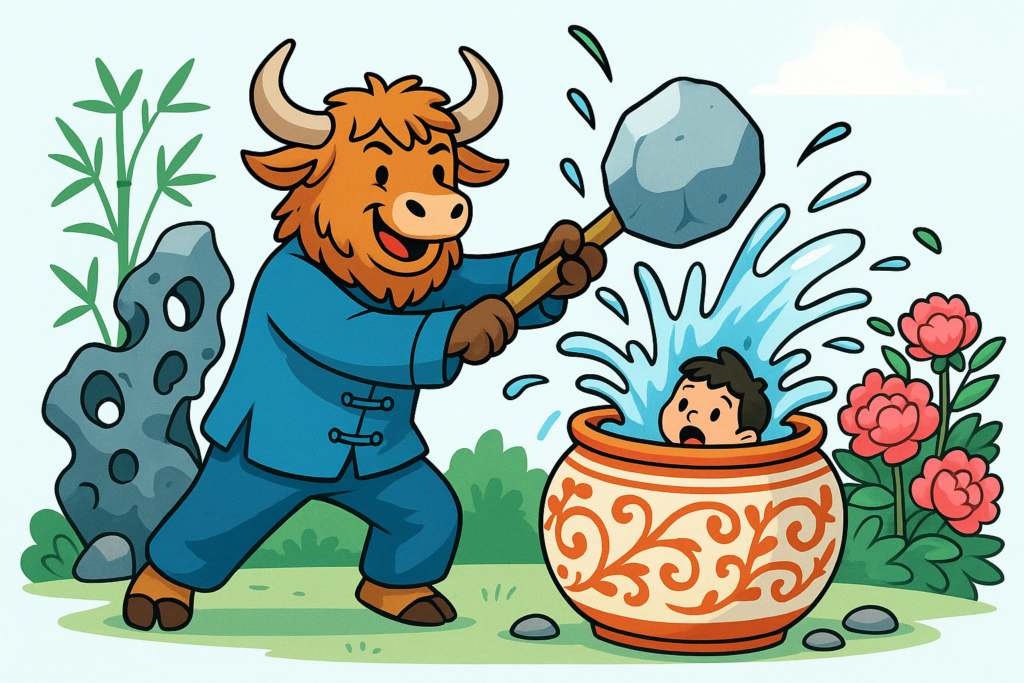
This A1 Beginner retelling of 司马光砸缸 keeps the plot clear for learners while still giving the story some atmosphere and momentum.
This version teaches Simplified Chinese through English and includes clickable word help inside the story, full story audio, and lesson notes after the reading. It is free to use on Yak Yacker and is designed to feel natural, readable, and manageable for learners.
司马光和小伙伴们在里玩。花园里有一个。
一个小朋友大水缸上。,"扑通"一声,他了水缸里!"救命!救命!"
其他的小朋友都很。哭,有的叫大人。"不好了!不好了!"
司马光不哭也不跑。他地上有一块。
司马光大石头,水缸。"一、二、三!"水缸,水流出来了。
小朋友从水缸里出来了,他!大人们来了,都说:"司马光,你真!"
Sima Guang and his friends were playing in a garden. There was a large water vat in the garden.
A child climbed onto the water vat. Suddenly, with a "plop," he fell into the vat! "Help! Help!"
The other children were very scared. Some cried, some ran to call adults. "Oh no! Oh no!"
Sima Guang neither cried nor ran. He saw a big rock on the ground.
Sima Guang picked up the big rock and smashed it against the vat. "One, two, three!" The vat broke, and water flowed out.
The child came out of the vat and was saved! The adults arrived and all said, "Sima Guang, you are so clever!"
Here are some of the key words from the story. You saw them in action, now let's make them yours!
- 水缸 (shuǐ gāng) - water vat
- 石头 (shí tou) - rock
- 砸 (zá) - to smash
- 破 (pò) - to break
- 聪明 (cōng ming) - smart
In the story, when the child fell in, the other kids reacted in different ways: "有的哭,有的跑去叫大人" - some cried, some ran to call the adults. This pattern is super useful when you want to talk about a group doing different things.
- Pattern: 有的 + Action A,有的 + Action B
- Example: 下课了,有的读书,有的聊天。(After class, some read, some chat.)
You just read a full story in Chinese! That's a big step. Try reading it out loud once more, imagining you're Sima Guang. Notice how the words and patterns work together. Next time you see "有的" in a story or video, you'll know exactly what's happening.
司马光砸缸 comes from the Chinese / idiom story tradition and is best known as a moral anecdote. This Yak Yacker article is an original learner retelling based on Traditional Song-dynasty anecdote; public domain, so the wording here is simplified for modern learners rather than copied from one old edition.
Older printings, translations, and retellings of this story can vary quite a bit. The original audience was usually kids, but this version is adapted for A1 Beginner learners studying Simplified Chinese. Good rescue story; simple action verbs.
If you want to look into the source tradition, start with Wikisource.
If you want to keep going, browse more in our Simplified Chinese section and review the HSK Level 1 Chinese Vocabulary. After that, try Essential Chinese Grammar Words for another useful next step.