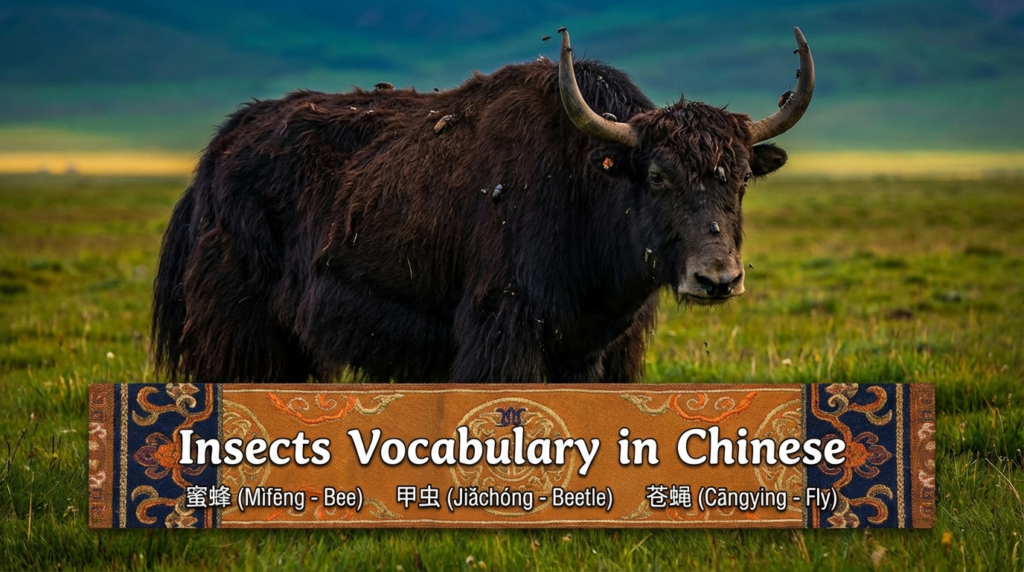
Learn 昆虫词汇 (kūnchóng cíhuì) with the words for insects, bugs, bites, and all the tiny creatures that can turn a peaceful picnic into a vocabulary lesson.
Bug words show up more often than most beginners expect. You hear them in parks, gardens, summer nights, apartment complaints, children’s books, and every conversation that starts with “what just bit me?” Not glamorous. Very useful.
Many short starter lists from ChineseClass101, Chinese4Kids, and Mandarin Corner cover the basics. Good start. This guide goes much further with casual bug words, garden insects, annoying pests, and natural phrases people actually say.
Nothing speeds up vocabulary like spotting a 蟑螂 (zhāngláng) in the kitchen. Sudden fluency is a weirdly effective teaching method.
Core Insect Words At A Glance
蚂蚁
mǎyǐ
ant
蜜蜂
mìfēng
bee
蝴蝶
húdié
butterfly
蜻蜓
qīngtíng
dragonfly
瓢虫
piáochóng
ladybug
萤火虫
yínghuǒchóng
firefly
蚊子
wénzi
mosquito
蟑螂
zhāngláng
cockroach
Useful Phrases And Real-Life Sentences
These are the phrases that make insect vocabulary actually usable. Learn them with the nouns, not later, because later is where vocabulary goes to fake its own disappearance.
Talking About What You See
| Phrase | Pinyin | Meaning | Example (ZH) | Example (Pinyin) | Translation (EN) |
|---|---|---|---|---|---|
| 一只昆虫 | yì zhī kūnchóng | one insect | 我看到一只昆虫停在窗边。 | Wǒ kàndào yì zhī kūnchóng tíng zài chuāngbiān. | I saw an insect land by the window. |
| 有虫子 | yǒu chóngzi | there are bugs | 花盆里有虫子。 | Huāpén lǐ yǒu chóngzi. | There are bugs in the flowerpot. |
| 蝴蝶在飞 | húdié zài fēi | butterflies are flying | 花园里蝴蝶在飞。 | Huāyuán lǐ húdié zài fēi. | Butterflies are flying in the garden. |
| 蜜蜂在采蜜 | mìfēng zài cǎimì | bees are collecting nectar | 那些蜜蜂在采蜜。 | Nàxiē mìfēng zài cǎimì. | Those bees are collecting nectar. |
| 蚂蚁排成一排 | mǎyǐ pái chéng yì pái | ants are in a line | 地上的蚂蚁排成一排。 | Dì shang de mǎyǐ pái chéng yì pái. | The ants on the ground are lined up. |
| 虫子在爬 | chóngzi zài pá | a bug is crawling | 一只虫子在墙上爬。 | Yì zhī chóngzi zài qiáng shàng pá. | A bug is crawling on the wall. |
| 草地上有蚱蜢 | cǎodì shàng yǒu zhàměng | there are grasshoppers in the grass | 周末我们在草地上看见蚱蜢。 | Zhōumò wǒmen zài cǎodì shàng kànjiàn zhàměng. | We saw grasshoppers in the grass on the weekend. |
| 公园里有很多蜻蜓 | gōngyuán lǐ yǒu hěn duō qīngtíng | there are many dragonflies in the park | 夏天公园里有很多蜻蜓。 | Xiàtiān gōngyuán lǐ yǒu hěn duō qīngtíng. | There are many dragonflies in the park in summer. |
| 晚上有萤火虫 | wǎnshang yǒu yínghuǒchóng | there are fireflies at night | 乡下晚上有萤火虫。 | Xiāngxià wǎnshang yǒu yínghuǒchóng. | There are fireflies at night in the countryside. |
| 夏天蝉叫得很大声 | xiàtiān chán jiào de hěn dàshēng | cicadas are loud in summer | 这儿夏天蝉叫得很大声。 | Zhèr xiàtiān chán jiào de hěn dàshēng. | The cicadas are very loud here in summer. |
Talking About Bites, Pests, And Problems
| Phrase | Pinyin | Meaning | Example (ZH) | Example (Pinyin) | Translation (EN) |
|---|---|---|---|---|---|
| 好多蚊子 | hǎo duō wénzi | so many mosquitoes | 河边晚上好多蚊子。 | Hébiān wǎnshang hǎo duō wénzi. | There are so many mosquitoes by the river at night. |
| 被蚊子咬了 | bèi wénzi yǎo le | got bitten by mosquitoes | 我昨晚被蚊子咬了。 | Wǒ zuówǎn bèi wénzi yǎo le. | I got bitten by mosquitoes last night. |
| 被蜜蜂蜇了 | bèi mìfēng zhē le | got stung by a bee | 他在公园里被蜜蜂蜇了。 | Tā zài gōngyuán lǐ bèi mìfēng zhē le. | He got stung by a bee in the park. |
| 小心马蜂 | xiǎoxīn mǎfēng | watch out for hornets | 那边有马蜂窝,小心马蜂。 | Nàbiān yǒu mǎfēngwō, xiǎoxīn mǎfēng. | There is a hornet nest over there, so watch out for hornets. |
| 不要碰毛毛虫 | búyào pèng máomaochóng | do not touch caterpillars | 老师说不要碰毛毛虫。 | Lǎoshī shuō búyào pèng máomaochóng. | The teacher said not to touch caterpillars. |
| 打蚊子 | dǎ wénzi | swat mosquitoes | 他拿报纸打蚊子。 | Tā ná bàozhǐ dǎ wénzi. | He uses a newspaper to swat mosquitoes. |
| 赶走苍蝇 | gǎn zǒu cāngying | shoo away flies | 请先把桌边的苍蝇赶走。 | Qǐng xiān bǎ zhuōbiān de cāngying gǎn zǒu. | Please shoo away the flies by the table first. |
| 家里有蟑螂 | jiālǐ yǒu zhāngláng | there are cockroaches at home | 夏天太热的时候家里有蟑螂。 | Xiàtiān tài rè de shíhou jiālǐ yǒu zhāngláng. | There are cockroaches at home when summer gets too hot. |
| 被白蚁蛀了 | bèi báiyǐ zhù le | damaged by termites | 这张旧桌子已经被白蚁蛀了。 | Zhè zhāng jiù zhuōzi yǐjīng bèi báiyǐ zhù le. | This old table has already been damaged by termites. |
| 蜘蛛在结网 | zhīzhū zài jié wǎng | the spider is spinning a web | 窗角那只蜘蛛在结网。 | Chuāngjiǎo nà zhī zhīzhū zài jié wǎng. | The spider in the corner of the window is spinning a web. |
Quick Notes That Save A Lot Of Confusion
- 昆虫 (kūnchóng) is the more exact word for “insect.”
- 虫子 (chóngzi) is the casual everyday word for “bug” or “creepy-crawly.” People use it loosely, which is how language behaves when science is not in charge.
- The most useful measure word is 只 (zhī): 一只蚂蚁 (yì zhī mǎyǐ), 一只蝴蝶 (yì zhī húdié), 一只蜜蜂 (yì zhī mìfēng).
- 蜘蛛 (zhīzhū), 蜈蚣 (wúgōng), and 蚯蚓 (qiūyǐn) are not true insects, but they often get taught with bug vocabulary because that is what learners usually need in real life.
Tables Of Words
Everyday And Garden Insects
| Hanzi | Pinyin | Meaning | ZH | Pinyin Example | EN |
|---|---|---|---|---|---|
| 昆虫 | kūnchóng | insect | 这本书介绍很多昆虫。 | Zhè běn shū jièshào hěn duō kūnchóng. | This book introduces many insects. |
| 虫子 | chóngzi | bug | 叶子上有一只小虫子。 | Yèzi shàng yǒu yì zhī xiǎo chóngzi. | There is a small bug on the leaf. |
| 蚂蚁 | mǎyǐ | ant | 地上有很多蚂蚁。 | Dì shang yǒu hěn duō mǎyǐ. | There are many ants on the ground. |
| 蜜蜂 | mìfēng | bee | 花上停着一只蜜蜂。 | Huā shàng tíngzhe yì zhī mìfēng. | A bee is resting on the flower. |
| 黄蜂 | huángfēng | wasp | 那只黄蜂看起来很凶。 | Nà zhī huángfēng kànqǐlái hěn xiōng. | That wasp looks fierce. |
| 马蜂 | mǎfēng | hornet | 树上有一个马蜂窝。 | Shù shàng yǒu yí gè mǎfēngwō. | There is a hornet nest in the tree. |
| 蝴蝶 | húdié | butterfly | 花园里有几只蝴蝶。 | Huāyuán lǐ yǒu jǐ zhī húdié. | There are a few butterflies in the garden. |
| 飞蛾 | fēi’é | moth | 晚上飞蛾总是往灯边飞。 | Wǎnshang fēi’é zǒng shì wǎng dēngbiān fēi. | Moths always fly toward the light at night. |
| 毛毛虫 | máomaochóng | caterpillar | 毛毛虫在叶子上慢慢爬。 | Máomaochóng zài yèzi shàng mànmàn pá. | The caterpillar is slowly crawling on the leaf. |
| 蜻蜓 | qīngtíng | dragonfly | 湖边有很多蜻蜓。 | Húbiān yǒu hěn duō qīngtíng. | There are many dragonflies by the lake. |
Summer, Noise, And Jumping Things
| Hanzi | Pinyin | Meaning | ZH | Pinyin Example | EN |
|---|---|---|---|---|---|
| 瓢虫 | piáochóng | ladybug | 瓢虫停在我的手上。 | Piáochóng tíng zài wǒ de shǒu shàng. | A ladybug landed on my hand. |
| 萤火虫 | yínghuǒchóng | firefly | 夏天晚上能看到萤火虫。 | Xiàtiān wǎnshang néng kàndào yínghuǒchóng. | You can see fireflies on summer nights. |
| 蚊子 | wénzi | mosquito | 夏天的蚊子特别多。 | Xiàtiān de wénzi tèbié duō. | There are especially many mosquitoes in summer. |
| 苍蝇 | cāngying | fly | 厨房里有一只苍蝇。 | Chúfáng lǐ yǒu yì zhī cāngying. | There is a fly in the kitchen. |
| 蟋蟀 | xīshuài | cricket | 晚上能听见蟋蟀叫。 | Wǎnshang néng tīngjiàn xīshuài jiào. | You can hear crickets at night. |
| 蚱蜢 | zhàměng | grasshopper | 草地上跳着一只蚱蜢。 | Cǎodì shàng tiàozhe yì zhī zhàměng. | A grasshopper is jumping in the grass. |
| 蝗虫 | huángchóng | locust | 农民怕蝗虫吃庄稼。 | Nóngmín pà huángchóng chī zhuāngjia. | Farmers worry about locusts eating crops. |
| 蝉 | chán | cicada | 夏天的蝉叫得很大声。 | Xiàtiān de chán jiào de hěn dàshēng. | Cicadas are very loud in summer. |
| 螳螂 | tángláng | praying mantis | 螳螂停在树枝上。 | Tángláng tíng zài shùzhī shàng. | A praying mantis is resting on the branch. |
| 甲虫 | jiǎchóng | beetle | 这只甲虫的壳很硬。 | Zhè zhī jiǎchóng de ké hěn yìng. | This beetle has a very hard shell. |
Pests And Other Creepy-Crawlies You Will Still Want To Name
| Hanzi | Pinyin | Meaning | ZH | Pinyin Example | EN |
|---|---|---|---|---|---|
| 蟑螂 | zhāngláng | cockroach | 我最怕厨房里的蟑螂。 | Wǒ zuì pà chúfáng lǐ de zhāngláng. | I am most afraid of cockroaches in the kitchen. |
| 白蚁 | báiyǐ | termite | 这些木头被白蚁蛀了。 | Zhèxiē mùtou bèi báiyǐ zhù le. | This wood has been damaged by termites. |
| 跳蚤 | tiàozao | flea | 小狗身上可能有跳蚤。 | Xiǎogǒu shēnshang kěnéng yǒu tiàozao. | The puppy may have fleas. |
| 臭虫 | chòuchóng | bedbug | 这张旧床上可能有臭虫。 | Zhè zhāng jiù chuáng shàng kěnéng yǒu chòuchóng. | There may be bedbugs on this old bed. |
| 虱子 | shīzi | louse | 小孩头上不能有虱子。 | Xiǎohái tóu shàng bù néng yǒu shīzi. | A child should not have lice in their hair. |
| 蚜虫 | yáchóng | aphid | 花盆里的叶子上有蚜虫。 | Huāpén lǐ de yèzi shàng yǒu yáchóng. | There are aphids on the leaves in the flowerpot. |
| 蚕 | cán | silkworm | 蚕会吃桑叶。 | Cán huì chī sāngyè. | Silkworms eat mulberry leaves. |
| 蜘蛛 | zhīzhū | spider | 墙角有一只蜘蛛。 | Qiángjiǎo yǒu yì zhī zhīzhū. | There is a spider in the corner of the wall. |
| 蜈蚣 | wúgōng | centipede | 雨后院子里跑出一条蜈蚣。 | Yǔ hòu yuànzi lǐ pǎo chū yì tiáo wúgōng. | After the rain, a centipede came out in the yard. |
| 蚯蚓 | qiūyǐn | earthworm | 下雨后地上常有蚯蚓。 | Xiàyǔ hòu dì shang cháng yǒu qiūyǐn. | There are often earthworms on the ground after rain. |
Bonus Words That Make You Sound Less Stuck
| Hanzi | Pinyin | Meaning | ZH | Pinyin Example | EN |
|---|---|---|---|---|---|
| 害虫 | hàichóng | pest | 菜地里有很多害虫。 | Càidì lǐ yǒu hěn duō hàichóng. | There are many pests in the vegetable patch. |
| 益虫 | yìchóng | beneficial insect | 瓢虫是常见的益虫。 | Piáochóng shì chángjiàn de yìchóng. | Ladybugs are a common beneficial insect. |
| 蜂窝 | fēngwō | hive; wasp or bee nest | 树上挂着一个蜂窝。 | Shù shàng guàzhe yí gè fēngwō. | There is a hive hanging in the tree. |
| 蜘蛛网 | zhīzhūwǎng | spider web | 门后有一张蜘蛛网。 | Mén hòu yǒu yì zhāng zhīzhūwǎng. | There is a spider web behind the door. |
| 七星瓢虫 | qīxīng piáochóng | seven-spotted ladybug | 叶子上有一只七星瓢虫。 | Yèzi shàng yǒu yì zhī qīxīng piáochóng. | There is a seven-spotted ladybug on the leaf. |
| 幼虫 | yòuchóng | larva | 这种昆虫的幼虫住在水里。 | Zhè zhǒng kūnchóng de yòuchóng zhù zài shuǐ lǐ. | The larva of this insect lives in water. |
| 成虫 | chéngchóng | adult insect | 这种昆虫的成虫会飞。 | Zhè zhǒng kūnchóng de chéngchóng huì fēi. | The adult form of this insect can fly. |
Useful Pairs And Easy Distinctions
| Pair | What It Means | Quick Fix |
|---|---|---|
| 昆虫 (kūnchóng) vs 虫子 (chóngzi) | “Insect” vs casual “bug” | Use 昆虫 (kūnchóng) when you want the exact word, and 虫子 (chóngzi) when you are speaking casually. |
| 蜜蜂 (mìfēng) vs 黄蜂 (huángfēng) | bee vs wasp | 蜜蜂 (mìfēng) makes honey; 黄蜂 (huángfēng) is the nastier one you do not want hovering near your drink. |
| 黄蜂 (huángfēng) vs 马蜂 (mǎfēng) | wasp vs hornet | 马蜂 (mǎfēng) is often used for larger, more aggressive hornets. |
| 蝴蝶 (húdié) vs 飞蛾 (fēi’é) | butterfly vs moth | Pretty daytime flutterer versus the nighttime lamp addict. |
| 蚱蜢 (zhàměng) vs 蝗虫 (huángchóng) | grasshopper vs locust | They are related, but 蝗虫 (huángchóng) is the word you will hear for crop-damaging locusts. |
| 瓢虫 (piáochóng) vs 七星瓢虫 (qīxīng piáochóng) | ladybug vs seven-spotted ladybug | 七星瓢虫 (qīxīng piáochóng) is a more specific type of ladybug. |
Tiny-Creature Memory Tricks That Actually Work
- Learn by place, not just by alphabet. Park words: 蝴蝶 (húdié), 蜻蜓 (qīngtíng), 蚂蚁 (mǎyǐ). Apartment words: 蚊子 (wénzi), 苍蝇 (cāngying), 蟑螂 (zhāngláng).
- Learn contrast pairs together: 蝴蝶 (húdié) and 飞蛾 (fēi’é), 蜜蜂 (mìfēng) and 黄蜂 (huángfēng), 蚱蜢 (zhàměng) and 蝗虫 (huángchóng).
- Notice how many bug words use the 虫 (chóng) component. Once your eyes catch that pattern, characters stop looking quite so random.
- Say the short phrases aloud. 被蚊子咬了 (bèi wénzi yǎo le) sticks very fast when it is unfortunately true.
FAQ
What Is The Difference Between 昆虫 (kūnchóng) And 虫子 (chóngzi)?
昆虫 (kūnchóng) is the exact word for “insect.” 虫子 (chóngzi) is the everyday casual word for “bug,” and people use it much more loosely.
What Measure Word Should Be Used For Insects?
The most useful one is 只 (zhī). You can say 一只蚂蚁 (yì zhī mǎyǐ), 一只蜜蜂 (yì zhī mìfēng), and 一只蝴蝶 (yì zhī húdié).
Is 蜘蛛 (zhīzhū) Really An Insect?
No. 蜘蛛 (zhīzhū) is a spider, not a true insect. But it still shows up in beginner bug vocabulary all the time because it is practical and common.
Which Insect Words Should Beginners Memorize First?
Start with 蚂蚁 (mǎyǐ), 蜜蜂 (mìfēng), 蝴蝶 (húdié), 蚊子 (wénzi), 苍蝇 (cāngying), 蜻蜓 (qīngtíng), 瓢虫 (piáochóng), and 蟑螂 (zhāngláng). Those cover the pretty ones, the useful ones, and the deeply annoying ones.