


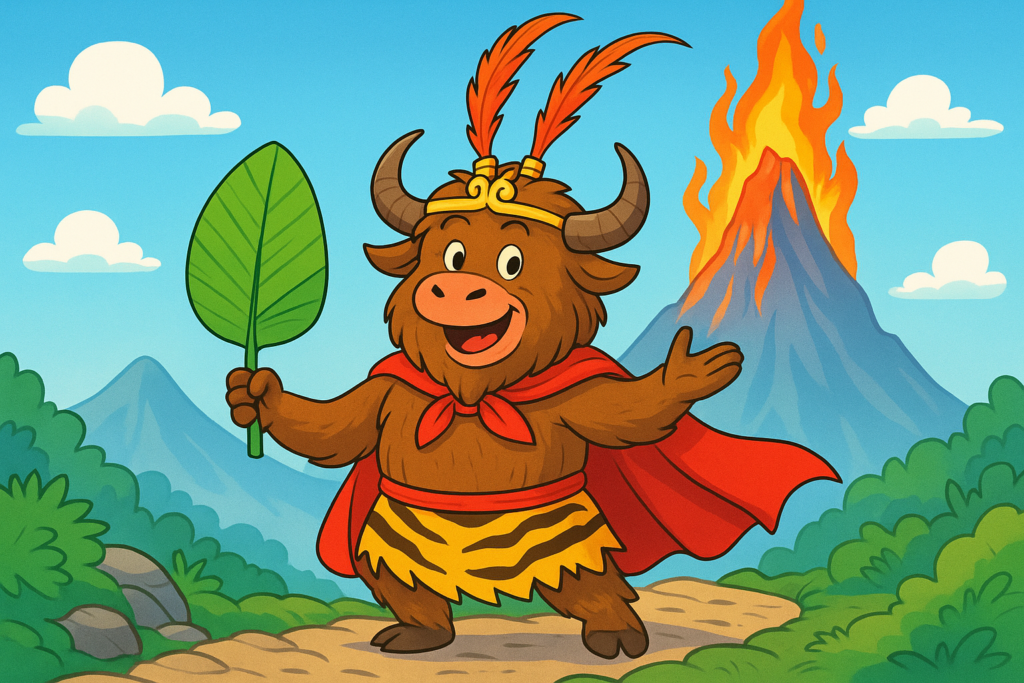
This A2 Elementary retelling of Monkey Borrows the Banana Fan keeps the plot clear for learners while still giving the story some atmosphere and momentum.
This version teaches Simplified Chinese through English and includes clickable word help inside the story, full story audio, and lesson notes after the reading. It is free to use on Yak Yacker and is designed to feel natural, readable, and manageable for learners.
孙悟空、唐僧、猪八戒和沙和尚来到。山上有,非常。他们。孙悟空说:"我去。"
孙悟空找到。"请。"铁扇公主很:"你我的孩子红孩儿,不借!"孙悟空说:"对不起,但我们需要扇子。请!"她仍然不借。
孙悟空变成,飞进她的。她喝了茶,虫子进入。孙悟空在她肚子里。铁扇公主很,说:"我给你扇子!快!"孙悟空拿到扇子,但她给的是。
孙悟空用扇子火,火更大了。他知道。他想到一个:变成牛魔王,她的。
孙悟空变成牛魔王,去铁扇公主的。"娘子,我!"她说:"你看,我孙悟空!"她给他真芭蕉扇,还教他:"扇子!"扇子变成小树叶。孙悟空。
孙悟空:"铁扇公主,谢谢你!这才是真扇子!"她非常:"你!"她告诉牛魔王。牛魔王孙悟空。
牛魔王很,这时来了,帮助孙悟空。牛魔王被。孙悟空回到火焰山,用扇子大火。火,天气。师徒四人高兴地。孙悟空把扇子还给了铁扇公主。
Let's learn some important words that appeared in the story. Try to remember them-you'll see them often in Chinese tales!
- 火焰山 (huǒyàn shān) - "Fiery Mountain"; the name of the mountain (火焰 = flame, 山 = mountain)
- 芭蕉扇 (bājiāo shàn) - "banana-leaf fan"; a magical fan made from a palm leaf
- 铁扇公主 (Tiěshàn Gōngzhǔ) - "Princess Iron Fan"; a fairy who owns the fan
- 借 (jiè) - "to borrow"; here 孙悟空 goes to borrow the fan, but it's not easy!
In the story, you saw sentences like 孙悟空把扇子还给了铁扇公主. The 把 structure moves the object before the verb to emphasize what happens to it. It's very common in Chinese.
Use 把 when an action results in a change or movement of an object. For example: 请把门打开 (Please open the door). In the story, 他把火灭了 (He extinguished the fire).
- Pattern: Subject + 把 + Object + Verb + Complement
- Often used with resultative verbs (like 打开, 关上)
- Not for all verbs; it needs a sense of disposal or change.
Chinese stories love vivid expressions. Let's grab a few from the tale that you can reuse.
- 跳来跳去 (tiào lái tiào qù) - "jump back and forth"; shows repeated movement (孙悟空在肚子里跳来跳去)
- 非常生气 (fēicháng shēngqì) - "very angry"; a strong phrase you can use (铁扇公主非常生气)
- 上当 (shàngdàng) - "to be tricked / fall for a trick"; 他知道上当了 (He knew he had been fooled)
- 现出原形 (xiànchū yuánxíng) - "reveal one's true form"; used when a disguise is dropped
Now you have the words and tools. Try retelling the story in your own Chinese! You can start with a simple summary: 孙悟空去火焰山借芭蕉扇。铁扇公主不借给他,于是他变成小虫子...
Change some details: What if Monkey borrowed something else? Or maybe Princess Iron Fan had a different trick? Play with the story-it's a great way to make the language your own.
Monkey Borrows the Banana Fan comes from the Chinese / Journey to the West tradition and is best known as a classic novel episode. This Yak Yacker article is an original learner retelling based on Journey to the West; public domain, so the wording here is simplified for modern learners rather than copied from one old edition.
Older printings, translations, and retellings of this story can vary quite a bit. The original audience was usually kids/general, but this version is adapted for A2 Elementary learners studying Simplified Chinese. Good adventure/magic vocabulary.
If you want to look into the source tradition, start with Project Gutenberg.
If you want to keep going, browse more in our Simplified Chinese section and review the HSK Level 1 Chinese Vocabulary. After that, try 1,000 Chinese Phrases and Expressions for another useful next step.