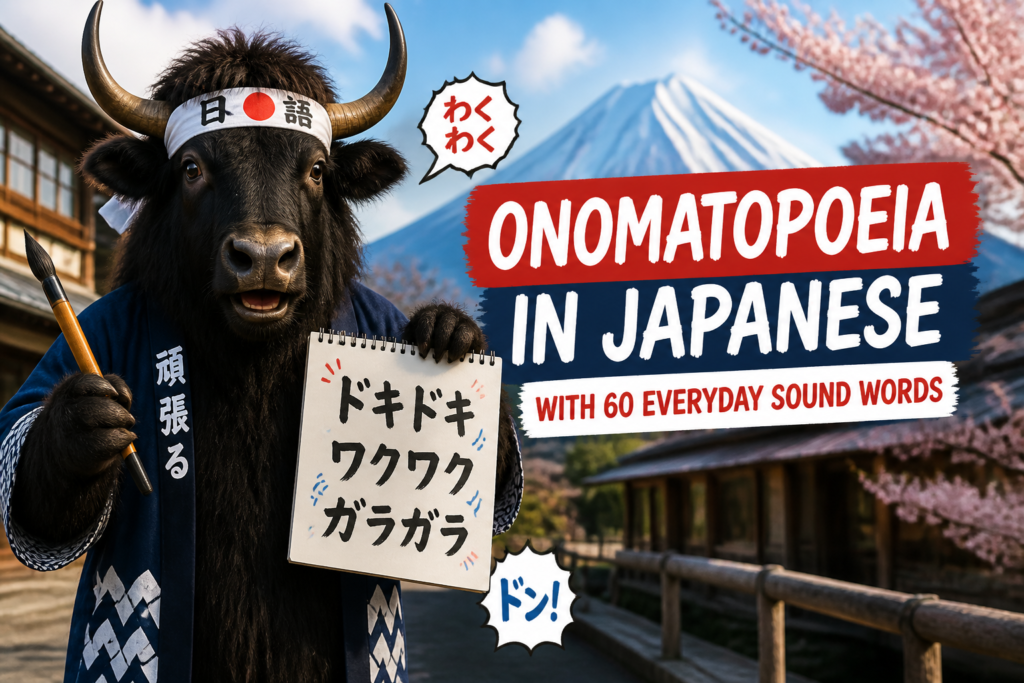
Japanese sound words are everywhere. They show up in casual speech, manga, interviews, ads, and even boring little life moments like rain, footsteps, and a stomach that has decided to be dramatic. If you want to sound more natural, learning Japanese Sound Effect and Onomatopoeia Chart for Everyday Words is a very smart move.
These words are often called 擬音語 Giongo or 擬態語 Gitaigo. That sounds fancy, but the idea is simple: Japanese loves sound symbolism. A tiny word can add a lot of feeling. Convenient, right? Almost suspiciously convenient.
For a broader Japanese learning path, you can also check the main guide at Learn Japanese.
What Japanese Onomatopoeia Means
擬音語 Giongo means sound words that imitate actual sounds, like a dog barking or rain falling.
擬態語 Gitaigo means words that describe a state, feeling, or condition, even if no real sound is involved. So yes, Japanese can make “sparkly,” “fluffy,” and “heavily tired” all feel like sound effects. Language is fun like that.
Many learners first meet these words in manga, but they are also very common in daily conversation. If you hear Japanese people say something like ドキドキ or サラサラ, they are usually not trying to be poetic. They are just speaking normally. That is the trick.
擬音語 Giongo = real sounds. 擬態語 Gitaigo = states, feelings, and textures. Japanese packs a lot into a tiny package.
Essential Onomatopoeia Words For Everyday Japanese
Here are some of the most useful and common sound words. Each one includes Kanji, Rōmaji, an English meaning, and an example sentence.
| Kanji | Rōmaji | Meaning | Example Sentence | English Translation |
|---|---|---|---|---|
| ドキドキ | dokidoki | heart pounding; nervous excitement | 試験の前でドキドキする。 Shiken no mae de dokidoki suru. | I feel nervous before the test. |
| ワクワク | wakuwaku | excited; thrilled | 旅行がワクワクする。 Ryokō ga wakuwaku suru. | The trip is exciting. |
| ニコニコ | nikoniko | smiling happily | 赤ちゃんがニコニコしている。 Akachan ga nikoniko shite iru. | The baby is smiling happily. |
| しくしく | shikushiku | quietly crying; sniffling | 子どもがしくしく泣いている。 Kodomo ga shikushiku naite iru. | The child is crying quietly. |
| げらげら | geragera | loud laughing | みんなでげらげら笑った。 Minna de geragera waratta. | Everyone laughed loudly. |
| Kanji | Rōmaji | Meaning | Example Sentence | English Translation |
|---|---|---|---|---|
| ぽろぽろ | poroporo | dropping little by little; crying tears | 涙がぽろぽろ落ちた。 Namida ga poroporo ochita. | Tears fell one by one. |
| さらさら | sarasara | smooth; silky; light flowing | この髪はさらさらです。 Kono kami wa sarasara desu. | This hair is smooth and silky. |
| ざらざら | zarazara | rough; gritty | 壁がざらざらしている。 Kabe ga zarazara shite iru. | The wall feels rough. |
| べたべた | betabeta | sticky | 手がべたべたする。 Teg a betabeta suru. | My hands feel sticky. |
| ぺこぺこ | pekopeko | very hungry; bowing repeatedly | お腹がぺこぺこだ。 Onaka ga pekopeko da. | I’m starving. |
| Kanji | Rōmaji | Meaning | Example Sentence | English Translation |
|---|---|---|---|---|
| ごろごろ | gorogoro | rumbling; lounging around; rolling | 雷がごろごろ鳴っている。 Kaminari ga gorogoro natte iru. | Thunder is rumbling. |
| ぽたぽた | potapota | dripping slowly | 水がぽたぽた落ちる。 Mizu ga potapota ochiru. | Water drips slowly. |
| ぴかぴか | pikapika | shiny; sparkling | 新しい靴がぴかぴかだ。 Atarashii kutsu ga pikapika da. | The new shoes are shiny. |
| きらきら | kirakira | glittering; twinkling | 星がきらきら光る。 Hoshi ga kirakira hikaru. | The stars sparkle. |
| ぺらぺら | perapera | fluent; thin and flimsy | 彼は日本語がぺらぺらだ。 Kare wa Nihongo ga perapera da. | He speaks Japanese fluently. |
| Kanji | Rōmaji | Meaning | Example Sentence | English Translation |
|---|---|---|---|---|
| がたがた | gatagata | shaking; rattling | 窓ががたがたしている。 Mado ga gatagata shite iru. | The window is rattling. |
| ぶるぶる | buruburu | shivering; trembling | 寒くてぶるぶる震えた。 Samukute buruburu furue ta. | I shivered because it was cold. |
| どきっと | dokitto | a sudden jolt of surprise | 大きな音にどきっとした。 Ōkina oto ni dokitto shita. | I was startled by the loud sound. |
| うとうと | utouto | dozing off | 電車でうとうとしていた。 Densha de utouto shite ita. | I was dozing on the train. |
| すやすや | suyasuy a | sleeping peacefully | 赤ちゃんがすやすや寝ている。 Akachan ga suyasuy a nete iru. | The baby is sleeping peacefully. |
A tiny note: some of these words have more than one use, and context decides the meaning. Japanese is polite like that, but also a little chaotic. The same word can describe a person, a sound, or a texture, and your brain just has to keep up.
More Everyday Sound Words You Will Actually See
| Kanji | Rōmaji | Meaning | Example Sentence | English Translation |
|---|---|---|---|---|
| ぱくぱく | pakupaku | eating with the mouth opening and closing; gobbling | 彼はパンをぱくぱく食べた。 Kare wa pan o pakupaku tabeta. | He gobbled the bread. |
| もぐもぐ | mogumogu | chewing slowly | 子どもがもぐもぐ食べている。 Kodomo ga mogumogu tabete iru. | The child is chewing. |
| ずるずる | zuruzuru | slurping; dragging along | ラーメンをずるずる食べる。 Rāmen o zuruzuru taberu. | I slurp ramen. |
| ごくごく | gokugoku | drinking quickly and repeatedly | 水をごくごく飲んだ。 Mizu o gokugoku nonda. | I drank water quickly. |
| むしゃむしゃ | mushamush a | munching noisily | 彼女はりんごをむしゃむしゃ食べた。 Kanojo wa ringo o mushamush a tabeta. | She munched on an apple. |
| Kanji | Rōmaji | Meaning | Example Sentence | English Translation |
|---|---|---|---|---|
| とことこ | tokotoko | small quick steps | 子犬がとことこ歩く。 Koinu ga tokotoko aruku. | The puppy walks with tiny steps. |
| てくてく | tekuteku | walking steadily | 駅までてくてく歩いた。 Eki made tekuteku aruita. | I walked steadily to the station. |
| すたすた | sutasuta | walking briskly | 彼はすたすた行ってしまった。 Kare wa sutasuta itte shimatta. | He walked off briskly. |
| ぶらぶら | burabura | wandering around; dangling | 週末に町をぶらぶらした。 Shūmatsu ni machi o burabura shita. | I wandered around town on the weekend. |
| よちよち | yochiyochi | walking unsteadily, like a baby | 赤ちゃんがよちよち歩く。 Akachan ga yochiyochi aruku. | The baby walks unsteadily. |
| Kanji | Rōmaji | Meaning | Example Sentence | English Translation |
|---|---|---|---|---|
| ぴょんぴょん | pyonpyon | hopping repeatedly | うさぎがぴょんぴょん跳ねる。 Usagi ga pyonpyon haneru. | The rabbit hops around. |
| どんどん | dondon | rapidly; steadily; more and more | 仕事がどんどん増える。 Shigoto ga dondon fueru. | The work keeps increasing. |
| ゆっくり | yukkuri | slowly; at ease | ゆっくり話してください。 Yukkuri hanashite kudasai. | Please speak slowly. |
| ぎゅうぎゅう | gyūgyū | packed tightly; squeezed | 電車がぎゅうぎゅうだった。 Densha ga gyūgyū datta. | The train was packed tight. |
| しんみり | shinmiri | quietly; seriously; in a thoughtful mood | 夜はしんみりした気分になる。 Yoru wa shinmiri shita kibun ni naru. | At night, I feel reflective. |
| Kanji | Rōmaji | Meaning | Example Sentence | English Translation |
|---|---|---|---|---|
| ぺたぺた | petapeta | slapping lightly; sticking flat | 床がぺたぺたする。 Yuka ga petapeta suru. | The floor feels sticky. |
| がぶがぶ | gabugabu | drinking a lot quickly | 喉が渇いて水をがぶがぶ飲んだ。 Nodo ga kawaite mizu o gabugabu nonda. | I was thirsty and drank water quickly. |
| ちらちら | chirachira | flickering; glancing repeatedly | 雪がちらちら降っている。 Yuki ga chirachira futte iru. | Snow is falling lightly. |
| もこもこ | mokomoko | fluffy; puffy | この犬はもこもこしている。 Kono inu wa mokomoko shite iru. | This dog is fluffy. |
| つるつる | tsurutsuru | smooth; slippery | この麺はつるつるしている。 Kono men wa tsurutsuru shite iru. | These noodles are smooth. |
| Kanji | Rōmaji | Meaning | Example Sentence | English Translation |
|---|---|---|---|---|
| ぴたり | pitari | stopping exactly; fitting perfectly | 時計がぴたりと止まった。 Tokei ga pitari to tomatta. | The clock stopped exactly. |
| がらがら | garagara | rattling; empty and noisy | 病院はがらがらだった。 Byōin wa garagara datta. | The hospital was empty. |
| ひそひそ | hisohiso | whispering | 二人はひそひそ話した。 Futari wa hisohiso hanashita. | The two whispered. |
| こそこそ | kosokoso | sneaking around; doing something secretly | 彼はこそこそ何かしている。 Kare wa kosokoso nanika shite iru. | He is secretly doing something. |
| びくびく | bikubiku | fearful; jumpy | 暗い道でびくびくした。 Kurai michi de bikubiku shita. | I felt jumpy on the dark road. |
Quick Meaning Groups So They Stick Better
Instead of memorizing random words like a stressed-out robot, group them by feeling. Much easier.
- Emotion: ドキドキ dokidoki, ワクワク wakuwaku, びくびく bikubiku, しんみり shinmiri
- Food and drinking: ぱくぱく pakupaku, もぐもぐ mogumogu, ずるずる zuruzuru, ごくごく gokugoku
- Walking and movement: とことこ tokotoko, てくてく tekuteku, すたすた sutasuta, ぶらぶら burabura
- Sound and shaking: がたがた gatagata, ごろごろ gorogoro, ぽたぽた potapota, がらがら garagara
- Texture and appearance: さらさら sarasara, ざらざら zarazara, ぴかぴか pikapika, きらきら kirakira
How These Words Work In Real Sentences
Japanese sound words often act like adverbs. They modify how something happens. That means they often appear with verbs like する suru, 歩く aruku, 泣く naku, or 笑う warau.
For example, ドキドキする dokidoki suru means “to feel nervous or excited.” The sound word is doing a lot of work there, which is very on-brand for Japanese.
Here is a useful pattern:
| Pattern | Meaning | Example | Rōmaji | English |
|---|---|---|---|---|
| Sound Word + する | to feel or act in that way | ワクワクする | wakuwaku suru | to feel excited |
| Sound Word + と | done in that manner | ぴたりと止まる | pitari to tomaru | to stop exactly |
| Sound Word + と | softly or naturally | さらさらと流れる | sarasara to nagareru | to flow smoothly |
| Sound Word + に | state or manner | ニコニコに話す | nikoniko ni hanasu | to speak with a smile |
Common Confusing Pairs
Some onomatopoeia words look similar but do different jobs. That is where learners get ambushed a bit. Very rude of the language, honestly.
- さらさら sarasara = smooth, silky, flowing lightly
- ざらざら zarazara = rough, gritty
- ぴかぴか pikapika = shiny, sparkling, newly polished
- きらきら kirakira = twinkling, glittering, sparkling softly
- ぺこぺこ pekopeko = starving; also bowing repeatedly
- ぱくぱく pakupaku = mouth opening and closing while eating
- もぐもぐ mogumogu = chewing slowly
- ずるずる zuruzuru = slurping noodles or dragging something
When in doubt, look at the sentence. Onomatopoeia in Japanese is all about context. The word by itself gives a clue, but the sentence does the heavy lifting.
Practice: Swap The Word
Try replacing the blank with the best sound word.
- 1. 試験の前で ______ する。 Shiken no mae de ______ suru. → nervous
- 2. 旅行が ______ する。 Ryokō ga ______ suru. → excited
- 3. ラーメンを ______ 食べる。 Rāmen o ______ taberu. → slurp
- 4. 赤ちゃんが ______ 寝ている。 Akachan ga ______ nete iru. → sleeping peacefully
- 5. 新しい靴が ______ だ。 Atarashii kutsu ga ______ da. → shiny
- 6. 壁が ______ している。 Kabe ga ______ shite iru. → rough
- 7. 水が ______ 落ちる。 Mizu ga ______ ochiru. → dripping
- 8. 子犬が ______ 歩く。 Koinu ga ______ aruku. → tiny steps
Answers: ドキドキ, ワクワク, ずるずる, すやすや, ぴかぴか, ざらざら, ぽたぽた, とことこ
Common Mistakes And Easy Fixes
Mistake 1: using a sound word like it always means the same thing in English.
Fix: check the context. ぺこぺこ can mean hungry, but it can also mean bowing repeatedly. Same word, different scene.
Mistake 2: forcing an English-style translation.
Fix: learn the feeling of the word, not only the dictionary meaning. ニコニコ is not just “smiling”; it feels warm, bright, and cheerful.
Mistake 3: forgetting that many sound words are spoken casually.
Fix: use them in simple sentences first. Once they feel natural, your Japanese gets more vivid without trying too hard. And yes, it will sound cooler.
Quick Reference Summary
| Category | Useful Words | What They Do |
|---|---|---|
| Feelings | ドキドキ, ワクワク, びくびく, しんみり | show emotion or mood |
| Eating And Drinking | ぱくぱく, もぐもぐ, ずるずる, ごくごく | describe how someone eats or drinks |
| Movement | とことこ, てくてく, すたすた, ぶらぶら | describe walking style |
| Sound And Motion | がたがた, ごろごろ, ぽたぽた, がらがら | describe noise, shaking, or emptiness |
| Texture And Shine | さらさら, ざらざら, ぴかぴか, きらきら | describe surfaces and appearance |
If you want to test your Japanese knowledge more broadly, try the Japanese Vocabulary Test or check your level with the Japanese Placement Test JLPT.
For another useful language lesson, you can also visit this Japanese guide.
Japanese onomatopoeia is one of those topics that looks cute at first and then quietly becomes extremely useful. Learn a few common words, use them in real sentences, and suddenly Japanese starts sounding more alive. That is the good stuff.