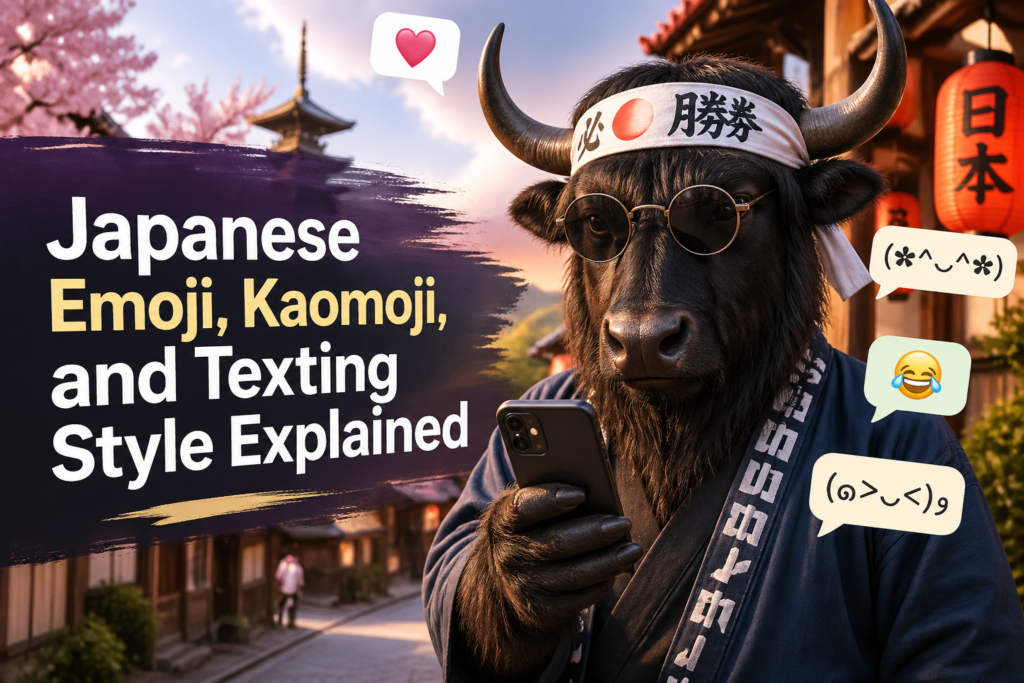
Japanese text messages can look tiny, cute, emotional, and just a little chaotic. That is not a bug. It is the style.
In Japanese, people often use emoji, kaomoji, and shorthand texting words to show mood fast. A plain sentence can feel cold, so a tiny face like 笑 warai helps warm it up. Or a message can become extremely dramatic with a string of symbols that somehow looks like a tiny rabbit having feelings. Very efficient. Very Japanese internet.
If you want a broad, beginner-friendly overview of Japanese writing and communication, the Learn Japanese page is a good place to branch out. For a quick historical and cultural side note on emoji itself, emoji is a handy reference.
What Makes Japanese Texting Style Different?
Japanese texting often mixes standard words, abbreviations, emoji, and kaomoji. The result is compact, expressive, and sometimes wildly cute. It also saves time, because Japanese social messages love speed almost as much as they love tone.
The main thing to remember is this: Japanese chat style is not just about meaning. It is about feeling. A message may be technically correct, but if it lacks a soft ending, a face, or a playful mark, it can sound flat. Nobody wants their text to sound like a tax form.
Core Vocabulary For Japanese Texting
| Kanji / Symbol | Rōmaji | English Meaning | Example Sentence |
|---|---|---|---|
| 絵文字 | emoji | emoji; picture character | 今日は絵文字をたくさん使います。 Kyō wa emoji o takusan tsukaimasu. I use lots of emoji today. |
| 顔文字 | kaomoji | text face; Japanese emoticon | 彼女は顔文字が上手です。 Kanojo wa kaomoji ga jōzu desu. She is good at kaomoji. |
| 略語 | ryakugo | abbreviation; shortened form | チャットでは略語がよく使われます。 Chatto de wa ryakugo ga yoku tsukawaremasu. Abbreviations are often used in chat. |
| 返信 | henshin | reply; response | すぐに返信しました。 Sugu ni henshin shimashita. I replied right away. |
| 既読 | kidoku | read receipt; read | メッセージは既読になりました。 Messēji wa kidoku ni narimashita. The message was marked as read. |
| 既読無視 | kidoku mushi | left on read | 彼に既読無視されました。 Kare ni kidoku mushi saremashita. He left me on read. |
| 未読 | midoku | unread | そのメッセージはまだ未読です。 Sono messēji wa mada midoku desu. That message is still unread. |
| 通知 | tsūchi | notification | 通知がたくさん来ました。 Tsūchi ga takusan kimashita. A lot of notifications came in. |
| 省略 | shōryaku | omission; abbreviation | 日本語では省略が多いです。 Nihongo de wa shōryaku ga ōi desu. Japanese uses a lot of omission. |
| 連絡 | renraku | contact; message | あとで連絡します。 Ato de renraku shimasu. I will contact you later. |
Common Emoji Meanings In Japanese Chat
| Kanji / Symbol | Rōmaji | English Meaning | Example Sentence |
|---|---|---|---|
| 😊 | niko niko / egao | smiling; friendly | 今日はいい日です😊 Kyō wa ii hi desu 😊 Today is a good day. |
| 😂 | okashii / waraeru | laughing; hilarious | その話、面白い😂 Sono hanashi, omoshiroi 😂 That story is funny. |
| 😭 | kanashii / namida | crying; overwhelmed | 宿題が多すぎる😭 Shukudai ga ōsugiru 😭 There is too much homework. |
| 🙏 | onegai / kansha | please; thanks; apology | 手伝ってください🙏 Tetsudatte kudasai 🙏 Please help me. |
| ✨ | kira kira | sparkling; shiny; extra emphasis | 新しい服がかわいい✨ Atarashii fuku ga kawaii ✨ The new clothes are cute. |
| 💦 | ase | sweat; awkwardness; stress | 遅れました、すみません💦 Okuremashita, sumimasen 💦 I’m late, sorry. |
| ❤️ | ai | love; affection | 本当にありがとう❤️ Hontō ni arigatō ❤️ Thank you so much. |
| 🎉 | omedetō | celebration; congratulations | 誕生日おめでとう🎉 Tanjōbi omedetō 🎉 Happy birthday. |
| 👍 | ii ne | good; okay; thumbs up | そのアイデア、いいね👍 Sono aidia, ii ne 👍 That idea is good. |
| 😅 | sukoshi komaru | nervous smile; awkward but okay | ちょっと忘れました😅 Chotto wasuremashita 😅 I forgot a little. |
Kaomoji You Will See All The Time
Kaomoji are Japanese-style emoticons made from text characters. They often look more detailed than Western emoticons because they focus on the eyes first. In Japanese culture, eyes carry a lot of expression, so the face does the heavy lifting while the mouth stays quiet. Honestly, the mouth is on vacation.
| Kanji / Symbol | Rōmaji | English Meaning | Example Sentence |
|---|---|---|---|
| (^^) | egao | smile; happy face | 今日は楽しいです(^^) Kyō wa tanoshii desu (^^) Today is fun. |
| (^_^) | niko niko | gentle smile | また会いましょう(^_^) Mata aimashō (^_^) Let’s meet again. |
| (T_T) | naku | crying face | 試験が難しい(T_T) Shiken ga muzukashii (T_T) The test is difficult. |
| (>_<) | kurushii | frustrated; upset | まだ終わっていない(>_<) Mada owatte inai (>_<) It is not finished yet. |
| (^o^) | ureshii | cheerful; excited | やった!合格した(^o^) Yatta! Gōkaku shita (^o^) Yes! I passed. |
| (-_-) | shibui / tsumaranai | tired; unimpressed; flat mood | 今日は眠い(-_-) Kyō wa nemui (-_-) I’m sleepy today. |
| (^人^) | onegai | begging; please | お願いします(^人^) Onegaishimasu (^人^) Please. |
| (。>﹏<。) | komaru | big emotional distress | 失敗しました(。>﹏<。) Shippai shimashita (。>﹏<。) I made a mistake. |
| (≧◡≦) | totemo ureshii | very happy | プレゼントがうれしい(≧◡≦) Purezento ga ureshii (≧◡≦) The present makes me happy. |
| ( ̄▽ ̄) | yoyū | relaxed; smug; confident | まあ、大丈夫です( ̄▽ ̄) Mā, daijōbu desu ( ̄▽ ̄) Well, it is fine. |
Useful Texting Phrases You Will Actually See
| Kanji | Rōmaji | English Meaning | Example Sentence |
|---|---|---|---|
| 了解 | ryōkai | roger; got it | 了解です。 Ryōkai desu. Got it. |
| 大丈夫 | daijōbu | okay; all right | 大丈夫ですか。 Daijōbu desu ka. Are you okay? |
| 助かる | tasukaru | that helps a lot | それは助かる。 Sore wa tasukaru. That helps a lot. |
| よろしく | yoroshiku | please; nice to meet you; thanks in advance | 明日もよろしく。 Ashita mo yoroshiku. Thanks for tomorrow too. |
| おつかれ | otsukare | good work; thanks for your effort | 今日もおつかれ。 Kyō mo otsukare. Good work today. |
| ごめん | gomen | sorry | ごめん、遅れた。 Gomen, okureta. Sorry, I was late. |
| ありがとう | arigatō | thank you | ありがとう、助かった。 Arigatō, tasukatta. Thanks, that really helped. |
| 今 | ima | now | 今行きます。 Ima ikimasu. I’m going now. |
| すぐ | sugu | right away; immediately | すぐ返します。 Sugu kaeshimasu. I will reply right away. |
| また | mata | again; see you later | またね。 Mata ne. See you again. |
Shorthand And Internet Style Words
Japanese online chat loves shortcuts. Some are based on English letters, some on Japanese sound, and some are just visual jokes. The internet, as always, refuses to behave in one normal way.
| Kanji / Symbol | Rōmaji | English Meaning | Example Sentence |
|---|---|---|---|
| w | warai | lol; laughter | それ、笑ったw Sore, waratta w That made me laugh lol. |
| 草 | kusa | laughing; internet “lol” | その写真、草。 Sono shashin, kusa. That photo is hilarious. |
| 乙 | otsu | thanks for your effort; good work | 今日も乙です。 Kyō mo otsu desu. Good work today. |
| ワンチャン | wan chansu | maybe there is a chance | ワンチャンあるかも。 Wan chansu aru kamo. There might be a chance. |
| りょ | ryo | okay; got it | りょ、すぐ行く。 Ryo, sugu iku. Okay, I’m coming soon. |
| あざす | azasu | thanks, casual | 手伝ってくれてあざす。 Tetsudatte kurete azasu. Thanks for helping. |
| うける | ukeru | funny; I’m laughing | そのネタ、うける。 Sono neta, ukeru. That joke is funny. |
| 神 | kami | amazing; god-tier | このアプリ、神。 Kono apuri, kami. This app is amazing. |
How To Read The Mood Correctly
Japanese message style often adds emotion at the end. A simple ね ne can sound friendly and soft. A よ yo can make something sound more assertive. And emoji or kaomoji can make a short message feel warmer or more playful.
| Kanji / Symbol | Rōmaji | English Meaning | Example Sentence |
|---|---|---|---|
| ね | ne | right?; friendly tone | いい天気ですね。 Ii tenki desu ne. Nice weather, right? |
| よ | yo | you know; emphasis | 今日は休みですよ。 Kyō wa yasumi desu yo. Today is a day off, you know. |
| かな | kana | I wonder; maybe | 明日来るかな。 Ashita kuru kana. I wonder if they will come tomorrow. |
| かも | kamo | maybe | 雨が降るかも。 Ame ga furu kamo. It might rain. |
| っぽい | ppoi | -ish; seems like | 子どもっぽいね。 Kodomoppoi ne. That seems childish. |
| だけど | dakedo | but; however | 行きたい、だけど忙しい。 Ikitai, dakedo isogashii. I want to go, but I’m busy. |
Kaomoji Vs Emoji: What Is The Difference?
Emoji are picture symbols. Kaomoji are text-built faces. Both can show mood, but kaomoji often feel more Japanese because they use the shape of written characters creatively. Emoji are universal. Kaomoji are a little more handmade.
In practice, people use both. A message might combine a normal sentence, a kaomoji, and an emoji in one go. That is not indecision. That is style with accessories.
Tip: If a Japanese text looks “too happy” or “too dramatic,” that is often on purpose. Texting style is part language, part performance.
Mini Practice: Match The Meaning
| Target | Rōmaji | Meaning |
|---|---|---|
| 了解 | ryōkai | got it |
| 既読 | kidoku | read |
| 顔文字 | kaomoji | text face |
| 草 | kusa | lol / funny |
| 大丈夫 | daijōbu | okay / all right |
Common Mistakes And Easy Fixes
| Common Mistake | Better Choice | Why It Matters |
|---|---|---|
| Using only emoji and no words | Add a short sentence too | Japanese messages often balance mood and meaning. |
| Using w in formal messages | Use a normal ending like です desu | w is casual and can feel too relaxed. |
| Confusing 了解 with polite gratitude | Use ありがとうございます arigatō gozaimasu for thanks | 了解 means “got it,” not “thank you.” |
| Forgetting tone marks like ね and よ | Use them lightly | These endings change how friendly or strong the sentence feels. |
| Assuming kaomoji always mean the same thing | Read the whole message | Context can change the mood completely. |
Quick Reference Summary
- 絵文字 emoji = picture emoji
- 顔文字 kaomoji = text face
- 了解 ryōkai = got it
- 大丈夫 daijōbu = okay / all right
- 既読 kidoku = read
- 草 kusa = laughing / lol
- ね ne = soft, friendly ending
- よ yo = emphasis
- かな kana = I wonder / maybe
- ごめん gomen = sorry
- ありがとう arigatō = thank you
Japanese texting is basically normal language wearing a cute jacket. Once you know the main emoji, kaomoji, and shorthand, messages become much easier to read and a lot more fun to send. The trick is to notice the feeling behind the text, not just the dictionary meaning. That is where the good stuff lives.
Start with the basics: 絵文字 emoji, 顔文字 kaomoji, 了解 ryōkai, and 草 kusa. After that, Japanese chat starts looking less mysterious and more like a very expressive, very efficient little language game.