Common Japanese idioms guide

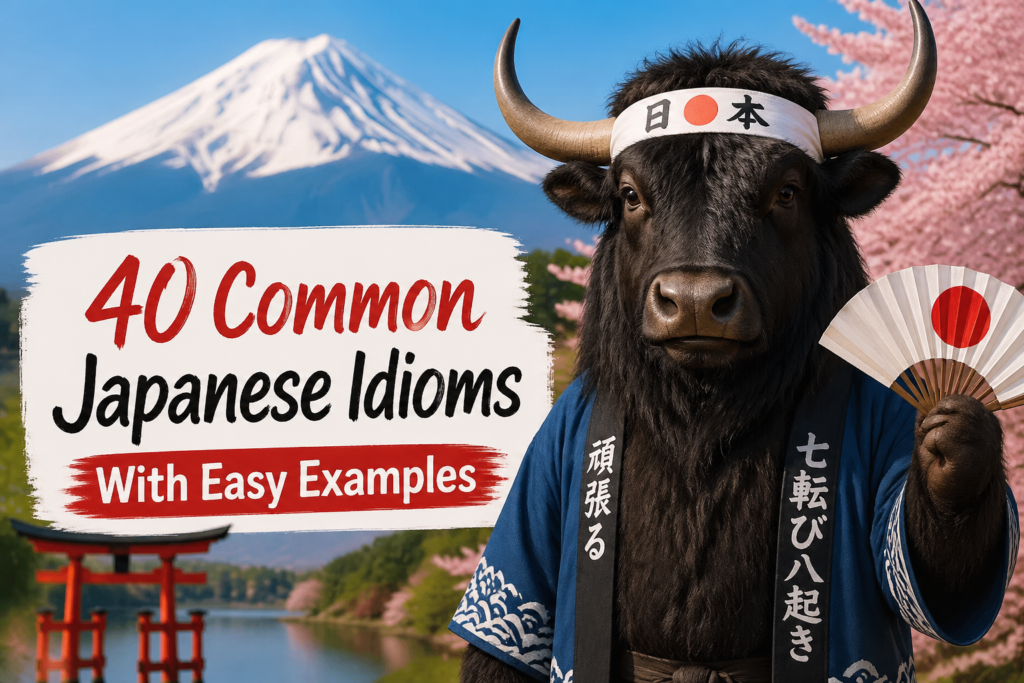
40 Common Japanese Idioms With Easy Examples

慣用句
Kan’yōku
Japanese idioms are the spicy little side dish of the language: short, vivid, sometimes weird, and annoyingly memorable in the best way.

If you have ever studied Japanese and thought, “Why is the face wide? Why are cats involved? Why is someone’s hand coming out of their throat?” — welcome. Idioms are where Japanese gets extra visual, extra cultural, and occasionally extra dramatic.

The good news: you do not need to memorize a hundred at once like some kind of sleep-deprived proverb goblin. Start with the common ones, learn what they actually mean in real life, and use them naturally. If you want a broader starting point before diving into expressions, the main Learn Japanese hub is a solid place to wander through without frying your brain.

This guide gives you more than 40 common Japanese idioms with simple meanings and easy example sentences. Every entry includes the Japanese, the rōmaji, and an English translation, because guessing from context is noble but also overrated.

Useful Japanese Idioms And Real-Life Sentences

KanjiRōmajiMeaningExample (Japanese)Example (Rōmaji)Translation
頭がいいAtama ga iiSmart; intelligent彼は頭がいいから、すぐに答えが分かった。Kare wa atama ga ii kara, sugu ni kotae ga wakatta.He is smart, so he understood the answer right away.
頭が切れるAtama ga kireruSharp-minded; quick-thinkingあの弁護士は本当に頭が切れる。Ano bengoshi wa hontō ni atama ga kireru.That lawyer is really sharp.
頭が上がらないAtama ga agaranaiUnable to stand up to someone; indebted to someone母にはいつも世話になっていて、頭が上がらない。Haha ni wa itsumo sewa ni natte ite, atama ga agaranai.I owe my mother so much that I cannot stand up to her.
顔が広いKao ga hiroiWell-connected; knows many people田中さんは顔が広いので、いい店をたくさん知っている。Tanaka-san wa kao ga hiroi node, ii mise o takusan shitte iru.Mr. Tanaka knows a lot of people, so he knows many good places.
顔が立つKao ga tatsuTo save face; maintain honorみんなの前でほめられて、父の顔が立った。Minna no mae de homerarete, chichi no kao ga tatta.Being praised in front of everyone helped my father save face.
顔に出るKao ni deruTo show on one’s face彼はうれしいとすぐ顔に出る。Kare wa ureshii to sugu kao ni deru.When he is happy, it immediately shows on his face.
口が軽いKuchi ga karuiLoose-lipped; cannot keep secrets彼には秘密を話さないほうがいい。口が軽いから。Kare ni wa himitsu o hanasanai hō ga ii. Kuchi ga karui kara.You should not tell him secrets. He has a loose tongue.
口が堅いKuchi ga kataiTrustworthy with secrets山本さんは口が堅いので、安心して相談できる。Yamamoto-san wa kuchi ga katai node, anshin shite sōdan dekiru.Yamamoto is discreet, so I can talk to her without worry.
口がうまいKuchi ga umaiGood with words; persuasive彼は口がうまくて、だれとでもすぐ仲よくなる。Kare wa kuchi ga umakute, dare to demo sugu nakayoku naru.He is smooth with words and quickly gets along with anyone.
口に合うKuchi ni auTo suit one’s tasteこのカレーは私の口に合う。Kono karē wa watashi no kuchi ni au.This curry suits my taste.
KanjiRōmajiMeaningExample (Japanese)Example (Rōmaji)Translation
耳が痛いMimi ga itaiHard to hear because it is true先生の注意は耳が痛かった。Sensei no chūi wa mimi ga itakatta.The teacher’s warning was painful to hear because it was true.
耳に入るMimi ni hairuTo hear about; to come to one’s attentionそのうわさはすぐ部長の耳に入った。Sono uwasa wa sugu buchō no mimi ni haitta.That rumor quickly reached the manager’s ears.
目が高いMe ga takaiHave a good eye; good judgment彼女は目が高いから、いい家具を選べる。Kanojo wa me ga takai kara, ii kagu o eraberu.She has a good eye, so she can choose nice furniture.
目がないMe ga naiCrazy about; weak for父は甘い物に目がない。Chichi wa amaimono ni me ga nai.My father has a weakness for sweets.
目に入るMe ni hairuTo catch one’s eye駅でかわいい店が目に入った。Eki de kawaii mise ga me ni haitta.A cute shop caught my eye at the station.
目を通すMe o tōsuTo look through; to read over会議の前に資料に目を通してください。Kaigi no mae ni shiryō ni me o tōshite kudasai.Please look over the documents before the meeting.
目を疑うMe o utagauCannot believe one’s eyes値段を見て、自分の目を疑った。Nedan o mite, jibun no me o utagatta.I could not believe my eyes when I saw the price.
鼻が高いHana ga takaiProud息子が賞を取って、両親は鼻が高い。Musuko ga shō o totte, ryōshin wa hana ga takai.The parents are proud because their son won a prize.
鼻につくHana ni tsukuAnnoying; get on one’s nerves彼の自慢話は少し鼻につく。Kare no jimanbanashi wa sukoshi hana ni tsuku.His bragging is a little annoying.
胸がいっぱいMune ga ippaiFilled with emotion卒業式で胸がいっぱいになった。Sotsugyōshiki de mune ga ippai ni natta.I was overwhelmed with emotion at the graduation ceremony.
KanjiRōmajiMeaningExample (Japanese)Example (Rōmaji)Translation
胸を張るMune o haruTo be proud; hold one’s head high自分の仕事に胸を張っていいよ。Jibun no shigoto ni mune o hatte ii yo.You can be proud of your work.
腹が立つHara ga tatsuTo get angry約束を忘れられて、腹が立った。Yakusoku o wasurerarete, hara ga tatta.I got angry because they forgot the promise.
腹を割るHara o waruSpeak frankly; open up honestly今夜は腹を割って話そう。Kon’ya wa hara o watte hanasō.Let’s speak honestly tonight.
腹が黒いHara ga kuroiScheming; maliciousあの人は親切そうだけど、腹が黒いらしい。Ano hito wa shinsetsu sō da kedo, hara ga kuroi rashii.That person seems kind, but apparently is scheming.
気がつくKi ga tsukuTo notice電車の中で財布がないことに気がついた。Densha no naka de saifu ga nai koto ni ki ga tsuita.I noticed on the train that my wallet was gone.
気が合うKi ga auTo get along well彼とは初めて会ったのに気が合う。Kare to wa hajimete atta noni ki ga au.I get along with him even though we just met.
気が強いKi ga tsuyoiStrong-willed彼女は気が強くて、簡単には負けない。Kanojo wa ki ga tsuyokute, kantan ni wa makenai.She is strong-willed and does not give up easily.
気が弱いKi ga yowaiTimid; weak-nerved弟は気が弱くて、人前で話すのが苦手だ。Otōto wa ki ga yowakute, hitomae de hanasu no ga nigate da.My younger brother is timid and bad at speaking in public.
気が重いKi ga omoiFeel reluctant; feel heavy-hearted月曜日の朝はいつも気が重い。Getsuyōbi no asa wa itsumo ki ga omoi.I always feel heavy on Monday mornings.
気が利くKi ga kikuThoughtful; attentive彼女は気が利くので、みんなに好かれている。Kanojo wa ki ga kiku node, minna ni sukarete iru.She is thoughtful, so everyone likes her.
KanjiRōmajiMeaningExample (Japanese)Example (Rōmaji)Translation
手が足りないTe ga tarinaiNot enough help; short-handed今日は忙しくて、店は手が足りない。Kyō wa isogashikute, mise wa te ga tarinai.The shop is busy today and short-handed.
手が出ないTe ga denaiCannot afford; cannot manageその時計は高すぎて手が出ない。Sono tokei wa takasugite te ga denai.That watch is too expensive for me to afford.
手を貸すTe o kasuTo lend a hand忙しそうだから、少し手を貸そうか。Isogashisō dakara, sukoshi te o kasō ka.You look busy, so shall I lend a hand?
手を抜くTe o nukuTo cut corners; do less than one shouldこの仕事で手を抜いてはいけない。Kono shigoto de te o nuite wa ikenai.You must not cut corners on this job.
足を引っ張るAshi o hipparuHold someone backチームの足を引っ張らないように頑張る。Chīmu no ashi o hipparanai yō ni ganbaru.I will do my best not to hold the team back.
足が出るAshi ga deruGo over budget旅行の費用は少し足が出た。Ryokō no hiyō wa sukoshi ashi ga deta.The travel expenses went a little over budget.
足が遠のくAshi ga tōnokuStop going somewhere引っ越してから、その店には足が遠のいた。Hikkoshite kara, sono mise ni wa ashi ga tōnoita.After moving, I stopped going to that shop.
首になるKubi ni naruTo get firedそんなに遅刻したら首になるよ。Sonna ni chikoku shitara kubi ni naru yo.If you are that late so often, you will get fired.
首を長くするKubi o nagaku suruWait eagerly子どもたちは夏休みを首を長くして待っている。Kodomotachi wa natsuyasumi o kubi o nagaku shite matte iru.The children are eagerly waiting for summer vacation.
肩を持つKata o motsuTo side with; support someoneいつも兄の肩を持つのはやめて。Itsumo ani no kata o motsu no wa yamete.Please stop always taking my brother’s side.
KanjiRōmajiMeaningExample (Japanese)Example (Rōmaji)Translation
肩の荷が下りるKata no ni ga oriruA burden is lifted試験が終わって、肩の荷が下りた。Shiken ga owatte, kata no ni ga orita.After the exam ended, a weight was lifted off my shoulders.
猫の手も借りたいNeko no te mo karitaiExtremely busy年末は猫の手も借りたいほど忙しい。Nenmatsu wa neko no te mo karitai hodo isogashii.At the end of the year, we are so busy we would borrow even a cat’s paw.
猫をかぶるNeko o kaburuPretend to be sweet or innocent彼女は初対面では猫をかぶることが多い。Kanojo wa shotaimen de wa neko o kaburu koto ga ōi.She often acts extra sweet when meeting people for the first time.
猿も木から落ちるSaru mo ki kara ochiruEven experts make mistakes先生も漢字を間違えた。猿も木から落ちるね。Sensei mo kanji o machigaeta. Saru mo ki kara ochiru ne.Even the teacher got the kanji wrong. Even experts make mistakes.
犬猿の仲Ken’en no nakaLike cats and dogs; bitter relationshipあの二人は昔から犬猿の仲だ。Ano futari wa mukashi kara ken’en no naka da.Those two have never gotten along.
馬が合うUma ga auClick naturally with someone初めて会ったのに、彼とは馬が合った。Hajimete atta noni, kare to wa uma ga atta.Even though we had just met, we clicked right away.
蛙の子は蛙Kaeru no ko wa kaeruLike parent, like child娘も音楽が得意だね。蛙の子は蛙だ。Musume mo ongaku ga tokui da ne. Kaeru no ko wa kaeru da.Your daughter is good at music too. Like parent, like child.
井の中の蛙I no naka no kawazuSomeone with a narrow view of the world自分は井の中の蛙だったと留学して気づいた。Jibun wa i no naka no kawazu datta to ryūgaku shite kizuita.Studying abroad made me realize I had had a narrow view of the world.
狐につままれるKitsune ni tsumareruFeel puzzled as if tricked説明を聞いても、狐につままれたような気分だった。Setsumei o kiite mo, kitsune ni tsumarareta yō na kibun datta.Even after the explanation, I still felt baffled.
手が焼けるTe ga yakeruHard to handleあの子は元気すぎて手が焼ける。Ano ko wa genki sugite te ga yakeru.That child is so energetic that he is hard to handle.

A Few More Very Common Idioms

KanjiRōmajiMeaningExample (Japanese)Example (Rōmaji)Translation
骨が折れるHone ga oreruTakes a lot of effortこの作業は細かくて骨が折れる。Kono sagyō wa komakakute hone ga oreru.This task is detailed and takes a lot of effort.
腰が低いKoshi ga hikuiHumble; modest有名なのに、あの俳優はとても腰が低い。Yūmei na noni, ano haiyū wa totemo koshi ga hikui.Even though he is famous, that actor is very humble.
腰が重いKoshi ga omoiSlow to act彼は腰が重くて、なかなか動かない。Kare wa koshi ga omokute, nakanaka ugokanai.He is slow to get moving.
舌を巻くShita o makuBe astonished by skill彼女の日本語の上手さには舌を巻いた。Kanojo no nihongo no umzasa ni wa shita o maita.I was amazed by how good her Japanese was.
手に負えないTe ni oenaiOut of control; impossible to handleその問題はもう私たちには手に負えない。Sono mondai wa mō watashitachi ni wa te ni oenai.That problem is already beyond what we can handle.

Curious Bit: Why So Many Body Parts?

Japanese idioms love body parts. (atama, head), (kao, face), (kuchi, mouth), (me, eye), (hara, belly), and (te, hand) appear everywhere. Once you notice the pattern, these expressions stop looking random and start feeling oddly logical.

For example, idioms with
Kao often relate to reputation or visible emotion. Idioms with
Hara often connect to feelings, honesty, or hidden intention. And idioms with
Te usually involve action, ability, or help. Language is basically a giant bag of metaphors pretending to be normal conversation.

If an idiom feels strange, do not fight it too hard. Learn the image, then learn the meaning. The image is usually the part that sticks.

Variants And Near Matches

ExpressionRōmajiMeaningNuance
気が合うKi ga auGet along wellNatural compatibility
馬が合うUma ga auReally click with someoneVery natural chemistry, often a bit stronger
口が軽いKuchi ga karuiLoose-lippedNegative; cannot keep secrets
口が堅いKuchi ga kataiDiscreetPositive; reliable with secrets
腹が立つHara ga tatsuGet angryCommon everyday phrase
気が重いKi ga omoiFeel mentally heavyMore about reluctance than anger
手を貸すTe o kasuLend a handOffer help directly
肩を持つKata o motsuTake someone’s sideSupport in an argument or conflict

Mini Practice: Can You Guess The Right Idiom?

  • Someone always tells secrets.
    口が軽い
    Kuchi ga karui
    Loose-lipped
  • You are proud of your child’s success.
    鼻が高い
    Hana ga takai
    Proud
  • You and a new friend instantly click.
    馬が合う
    Uma ga au
    Click naturally
  • A project is so busy that everyone is overwhelmed.
    猫の手も借りたい
    Neko no te mo karitai
    Extremely busy
  • You finally finish a huge responsibility.
    肩の荷が下りる
    Kata no ni ga oriru
    A burden is lifted

Common Mistakes Learners Make

  • Using idioms too literally. 猫をかぶる
    Neko o kaburu does not mean wearing a cat. Tragically, fashion has limits.
  • Mixing up similar body-part expressions. 顔が広い
    Kao ga hiroi is about connections, not physical appearance.
  • Using strong idioms in the wrong setting. 腹が黒い
    Hara ga kuroi is pretty harsh, so maybe do not toss it around lightly.
  • Memorizing only the English meaning. Learn the image too. It helps a lot with recall.

Quick Reference Summary


  • Kao expressions often relate to reputation or expression.

  • Kuchi expressions often relate to speaking, taste, or secrecy.

  • Me expressions often relate to seeing, judgment, or attention.

  • Hara expressions often relate to anger, honesty, or hidden motives.

  • Te expressions often relate to help, action, or ability.

  • Ki expressions often describe mood, personality, or mental state.

If you want more useful everyday Japanese after idioms, this related Japanese guide is a good next stop.

Yak Takeaway

Japanese idioms are not just decorative little phrases people throw around to sound clever. They show how Japanese packs emotion, social nuance, and vivid imagery into a few words. Start with the common ones that appear in daily conversation, notice the body-part patterns, and steal them shamelessly for your own speaking practice. One or two well-used idioms can make your Japanese sound much more natural — and a lot less like a textbook that has never met a real human.