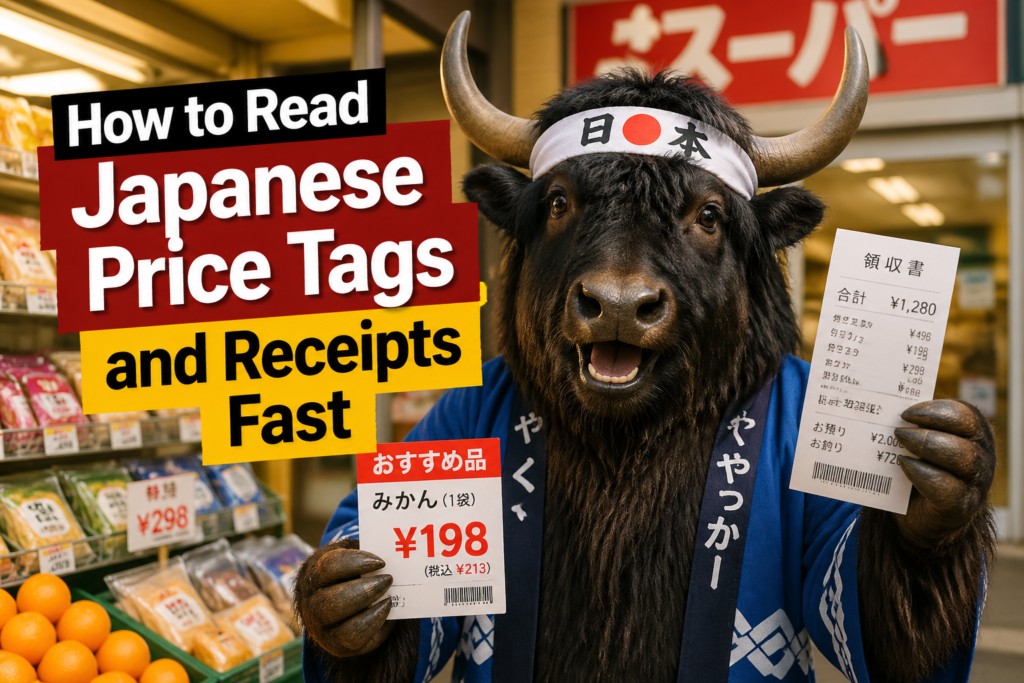
Japanese shopping text can look like a tiny math exam that wandered into a convenience store. But once the most common symbols, labels, and number patterns click, price tags and receipts become surprisingly friendly.
For the broader learning path, visit our parent guide.
This guide focuses on the stuff shoppers actually meet in the wild: 円 (En, yen), 税込 (Zeikomi, tax included), 割引 (Waribiki, discount), and the store signs that quietly save or steal your money if you ignore them. If you want a broad starter list of useful Japanese words too, this Japanese starter guide is a good companion.
For a deeper look at signs and labels in daily life, Japanese signs and signage pairs nicely with this article. Same language, different battlefield.
The Core Idea: Look For The Money Words First
When you see Japanese price information, do not try to read everything at once. Start with the money symbol, then look for the small words that tell you whether tax is included, whether the item is discounted, and whether the price is per item, per 100 grams, or per pack.
That is the trick. Japanese price tags are often short, but they hide important detail in tiny labels. Rude of them, really.
| Japanese | Rōmaji | English Meaning | Example Sentence |
|---|---|---|---|
| 円 | En | Yen | これは 500円 です。 これは ごひゃくえん です。 This is 500 yen. |
| 税込 | Zeikomi | Tax included | 税込 1,100円 です。 ぜいこみ せんひゃくえん です。 The price is 1,100 yen including tax. |
| 税抜 | Zenuki | Before tax, tax excluded | 税抜 980円 です。 ぜいぬき きゅうひゃくはちじゅうえん です。 The price is 980 yen before tax. |
| 円+税 | En + zei | Yen plus tax | 1,000円+税 です。 せんえん ぷらす ぜい です。 It is 1,000 yen plus tax. |
Money And Tax Words You Will See Everywhere
These are the first words to learn because they show up on almost every tag, shelf card, and receipt. Once you know them, you stop guessing and start reading like a person who has been secretly studying retail language for years.
| Japanese | Rōmaji | Meaning | Example Sentence |
|---|---|---|---|
| 価格 | Kakaku | Price | この 価格 は 高い です。 この かかく は たかい です。 This price is expensive. |
| 値段 | Nedan | Price, cost | 値段 を 見て ください。 ねだん を みて ください。 Please look at the price. |
| 税込 | Zeikomi | Tax included | 税込 で 安い です。 ぜいこみ で やすい です。 It is cheap with tax included. |
| 税抜 | Zenuki | Tax excluded | 税抜 の 価格 を 確認 します。 ぜいぬき の かかく を かくにん します。 I will check the tax-excluded price. |
| 消費税 | Shōhizei | Consumption tax | 消費税 は 10% です。 しょうひぜい は じゅっパーセント です。 Consumption tax is 10%. |
| 会計 | Kaikei | Checkout, bill, payment | 会計 を お願い します。 かいけい を おねがい します。 Check, please. |
| 合計 | Gōkei | Total | 合計 は 2,300円 です。 ごうけい は にせんさんびゃくえん です。 The total is 2,300 yen. |
| 小計 | Shōkei | Subtotal | 小計 は 1,800円 です。 しょうけい は せんはっぴゃくえん です。 The subtotal is 1,800 yen. |
| 支払 | Shiharai | Payment | 支払 方法 を 選びます。 しはらい ほうほう を えらびます。 I choose the payment method. |
| 現金 | Genkin | Cash | 現金 で 払います。 げんきん で はらいます。 I pay in cash. |
Common Price Tag Labels
Japanese price tags often use short labels instead of full sentences. That is efficient, which is a polite way of saying “slightly annoying until you learn the code.”
| Japanese | Rōmaji | Meaning | Example Sentence |
|---|---|---|---|
| 本体価格 | Hontai kakaku | Base price, item price before tax | 本体価格 は 980円 です。 ほんたいかかく は きゅうひゃくはちじゅうえん です。 The base price is 980 yen. |
| 税込価格 | Zeikomi kakaku | Price including tax | 税込価格 を 確認 しました。 ぜいこみかかく を かくにん しました。 I checked the tax-included price. |
| 特価 | Tokk a | Special price | 特価 で 売っています。 とっか で うっています。 It is being sold at a special price. |
| 割引 | Waribiki | Discount | 30% 割引 です。 さんじゅっぱーせんと わりびき です。 It is 30% off. |
| 半額 | Hangaku | Half price | 今日は 半額 です。 きょう は はんがく です。 Today it is half price. |
| 値引 | Nebiki | Price cut, markdown | 値引 されて います。 ねびき されて います。 It has been marked down. |
| 均一 | Kin’itsu | Flat rate, same price | 100円 均一 です。 ひゃくえん きんいつ です。 It is a 100-yen flat price. |
| セット | Setto | Set, bundle | セット で お得 です。 せっと で おとく です。 It is a good deal as a set. |
Numbers On Receipts: The Parts That Matter
Receipts can look dense, but they are usually very logical. Find the item lines, then find subtotal, tax, and total. After that, look for payment method and change.
For Japanese numbers, the biggest receipt skill is reading large amounts fast. If you already know basic number patterns, the rest is just practice. If not, do not panic. Even the receipt is not judging you. Probably.
| Japanese | Rōmaji | Meaning | Example Sentence |
|---|---|---|---|
| お預り | Oazukari | Amount received from customer | お預り は 1,000円 です。 おあずかり は せんえん です。 The amount received is 1,000 yen. |
| お釣り | Otsuri | Change | お釣り は 300円 です。 おつり は さんびゃくえん です。 The change is 300 yen. |
| 内税 | Uchi-zei | Tax included in the price | 内税 の 表示 が あります。 うちぜい の ひょうじ が あります。 There is a tax-included display. |
| 外税 | Soto-zei | Tax added separately | 外税 で 計算 します。 そとぜい で けいさん します。 It is calculated with tax added separately. |
| 領収書 | Ryōshūsho | Receipt, proof of payment | 領収書 を ください。 りょうしゅうしょ を ください。 Please give me a receipt. |
| 明細 | Meisai | Details, itemized statement | 明細 を 確認 します。 めいさい を かくにん します。 I will check the itemized details. |
| 品目 | Himmoku | Item, product line | 品目 が 多い です。 ひんもく が おおい です。 There are many items. |
| 数量 | Sūryō | Quantity | 数量 は 2 です。 すうりょう は 2 です。 The quantity is 2. |
Store Signs And Shelf Labels
Store signs are where the fun begins. Some signs tell you the price. Others tell you whether something is fresh, on sale, or sold by weight. Japanese likes to compress a lot of information into a tiny space, which is very efficient and mildly suspicious.
| Japanese | Rōmaji | Meaning | Example Sentence |
|---|---|---|---|
| 入口 | Iriguchi | Entrance | 入口 は あちら です。 いりぐち は あちら です。 The entrance is that way. |
| 出口 | Deguchi | Exit | 出口 を 確認 します。 でぐち を かくにん します。 I will check the exit. |
| 営業中 | Eigyō-chū | Open for business | この 店 は 営業中 です。 この みせ は えいぎょうちゅう です。 This store is open. |
| 準備中 | Junbi-chū | Preparing, not open yet | 今 は 準備中 です。 いま は じゅんびちゅう です。 It is preparing right now. |
| 本日限り | Honjitsu-giri | Only today | 本日限り の 特価 です。 ほんじつかぎり の とっか です。 It is a special price only for today. |
| 数量限定 | Sūryō gentei | Limited quantity | 数量限定 です。 すうりょうげんてい です。 It is limited in quantity. |
| 売り切れ | Urikire | Sold out | 人気 商品 は 売り切れ です。 にんき しょうひん は うりきれ です。 The popular item is sold out. |
| 入荷 | Nyūka | New stock arrival | 新しい 商品 が 入荷 しました。 あたらしい しょうひん が にゅうか しました。 New products have arrived. |
| 特売 | Tokubai | Special sale | 今日は 特売 日 です。 きょう は とくばいび です。 Today is a special sale day. |
| 見切り品 | Mikiri-hin | Marked-down item, clearance item | 見切り品 は 安い です。 みきりひん は やすい です。 Marked-down items are cheap. |
Useful Shopping Phrases
These are the phrases that help when you want to ask about price, tax, or the total. Keep them close. They are doing a lot of work for very few syllables.
- これは いくら ですか。
これ は いくら ですか。
How much is this? - 税込 ですか。
ぜいこみ ですか。
Is tax included? - 税抜 ですか。
ぜいぬき ですか。
Is this before tax? - 割引 は ありますか。
わりびき は ありますか。
Is there a discount? - 会計 を お願い します。
かいけい を おねがい します。
Check, please. - 領収書 を ください。
りょうしゅうしょ を ください。
Please give me a receipt. - カード で 払えますか。
カード で はらえますか。
Can I pay by card? - 現金 で 払います。
げんきん で はらいます。
I will pay in cash. - お釣り は いくら ですか。
おつり は いくら ですか。
How much change is there? - この 値段 は 税込 ですか。
この ねだん は ぜいこみ ですか。
Is this price tax included?
Reading Receipts Step By Step
Here is the simple order that works in most Japanese shops:
- Find 合計 (Gōkei, total).
- Check 小計 (Shōkei, subtotal).
- Look for 消費税 (Shōhizei, consumption tax).
- Check お預り (Oazukari, amount received) and お釣り (Otsuri, change).
- If needed, look at 明細 (Meisai, itemized details) for item names and quantities.
A receipt may also show different tax rates, especially for food and non-food items. In that case, the receipt may separate the taxable categories instead of giving one neat total line. Of course it would. Japanese receipts enjoy being helpful in a very specific way.
| Japanese | Rōmaji | Meaning | Example Sentence |
|---|---|---|---|
| 8% | Hachi-pāsento | 8 percent tax | 食品 は 8% です。 しょくひん は はちパーセント です。 Food is 8%. |
| 10% | Jū-pāsento | 10 percent tax | 多く の 商品 は 10% です。 おおく の しょうひん は じゅうパーセント です。 Many products are 10%. |
| 軽減税率 | Keigen zeiritsu | Reduced tax rate | 軽減税率 の 対象 です。 けいげんぜいりつ の たいしょう です。 It is subject to the reduced tax rate. |
| 対象 | Taiyō | Applicable, covered | この 価格 は 対象 です。 この かかく は たいしょう です。 This price is applicable. |
Mini Practice: Spot The Meaning
Try these quick readings. Say the meaning out loud before checking the English. Your brain will complain briefly, then cooperate.
- 税込 1,298円
ぜいこみ せんにひゃくきゅうじゅうはちえん
1,298 yen tax included - 税抜 980円
ぜいぬき きゅうひゃくはちじゅうえん
980 yen before tax - 30% 割引
さんじゅっぱーせんと わりびき
30% off - 半額
はんがく
Half price - 特価
とっか
Special price - お釣り 200円
おつり にひゃくえん
200 yen change - 合計 3,500円
ごうけい さんぜんごひゃくえん
Total: 3,500 yen - 売り切れ
うりきれ
Sold out
Common Mistakes And Fast Fixes
Most shopping mistakes come from reading too quickly. Slow down for one second and check these common trouble spots.
| Mistake | Why It Happens | Quick Fix |
|---|---|---|
| Thinking 税込 means “discount” | It looks short and important, so the eye jumps to it | Remember: 税込 = tax included |
| Missing 税抜 | The price looks lower than expected | Check whether tax is added later |
| Confusing 小計 and 合計 | Both are “total-ish” | 小計 = subtotal, 合計 = final total |
| Ignoring +税 | The tag looks simple | +税 means tax will be added |
| Forgetting お釣り | Payment is happening fast | Check the change before walking away like a speedrun champion |
Quick Reference Summary
- 円 (En) = yen
- 税込 (Zeikomi) = tax included
- 税抜 (Zenuki) = tax excluded
- 小計 (Shōkei) = subtotal
- 合計 (Gōkei) = total
- 割引 (Waribiki) = discount
- 半額 (Hangaku) = half price
- 売り切れ (Urikire) = sold out
- お釣り (Otsuri) = change
- 領収書 (Ryōshūsho) = receipt
Read the money word first, the tax word second, and the extra tiny print third. That one habit saves time, money, and the deeply unnecessary pain of discovering a tax surprise at checkout.
If you want to build this skill fast, practice with real receipts and price tags whenever you shop. Japanese retail language is repetitive in the best possible way: once you learn the core words, they keep showing up and doing the heavy lifting for you.