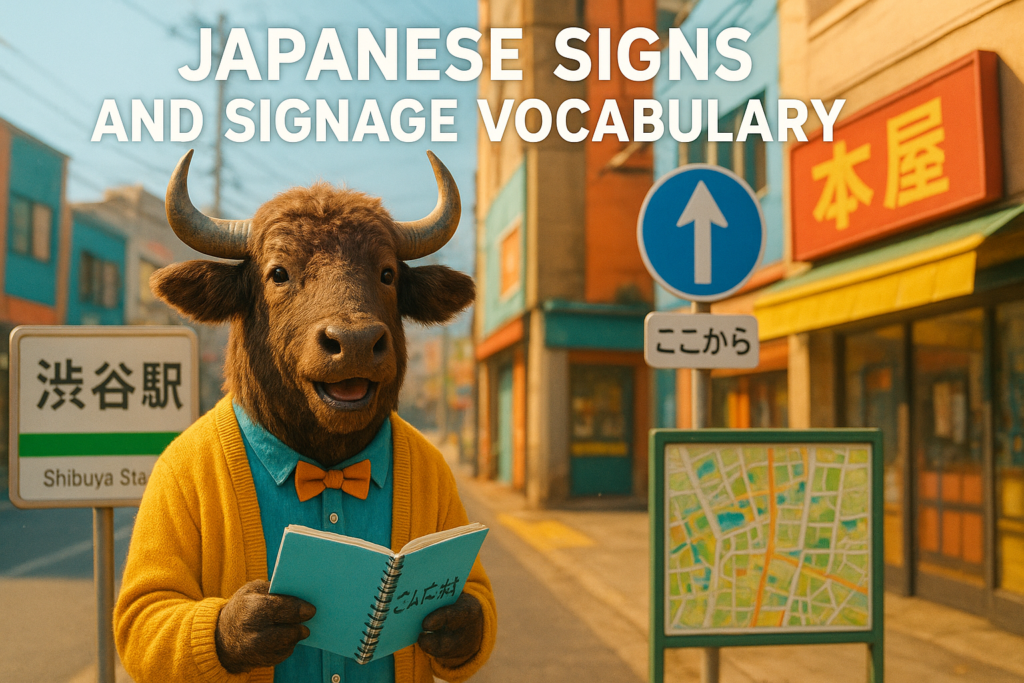
Japanese Signs And Signage Vocabulary
日本の看板と標識 (Nihon no Kanban to Hyoushiki) — The words that help you read stations, shops, toilets, warnings, and roads without doing that awkward “I hope this door is right” shuffle.
Below you will learn the recurring kanji and fixed phrases that show up constantly in everyday Japanese signage, with plain-English meanings and real sentences you can actually use.
I still think one of the sneakiest little Japanese flexes is the day you stop needing icons and start reading the signs. One minute you are blindly following arrows like a lost potato, and the next minute you spot 出口 (deguchi) and walk out of the station like a person who absolutely did not get trapped on the wrong side yesterday.
That is the nice thing about signage Japanese: it repeats. A small handful of chunks like 禁止 (kinshi), 中 (chuu), 口 (guchi), 無料 (muryou), and 有料 (yuuryou) shows up everywhere. Learn those once, and Japan starts looking a lot less like decorative mystery text and a lot more like useful information.
Yak Tip: Read The Repeating Chunks, Not Every Last Character
If you can decode the common building blocks, whole signs become much easier. Japanese signs love formula language. Very efficient. Mildly rude to beginners. Extremely fixable.
How To Decode Signs Fast
| Chunk | Romaji | Meaning | Common Sign | Example Sentence | Translation |
|---|---|---|---|---|---|
| 禁止 | kinshi | prohibited | 撮影禁止 | 館内は撮影禁止です。 Kannai wa satsuei kinshi desu. | Photography is prohibited inside. |
| 中 | chuu | in progress / currently | 使用中 | この個室は使用中です。 Kono koshitsu wa shiyouchuu desu. | This stall is in use. |
| 無料 | muryou | free of charge | 無料 | この駐輪場は二時間まで無料です。 Kono chuurinjou wa nijikan made muryou desu. | This bike parking area is free for up to two hours. |
| 有料 | yuuryou | fee required / paid | 有料駐車場 | この駐車場は有料です。 Kono chuushajou wa yuuryou desu. | This parking lot is paid. |
| 優先 | yuusen | priority | 優先席 | 優先席では通話を控えます。 Yuusenseki de wa tsuuwa o hikaemasu. | People refrain from phone calls in the priority seat area. |
| 専用 | senyou | for specific users only | 関係者専用 | ここは関係者専用です。 Koko wa kankeisha senyou desu. | This area is for authorized personnel only. |
| 口 | guchi | entrance / exit opening | 北口 | 北口で会いましょう。 Kitaguchi de aimashou. | Let’s meet at the north exit. |
| 注意 | chuui | caution / watch out | 足元注意 | 階段なので足元注意です。 Kaidan na node ashimoto chuui desu. | Watch your step because there are stairs. |
Visual Cards: The Eight Signs You Will Meet Constantly
入口
iriguchi — entrance
入口はこちらです。
Iriguchi wa kochira desu.
The entrance is this way.
出口
deguchi — exit
出口はあちらです。
Deguchi wa achira desu.
The exit is over there.
お手洗い
otearai — restroom
お手洗いは奥にあります。
Otearai wa oku ni arimasu.
The restroom is in the back.
改札
kaisatsu — ticket gate
改札は二階です。
Kaisatsu wa nikai desu.
The ticket gate is on the second floor.
禁煙
kin’en — no smoking
この店は禁煙です。
Kono mise wa kin’en desu.
This shop is non-smoking.
撮影禁止
satsuei kinshi — no photography
館内は撮影禁止です。
Kannai wa satsuei kinshi desu.
Photography is prohibited inside.
準備中
junbichuu — preparing / not open yet
カフェはまだ準備中です。
Kafe wa mada junbichuu desu.
The cafe is still preparing.
止まれ
tomare — stop
交差点で止まれの標識を見ました。
Kousaten de tomare no hyoushiki o mimashita.
I saw a stop sign at the intersection.
Useful Phrases And Real-Life Sentences
- 入口はこちらです。 (Iriguchi wa kochira desu.) — The entrance is this way.
- 出口はあちらです。 (Deguchi wa achira desu.) — The exit is over there.
- お手洗いは奥にあります。 (Otearai wa oku ni arimasu.) — The restroom is in the back.
- 改札は二階です。 (Kaisatsu wa nikai desu.) — The ticket gate is on the second floor.
- 関係者以外立入禁止です。 (Kankeisha igai tachiiri kinshi desu.) — No entry except authorized personnel.
- 館内は撮影禁止です。 (Kannai wa satsuei kinshi desu.) — Photography is prohibited inside.
- ここでは土足厳禁です。 (Koko de wa dosoku genkin desu.) — Shoes are not allowed here.
- ただいま準備中です。 (Tadaima junbichuu desu.) — We are preparing right now.
- 本日は休業です。 (Honjitsu wa kyuugyou desu.) — Closed today.
- この先工事中です。 (Kono saki koujichuu desu.) — Construction ahead.
- ここは駐車禁止です。 (Koko wa chuushakinshi desu.) — No parking here.
- 優先席付近では通話をご遠慮ください。 (Yuusenseki fukin de wa tsuuwa o goenryo kudasai.) — Please refrain from phone calls near the priority seats.
Common Confusions That Cause Tiny Travel Meltdowns
- 入口 (iriguchi) means entrance, 出口 (deguchi) means exit, and 出入口 (deiriguchi) means the same doorway handles both. One door, double duty.
- 無料 (muryou) means free, while 有料 (yuuryou) means you need to pay. This is not the time for optimistic guessing.
- 使用中 (shiyouchuu), 準備中 (junbichuu), 工事中 (koujichuu), 点検中 (tenkenchuu), and 清掃中 (seisouchuu) all share 中 (chuu), which usually means “currently in progress.”
- 禁止 (kinshi) and 厳禁 (genkin) both tell you not to do something, but 厳禁 feels stricter and more formal. Think “seriously, do not do this.”
- Station exits often use directions with 口 (guchi): 北口 (kitaguchi) north exit, 南口 (minamiguchi) south exit, 東口 (higashiguchi) east exit, and 西口 (nishiguchi) west exit.
Navigation And Building Signs
| Kanji | Romaji | Meaning | Example (JP) | Example (Romaji) | Translation (EN) |
|---|---|---|---|---|---|
| 入口 | iriguchi | entrance | 入口は左側です。 | Iriguchi wa hidarigawa desu. | The entrance is on the left. |
| 出口 | deguchi | exit | 出口はまっすぐです。 | Deguchi wa massugu desu. | The exit is straight ahead. |
| 出入口 | deiriguchi | entrance and exit | このドアは出入口です。 | Kono doa wa deiriguchi desu. | This door is both an entrance and exit. |
| 非常口 | hijouguchi | emergency exit | 非常口はふさがないでください。 | Hijouguchi wa fusaganaide kudasai. | Please do not block the emergency exit. |
| 案内所 | annaijo | information desk | 分からないときは案内所へ行きます。 | Wakaranai toki wa annaijo e ikimasu. | When I am unsure, I go to the information desk. |
| 受付 | uketsuke | reception | 受付は三階にあります。 | Uketsuke wa sankai ni arimasu. | The reception desk is on the third floor. |
| 待合室 | machiaishitsu | waiting room | 診察まで待合室で待ちます。 | Shinsatsu made machiaishitsu de machimasu. | I will wait in the waiting room until the appointment. |
| 更衣室 | kouishitsu | changing room | 更衣室はプールの横です。 | Kouishitsu wa puuru no yoko desu. | The changing room is next to the pool. |
| 階段 | kaidan | stairs | 出口へは階段をご利用ください。 | Deguchi e wa kaidan o goriyou kudasai. | Please use the stairs to reach the exit. |
| 自動ドア | jidou doa | automatic door | その入口は自動ドアです。 | Sono iriguchi wa jidou doa desu. | That entrance has an automatic door. |
Station And Transport Signs
| Kanji | Romaji | Meaning | Example (JP) | Example (Romaji) | Translation (EN) |
|---|---|---|---|---|---|
| 改札 | kaisatsu | ticket gate | 改札の前で友だちを待ちます。 | Kaisatsu no mae de tomodachi o machimasu. | I will wait for my friend in front of the ticket gate. |
| 券売機 | kenbaiki | ticket machine | 券売機で切符を買いました。 | Kenbaiki de kippu o kaimashita. | I bought a ticket at the ticket machine. |
| 乗り場 | noriba | boarding area / platform | 三番乗り場へ急ぎましょう。 | Sanban noriba e isogimashou. | Let’s hurry to boarding area number three. |
| 優先席 | yuusenseki | priority seat | 優先席では通話を控えます。 | Yuusenseki de wa tsuuwa o hikaemasu. | People refrain from phone calls in the priority seat area. |
| 自由席 | jiyuuseki | non-reserved seat | この新幹線は自由席もあります。 | Kono shinkansen wa jiyuuseki mo arimasu. | This bullet train also has non-reserved seats. |
| 指定席 | shiteiseki | reserved seat | 指定席は満席でした。 | Shiteiseki wa manseki deshita. | The reserved seats were full. |
| 乗換 | norikae | transfer | 東京駅で乗換をします。 | Toukyou eki de norikae o shimasu. | I will transfer at Tokyo Station. |
| 南口 | minamiguchi | south exit | 南口で会いましょう。 | Minamiguchi de aimashou. | Let’s meet at the south exit. |
| 北口 | kitaguchi | north exit | 北口の近くにカフェがあります。 | Kitaguchi no chikaku ni kafe ga arimasu. | There is a cafe near the north exit. |
| 精算機 | seisanki | fare adjustment / payment machine | 出る前に精算機を使います。 | Deru mae ni seisanki o tsukaimasu. | I use the fare adjustment machine before leaving. |
Toilet And Facility Signs
| Kanji | Romaji | Meaning | Example (JP) | Example (Romaji) | Translation (EN) |
|---|---|---|---|---|---|
| お手洗い | otearai | restroom | お手洗いは奥にあります。 | Otearai wa oku ni arimasu. | The restroom is in the back. |
| 男 | otoko | men | 男のトイレは右です。 | Otoko no toire wa migi desu. | The men’s restroom is on the right. |
| 女 | onna | women | 女のトイレは左です。 | Onna no toire wa hidari desu. | The women’s restroom is on the left. |
| 多目的トイレ | tamokuteki toire | multipurpose / accessible toilet | 多目的トイレは一階にあります。 | Tamokuteki toire wa ikkai ni arimasu. | The accessible restroom is on the first floor. |
| 手洗い | tearai | handwashing | 食事の前に手洗いをします。 | Shokuji no mae ni tearai o shimasu. | I wash my hands before eating. |
| 使用中 | shiyouchuu | in use / occupied | この個室は使用中です。 | Kono koshitsu wa shiyouchuu desu. | This stall is in use. |
| 空室 | kuushitsu | vacant room | 三〇五号室は空室です。 | Sanmarugogoushitsu wa kuushitsu desu. | Room 305 is vacant. |
| 故障中 | koshouchuu | out of order | このトイレは故障中です。 | Kono toire wa koshouchuu desu. | This toilet is out of order. |
| 清掃中 | seisouchuu | cleaning in progress | ただいま清掃中です。 | Tadaima seisouchuu desu. | Cleaning is in progress right now. |
| 点検中 | tenkenchuu | under inspection | エレベーターは点検中です。 | Erebeetaa wa tenkenchuu desu. | The elevator is under inspection. |
Warnings And Restrictions
| Kanji | Romaji | Meaning | Example (JP) | Example (Romaji) | Translation (EN) |
|---|---|---|---|---|---|
| 足元注意 | ashimoto chuui | watch your step | 階段なので足元注意です。 | Kaidan na node ashimoto chuui desu. | Watch your step because there are stairs. |
| 段差注意 | dansa chuui | mind the step / uneven level | この先は段差注意です。 | Kono saki wa dansa chuui desu. | Watch the step ahead. |
| 危険 | kiken | danger | ここは危険です。 | Koko wa kiken desu. | This area is dangerous. |
| 立入禁止 | tachiirikinshi | no entry / keep out | ここは立入禁止です。 | Koko wa tachiirikinshi desu. | No entry here. |
| 関係者以外立入禁止 | kankeisha igai tachiiri kinshi | no entry except authorized personnel | 関係者以外立入禁止なので、中に入れません。 | Kankeisha igai tachiiri kinshi na node, naka ni hairaemasen. | Only authorized people may enter, so I cannot go inside. |
| 撮影禁止 | satsuei kinshi | no photography | 館内は撮影禁止です。 | Kannai wa satsuei kinshi desu. | Photography is prohibited inside. |
| 飲食禁止 | inshoku kinshi | no eating or drinking | この車内は飲食禁止です。 | Kono shanai wa inshoku kinshi desu. | Eating and drinking are prohibited in this car. |
| 禁煙 | kin’en | no smoking | この店は禁煙です。 | Kono mise wa kin’en desu. | This shop is non-smoking. |
| 土足厳禁 | dosoku genkin | no shoes allowed inside | ここでは土足厳禁です。 | Koko de wa dosoku genkin desu. | Shoes are not allowed here. |
| 火気厳禁 | kaki genkin | no open flames | 倉庫では火気厳禁です。 | Souko de wa kaki genkin desu. | Open flames are strictly prohibited in the storage area. |
Shop And Daily-Life Signs
| Kanji | Romaji | Meaning | Example (JP) | Example (Romaji) | Translation (EN) |
|---|---|---|---|---|---|
| 営業中 | eigyouchuu | open / in business | その店はまだ営業中です。 | Sono mise wa mada eigyouchuu desu. | That shop is still open. |
| 準備中 | junbichuu | preparing / not open yet | カフェはまだ準備中です。 | Kafe wa mada junbichuu desu. | The cafe is still preparing. |
| 本日休業 | honjitsu kyuugyou | closed today | その店は本日休業でした。 | Sono mise wa honjitsu kyuugyou deshita. | That shop was closed today. |
| 定休日 | teikyuubi | regular closed day | 水曜日は定休日です。 | Suiyoubi wa teikyuubi desu. | Wednesday is the regular closing day. |
| 売切れ | urikire | sold out | 人気の弁当はもう売切れです。 | Ninki no bentou wa mou urikire desu. | The popular lunch boxes are already sold out. |
| 半額 | hangaku | half price | このお寿司は半額になりました。 | Kono osushi wa hangaku ni narimashita. | This sushi became half price. |
| 値引き | nebiki | discount / price reduction | レジでさらに値引きされました。 | Reji de sara ni nebiki saremashita. | I got an additional discount at the register. |
| 無料 | muryou | free of charge | この駐輪場は二時間まで無料です。 | Kono chuurinjou wa nijikan made muryou desu. | This bicycle parking area is free for up to two hours. |
| 有料 | yuuryou | paid / fee required | このロッカーは有料です。 | Kono rokkaa wa yuuryou desu. | This locker requires a fee. |
| 現金のみ | genkin nomi | cash only | この店は現金のみです。 | Kono mise wa genkin nomi desu. | This shop accepts cash only. |
Road And Parking Signs
| Kanji | Romaji | Meaning | Example (JP) | Example (Romaji) | Translation (EN) |
|---|---|---|---|---|---|
| 止まれ | tomare | stop | 交差点で止まれの標識を見ました。 | Kousaten de tomare no hyoushiki o mimashita. | I saw a stop sign at the intersection. |
| 一方通行 | ippou tsuukou | one way | この道は一方通行です。 | Kono michi wa ippou tsuukou desu. | This road is one way. |
| 進入禁止 | shinnyuu kinshi | no entry | 車はここから進入禁止です。 | Kuruma wa koko kara shinnyuu kinshi desu. | Cars may not enter from here. |
| 通行止め | tsuukoudome | road closed | 工事でこの先は通行止めです。 | Kouji de kono saki wa tsuukoudome desu. | The road ahead is closed because of construction. |
| 駐車場 | chuushajou | parking lot | 駐車場は建物の裏です。 | Chuushajou wa tatemono no ura desu. | The parking lot is behind the building. |
| 駐車禁止 | chuushakinshi | no parking | ここは駐車禁止です。 | Koko wa chuushakinshi desu. | No parking here. |
| 駐輪場 | chuurinjou | bicycle parking | 駅前の駐輪場を使いました。 | Ekimae no chuurinjou o tsukaimashita. | I used the bicycle parking area in front of the station. |
| 駐輪禁止 | chuurinkinshi | no bicycle parking | ここは駐輪禁止なので、自転車を置けません。 | Koko wa chuurinkinshi na node, jitensha o okemasen. | Bicycle parking is prohibited here, so I cannot leave my bike. |
| 徐行 | jokou | go slow / slow driving | 学校の前では徐行してください。 | Gakkou no mae de wa jokou shite kudasai. | Please drive slowly in front of the school. |
| 無断駐車禁止 | mudan chuusha kinshi | unauthorized parking prohibited | この場所は無断駐車禁止です。 | Kono basho wa mudan chuusha kinshi desu. | Unauthorized parking is prohibited in this area. |
Quick Memory Set: Learn These First
- 入口 (iriguchi) — entrance
- 出口 (deguchi) — exit
- お手洗い (otearai) — restroom
- 改札 (kaisatsu) — ticket gate
- 禁止 (kinshi) — prohibited
- 注意 (chuui) — caution
- 使用中 (shiyouchuu) — in use
- 営業中 (eigyouchuu) — open
- 準備中 (junbichuu) — not open yet
- 無料 (muryou) — free
- 有料 (yuuryou) — paid
- 止まれ (tomare) — stop
If these twelve stick, you already stop making a shocking number of beginner mistakes. Wrong exit, wrong toilet, wrong seat area, wrong door, wrong parking spot — all very avoidable, very unglamorous disasters.
Final Yak Box
Japanese signage looks scary until you notice it is mostly the same small set of words wearing different uniforms. Learn the repeats, trust the chunks, and suddenly the city starts cooperating. Beautiful. Civilized. Less accidental wandering.
The best next step is simple: whenever you see a sign, pause for three seconds and ask, “Do I know one piece of this?” One piece becomes two, two becomes the whole sign, and now you are reading real Japanese in the wild instead of just admiring it from a respectful distance.