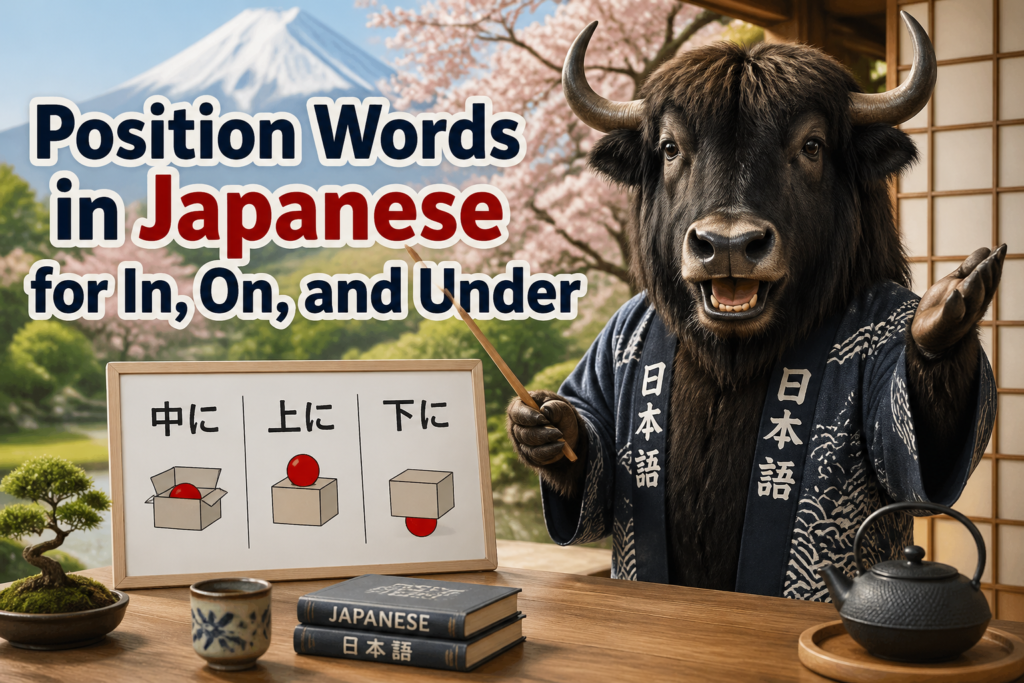
Japanese Position Words Chart for In, On, Under, Next To, and Between
Want to say where something is in Japanese without sounding like your sentence got lost on the way to work? Good. Position words are one of those small grammar pieces that show up everywhere, from grocery stores to train stations to “Where did I put my phone?” moments.
The useful part is this: Japanese often uses a different word depending on whether something is inside, on top of, under, next to, or between something else. Once you learn the chart, everyday sentences get much easier.
For a broader study path, it helps to keep the Japanese learning hub nearby, and if you want to check your understanding later, there’s also a Japanese placement test JLPT.
Main Position Words
| Kanji | Rōmaji | Meaning | Example | Rōmaji | Translation |
|---|---|---|---|---|---|
| 中 | naka | in, inside | 箱の中に本があります。 | Hako no naka ni hon ga arimasu. | There is a book inside the box. |
| 上 | ue | on, above | 机の上にペンがあります。 | Tsukue no ue ni pen ga arimasu. | There is a pen on the desk. |
| 下 | shita | under, below | ベッドの下に猫がいます。 | Beddo no shita ni neko ga imasu. | A cat is under the bed. |
| 横 | yoko | beside, next to | 駅の横にコンビニがあります。 | Eki no yoko ni konbini ga arimasu. | There is a convenience store next to the station. |
| 間 | aida | between, among | 二つの家の間に木があります。 | Futatsu no ie no aida ni ki ga arimasu. | There is a tree between the two houses. |
Notice the little helper particle に in many of these sentences. Japanese likes to quietly point to location with に, while English just says “in,” “on,” or “under” and hopes for the best.
Useful Phrases For Everyday Location Talk
| Kanji | Rōmaji | Meaning | Example | Rōmaji | Translation |
|---|---|---|---|---|---|
| ここ | koko | here | 本はここにあります。 | Hon wa koko ni arimasu. | The book is here. |
| そこ | soko | there, near you | 財布はそこにあります。 | Saifu wa soko ni arimasu. | The wallet is there. |
| あそこ | asoko | over there | 学校はあそこにあります。 | Gakkō wa asoko ni arimasu. | The school is over there. |
| 前 | mae | in front of | 車の前に人がいます。 | Kuruma no mae ni hito ga imasu. | There is a person in front of the car. |
| 後ろ | ushiro | behind | 椅子の後ろにバッグがあります。 | Isu no ushiro ni baggu ga arimasu. | There is a bag behind the chair. |
| 左 | hidari | left | 店の左に公園があります。 | Mise no hidari ni kōen ga arimasu. | There is a park to the left of the store. |
| 右 | migi | right | 駅の右に郵便局があります。 | Eki no migi ni yūbinkyoku ga arimasu. | There is a post office to the right of the station. |
| 隣 | tonari | next door, next to | 私の隣に友だちがいます。 | Watashi no tonari ni tomodachi ga imasu. | My friend is next to me. |
| 間 | aida | between | 机と窓の間に椅子があります。 | Tsukue to mado no aida ni isu ga arimasu. | There is a chair between the desk and the window. |
How To Use These Words
The basic pattern is simple:
- Noun + の + position word + に + exists verb
- Example: 机の上にペンがあります。
Tsukue no ue ni pen ga arimasu.
There is a pen on the desk. - ある is used for non-living things.
- いる is used for living things.
That last bit matters. Japanese is very polite about whether something is alive. A cat gets います. A book gets あります. No one wants the grammar police showing up.
| Pattern | Meaning | Example | Rōmaji | English |
|---|---|---|---|---|
| Noun + の + 中に | inside | バッグの中に鍵があります。 | Baggu no naka ni kagi ga arimasu. | There is a key inside the bag. |
| Noun + の + 上に | on top of | 箱の上に花があります。 | Hako no ue ni hana ga arimasu. | There is a flower on the box. |
| Noun + の + 下に | under | テーブルの下に犬がいます。 | Tēburu no shita ni inu ga imasu. | There is a dog under the table. |
| Noun + の + 横に | next to | 銀行の横にカフェがあります。 | Ginkō no yoko ni kafe ga arimasu. | There is a cafe next to the bank. |
| Noun + と + Noun + の間に | between | 駅と学校の間に店があります。 | Eki to gakkō no aida ni mise ga arimasu. | There is a shop between the station and the school. |
Real-Life Sentences You Can Actually Use
| Kanji | Rōmaji | Meaning | Example | Rōmaji | Translation |
|---|---|---|---|---|---|
| 本はどこですか。 | Hon wa doko desu ka. | Where is the book? | 本は机の上にあります。 | Hon wa tsukue no ue ni arimasu. | The book is on the desk. |
| 猫はどこですか。 | Neko wa doko desu ka. | Where is the cat? | 猫はソファの下にいます。 | Neko wa sofa no shita ni imasu. | The cat is under the sofa. |
| 駅はどこですか。 | Eki wa doko desu ka. | Where is the station? | 駅はコンビニの隣にあります。 | Eki wa konbini no tonari ni arimasu. | The station is next to the convenience store. |
| 写真はどこですか。 | Shashin wa doko desu ka. | Where is the photo? | 写真は棚の中にあります。 | Shashin wa tana no naka ni arimasu. | The photo is inside the shelf. |
| 公園はどこですか。 | Kōen wa doko desu ka. | Where is the park? | 公園は銀行と郵便局の間にあります。 | Kōen wa ginkō to yūbinkyoku no aida ni arimasu. | The park is between the bank and the post office. |
Small Confusions Worth Knowing
中 (naka) and 中に (naka ni) are related, but the full location phrase usually needs に when you say where something exists.
横 (yoko) and 隣 (tonari) both mean “next to,” but they are not identical. 横 is a more general “beside,” while 隣 often means the item or person right beside it, especially adjacent spaces or neighbors.
間 (aida) means “between,” but it also works for “among” in some situations. If you have two specific things, it is often very clear. If you have many things, context does the heavy lifting.
Quick Yak Wisdom: When Japanese location words feel too similar, don’t panic. The sentence usually gives away the meaning. Grammar likes to be annoying, but not impossible.
Practice
- Change “inside the box” into Japanese: 箱の中に / Hako no naka ni
- Change “on the table” into Japanese: テーブルの上に / Tēburu no ue ni
- Change “under the chair” into Japanese: 椅子の下に / Isu no shita ni
- Change “next to the station” into Japanese: 駅の横に / Eki no yoko ni
- Change “between the bank and the school” into Japanese: 銀行と学校の間に / Ginkō to gakkō no aida ni
Try saying each one out loud. Japanese position words are easier to remember when your mouth has to do the job too. Sneaky, but effective.
Quick Reference Summary
- 中 (naka) = in, inside
- 上 (ue) = on, above
- 下 (shita) = under, below
- 横 (yoko) = beside, next to
- 隣 (tonari) = next to, adjacent
- 間 (aida) = between
- に (ni) often marks the place where something exists
- あります (arimasu) for things
- います (imasu) for living beings
If you can spot the object, choose the relationship, and attach に in the right place, you are already doing real Japanese. Not flawless. Real. Which is better.