ひらがな
Hiragana
If Japanese writing looks like a mountain you did not agree to climb, good news: ひらがな is the first friendly path up. It is one of the three Japanese writing systems, and it is usually the first one learners meet before moving on to katakana and kanji. You do not need to be “good at languages” to start. You just need a little patience and a pen that still works.
For the broader learning path, visit our parent guide.
Think of hiragana as the soft, flexible backbone of Japanese. It helps spell native words, grammar endings, and common particles. In other words, it shows up everywhere. That is annoying at first, then weirdly comforting once you start recognizing it.
Hiragana is also a great place to learn Japanese sound patterns. If you want a bigger picture of how it fits with the rest of the script, check Japanese Writing Systems and Japanese Pronunciation. For a quick official-style overview of Japanese script, the general idea is also explained on Wikipedia, which is boring in the best possible way.
What Hiragana Is
ひらがな
Hiragana
Hiragana is a syllabary. That means each character stands for a sound unit, usually a consonant plus vowel, like か ka or み mi. It is not an alphabet with separate letters for each sound. That tiny detail is where many beginners go “Oh. Right. This is different.”
Unlike English, Japanese does not rely on spaces between words. Hiragana helps show grammar clearly, so once you know it, Japanese text stops looking like a mysterious noodle pile.
Why Beginners Learn Hiragana First
ひらがな
Hiragana
Beginners usually learn hiragana first because it is used in everyday Japanese and because it unlocks reading practice fast. Even before you know a lot of vocabulary, you can start sounding out simple words. That is a small win, and small wins are how language learning avoids becoming a dramatic hobby.
Here are the main reasons hiragana matters:
- It shows grammar endings. Verbs and adjectives often use hiragana endings.
- It helps you read native Japanese words. Many common words are written in hiragana.
- It supports kanji. Furigana, or reading help, is often written in hiragana.
- It builds pronunciation skills. Hiragana matches Japanese sounds more closely than English spelling does.
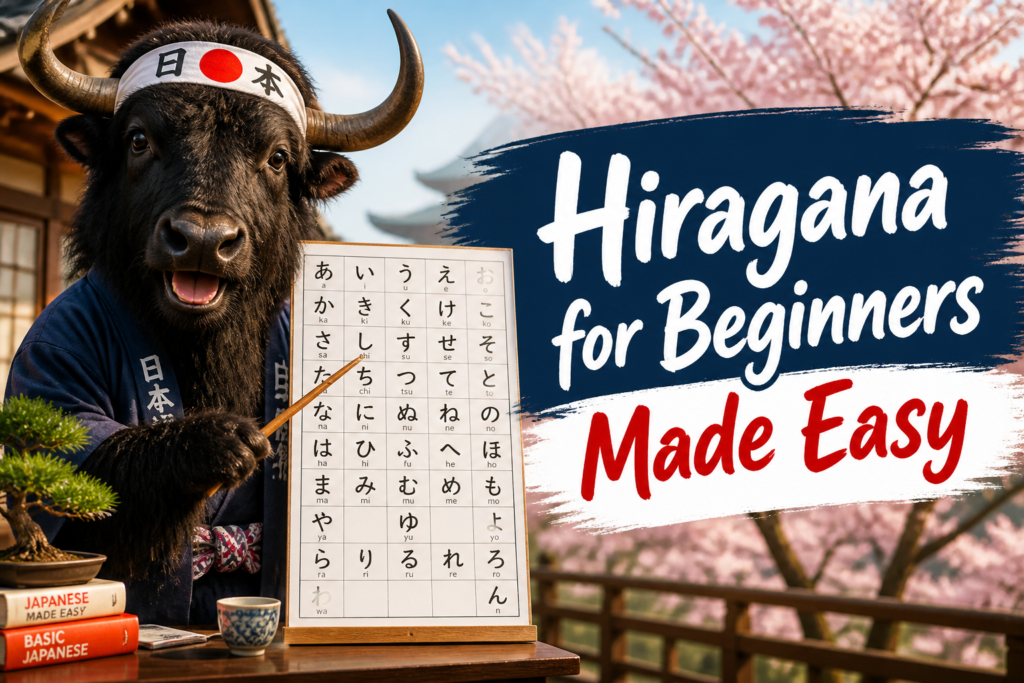
Core Hiragana Vowels
Japanese starts with five main vowel sounds. Learn these first and the rest becomes much easier.
| Hiragana | Rōmaji | Meaning / Sound | Example | Example Rōmaji | Translation |
|---|---|---|---|---|---|
| あ | a | “ah” sound | あさ | asa | morning |
| い | i | “ee” sound | いぬ | inu | dog |
| う | u | “oo” sound | うみ | umi | sea |
| え | e | “eh” sound | えき | eki | station |
| お | o | “oh” sound | おにぎり | onigiri | rice ball |
These five vowels are the skeleton key. Once you can read them, you can start reading basic syllables and words. Nothing glamorous, but very useful. That is the kind of progress that pays rent.
Basic Hiragana Rows
After the vowels, the next step is the consonant rows. These are the building blocks of everyday reading.
| Hiragana | Rōmaji | Meaning / Sound | Example | Example Rōmaji | Translation |
|---|---|---|---|---|---|
| か | ka | ka sound | かさ | kasa | umbrella |
| き | ki | ki sound | きた | kita | north |
| く | ku | ku sound | くち | kuchi | mouth |
| け | ke | ke sound | けん | ken | pen |
| こ | ko | ko sound | こえ | koe | voice |
| さ | sa | sa sound | さくら | sakura | cherry blossom |
| し | shi | shi sound | しま | shima | island |
| た | ta | ta sound | たこ | tako | octopus |
| ち | chi | chi sound | ちず | chizu | map |
| つ | tsu | tsu sound | つき | tsuki | moon |
| な | na | na sound | なつ | natsu | summer |
| は | ha | ha sound | はな | hana | flower / nose |
| ま | ma | ma sound | まど | mado | window |
| や | ya | ya sound | やま | yama | mountain |
| ら | ra | ra sound | らく | raku | easy / comfort |
| わ | wa | wa sound | わたし | watashi | I / me |
| ん | n | nasal sound | ほん | hon | book |
You do not need to memorize all of these in one sitting. Please do not attempt heroic nonsense. Learn a few rows, read them aloud, then come back later and add more.
Useful Hiragana Words And Phrases
Below are common beginner-friendly words and phrases. Each one gives you a little reading practice plus a real use case, because isolated characters alone are not the whole game.
| Kanji / Hiragana | Rōmaji | English Meaning | Example Sentence | Rōmaji | English Translation |
|---|---|---|---|---|---|
| こんにちは | konnichiwa | hello / good afternoon | こんにちは。お元気ですか。 | Konnichiwa. Ogenki desu ka. | Hello. How are you? |
| ありがとう | arigatou | thank you | ありがとう。 | Arigatou. | Thank you. |
| すみません | sumimasen | excuse me / sorry | すみません、駅はどこですか。 | Sumimasen, eki wa doko desu ka. | Excuse me, where is the station? |
| はい | hai | yes | はい、そうです。 | Hai, sou desu. | Yes, that’s right. |
| いいえ | iie | no | いいえ、ちがいます。 | Iie, chigaimasu. | No, that’s different. |
| わたし | watashi | I / me | わたしは学生です。 | Watashi wa gakusei desu. | I am a student. |
| なまえ | namae | name | おなまえは何ですか。 | Onamae wa nan desu ka. | What is your name? |
| ともだち | tomodachi | friend | ともだちと行きます。 | Tomodachi to ikimasu. | I will go with a friend. |
| ひと | hito | person | あのひとは先生です。 | Ano hito wa sensei desu. | That person is a teacher. |
| やま | yama | mountain | やまが見えます。 | Yama ga miemasu. | I can see a mountain. |
| かわ | kawa | river | かわの近くです。 | Kawa no chikaku desu. | It is near the river. |
| あさ | asa | morning | あさごはんを食べます。 | Asa gohan o tabemasu. | I eat breakfast. |
| よる | yoru | night | よるは静かです。 | Yoru wa shizuka desu. | It is quiet at night. |
| みず | mizu | water | みずをください。 | Mizu o kudasai. | Water, please. |
| ほん | hon | book | ほんを読みます。 | Hon o yomimasu. | I read a book. |
Helpful Beginner Phrases
These are small but mighty phrases. They are useful in class, travel, and survival-level Japanese conversation, which is a very real stage of life.
| Kanji / Hiragana | Rōmaji | English Meaning | Example Sentence | Rōmaji | English Translation |
|---|---|---|---|---|---|
| おはようございます | ohayou gozaimasu | good morning | おはようございます、先生。 | Ohayou gozaimasu, sensei. | Good morning, teacher. |
| おねがいします | onegaishimasu | please / I ask a favor | おねがいします。 | Onegaishimasu. | Please. |
| わかりません | wakarimasen | I do not understand | わかりません。もう一度お願いします。 | Wakarimasen. Mou ichido onegaishimasu. | I don’t understand. Please say it once more. |
| だいじょうぶ | daijoubu | okay / alright / no problem | だいじょうぶです。 | Daijoubu desu. | I’m okay. |
| さようなら | sayounara | goodbye | さようなら、また明日。 | Sayounara, mata ashita. | Goodbye, see you tomorrow. |
| またね | matane | see you later | またね。 | Matane. | See you later. |
| おはなし | ohanashi | story / talk | おはなしを聞きます。 | Ohanashi o kikimasu. | I listen to the story. |
How Hiragana Works In Real Sentences
Hiragana is not just for cute flashcards. It appears in actual grammar. Here is what that looks like in practice.
| Pattern | Meaning | Example | Rōmaji | English |
|---|---|---|---|---|
| は | topic marker | わたしは学生です。 | Watashi wa gakusei desu. | I am a student. |
| を | direct object marker | 本を読みます。 | Hon o yomimasu. | I read a book. |
| に | time / destination marker | 学校に行きます。 | Gakkou ni ikimasu. | I go to school. |
| で | place of action | 駅で会います。 | Eki de aimasu. | I will meet at the station. |
| の | possession / connection | 私の本です。 | Watashi no hon desu. | It is my book. |
Notice how these tiny hiragana characters do a lot of work. Tiny. Busy. Absolutely impossible to ignore once you start reading.
Common Confusions For Beginners
Hiragana is friendly, but it still has a few classic beginner traps. Here are the main ones.
| Character | Rōmaji | Common Mistake | Quick Fix |
|---|---|---|---|
| し | shi | mixed up with つ | Remember the curve: し is more like a soft “she” sound. |
| つ | tsu | mixed up with し | Look for the little shape and practice saying “tsu” clearly. |
| ね | ne | confused with れ | Focus on the ending: ね has a loop-like feel. |
| れ | re | confused with ね | Practice writing both slowly side by side. |
| ぬ | nu | confused with め | Watch the shape carefully; ぬ has a looped stroke. |
| め | me | confused with ぬ | Me has a different center shape, so compare them directly. |
Pronunciation Tips That Save Time
Hiragana is written in Japanese sound order, so it is a great place to train your ear. A few sound tips matter a lot more than dramatic handwriting perfection.
- Each vowel stays clean. Japanese vowels are usually short and clear.
- Long sounds matter. おばさん and おばあさん are not the same word.
- ん is a real sound. It can change slightly depending on what comes next.
- つ can be doubled in spelling. That often shows a pause or a doubled consonant in speech.
If you want more detail on sound and rhythm, Japanese Pronunciation is worth a look. Japanese rhythm is not difficult, but it does enjoy being different just to keep people humble.
Practice: Read These Out Loud
Try these in order. Say the hiragana, then the rōmaji, then the English meaning. Yes, out loud. Your mouth needs the workout too.
- あさ — asa — morning
- いぬ — inu — dog
- うみ — umi — sea
- えき — eki — station
- おにぎり — onigiri — rice ball
- さくら — sakura — cherry blossom
- ともだち — tomodachi — friend
- みず — mizu — water
- やま — yama — mountain
- ほん — hon — book
Mini Drill: Match The Sound
Read the hiragana and match it to the meaning. This is the moment when your brain stops panicking and starts recognizing patterns. Very satisfying.
| Hiragana | Rōmaji | Meaning |
|---|---|---|
| か | ka | ka sound |
| さ | sa | sa sound |
| ち | chi | chi sound |
| つ | tsu | tsu sound |
| の | no | no / possession marker |
| ん | n | nasal ending sound |
Hiragana Vs Katakana
Hiragana and katakana are both phonetic scripts. The difference is mostly use and style.
| Script | Main Use | Feel | Example |
|---|---|---|---|
| ひらがな | native words, grammar, reading help | soft, rounded | やま、こんにちは |
| カタカナ | loanwords, emphasis, names | sharp, angular | コンビニ、コーヒー |
If you want to compare them in more detail, take a look at Katakana Japanese. The two scripts are basically siblings who dress differently and argue about it.
How To Study Hiragana Without Burning Out
- Learn 5 to 10 characters at a time.
- Write each character by hand.
- Read short words, not just single symbols.
- Review old characters every day for a few minutes.
- Use reading tests to check what you actually know.
You can also use a placement or vocabulary check when you want to see where you stand. Try the Japanese Placement Test JLPT or the Japanese Vocabulary Test for a quick reality check. Reality checks are rude, but useful.
Quick Reference Summary
| Topic | Quick Reminder |
|---|---|
| What Hiragana Is | A Japanese syllabary used for native words and grammar. |
| First Sounds To Learn | あ い う え お |
| Best Study Habit | Learn small groups, write them, and read them in real words. |
| Most Important Skill | Recognizing the sound each character makes. |
| Next Step After Hiragana | Move on to katakana, then start building kanji reading skills. |
Hiragana may look simple, but it is one of the most important pieces of Japanese. Learn it well, and every later step becomes less mysterious and a lot less dramatic. That is the whole game: small symbols, big payoff.