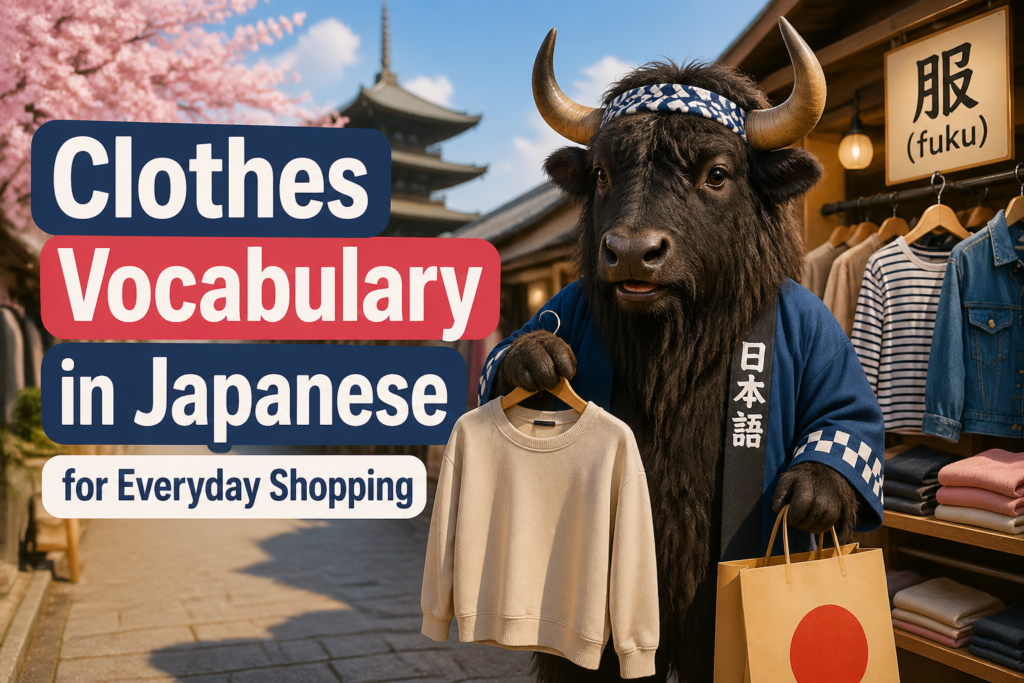
服の語彙 fuku no goi — clothes vocabulary. If shopping for clothes in Japan sounds easy, good news: it usually is. The labels are polite, the stores are tidy, and the language is surprisingly practical. No dramatic mystery, just useful words that help you find the right size before the fitting room starts judging you.
For the broader learning path, visit our parent guide.
Clothing words show up everywhere: in stores, on hangers, on size tags, and in “Do you have this in another color?” moments. If you know the core vocabulary, you can survive a shopping trip without pointing at random sweaters like a confused raccoon.
For a broader lesson on Japanese shopping language, see Clothes Vocabulary in Japanese. It fits nicely with this guide and keeps the vocabulary from running off in six different directions.
Need another useful shopping topic? Try Signs and Signage in Japanese for store labels, notices, and all the little words that quietly boss you around in public.
Basic Clothes Words You Will Use All The Time
| Kanji | Rōmaji | English Meaning | Example Sentence | Rōmaji | English Translation |
|---|---|---|---|---|---|
| 服 | fuku | clothes | 新しい服を買います。 | Atarashii fuku o kaimasu. | I will buy new clothes. |
| 洋服 | yōfuku | Western-style clothes | 洋服が好きです。 | Yōfuku ga suki desu. | I like Western-style clothes. |
| 和服 | wafuku | Japanese-style clothes | 和服を着ます。 | Wafuku o kimasu. | I wear Japanese-style clothes. |
| 衣類 | irui | clothing, garments | 衣類を整理します。 | Irui o seiri shimasu. | I organize the clothes. |
| 衣服 | ifuku | clothing | 衣服は毎日必要です。 | Ifuku wa mainichi hitsuyō desu. | Clothing is necessary every day. |
服 fuku is the most common word here. It simply means “clothes.” In daily conversation, this is the one you will hear most often.
洋服 yōfuku means Western-style clothes, while 和服 wafuku means traditional Japanese clothing. One is everyday shopping language, the other shows up when culture wants to look extra elegant.
For a quick side note on fashion words and labels, the Clothing entry is a boring but useful reference. Exactly the kind of thing that quietly saves time later.
Common Clothing Items
| Kanji | Rōmaji | English Meaning | Example Sentence | Rōmaji | English Translation |
|---|---|---|---|---|---|
| シャツ | shatsu | shirt | このシャツは大きいです。 | Kono shatsu wa ōkii desu. | This shirt is big. |
| Tシャツ | T-shatsu | T-shirt | 白いTシャツを探しています。 | Shiroi T-shatsu o sagashite imasu. | I am looking for a white T-shirt. |
| ズボン | zubon | pants | 黒いズボンがほしいです。 | Kuroi zubon ga hoshii desu. | I want black pants. |
| スカート | sukāto | skirt | そのスカートは長いです。 | Sono sukāto wa nagai desu. | That skirt is long. |
| ワンピース | wanpīsu | one-piece dress | このワンピースはかわいいです。 | Kono wanpīsu wa kawaii desu. | This dress is cute. |
| ジャケット | jaketto | jacket | ジャケットを着ています。 | Jaketto o kite imasu. | I am wearing a jacket. |
| コート | kōto | coat | 冬はコートが必要です。 | Fuyu wa kōto ga hitsuyō desu. | A coat is necessary in winter. |
| セーター | sētā | sweater | セーターが少し暑いです。 | Sētā ga sukoshi atsui desu. | The sweater is a little warm. |
| 下着 | shitagi | underwear | 下着も買います。 | Shitagi mo kaimasu. | I will also buy underwear. |
| 靴下 | kutsushita | socks | 靴下を一足買いました。 | Kutsushita o issoku kaimashita. | I bought one pair of socks. |
シャツ shatsu, ズボン zubon, and スカート sukāto are some of the most useful shopping words. These are the words that help you go from “I need clothes” to “Yes, that one, not the tragic green one.”
ワンピース wanpīsu is especially common in fashion stores. It means a one-piece dress, not a mystery category created by fashion people to confuse everyone.
Clothing Accessories And Small Items
| Kanji | Rōmaji | English Meaning | Example Sentence | Rōmaji | English Translation |
|---|---|---|---|---|---|
| 帽子 | bōshi | hat, cap | 帽子をかぶります。 | Bōshi o kaburimasu. | I wear a hat. |
| 手袋 | tebukuro | gloves | 手袋はどこですか。 | Tebukuro wa doko desu ka. | Where are the gloves? |
| マフラー | mafurā | scarf | マフラーが暖かいです。 | Mafurā ga atatakai desu. | The scarf is warm. |
| ネクタイ | nekutai | tie | 青いネクタイをしています。 | Aoi nekutai o shite imasu. | I am wearing a blue tie. |
| ベルト | beruto | belt | ベルトが少しきついです。 | Beruto ga sukoshi kitsui desu. | The belt is a little tight. |
| バッグ | baggu | bag | このバッグは軽いです。 | Kono baggu wa karui desu. | This bag is light. |
| リュック | ryukku | backpack | リュックを背負います。 | Ryukku o seoi masu. | I carry a backpack. |
| 財布 | saihu | wallet | 財布はバッグの中です。 | Saihu wa baggu no naka desu. | The wallet is inside the bag. |
| 傘 | kasa | umbrella | 雨の日は傘を持ちます。 | Ame no hi wa kasa o mochimasu. | I carry an umbrella on rainy days. |
帽子 bōshi and 靴下 kutsushita show how Japanese often uses very specific words for practical things. Nice and efficient. Very unlike some shopping trips, which can become an accidental endurance test.
Materials, Patterns, And Fabric Words
| Kanji | Rōmaji | English Meaning | Example Sentence | Rōmaji | English Translation |
|---|---|---|---|---|---|
| 綿 | men | cotton | 綿のシャツが好きです。 | Men no shatsu ga suki desu. | I like cotton shirts. |
| 麻 | asa | linen, hemp | 麻の服は涼しいです。 | Asa no fuku wa suzushii desu. | Linen clothes are cool. |
| 絹 | kinu | silk | 絹のスカーフを買いました。 | Kinu no sukāfu o kaimashita. | I bought a silk scarf. |
| 毛 | ke | wool, fur | 毛のセーターは暖かいです。 | Ke no sētā wa atatakai desu. | Wool sweaters are warm. |
| 革 | kawa | leather | 革のベルトを使います。 | Kawa no beruto o tsukaimasu. | I use a leather belt. |
| 模様 | moyō | pattern | この模様はおもしろいです。 | Kono moyō wa omoshiroi desu. | This pattern is interesting. |
| 柄 | gara | design, print, pattern | 花柄のワンピースです。 | Hana-gara no wanpīsu desu. | It is a floral dress. |
| サイズ | saizu | size | サイズを確認します。 | Saizu o kakunin shimasu. | I will check the size. |
| 色 | iro | color | 色がきれいです。 | Iro ga kirei desu. | The color is beautiful. |
柄 gara is especially useful in fashion shopping. It refers to the pattern or print on the item, like floral or striped designs. In other words, the part of the outfit that quietly does all the work.
綿 men, 麻 asa, and 絹 kinu are handy when you want to ask about fabric. If the shop staff mention these, they are not testing you. They are just being helpful in a very Japanese retail way.
Shopping Phrases You Will Actually Hear
| Kanji | Rōmaji | English Meaning | Example Sentence | Rōmaji | English Translation |
|---|---|---|---|---|---|
| 試着 | shichaku | trying on clothes | 試着できますか。 | Shichaku dekimasu ka. | Can I try it on? |
| 試着室 | shichakushitsu | fitting room | 試着室はどこですか。 | Shichakushitsu wa doko desu ka. | Where is the fitting room? |
| 似合う | niau | to suit, to look good on someone | この色はあなたに似合います。 | Kono iro wa anata ni niaimasu. | This color suits you. |
| 大きい | ōkii | big, large | 少し大きいです。 | Sukoshi ōkii desu. | It is a little big. |
| 小さい | chiisai | small | このサイズは小さいです。 | Kono saizu wa chiisai desu. | This size is small. |
| ちょうどいい | chōdo ii | just right | このサイズはちょうどいいです。 | Kono saizu wa chōdo ii desu. | This size is just right. |
| 高い | takai | expensive | このジャケットは高いです。 | Kono jaketto wa takai desu. | This jacket is expensive. |
| 安い | yasui | cheap, inexpensive | 安いシャツを見つけました。 | Yasui shatsu o mitsukemashita. | I found a cheap shirt. |
| 値段 | nedan | price | 値段を見てください。 | Nedan o mite kudasai. | Please look at the price. |
| 返品 | henpin | returning an item | 返品できますか。 | Henpin dekimasu ka. | Can I return it? |
試着 shichaku is one of the most important shopping words. It means “trying on clothes.” If you remember only one store word, this is a very good candidate.
似合う niau means “to suit” or “to look good on someone.” This is the word you want when asking whether something matches your style. It is polite, useful, and much better than guessing in the mirror for ten minutes.
Size And Fit Words
| Kanji | Rōmaji | English Meaning | Example Sentence | Rōmaji | English Translation |
|---|---|---|---|---|---|
| 丈 | take | length | 丈が少し短いです。 | Take ga sukoshi mijikai desu. | The length is a little short. |
| 肩幅 | katahaba | shoulder width | 肩幅がぴったりです。 | Katahaba ga pittari desu. | The shoulder width fits perfectly. |
| 袖 | sode | sleeve | 袖が長いです。 | Sode ga nagai desu. | The sleeves are long. |
| ウエスト | uesuto | waist | ウエストが少しきついです。 | Uesuto ga sukoshi kitsui desu. | The waist is a little tight. |
| ゆるい | yurui | loose, slack | このパンツはゆるいです。 | Kono pantsu wa yurui desu. | These pants are loose. |
| きつい | kitsui | tight | 靴がきついです。 | Kutsu ga kitsui desu. | The shoes are tight. |
丈 take is the length of clothing, especially skirts, pants, and sleeves. This one is very practical because size problems love to hide in the details.
肩幅 katahaba means shoulder width. You may not use it every day, but when you need it, it suddenly becomes the star of the show.
Useful Shopping Sentences
| Kanji | Rōmaji | English Meaning | Example Sentence | Rōmaji | English Translation |
|---|---|---|---|---|---|
| このシャツはありますか。 | Kono shatsu wa arimasu ka. | Do you have this shirt? | このシャツはありますか。 | Kono shatsu wa arimasu ka. | Do you have this shirt? |
| 別の色はありますか。 | Betsu no iro wa arimasu ka. | Do you have another color? | 別の色はありますか。 | Betsu no iro wa arimasu ka. | Do you have another color? |
| これを試着できますか。 | Kore o shichaku dekimasu ka. | Can I try this on? | これを試着できますか。 | Kore o shichaku dekimasu ka. | Can I try this on? |
| もう少し大きいサイズはありますか。 | Mō sukoshi ōkii saizu wa arimasu ka. | Do you have a slightly larger size? | もう少し大きいサイズはありますか。 | Mō sukoshi ōkii saizu wa arimasu ka. | Do you have a slightly larger size? |
| これをください。 | Kore o kudasai. | I’ll take this one. | これをください。 | Kore o kudasai. | I’ll take this one. |
| これはいくらですか。 | Kore wa ikura desu ka. | How much is this? | これはいくらですか。 | Kore wa ikura desu ka. | How much is this? |
| 少し高いです。 | Sukoshi takai desu. | It is a little expensive. | 少し高いです。 | Sukoshi takai desu. | It is a little expensive. |
| とても安いです。 | Totemo yasui desu. | It is very cheap. | とても安いです。 | Totemo yasui desu. | It is very cheap. |
| どこで作られましたか。 | Doko de tsukuraremashita ka. | Where was it made? | どこで作られましたか。 | Doko de tsukuraremashita ka. | Where was it made? |
| レジはどこですか。 | Reji wa doko desu ka. | Where is the checkout? | レジはどこですか。 | Reji wa doko desu ka. | Where is the checkout? |
These sentences are useful because they cover the whole shopping flow: asking, trying on, comparing, and buying. Efficient. No speech that sounds like a broken vending machine.
Polite And Casual Variants
| Kanji | Rōmaji | Meaning | Use | Example |
|---|---|---|---|---|
| 服 | fuku | clothes | everyday, neutral | 服を買います。 |
| 洋服 | yōfuku | Western-style clothes | more formal or specific | 洋服を探しています。 |
| シャツ | shatsu | shirt | borrowed everyday word | シャツが必要です。 |
| 上着 | uwagi | outer garment, jacket | more general than ジャケット | 上着を脱いでください。 |
| 上着 | uwagi | jacket, outerwear | general term in shops | 上着はここです。 |
上着 uwagi is a handy general word for an outer garment. It can be broader than ジャケット jaketto, so it helps when the exact style is not important.
Sometimes Japanese gives you a precise word, sometimes a helpful umbrella word. Language is generous like that, which is rare enough to be suspicious.
Quick Practice
Try swapping the word in each sentence:
- このシャツ Kono shatsu → this shirt
- このスカート Kono sukāto → this skirt
- このジャケット Kono jaketto → this jacket
- このバッグ Kono baggu → this bag
- このサイズ Kono saizu → this size
Now use them in a shopping sentence:
このシャツはありますか。 Kono shatsu wa arimasu ka. — Do you have this shirt?
このバッグはありますか。 Kono baggu wa arimasu ka. — Do you have this bag?
このサイズはちょうどいいです。 Kono saizu wa chōdo ii desu. — This size is just right.
Common Mistakes And Fixes
| Common Mistake | Better Version | Why |
|---|---|---|
| 服を着る | 服を着ます | Use polite form in shopping situations. |
| シャツありますか | このシャツはありますか | Adding この makes the request clear. |
| サイズ大きいです | サイズが大きいです | Use が for the thing being described. |
| 試着するできますか | 試着できますか | できます already means “can do.” |
| 似合うです | 似合います | 似合う is a verb, not an adjective here. |
試着できますか。 Shichaku dekimasu ka. is the clean, natural version. Japanese shopping language likes being neat. Honestly, it has standards.
Quick Reference Summary
- 服 fuku — clothes
- シャツ shatsu — shirt
- ズボン zubon — pants
- スカート sukāto — skirt
- ワンピース wanpīsu — dress
- ジャケット jaketto — jacket
- コート kōto — coat
- 帽子 bōshi — hat
- サイズ saizu — size
- 試着 shichaku — trying on clothes
- 試着室 shichakushitsu — fitting room
- 似合う niau — to suit, to look good on someone
- 安い yasui — cheap
- 高い takai — expensive
- 色 iro — color
- 柄 gara — pattern, print
If you know these words, you can do real shopping in Japanese without panic. Not glamorous. Very effective.
Next, keep building your shopping vocabulary with the related lesson on Signs and Signage in Japanese, because store labels and clothing words make a strong little team. And if you want a wider language base, the main Learn Japanese page is a good place to keep going.
Yak takeaway: clothing shopping in Japanese gets much easier when you know the basic item words, the fitting-room words, and the size words. Learn those first, then add colors, fabrics, and fit. That is the part where Japanese stops being “mystical retail fog” and starts being just another useful language skill.