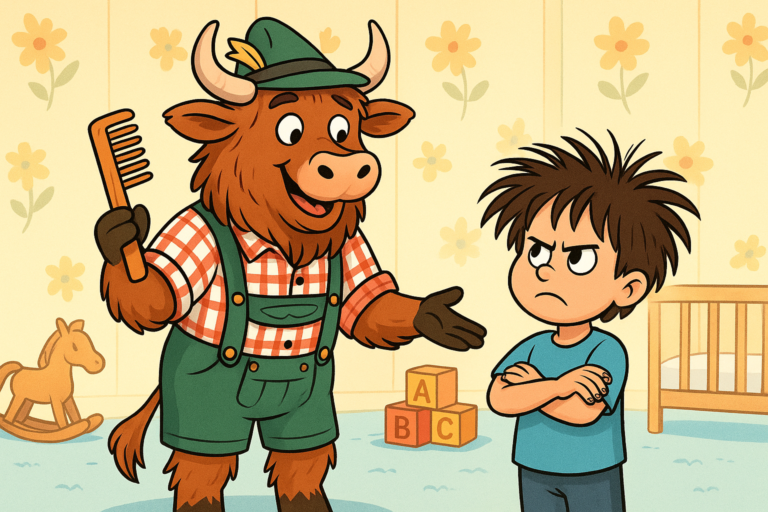
If German ever sounds like it is being mildly dramatic on purpose, congratulations: you have met the world of Redewendungen — idioms. They are the little phrases that make German feel more natural, more colourful, and occasionally a bit cheeky. Used well, they make you sound less like a textbook and more like a real human who has survived at least one train delay.
For the broader learning path, visit our parent guide.
This guide focuses on practical, common idioms you will actually hear in everyday German. You will get the meaning, pronunciation help, example sentences, and notes on usage so you do not accidentally use a casual phrase in a formal email and wonder why everybody got awkward.
In German, idioms often use vivid body, food, animal, or everyday-life images. The logic is not always obvious. That is fine. Language has a weird sense of humour.
For a boring but helpful reference, you can also check Duden when you want to see how a phrase is used in standard German.
What Counts As A German Idiom?
An idiom is a fixed expression whose meaning is not always obvious from the individual words. For example, ins Gras beißen literally means “to bite into the grass,” but it actually means “to die.” Dark? Yes. Common? Also yes, though not in polite small talk unless you are writing a crime novel.
Many idioms are neutral and everyday, while others are informal, regional, or slightly old-fashioned. This article marks those differences so you can choose the right phrase for the right moment.
Core Idioms You Will Hear Often
| German | Pronunciation | Meaning | Example Sentence | Translation | Learner Note |
|---|---|---|---|---|---|
| ins Gras beißen | ins grahs BYE-sen | to die | Der alte Pirat hat ins Gras gebissen. | The old pirate died. | Very idiomatic and a bit crude; avoid in formal situations. |
| den Nagel auf den Kopf treffen | den NAH-gel owf den kopf TREF-en | to hit the nail on the head | Mit deiner Erklärung hast du den Nagel auf den Kopf getroffen. | With your explanation, you hit the nail on the head. | Common and useful in speech and writing. |
| Tomaten auf den Augen haben | toh-MAH-ten owf den OW-gen hah-ben | to not see something obvious | Hast du Tomaten auf den Augen? Der Schlüssel liegt doch da! | Are you blind? The key is right there! | Informal; can sound annoyed or teasing. |
| ins kalte Wasser springen | ins KAL-te VAH-ser shprin-gen | to jump in at the deep end / do something without preparation | Ich musste ins kalte Wasser springen und die Präsentation allein halten. | I had to jump in at the deep end and give the presentation alone. | Great for new jobs, first experiences, or sudden tasks. |
| die Nase voll haben | dee NAH-ze voll hah-ben | to be fed up | Ich habe von dem Chaos langsam die Nase voll. | I’m slowly getting fed up with the mess. | Very common in everyday speech. |
| aus dem Häuschen sein | ows dem HOY-schen zyne | to be thrilled / over the moon | Sie war aus dem Häuschen, als sie die Zusage bekam. | She was over the moon when she got the acceptance. | Often used for happy excitement. |
| die Flinte ins Korn werfen | dee FLIN-te ins korn VER-fen | to give up | Gib nicht gleich die Flinte ins Korn. | Don’t give up right away. | Useful in advice and encouragement. |
| nicht alle Tassen im Schrank haben | nikht AL-le TAH-sen im shrank hah-ben | to be a bit crazy / not quite normal | Wenn du das freiwillig machst, hast du nicht alle Tassen im Schrank. | If you do that voluntarily, you’re not quite right in the head. | Very informal and rude if used seriously. Careful. |
| alles im Griff haben | AL-les im grif hah-ben | to have everything under control | Keine Sorge, sie hat die Situation im Griff. | No worries, she has the situation under control. | Positive and common in work and daily life. |
| auf Wolke sieben schweben | owf VOL-ke zee-ben shvay-ben | to be on cloud nine | Seit dem Urlaub schwebt er auf Wolke sieben. | Since the holiday, he has been on cloud nine. | Very natural for happiness, love, or good news. |
| einen Vogel haben | INE-en FOH-gel hah-ben | to be weird / a little crazy | Du willst bei Regen joggen? Du hast wohl einen Vogel. | You want to go jogging in the rain? You must be crazy. | Informal. Often joking, but still not exactly gentle. |
| auf dem Holzweg sein | owf dem HOLTZ-veyk zyne | to be mistaken / on the wrong track | Wenn du denkst, das Problem löst sich von selbst, bist du auf dem Holzweg. | If you think the problem will solve itself, you are on the wrong track. | Useful when correcting ideas or plans. |
Notice how many idioms use the accusative case: den Kopf, den Augen, den Nagel. That is not a coincidence. German loves a tidy grammatical pattern hiding inside a very untidy image.
Idioms For Talking About Problems And Stress
These are especially useful in everyday life, work, and study. If German learners know one thing, it is that stress comes in many flavours, and Germans have idioms for nearly all of them.
| German | Pronunciation | Meaning | Example Sentence | Translation | Learner Note |
|---|---|---|---|---|---|
| den Kopf nicht hängen lassen | den kopf nikht HEN-gen la-sen | to not lose heart | Lass den Kopf nicht hängen, es wird schon wieder. | Don’t lose heart, it will get better. | Friendly encouragement; very common. |
| den Wald vor lauter Bäumen nicht sehen | den valt for LOW-ter BOY-men nikht zay-en | to miss the big picture | Er sucht komplizierte Lösungen und sieht den Wald vor lauter Bäumen nicht. | He is looking for complicated solutions and can’t see the big picture. | Useful in work, planning, and problem-solving. |
| auf dem Schlauch stehen | owf dem shlowkh shtay-en | to have a mental block | Bei der letzten Frage stand ich total auf dem Schlauch. | I totally blanked on the last question. | Very common in speech; sounds natural and casual. |
| am Zahn der Zeit nagen | am tsahn der tsyt NAH-gen | to be worn down by time / become outdated | Dieses Gebäude nagt am Zahn der Zeit. | This building is showing the effects of time. | More literary or descriptive than casual. |
| einen Knoten im Kopf haben | INE-en KNOH-ten im kopf hah-ben | to be confused | Nach der Erklärung hatte ich einen Knoten im Kopf. | After the explanation, my head was tangled up. | Great for study situations and complicated instructions. |
| die Zähne zusammenbeißen | dee TSAY-ne tsoo-ZAM-en-BYE-sen | to grit your teeth and endure | Manchmal muss man einfach die Zähne zusammenbeißen. | Sometimes you just have to grit your teeth and push through. | Common for effort, pain, and difficult situations. |
One nice thing about idioms like these: they are often memorable because the image is vivid. One less nice thing: sometimes the image is so vivid that you briefly feel attacked by a sentient cupboard.
Idioms For Success, Luck, And Failure
| German | Pronunciation | Meaning | Example Sentence | Translation | Learner Note |
|---|---|---|---|---|---|
| Glück im Unglück haben | glyk im oong-LYUK hah-ben | to have a stroke of luck in an unlucky situation | Wir hatten Glück im Unglück, dass niemand verletzt wurde. | We were lucky that nobody was injured. | Useful in accidents, delays, and bad news. |
| den Nagel auf den Kopf treffen | den NAH-gel owf den kopf TREF-en | to say exactly the right thing | Mit dem Kommentar hast du den Nagel auf den Kopf getroffen. | With that comment, you hit the nail on the head. | Positive and precise. |
| es geschafft haben | es ge-SHAFT hah-ben | to manage it / pull it off | Zum Glück haben wir es noch rechtzeitig geschafft. | Luckily, we managed it in time. | Not a strict idiom, but extremely useful everyday German. |
| aus dem Rahmen fallen | ows dem RAH-men fal-en | to stand out / be unusual | Sein Outfit fiel bei der Hochzeit völlig aus dem Rahmen. | His outfit stood out completely at the wedding. | Can sound neutral or critical depending on context. |
| in die Hose gehen | in dee HOH-ze gay-en | to go badly / fail | Der Plan ist leider total in die Hose gegangen. | The plan unfortunately went totally wrong. | Very informal; common in speech, not in formal writing. |
| etwas auf die Reihe kriegen | ET-vahs owf dee RYE-e krie-gen | to get something sorted out | Ich kriege heute gar nichts auf die Reihe. | I can’t get anything sorted out today. | Colloquial and very common; often used when overwhelmed. |
Idioms About People, Behaviour, And Attitude
These phrases show up a lot in conversations, especially when people describe someone’s personality, habits, or reactions. A few are friendly. A few are spicy. German, in other words, is not always emotionally subtle.
| German | Pronunciation | Meaning | Example Sentence | Translation | Learner Note |
|---|---|---|---|---|---|
| kein Blatt vor den Mund nehmen | kyne blat for den moont NAY-men | to speak plainly / not hold back | Sie nimmt nie ein Blatt vor den Mund. | She never holds back. | Often positive, but can also mean someone is blunt. |
| jemandem auf der Nase herumtanzen | YEE-man-dem owf der NAH-ze her-oom-TAN-tsen | to walk all over someone | Die Kinder tanzen ihren Großeltern auf der Nase herum. | The children walk all over their grandparents. | Used when someone is too lenient or easily controlled. |
| aus dem gleichen Holz geschnitzt sein | ows dem GLY-khen holts ge-SHNITST zyne | to be cut from the same cloth | Die beiden sind aus dem gleichen Holz geschnitzt. | The two are cut from the same cloth. | Often used for personality or character. |
| jemandem etwas an der Nase ansehen | YEE-man-dem ET-vahs an der NAH-ze an-ZAY-en | to be able to tell something from someone | Man kann ihr sofort ansehen, wenn sie wütend ist. | You can tell immediately when she is angry. | Common with emotions and moods. |
| nicht auf den Mund gefallen sein | nikht owf den moont ge-FAH-len zyne | to be sharp-tongued / quick to reply | Sie ist nicht auf den Mund gefallen. | She’s quick-witted. | Usually positive, but can hint at cheekiness. |
| wie ein Buch reden | vee ine book RAY-den | to talk fluently and clearly | Das Kind redet wie ein Buch. | The child speaks very fluently and clearly. | Often used to praise someone, especially a child. |
Everyday Idioms For Time, Speed, And Change
| German | Pronunciation | Meaning | Example Sentence | Translation | Learner Note |
|---|---|---|---|---|---|
| auf die Schnelle | owf dee SHNEL-le | quickly / in a hurry | Ich habe nur auf die Schnelle etwas gegessen. | I only ate something quickly. | Very common in informal speech. |
| mit der Tür ins Haus fallen | mit der toor ins hows fal-en | to come straight to the point too abruptly | Er fiel mit der Tür ins Haus und fragte sofort nach dem Gehalt. | He came straight to the point and asked about the salary right away. | Useful when talking about tact and conversation style. |
| von heute auf morgen | fon HOY-te owf MOR-gen | overnight / suddenly | Die Regeln können nicht von heute auf morgen geändert werden. | The rules cannot be changed overnight. | Very useful in news, business, and daily life. |
| langsam aber sicher | LANG-zam AH-ber ZI-ker | slowly but surely | Langsam aber sicher verstehe ich die Grammatik. | Slowly but surely, I understand the grammar. | Excellent learner phrase, honestly. |
| alles hat ein Ende, nur die Wurst hat zwei | AL-les hat ine EN-de, noor dee voorst hat tsvye | everything ends; only the sausage has two ends | Nach drei Stunden ist das Meeting vorbei — alles hat ein Ende, nur die Wurst hat zwei. | After three hours, the meeting is over — everything ends, only the sausage has two ends. | Humorous and very German. Slightly silly, highly memorable. |
The sausage line is the kind of phrase that makes sense emotionally even if it makes very little sense literally. That is pretty much idioms in a nutshell.
Pronunciation Notes For Common Idiom Sounds
Idioms are easier to remember when the sound feels familiar. A few German pronunciation patterns show up again and again in these expressions:
- ch: in nicht, ich, Kopf nicht hängen lassen it sounds soft, like the “h” in a gentle hiss, not like English “k”.
- r: often softer than English, especially in Gras, Rahmen, and morgen.
- ei: sounds like “eye,” as in beißen, Zeit, heute.
- eu/äu: sounds like “oy,” as in heute, Freude, Bäumen.
- sp and st: at the beginning of syllables, often sound like shp and sht, as in springen and stehen.
- final devoicing: word-final b, d, g often sound like p, t, k, so Tag sounds closer to “tahk.”
If you want a reliable dictionary check for pronunciation and usage, Collins German-English Dictionary is a decent no-nonsense place to compare meanings.
Germany, Austria, And Switzerland Differences
Most idioms in this article are broadly understood in Germany-based standard German. That said, some expressions feel more regional, more informal, or more common in one country than another. Language likes to wander across borders wearing a slightly different hat.
| Expression | Germany | Austria | Switzerland | Note |
|---|---|---|---|---|
| die Nase voll haben | Very common | Very common | Understood and used | Safe across standard varieties. |
| auf der Nase herumtanzen | Common | Common | Understood, but less frequent | Works well in everyday speech. |
| alles im Griff haben | Very common | Very common | Very common | Nice safe idiom for all three countries. |
| nicht alle Tassen im Schrank haben | Common and very informal | Common and very informal | Understood, but style may vary | Use carefully; it is not a warm compliment. |
Mini Practice
Try translating these into German idioms. Don’t panic. These are practice sentences, not a courtroom.
- 1. I’m fed up with this.
- 2. Don’t give up right away.
- 3. She hit the nail on the head.
- 4. We had to jump in at the deep end.
- 5. He is over the moon.
Possible answers:
- 1. Ich habe davon die Nase voll.
- 2. Gib nicht gleich die Flinte ins Korn.
- 3. Sie hat den Nagel auf den Kopf getroffen.
- 4. Wir mussten ins kalte Wasser springen.
- 5. Er schwebt auf Wolke sieben.
Now try a small transformation exercise:
- Turn Ich verstehe das Problem. into a more idiomatic version using den Nagel auf den Kopf treffen.
- Turn Ich bin sehr glücklich. into a more colourful idiomatic sentence.
- Turn Ich kann nicht mehr. into a phrase with die Nase voll haben or den Kopf nicht hängen lassen, depending on the meaning.
Common Mistakes And Fixes
| Common Mistake | Better Version | Why It Matters |
|---|---|---|
| Ich habe Tomaten in den Augen. | Ich habe Tomaten auf den Augen. | The fixed idiom uses auf, not in. |
| Ich bin auf Wolke sieben. | Ich schwebe auf Wolke sieben. | The image is usually “floating” on cloud nine. |
| Er hat die Nase voll von es. | Er hat davon die Nase voll. | Use davon or a noun phrase correctly. |
| Sie hat den Nagel auf Kopf getroffen. | Sie hat den Nagel auf den Kopf getroffen. | Don’t drop the article den. |
| Ich gebe die Flinte ins Korn. | Ich werfe die Flinte ins Korn. | The verb is usually werfen, not geben. |
A useful rule: idioms are fixed phrases. You can usually change the subject, tense, or pronoun, but the core wording often stays the same. If a phrase sounds oddly “almost right,” that is usually the trap.
Yak wisdom: If an idiom feels too literal, it is probably not being literal. German enjoys that sort of thing.
Quick Reference Summary
- ins Gras beißen = to die
- den Nagel auf den Kopf treffen = to hit the nail on the head
- Tomaten auf den Augen haben = to miss the obvious
- ins kalte Wasser springen = to jump in at the deep end
- die Nase voll haben = to be fed up
- aus dem Häuschen sein = to be thrilled
- die Flinte ins Korn werfen = to give up
- alles im Griff haben = to have everything under control
- auf Wolke sieben schweben = to be on cloud nine
- kein Blatt vor den Mund nehmen = to speak very directly
- auf dem Schlauch stehen = to have a mental block
- langsam aber sicher = slowly but surely
Idioms are one of the fastest ways to make your German sound more natural. Start with a few safe ones, use them in real sentences, and do not worry if some of the images are delightfully absurd. That is part of the charm.
Yak takeaway: learn the common idiom, learn the situation it fits, and let the weird little picture do the memory work for you.