


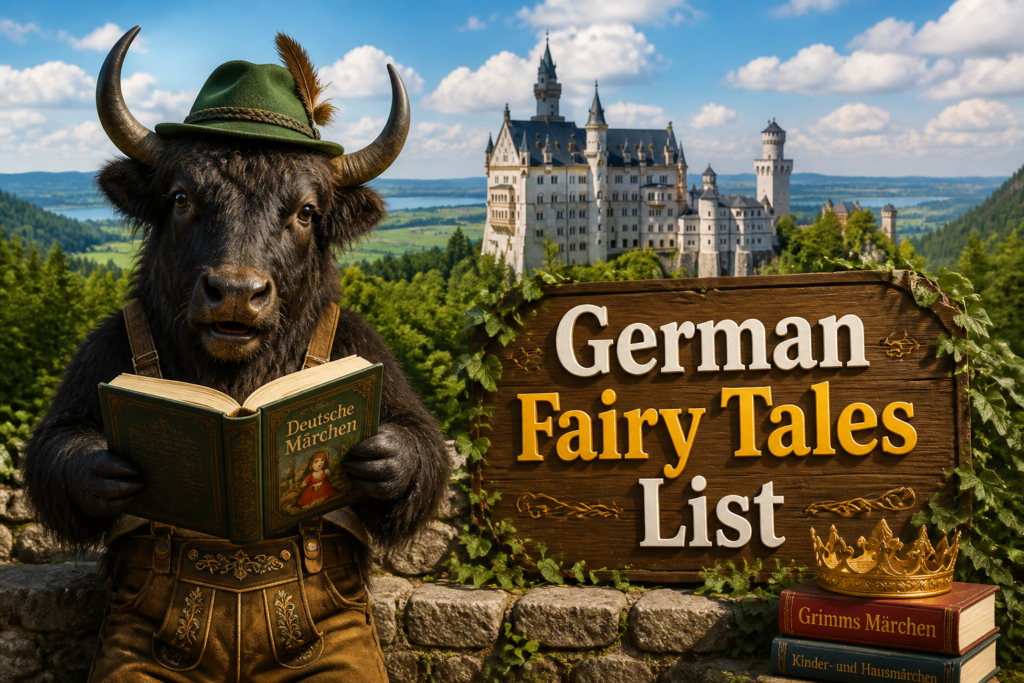
If you grew up on fairy tales, German is basically sitting at the big table of the genre, wearing a slightly old-fashioned cape and pretending not to enjoy the attention. Stories collected by the Brothers Grimm became global classics, and a lot of them still show up in school books, films, and casual cultural references today.
This list gives you the German names of famous fairy tales, with simple pronunciation help, English meanings, and a few learner notes. It is useful as a reference if you are learning German through stories, titles, or cultural reading. And yes, some titles are easier to remember than the stories themselves.
One nice bonus: fairy tale titles are a sneaky way to learn everyday German noun patterns, compound words, and common vocabulary you will keep seeing in books, articles, and jokes.
For broader vocabulary help, you can also bookmark the related guide on essential German words and phrases.
Why German Fairy Tales Matter
German fairy tales are not just children’s stories. They are part of everyday culture, literature, and even idioms. If someone mentions Rotkäppchen, Aschenputtel, or Hänsel und Gretel, many Germans immediately know the story. That cultural memory is useful for learners because it shows up in school, media, and the occasional clever joke.
Most of the famous tales were collected and shaped by the Brothers Grimm, which is why people often speak about “Grimm’s fairy tales.” For a boring-but-helpful reference point, the German Wikipedia overview of the Grimm collection is a decent starting place.
Quick Reference: The Most Famous German Fairy Tales
| German | Pronunciation | Meaning | Example Sentence | Translation | Learner Note |
|---|---|---|---|---|---|
| Hänsel und Gretel | HEN-sel oont GRAY-tel | Hansel and Gretel | Hänsel und Gretel irren im Wald umher. | Hansel and Gretel wander around in the forest. | Very famous worldwide; umherirren means to wander around aimlessly. |
| Rotkäppchen | ROHT-kep-chen | Little Red Riding Hood | Rotkäppchen trägt einen roten Hut. | Little Red Riding Hood wears a red hat. | Literally “red little cap”; -chen makes a noun diminutive. |
| Schneewittchen | SHNAY-vit-chen | Snow White | Schneewittchen lebt bei den sieben Zwergen. | Snow White lives with the seven dwarfs. | Wittchen is an old word; the title sounds old-fashioned on purpose. |
| Dornröschen | dorn-RUH-schen | Sleeping Beauty | Dornröschen schläft viele Jahre lang. | Sleeping Beauty sleeps for many years. | Literally “little thorn rose.” Pretty, but not exactly subtle. |
| Aschenputtel | AH-shen-poo-tel | Cinderella | Aschenputtel verliert einen Schuh. | Cinderella loses a shoe. | Related to ashes: Asche. The title is much more descriptive than glamorous. |
| Rumpelstilzchen | ROOM-pel-shtiltz-chen | Rumpelstiltskin | Rumpelstilzchen tanzt um das Feuer. | Rumpelstiltskin dances around the fire. | Great example of a tricky German consonant cluster. A tiny pronunciation workout with attitude. |
| Der Froschkönig | der FROSH-kur-nihk | The Frog King | Der Froschkönig sitzt im Brunnen. | The Frog King sits in the well. | König means king; the umlaut in ö matters. |
| Die Bremer Stadtmusikanten | dee BRAY-mer SHTAT-moo-zee-KAHN-ten | The Town Musicians of Bremen | Die Bremer Stadtmusikanten reisen nach Bremen. | The Town Musicians of Bremen travel to Bremen. | Long compound title; break it into chunks when reading aloud. |
Classic Tales You Should Know
| German | Pronunciation | Meaning | Example Sentence | Translation | Learner Note |
|---|---|---|---|---|---|
| Der Wolf und die sieben jungen Geißlein | der volf oont dee ZEE-ben YOO-ngen GUYSS-line | The Wolf and the Seven Young Kids | Der Wolf und die sieben jungen Geißlein ist ein bekanntes Märchen. | The Wolf and the Seven Young Kids is a well-known fairy tale. | Märchen means fairy tale. Geißlein is a small goat or kid. |
| Rapunzel | rah-POON-tsel | Rapunzel | Rapunzel lässt ihr Haar herunter. | Rapunzel lets her hair down. | Easy title, easy pronunciation, lucky for learners. |
| Der gestiefelte Kater | der ge-SHTEE-fehl-te KAH-ter | Puss in Boots | Der gestiefelte Kater trägt Stiefel. | Puss in Boots wears boots. | gestiefelt means “wearing boots.” |
| Das tapfere Schneiderlein | das TAP-feh-re SHNY-der-line | The Brave Little Tailor | Das tapfere Schneiderlein besiegt das Ungeheuer. | The Brave Little Tailor defeats the monster. | tapfer means brave; -lein also makes a diminutive. |
| Schneeweißchen und Rosenrot | SHNAY-vy-shen oont ROH-zen-roht | Snow-White and Rose-Red | Schneeweißchen und Rosenrot sind Schwestern. | Snow-White and Rose-Red are sisters. | Beautiful compound names; great for noticing German word building. |
| Die goldene Gans | dee GOL-deh-ne GAHNS | The Golden Goose | Die goldene Gans bringt Glück. | The Golden Goose brings luck. | goldene shows adjective agreement with die Gans. |
| Frau Holle | frow HOL-leh | Mother Holle | Frau Holle schüttelt die Betten aus. | Mother Holle shakes out the beds. | Very culturally important; the snow imagery sticks in memory nicely. |
| Die zwölf Brüder | dee TSVULF BRU-dehr | The Twelve Brothers | Die zwölf Brüder leben im Wald. | The Twelve Brothers live in the forest. | zwölf is one of those numbers learners should practice out loud. |
More Fairy Tales For Your Reference List
| German | Pronunciation | Meaning | Example Sentence | Translation | Learner Note |
|---|---|---|---|---|---|
| Der Eisenhans | der EYE-zen-hahns | Iron John | Der Eisenhans ist stark und geheimnisvoll. | Iron John is strong and mysterious. | Eisen means iron. Compound nouns are everywhere in German. Naturally, they do not apologize. |
| Die zertanzten Schuhe | dee tser-TSANT-sen SHOO-eh | The Worn-Out Dancing Shoes | Die zertanzten Schuhe sind verschwunden. | The worn-out dancing shoes are gone. | zertanzt means danced to pieces. |
| Der Hase und der Igel | der HAH-zeh oont der EE-gel | The Hare and the Hedgehog | Der Hase und der Igel ist eine bekannte Geschichte. | The Hare and the Hedgehog is a well-known story. | Good for learning animal vocabulary and a very German kind of moral tale. |
| Die kluge Else | dee KLOO-geh EL-zeh | Wise Else | Die kluge Else denkt sehr genau nach. | Wise Else thinks very carefully. | klug means clever or smart. |
| Die sieben Raben | dee ZEE-ben RAH-ben | The Seven Ravens | Die sieben Raben fliegen über das Feld. | The Seven Ravens fly over the field. | Rabe is raven; plural is Raben. |
| Jorinde und Joringel | yo-RIN-deh oont yo-RING-el | Jorinde and Joringel | Jorinde und Joringel suchen den Weg zurück. | Jorinde and Joringel search for the way back. | Less famous, but useful if you are building a reading list. |
| Der König Drosselbart | der KUR-nihk DROS-el-bahrt | King Thrushbeard | Der König Drosselbart ist ein verkleideter König. | King Thrushbeard is a disguised king. | Drossel is a thrush bird; compound names can be wonderfully weird. |
| Die Gänsemagd | dee GAIN-zeh-mahgt | The Goose Girl | Die Gänsemagd hütet die Gänse. | The Goose Girl tends the geese. | hüten means to tend, watch, or herd. |
Useful Fairy Tale Words In German
If you want to talk about fairy tales in German, these words show up again and again. They also help you understand titles, summaries, and cultural references without getting ambushed by vocabulary.
| German | Pronunciation | Meaning | Example Sentence | Translation | Learner Note |
|---|---|---|---|---|---|
| das Märchen | das MARE-khen | fairy tale | Ich lese gern Märchen. | I like reading fairy tales. | Plural: die Märchen. The ch sound is soft, like in “Bach” but gentler. |
| der König | der KUR-nihk | king | Der König lebt im Schloss. | The king lives in the castle. | Umlaut ö is important; do not flatten it into plain “o.” |
| die Königin | dee KUR-neh-gin | queen | Die Königin trägt eine Krone. | The queen wears a crown. | Plural: Königinnen. German loves its endings, and yes, it means business. |
| der Wald | der valt | forest | Im Wald ist es dunkel. | It is dark in the forest. | Final d sounds like t at the end of a word. |
| das Schloss | das shlos | castle | Das Schloss steht auf dem Hügel. | The castle stands on the hill. | Not the same as English school. German spelling likes to keep learners awake. |
| die Hexe | dee HEK-seh | witch | Die Hexe wohnt im Wald. | The witch lives in the forest. | Plural: Hexen. Useful in stories and Halloween talk. |
| der Wolf | der volf | wolf | Der Wolf ist im Märchen oft gefährlich. | The wolf is often dangerous in fairy tales. | German final devoicing: Wolf ends with a clear f sound. |
| der Zauber | der TSOW-ber | magic, enchantment | Der Zauber endet nicht sofort. | The magic does not end immediately. | Related words: zaubern = to do magic. |
| verzaubert | fer-TSOW-bert | enchanted | Der Prinz ist verzaubert. | The prince is enchanted. | Past participle used as an adjective; common in story language. |
| die Stiefel | dee SHTEE-fel | boots | Der Kater trägt Stiefel. | The cat wears boots. | Plural only in this form here; fairy tales love footwear for some reason. |
Pronunciation Notes That Actually Help
Fairy tale titles are a good excuse to practice a few classic German sounds without turning pronunciation into a science fair project.
| Sound | Example | How To Say It | Why It Matters |
|---|---|---|---|
| ch | Märchen, ich | A soft, airy sound, not the hard English “k.” | Very common in fairy tale vocabulary. |
| sch | Schneewittchen, Schloss | Sounds like English “sh.” | Easy win, thankfully. |
| sp, st at the beginning | Schloss has sch, but Stiefel and Sprecher show the rule | Often pronounced like “shp” and “sht.” | Useful for titles and story words. |
| ä, ö, ü | Märchen, König, Grüße | Umlauts are not decoration. They change the vowel. | They can change meaning, so do not ignore them. |
| z | Zauber | Like “ts.” | Common in words about magic and movement. |
| final devoicing | Wolf, Kind, Tag | Final voiced consonants often sound unvoiced. | It helps your German sound more natural and less like English with a hat. |
For pronunciation help beyond fairy tales, the Cambridge German-English Dictionary and Collins German-English Dictionary are both reliable, plain, and beautifully unexciting in the best possible way.
German Fairy Tale Titles: What They Are Telling You
German titles often tell you exactly what the story is about. That is helpful, even if it does make the titles sound a little like someone summarised the plot on the spot.
| Pattern | Meaning | German Example | English Translation | Learner Note |
|---|---|---|---|---|
| das + adjective + noun | describes a thing | das tapfere Schneiderlein | the brave little tailor | The adjective changes to match the noun. German grammar enjoys tiny costumes. |
| noun + noun compound | one long noun idea | Rotkäppchen | little red cap | German compounds are common and often logical once you break them apart. |
| proper names linked by und | two characters or parts of a story | Hänsel und Gretel | Hansel and Gretel | Very common in story titles and easy to recognise. |
| the + place or role | the character’s role | der Froschkönig | the frog king | Useful for understanding German descriptive naming. |
Mini Comparison: German, English, And A Few Title Traps
Some fairy tales have slightly different English names, so do not panic if the German title looks unfamiliar. Stories travel, titles mutate, and languages do their own little drama.
| German Title | Common English Title | Learner Note |
|---|---|---|
| Schneewittchen | Snow White | Not a literal word-for-word translation, but a set cultural title. |
| Aschenputtel | Cinderella | Different title, same story family. |
| Der gestiefelte Kater | Puss in Boots | The German title literally highlights the boots. |
| Die Bremer Stadtmusikanten | The Town Musicians of Bremen | Great title for learning compound nouns. |
| Der Froschkönig | The Frog King | Very close to the English meaning. |
Useful Phrases For Talking About Fairy Tales
| German | Pronunciation | Meaning | Example Sentence | Translation | Learner Note |
|---|---|---|---|---|---|
| ein Märchen erzählen | ine MARE-khen er-TSELL-en | to tell a fairy tale | Die Großmutter erzählt ein Märchen. | The grandmother tells a fairy tale. | erzählen is useful for stories, news, and retelling events. |
| die Geschichte lesen | dee ge-SHICH-teh lay-zen | to read the story | Ich lese heute Abend eine Geschichte. | I am reading a story tonight. | Geschichte can mean story or history depending on context. |
| im Wald wohnen | im valt VOH-nen | to live in the forest | Die Hexe wohnt im Wald. | The witch lives in the forest. | im = in dem. Handy little contraction. |
| in ein Schloss ziehen | in ine shlos tsee-en | to move into a castle | Der Prinz zieht in ein Schloss. | The prince moves into a castle. | ziehen can mean move or pull, depending on the context. German likes multitasking. |
| einen Fluch brechen | INE-nen flooch BRECHen | to break a curse | Der Held bricht den Fluch. | The hero breaks the curse. | Fluch is a curse; note the accusative den Fluch. |
| verzaubert sein | fer-TSOW-bert zine | to be enchanted | Der Wald ist verzaubert. | The forest is enchanted. | Very common story description. |
| am Ende der Geschichte | am EN-deh der ge-SHICH-teh | at the end of the story | Am Ende der Geschichte gewinnt das Gute. | At the end of the story, the good wins. | Good phrase for summaries and opinions. |
| es war einmal | es var eye-n-mal | once upon a time | Es war einmal eine Königin. | Once upon a time there was a queen. | The classic fairy tale opening. Learners should know this one immediately. |
| das Gute siegt | das GOO-teh zeekt | good wins | In vielen Märchen siegt das Gute. | In many fairy tales, good wins. | siegen is a more literary verb than everyday gewinnen. |
| ein bekanntes Märchen | ine beh-KAN-tes MARE-khen | a well-known fairy tale | Hänsel und Gretel ist ein bekanntes Märchen. | Hansel and Gretel is a well-known fairy tale. | Great phrase for reviews and descriptions. |
Common Mistakes Learners Make
These are the little things that trip up English speakers when they talk about German fairy tales. Nothing dramatic. Just the usual grammar mischief.
| Common Mistake | Better Version | Why |
|---|---|---|
| das Märchenes | das Märchen | Märchen is already the correct form. No extra ending needed. |
| die Rotkäppchen | das Rotkäppchen | The noun is neuter: das Rotkäppchen. |
| Der Schneewittchen | Schneewittchen or Das Schneewittchen | Article choice must match the noun; here the title is usually used as a proper name. |
| ich lese ein Märchen gestern | ich las gestern ein Märchen or ich habe gestern ein Märchen gelesen | German word order and tense matter. “Yesterday” needs the past tense. |
| im Walds | im Wald | No plural ending here. Wald is singular in this sentence. |
| ein bekannte Märchen | ein bekanntes Märchen | Adjective ending changes with ein + neuter noun. |
| die Hexe wohnt in Wald | die Hexe wohnt im Wald | im is the correct contraction of in dem. |
| Rotkäppchen trägt rote Hut | Rotkäppchen trägt einen roten Hut | Hut is masculine, and the adjective changes in accusative. |
Practice: Match The Fairy Tale To The Meaning
Try this quick check before the vocabulary slips away to live in a castle somewhere.
- Hänsel und Gretel → Hansel and Gretel
- Rotkäppchen → Little Red Riding Hood
- Schneewittchen → Snow White
- Dornröschen → Sleeping Beauty
- Aschenputtel → Cinderella
- Der Froschkönig → The Frog King
- Die Bremer Stadtmusikanten → The Town Musicians of Bremen
- Der gestiefelte Kater → Puss in Boots
Now try saying three of the titles out loud. If Rumpelstilzchen feels like a tongue twister, congratulations: you have met a very German problem. For more pronunciation fun, the 100 German tongue twisters page is waiting like a mischievous little goblin.
Short Story-Reading Tips For German Learners
If you want to use fairy tales for reading practice, keep it simple. Start with short summaries, picture books, or bilingual editions. Do not begin with a dense academic edition unless you enjoy suffering in a very specific way.
- Look for repeated words like der Wolf, die Hexe, der König, and das Schloss.
- Spot compound nouns and break them into smaller parts.
- Notice adjective endings in titles and descriptions.
- Read the same story twice: once for meaning, once for vocabulary.
- Say the titles aloud to practice German sounds.
If you want a lighter route into language learning, fairy tales also pair nicely with jokes and sound play. That is why the related guides on German jokes to learn German and the broader learn German hub can be useful next steps.
Closing Yak Takeaway
German fairy tales are more than nostalgia: they are a compact vocabulary stash, a pronunciation workout, and a culture cheat sheet all in one. Learn the most famous titles first, notice the recurring words, and let the stories do some of the heavy lifting. That is far nicer than memorising random noun lists while pretending to enjoy it.
Yak takeaway: if you know the fairy tale titles, you are already reading real German cultural language instead of just classroom crumbs.