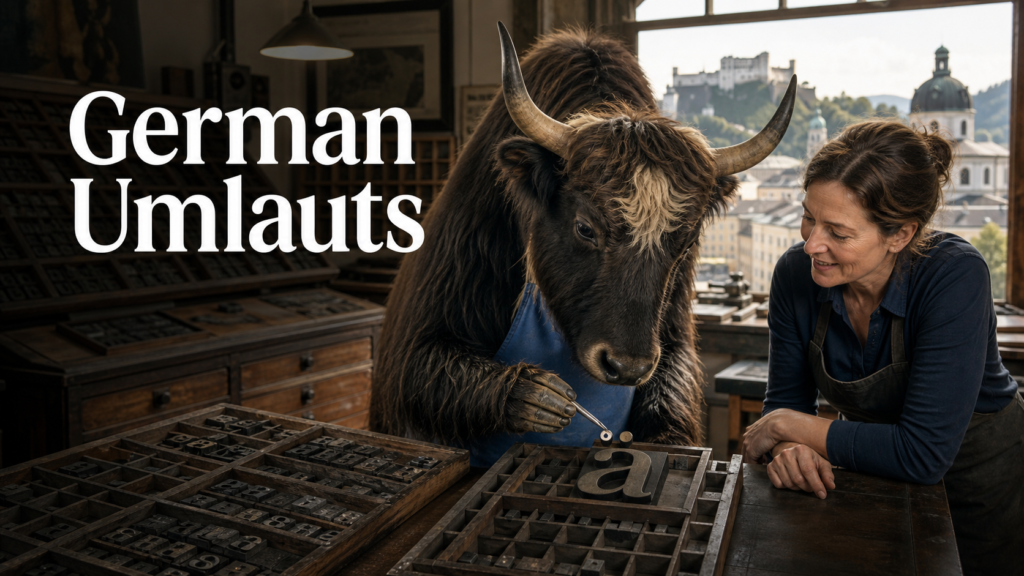
Umlauts are those two little dots that perch on top of A, O, and U in German, and they turn a familiar letter into a brand-new sound. If you’ve ever mixed up schon (already) with schön (beautiful), you already know why they matter. This list is your quick field guide to the most common words and patterns for Ä, Ö, and Ü-no dusty grammar lecture, just the practical stuff that shows up in everyday conversations.
We’ve rounded up around 15 entries that put umlauts in context. Each one comes with a straightforward meaning and a natural example sentence, so you can see exactly how the dotted vowel changes the word’s job. It’s built for general learners who want to stop guessing and start sounding more natural.
When you’re ready to study offline, use the free PDF download button below the table. No fluff, no signup-just a clean reference you can print or save.
If this topic helped, explore more in our German learning section. it’s the easiest way to keep building related vocabulary without jumping around the web.
Quick Quiz
Think you’ve got the hang of these dotted vowels? The quick quiz below will show you how many you can nail-no pressure, just a friendly check.
Keep building your German
Choose a practical next step when you are ready.
Quiz data not found. No rows have values for both headword and meaning.
Browse the Full List
| Word |
|---|
| Antike |
| bullen |
| feind |
| genannt |
| gespielt |
| gleichen |
| Homepage |
| jawohl |
| Lee |
| losfahren |
| Operation |
| Paris |
| schlachten |
| Stecker |
| worauf |