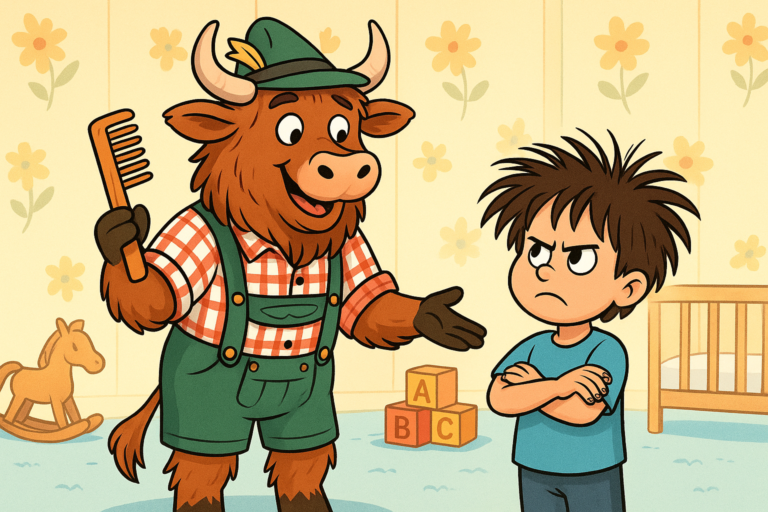
If you have ever stared at a German sentence and wondered why one tiny word can feel so socially loaded, welcome to the club. German has two main ways to say “you”: du for informal situations and Sie for formal ones. Pick the wrong one, and you will probably not start a war, but you may sound weirdly casual or stiff. Classic beginner chaos.
The good news: the system is actually learnable. By the end of this guide, you will understand when to use du, when to use Sie, how the grammar changes, and how to avoid the most common beginner mistakes without turning your German into a social accident.
For a broader overview of related beginner topics, you can also check the German learning hub and the companion guides on German articles explained and German question words.
The Big Idea: Two Ways To Say “You”
English only has one “you,” but German splits it into two main versions:
| Form | Use | Meaning | Pronunciation Help |
|---|---|---|---|
| du | informal, friendly, familiar | you | like “doo” |
| Sie | formal, polite, professional | you | like “zee” |
Du is for people you know well: friends, family, children, classmates in many casual settings, and sometimes coworkers if the workplace is relaxed. Sie is for strangers, customers, officials, many teachers, older people you do not know, and most formal or professional situations.
And yes, German speakers care about this more than English speakers usually do. Languages love a tiny social power game. Very friendly of them.
Quick Rule For Beginners
- Use Sie with strangers, in shops, in offices, in emails, and when you are not sure.
- Use du with friends, family, children, and people who clearly invite you to be informal.
- If unsure, start with Sie. It is safer and more polite.
- Switch to du only if the other person invites it.
That last one matters. In Germany, people often “offer” du. In German, this is often called duzen when people use du, and siezen when they use Sie. The words sound small, but the social signal is not small at all.
Useful Phrases For Real Life
These are the phrases you will actually hear in daily life, not weird textbook museum pieces.
| German | Pronunciation | Meaning | Example Sentence | Translation | Learner Note |
|---|---|---|---|---|---|
| Hallo, wie geht es dir? | HA-lo, vee gayt ess deer | Hello, how are you? to someone you know well | Hallo, wie geht es dir heute? | Hello, how are you today? | dir is the informal “you” form in the dative case. |
| Hallo, wie geht es Ihnen? | HA-lo, vee gayt ess EE-nen | Hello, how are you? formal | Hallo, wie geht es Ihnen? | Hello, how are you? | Ihnen is the formal “you” form in the dative case. |
| Wie heißt du? | vee hysst doo | What is your name? informal | Wie heißt du? | What is your name? | Use with people you can already address with du. |
| Wie heißen Sie? | vee HY-sen zee | What is your name? formal | Wie heißen Sie? | What is your name? | Notice the capital Sie when it means “you.” |
| Kann ich dir helfen? | kann ich deer HEL-fen | Can I help you? informal | Kann ich dir helfen? | Can I help you? | dir here is the indirect object. |
| Kann ich Ihnen helfen? | kann ich EE-nen HEL-fen | Can I help you? formal | Kann ich Ihnen helfen? | Can I help you? | Very common in shops, offices, and restaurants. |
| Hast du Zeit? | hast doo zyt | Do you have time? | Hast du heute Abend Zeit? | Do you have time this evening? | Friendly and direct. Great for friends. |
| Haben Sie Zeit? | HA-ben zee zyt | Do you have time? formal | Haben Sie morgen Zeit? | Do you have time tomorrow? | More polite and professional. |
| Ich kenne dich. | ikh KEN-ne dikh | I know you. informal | Ich kenne dich schon lange. | I have known you for a long time. | dich is the informal accusative “you.” |
| Ich kenne Sie. | ikh KEN-ne zee | I know you. formal | Ich kenne Sie noch nicht. | I do not know you yet. | Pronoun stays Sie in formal address. |
| Danke, du auch. | DAHN-ke, doo owkh | Thanks, you too. informal | Schönen Tag noch! — Danke, du auch. | Have a nice day! — Thanks, you too. | Use after friendly good wishes. |
| Danke, Ihnen auch. | DAHN-ke, EE-nen owkh | Thanks, you too. formal | Schönen Tag noch! — Danke, Ihnen auch. | Have a nice day! — Thanks, you too. | Very useful in shops and service situations. |
Notice something important: with Sie, the verb form is usually the same as for wir and sie in plural form. So you say Sie sind, Sie haben, Sie gehen. That is one reason beginner German can feel slightly rebellious at first.
How The Grammar Changes
When you switch between du and Sie, more than one word changes. German does not believe in doing things halfway.
| Pattern | Meaning | German Example | English Translation | Learner Note |
|---|---|---|---|---|
| du + verb | informal “you” | Du bist freundlich. | You are friendly. | The verb ends in -st in many du forms. |
| Sie + verb | formal “you” | Sie sind freundlich. | You are friendly. | The verb looks like the plural form. |
| dein / deine / deinen | your, informal | Ist das dein Buch? | Is that your book? | Changes with gender and case. |
| Ihr / Ihre / Ihren | your, formal | Ist das Ihr Buch? | Is that your book? | Formal possessive always starts with a capital letter in writing. |
| dich / dir | you, informal | Ich helfe dir. | I help you. | dir is dative, dich is accusative. |
| Sie / Ihnen | you, formal | Ich helfe Ihnen. | I help you. | Formal object forms are capitalized. |
Here is the short version: du uses the familiar set of pronouns and verb endings, while Sie uses formal pronouns and usually the plural verb form. If that sounds annoyingly tidy, that is because it is.
Examples You Will Actually Hear
| Situation | Informal With du | Formal With Sie |
|---|---|---|
| Meeting someone new | Wie heißt du? | Wie heißen Sie? |
| Asking for help | Kannst du mir helfen? | Können Sie mir helfen? |
| Asking for directions | Wo ist der Bahnhof? | Wo ist der Bahnhof? |
| Making an appointment | Hast du morgen Zeit? | Haben Sie morgen Zeit? |
| Thanking someone | Danke dir! | Danke Ihnen! |
| Offering something | Möchtest du einen Kaffee? | Möchten Sie einen Kaffee? |
That third row is a nice reminder that not every sentence changes. Wo ist der Bahnhof? works for both forms because the sentence is not directly addressing the person with a changed pronoun. German is picky, but not always dramatic.
When To Use Du
Du is the informal form. Think: warm, friendly, familiar, relaxed.
- with family members
- with close friends
- with children
- often with classmates or teammates
- sometimes in relaxed workplaces
- in social media or online communities where the tone is casual
- after someone invites you to use du
A useful real-life clue: if someone says Wir können uns duzen or simply Du kannst mich duzen, they are inviting informal address. That usually means the relationship is getting warmer, or at least less awkward. A tiny social upgrade.
Du is for closeness. If the relationship feels casual, familiar, or equal, du usually fits.
When To Use Sie
Sie is the formal form. Think: polite, respectful, careful, professional.
- with people you do not know
- with customers and service staff in formal situations
- in emails to companies, offices, or institutions
- with older people you do not know well
- in interviews, official appointments, and many business settings
- when you want to sound respectful and safe
If you are unsure, Sie is the polite default. No one is likely to be offended by politeness. German society does not hand out medals for crashing through formal boundaries.
For a related etiquette topic, the guide on thank you and you’re welcome in German pairs nicely with this one, because politeness likes company.
The Capital Letter Rule For Sie
When Sie means “you” in the formal sense, it is written with a capital S. That is standard modern German spelling.
| Form | Meaning | Example | Translation |
|---|---|---|---|
| Sie | formal you | Haben Sie Zeit? | Do you have time? |
| sie | they / she | Sie kommen heute. | They are coming today. |
That tiny capital letter is doing serious work. Without it, context has to carry the meaning. In the middle of a sentence, Sie and sie can look annoying, but German survives. Barely.
Common Mistakes And Easy Fixes
| Common Mistake | Better Version | Why |
|---|---|---|
| Wie heißt Sie? | Wie heißen Sie? | Sie takes the plural verb form heißen. |
| Ich helfe du. | Ich helfe dir. | After helfen, German uses the dative case. |
| Kannst Sie mir helfen? | Können Sie mir helfen? | Formal Sie needs the correct verb form. |
| Dein with formal people | Ihr | dein is informal only. |
| Using du with a stranger in a shop | Use Sie first | Safer and more polite. |
| Writing sie when you mean formal “you” | Write Sie | Capitalization changes the meaning. |
One extra note: after verbs like helfen, danken, and gehören, German often uses the dative case. So you say Ich helfe dir and Ich helfe Ihnen, not ich helfe du or ich helfe Sie. The case system is the part where German quietly tests your patience.
Mini Practice: Du Or Sie?
Choose the right form. Then check the answers below. No peeking like a cheater in a grammar trench coat.
- ___ kennen Sie / du?
- ___ hast du / Sie Zeit?
- Kann ich ___ helfen? dir / Ihnen
- ___ wohnen Sie / du in Berlin?
- Ich danke ___ dir / Ihnen.
- ___ bist du / Sie müde?
Answers: Sie, du, Ihnen, Sie, Ihnen, du.
Spot The Difference
Read these pairs and notice how the whole sentence mood changes.
| Informal | Formal | What Changes |
|---|---|---|
| Wie heißt du? | Wie heißen Sie? | Verb and pronoun |
| Ich kenne dich. | Ich kenne Sie. | Object pronoun |
| Kann ich dir helfen? | Kann ich Ihnen helfen? | Dative pronoun |
| Hast du einen Moment? | Haben Sie einen Moment? | Verb form and pronoun |
| Dein Name ist schön. | Ihr Name ist schön. | Possessive adjective |
If you are learning question forms too, the guide on German question words will help these patterns feel much less mysterious.
Germany, Austria, And Switzerland: A Small Nuance
Standard German is broadly similar in Germany, Austria, and Switzerland when it comes to du and Sie. The basic rule stays the same. The main difference is not grammar so much as social style and how quickly people move toward du.
- Germany: many workplaces and younger social circles may switch to du fairly quickly, but not always.
- Austria: also uses du and Sie, with formal address often feeling a bit more persistent in traditional settings.
- Switzerland: many people are also formal at first, though local habits can vary by region and situation.
So yes, the social timing can differ. The grammar does not care much; people do.
Pronunciation Tips That Save You Embarrassment
Two pronunciation details matter here:
- du sounds like “doo,” not “dew.”
- Sie sounds like “zee,” with a soft z sound.
- du is a short, simple word; do not overthink it.
- Sie should be clear and polite, not whispered like a secret.
The word Sie is also useful because it looks like sie meaning “they” or “she.” That is why German learners often rely on context and the capital letter. Helpful? Sort of. Charming? Not especially.
Rule of thumb: if the situation feels formal, start with Sie. If the other person wants du, they will usually make that clear.
How To Respond When Someone Switches To Du
Sometimes a German speaker may say something like Wir können uns duzen or simply start using du. In that case, you can also switch to du. A polite response can be:
| German | Pronunciation | Meaning | Use |
|---|---|---|---|
| Gerne. | GEHR-ne | Gladly / sure | Friendly acceptance of du |
| Ja, gerne. | yah GEHR-ne | Yes, gladly | Warm and natural |
| Sehr gern. | zair gern | With pleasure | Polite and friendly |
| Natürlich. | nah-TUER-likh | Of course | Simple and calm |
If you want a deeper look at polite responses, the companion article on thank you and you’re welcome in German is a useful next stop.
Quick Reference Summary
| Use | Form | Example | Translation |
|---|---|---|---|
| Informal, familiar | du | Wie geht es dir? | How are you? |
| Formal, polite | Sie | Wie geht es Ihnen? | How are you? |
| Informal possessive | dein | Ist das dein Buch? | Is that your book? |
| Formal possessive | Ihr | Ist das Ihr Buch? | Is that your book? |
| Informal object form | dich / dir | Ich helfe dir. | I help you. |
| Formal object form | Sie / Ihnen | Ich helfe Ihnen. | I help you. |
One tiny memory trick: du feels close, Sie feels respectful. When in doubt, be respectful first. German speakers are generally fine with that. Starting too casual is much more awkward than starting politely.
If you want to make this really stick, keep practising with everyday sentences like greetings, questions, and thanks. German social grammar is easier once the patterns stop looking like mysterious tiny boss fights. Yak takeaway: use du for people you know well, use Sie when in doubt, and let the situation guide you instead of guessing wildly like a caffeinated language goblin.
For a basic dictionary check on formal and informal forms, an authoritative reference like Duden is always a solid place to cross-check spelling and usage.