


Welcome to the lesson notes for "Waiting by a Tree Stump for Rabbits"! In this A1 beginner lesson, you will learn useful words like rabbit, stump, and wait. Tap any clickable word in the story to see its meaning, and listen to the audio to hear how it sounds.
Then use these lesson notes to review vocabulary, practice simple grammar, think about the story's message, and try a short writing and speaking task. Let's begin!
A farmer in his . He has a tree and an old stump.
One day, a rabbit . It the stump and .
"Oh! A rabbit!" says the farmer. "Now I have for !"
The next day, the farmer the stump. "I for a rabbit," he says. He waits and waits. No rabbit comes.
Day after day, the farmer waits. He does not in the field. "I wait for a rabbit," he says .
His grow . His friends say, "Come and work!" But the farmer only waits.
No more rabbits come. The farmer is . "I must work, not just !" he .
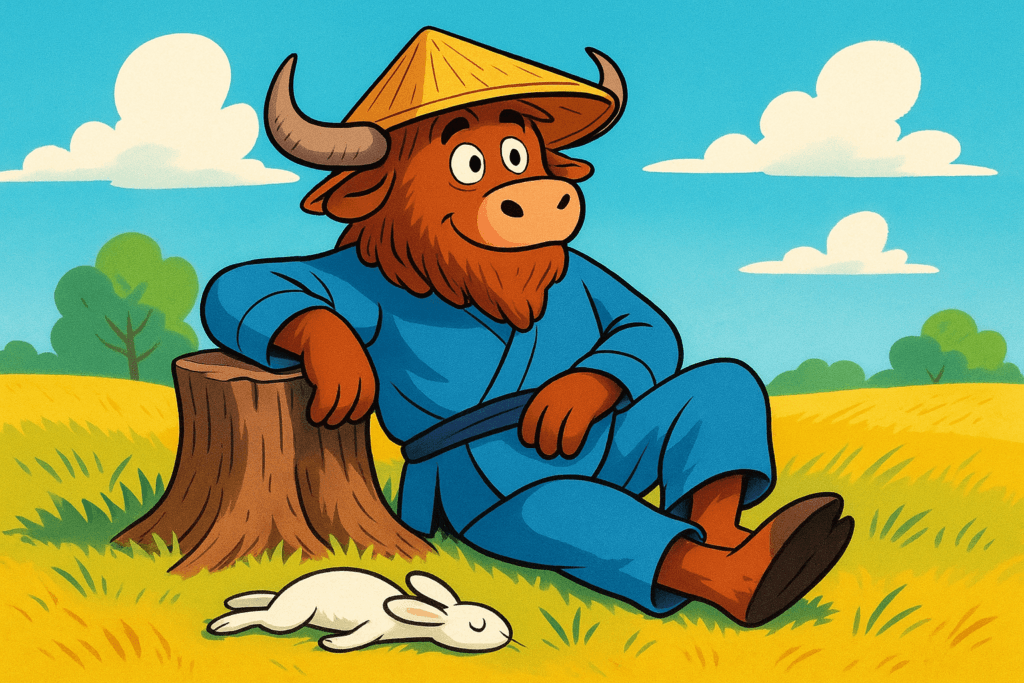
A farmer works in his field. He has a big tree and an old stump.
One day, a rabbit runs fast. It hits the stump and falls down.
"Oh! A rabbit!" says the farmer. "Now I have meat for dinner!"
The next day, the farmer sits by the stump. "I wait for a rabbit," he says. He waits and waits. No rabbit comes.
Day after day, the farmer waits. He does not work in the field. "I wait for a rabbit," he says again.
His crops grow small. His friends say, "Come and work!" But the farmer only waits.
No more rabbits come. The farmer is hungry. "I must work, not just wait for luck!" he learns.
Let's meet the main words from the farmer's story. These words appear again and again, so learning them will help you read with confidence.
Say each word out loud. You can also tap the words in the story to hear the audio!
- rabbit — a small animal with long ears
- tree stump — the short part of a tree left in the ground
- wait — to stay in one place until something happens
- work — to do a job or a task
- field — open land where farmers grow food
- crops — plants that farmers grow, like rice or corn
- hungry — feeling that you want to eat
- luck — good things that happen by chance
This story uses the simple present tense to talk about habits and facts. Look at these examples: "A farmer works in his field." "He waits and waits."
Remember: with he, she, or it, we usually add -s to the verb. With I, you, we, or they, we do not.
- The farmer works every day. (he + works)
- The rabbits run fast. (they + run)
- I wait for a rabbit. (I + wait)
- Negative: He does not work in the field.
This story teaches us an important lesson: good things usually come from work, not from waiting for luck.
The farmer was lucky one day, but no more rabbits came. His crops grew small because he stopped working. At the end, he learns: "I must work, not just wait for luck!"
Think about it: Is it better to wait for good luck, or to work hard every day? Why?
- Luck can happen once, but it does not come every day.
- If we stop working, we can lose what we have.
- Hard work is more reliable than waiting for luck.
Now it's your turn! Use the new words to write and speak. Don't worry about mistakes—every try helps you learn.
Write one or two sentences, then say them out loud. You can even record yourself and listen!
- Write: "I don't wait for rabbits. I work!"
- Write one sentence about something you do every day, using the simple present tense.
- Speaking: Retell the story to a friend in three or four sentences. Start with: "A farmer works in his field..."
Waiting by a Tree Stump for Rabbits comes from the Chinese / idiom story tradition and is best known as a idiom/fable. This Yak Yacker article is an original learner retelling based on Ancient Chinese idiom story; public domain, so the wording here is simplified for modern learners rather than copied from one old edition.
Older printings, translations, and retellings of this story can vary quite a bit. The original audience was usually kids/general, but this version is adapted for A1 Beginner learners studying English. Easy farming/animal vocabulary.
If you want to look into the source tradition, start with Wikisource.
If you want to keep going, browse more in our English section and review the A1 English Vocabulary List. After that, try Best Graded Readers for English for another useful next step.