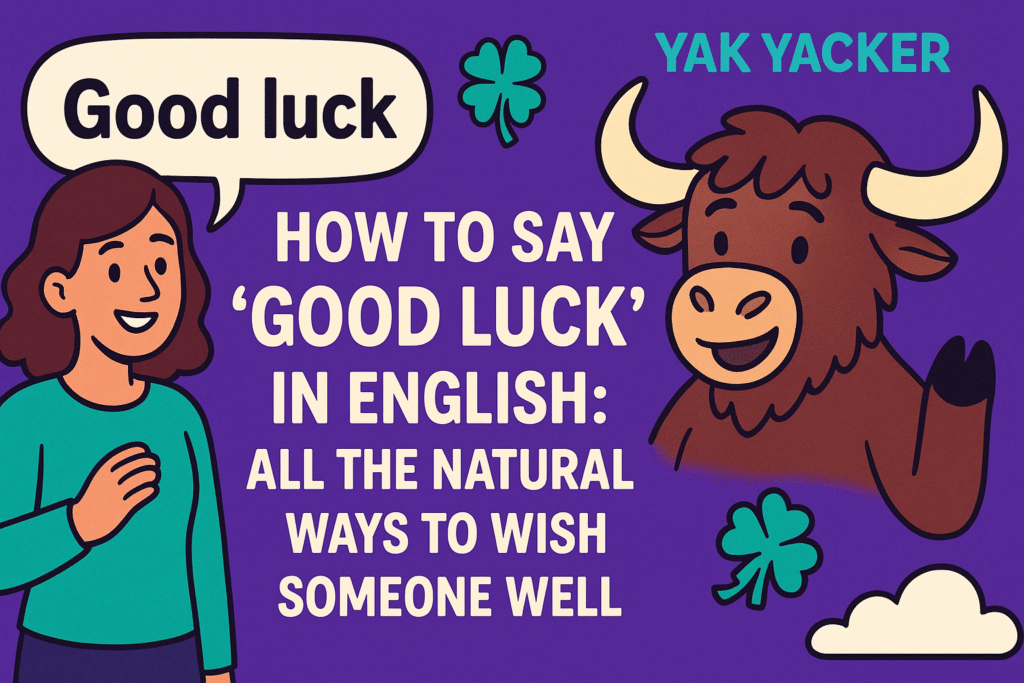
Why English Speakers Say “Good Luck” So Often
In English-speaking cultures, wishing someone “good luck” is more than a superstition — it’s a social ritual. It shows support, encouragement, and that you care about what the other person is about to do. English speakers say it before exams, interviews, performances, competitions, trips, medical appointments, presentations, and every moment that feels a little uncertain.
People use “good luck” to:
- cheer someone on
- send positive energy
- calm nerves
- show friendliness
- create connection
- give confidence
And here’s the part learners love:
English has endless ways to express this idea.
Some sound classic and universal.
Some are formal and polite.
Some are casual and friendly.
Some are quirky or playful.
Some don’t even contain the words “good luck”… but mean it perfectly.
Knowing which version fits the situation will help you sound warm, natural, and supportive — just like a native speaker.
The Classic English “Good Luck”
These are the simple, universal expressions every English speaker understands. They work in almost any situation — exams, trips, competitions, job interviews, first days, performances, or any moment where someone needs encouragement.
Think of them as the “default settings” of English good-luck wishes.
Common Classic Phrases
- Good luck!
- Best of luck!
- Wishing you luck!
- Wishing you the best of luck!
- All the best!
- I hope it goes well.
- Hope everything works out!
These sound natural with friends, coworkers, family, and even strangers.
When to Use Them
- Before tests or exams
- Before a job interview
- Before a performance or presentation
- Before travel
- Before a competition
- Anytime someone needs support or confidence
They’re warm but not overly emotional — perfect for everyday English.
Small Tone Tips
- Good luck! — simple, friendly, always appropriate.
- Best of luck! — stronger and a bit more formal.
- All the best! — common in British English and emails.
- I hope it goes well. — a softer, more supportive version.
Tone matters: a warm voice and small smile make even simple phrases feel encouraging.
Formal English Ways to Say “Good Luck”
These expressions are perfect for workplaces, professional emails, academic settings, polite conversations, or situations where you want to sound respectful and supportive without being too casual. They’re polished, encouraging, and widely used by English speakers in business or formal contexts.
Professional Good-Luck Expressions
- Wishing you the best of luck with your [exam/interview/presentation].
- I wish you success.
- Best wishes on your upcoming [project/meeting/event].
- I hope everything goes smoothly for you.
- Sending you my best wishes.
- Wishing you all the best in your efforts.
- Good luck on your presentation today.
- Hoping for a great result for you.
These sound natural in offices, emails, and academic settings.
Work Email Examples
These are extremely common in professional English, especially in written communication:
- Wishing you the best of luck on your interview tomorrow.
- Best wishes as you begin your new project.
- Good luck today — you’ve prepared well.
- I hope the meeting goes well for you.
- Wishing you success with the proposal.
Professional good-luck messages often mention the specific event — it feels more supportive.
Warm but Still Formal Options
These are polite, respectful, but friendly enough for coworkers or clients:
- I’m rooting for you. (gentle and supportive)
- You’ll do great.
- You’ve got this.
- I believe in your abilities.
- Hope it all goes well!
These keep the tone encouraging without becoming too casual.
Mini-Tips for Formal Good-Luck English
- Avoid slang or very playful phrases.
- Mentioning the specific task sounds more sincere.
- Keep tone warm but not too emotional.
- Perfect for emails, meetings, polite social events, or academic settings.
Casual & Friendly English Ways to Say “Good Luck”
These are the natural, everyday ways English speakers wish luck to friends, classmates, coworkers (you know well), family members, teammates, or anyone in a relaxed, comfortable setting. They’re warm, upbeat, and commonly used in real conversations.
Everyday Phrases You’ll Hear Constantly
- Good luck! (still very common casually)
- Good luck with that!
- Best of luck, man! / Best of luck, girl! (friendly tone)
- Hope it goes great!
- Hope it goes well!
- You’ve got this!
- You can do it!
- You’ll do awesome.
- Rooting for you!
These sound friendly and supportive without sounding formal.
Warm, Encouraging Versions
Used when you want to lift someone up or give them confidence.
- I’m cheering for you.
- Go get ’em!
- Make us proud!
- You’re gonna crush it.
- You’re ready for this.
- Show them what you can do.
- Give it your best shot!
These are common among friends, classmates, and teammates.
Short Modern Expressions
These feel quick, casual, and very natural for younger speakers.
- You got this!
- Let’s goooo! (very modern / hype)
- Fingers crossed!
- All the best! (can be formal or casual)
- Knock ’em dead! (performance, job interview, presentation)
- Smash it! (UK/Aus)
Playful Casual Phrases
These are joking and light, used only with people you joke around with.
- Don’t screw it up! (playful, said warmly)
- Try not to panic.
- May the odds be ever in your favor.
- Go forth and conquer.
- Remember us when you’re famous.
Again, tone is everything here.
Mini-Tips for Casual English Good-Luck Expressions
- Casual good luck phrases often include action verbs: crush, nail, smash, go get ’em.
- Some are humorous — use them only with people who appreciate that style.
- Encourage, don’t overwhelm; keep it supportive and upbeat.
Creative, Supportive & Unique English Good Luck Phrases
These expressions go beyond the usual “good luck.” They add personality, warmth, humor, or poetic flair — perfect for friends, classmates, partners, or anyone who enjoys more expressive English. These are the kinds of phrases that stick in someone’s mind and make them smile before their big moment.
Warm & Supportive (But Not Boring)
- You’re more ready than you think.
- I believe in you — truly.
- You’ve put in the work; now go shine.
- Sending all the good vibes your way.
- You’re going to surprise yourself.
- Go show the world what you’ve got.
- I’m excited for you — go for it!
These feel personal and heartfelt.
Poetic or Dramatic Good-Luck Wishes
For moments where you want to be inspiring or emotional.
- May today be your day.
- May confidence follow you wherever you go.
- May success find you easily.
- Let the universe be on your side today.
- Wishing you strength, calm, and clarity.
- May the path open in front of you.
These are lovely for messages, cards, or emotional support.
Funny or Quirky Good-Luck Wishes
Perfect for friends who like humor.
- Go make magic happen.
- Break a leg — figuratively, please.
- May your coffee be strong and your nerves be calm.
- Go out there and be the chaos you want to see.
- May the Wi-Fi be strong and the stress be weak.
- Hope luck sticks to you like glue today.
- May your brain remember everything except your ex.
These add humor while still being supportive.
Nerdy / Pop Culture Good-Luck Phrases
Super fun for the right people.
- May the Force be with you.
- May the odds be ever in your favor.
- Go forth, adventurer.
- Time to level up — you’ve got this.
- Activate beast mode.
Great for gamers, movie fans, and fellow nerds.
Cute Good-Luck Expressions
Soft, warm, affectionate.
- Good luck, you’ve got this, superstar.
- Sending a little courage your way.
- You’re going to do amazing, I promise.
- Go shine, brilliant human.
- You can count on me cheering for you.
These are perfect for partners, friends, or anyone who needs emotional support.
Mini-Tips for Creative Good-Luck English
- Creative phrases work best with people you know well.
- Humor or drama is great as long as tone stays supportive.
- Pop-culture references only work if the other person recognizes them.
- These are excellent for texts, cards, and messages of encouragement.
English Responses to “Good Luck”
When someone wishes you “Good luck,” English speakers don’t just smile silently — they usually respond. The reply is part of the social ritual, just like replying to “thank you.” And depending on the tone (formal, friendly, playful), the response changes too.
Here are the most natural replies in everyday English.
Classic Responses
These are universal, safe, and work in any situation.
- Thank you!
- Thanks!
- Thanks so much.
- I appreciate it.
- That means a lot.
- I’ll do my best.
- I’ll try!
These sound natural with coworkers, teachers, friends, or strangers.
Confident & Motivated Replies
Used when you want to sound ready and optimistic.
- I’ve got this!
- I’ll give it my best shot!
- I’m ready!
- I’m feeling good about it.
- Let’s do this.
- Here we go.
These show energy and determination.
Polite / Professional Responses
Perfect for workplace or academic settings.
- Thank you — that means a lot.
- Thank you, I appreciate your support.
- Thank you — I’ll do my best.
- Thanks, I hope it goes well.
- Thank you for the encouragement.
Professional replies avoid slang or overly emotional language.
Casual & Friendly Replies
These feel warm, relaxed, and upbeat.
- Thanks! I’ll try not to freak out.
- Thanks — fingers crossed!
- Thanks! I hope so too.
- Appreciate it!
- Thanks! Let’s see how it goes.
Very natural in everyday conversations.
Playful or Funny Replies
Perfect for close friends.
- If I survive, I’ll text you.
- Thanks — I’ll try not to trip.
- Thanks! Pray for me.
- Thanks — chaos, here I come.
- Thanks! If I win, we celebrate. If I lose, we still celebrate.
Only use these if you have a joking relationship.
Cute, Warm Replies
Great for partners or close friends.
- Thanks — that means a lot coming from you.
- Thank you, you’re so sweet.
- Thanks! I feel braver already.
- Thanks — I needed that.
- Thank you, you always make me feel better.
Soft, supportive, emotional.
Mini-Tips for Replying to “Good Luck”
- A smile + “Thank you” already sounds perfect.
- Replies show confidence, appreciation, or humor depending on tone.
- Don’t ignore “good luck” — English speakers expect acknowledgment.
- And don’t say “Please.” (That’s for requests, not gratitude.)
English Good Luck Expressions for Different Situations
Different moments call for different types of encouragement. The way you wish luck before an exam is not the same as cheering someone before a sports game or sending someone off on a trip. Here’s a complete guide to choosing the right phrase for each situation.
For Exams, Tests, and School
These are supportive without being dramatic.
- Good luck on your exam!
- You’ve studied hard — you’ve got this.
- Hope it goes really well.
- You’re totally prepared for this.
- Do your best — that’s enough.
- You’ll do great.
Perfect for classmates, friends, and even teachers.
For Job Interviews
Polite, encouraging, and slightly more professional.
- Good luck on your interview today.
- You’re going to make a great impression.
- Show them what you can do.
- They’d be lucky to have you.
- Hope everything goes smoothly.
- Rooting for you!
These are common in workplace English and messages.
For Presentations, Speeches, and Performances
More energetic and confidence-focused.
- Go crush it!
- Knock ’em dead!
- You’re going to do amazing.
- You’ve worked hard — time to shine.
- You’re going to nail it.
- Break a leg! (theater idiom)
“Break a leg” is especially used for performances but can be said jokingly for other events too.
For Sports, Competitions, and Games
High-energy, motivational.
- Go get ’em!
- You’ve got this, champ!
- Let’s gooooo!
- Give it everything you’ve got!
- Play your heart out.
- Time to dominate.
Often used by teammates, friends, or coaches.
For New Jobs, First Days, or Big Life Events
Warm, supportive, and encouraging.
- Good luck on your first day!
- You’re going to fit right in.
- You’re starting something great.
- You’ll do wonderfully.
- Wishing you success today.
- Sending good energy for your new chapter.
These also work in cards or messages.
For Travel and Trips
Not always “good luck,” but expresses protection and positivity.
- Safe travels!
- Have a wonderful trip!
- Hope everything goes smoothly on your journey.
- Wishing you an easy and safe flight.
- Enjoy every moment.
English speakers often say these instead of “good luck.”
For Medical Appointments or Difficult Days
Soft and emotionally supportive.
- Hope everything goes well today.
- Thinking of you — you’ve got this.
- Sending strength and calm your way.
- Wishing you a smooth appointment.
- You’re stronger than you think.
These show care without being dramatic.
For Tests of Skill (coding interviews, auditions, tryouts, etc.)
Focused encouragement:
- Show them what you can do.
- You’re ready for this.
- Go impress them.
- Give it your best shot.
- You’ve trained for this moment.
These feel supportive and modern.
For Everyday Challenges
Even small things can get a good-luck phrase.
- Good luck with that!
- Hope it goes well.
- Fingers crossed!
- Hope it works out!
- Let me know how it goes.
Perfect for daily conversations.
Common English Mistakes Learners Make with “Good Luck”
Even learners with strong English skills sometimes make small but noticeable mistakes when wishing someone luck. These don’t usually block communication — but fixing them makes your English sound far more natural and culturally aligned.
Here are the most frequent issues and the easy fixes.
Mistake 1: Saying “Good luck to you” in everyday conversation
Grammatically correct — but too formal and rarely used in casual speech.
❌ Good luck to you.
✔ Good luck!
✔ Best of luck!
✔ You’ve got this!
“Good luck to you” appears mostly in speeches, competitions, or dramatic moments — not normal daily talk.
Mistake 2: Using “Wish you good luck” without “I”
Learners often drop the subject:
❌ Wish you good luck.
✔ I wish you good luck. (formal)
✔ Wishing you good luck! (natural)
✔ Best of luck! (simple)
English needs the subject unless the phrase starts with Wishing…
Mistake 3: Using “Break a leg” incorrectly
Learners sometimes use it in serious situations like tests or medical appointments.
Native speakers use it mainly for:
- theater
- performances
- speeches
- presentations
- anything “stage-like”
Avoid it for sensitive or serious events.
Mistake 4: Using overly dramatic phrases in professional settings
Phrases like:
❌ Go crush it!
❌ Knock ’em dead!
❌ Smash it!
…sound too intense or playful for formal environments.
Use these instead:
✔ Wishing you success today.
✔ Hope it goes well.
✔ Best of luck with your presentation.
Mistake 5: Using “Good luck” in situations where English speakers don’t
Learners sometimes say “good luck” when a person is:
- arriving to meet them
- finishing a conversation
- leaving a store
- doing something not challenging
Instead, native speakers say:
- Take care.
- Have fun!
- Enjoy your time.
- Have a great day.
- Safe travels.
“Good luck” is saved for moments of uncertainty or challenge.
Mistake 6: Forgetting to respond when you receive a good-luck wish
In many cultures, silence is normal.
In English, silence feels awkward.
Correct responses:
- Thank you!
- Thanks, I’ll do my best.
- Thanks — I hope so!
- Thanks, I appreciate it.
Never respond with “Please” (this is for requests, not gratitude).
Mistake 7: Being too formal with friends
Learners sometimes say:
❌ I wish you success on your exam.
❌ Best wishes on your endeavor.
Friends usually use:
✔ Good luck!
✔ You’re gonna do great.
✔ You’ve got this!
✔ Fingers crossed!
Tone matters as much as vocabulary.
Mistake 8: Using text slang in spoken English
Saying these aloud sounds unnatural:
❌ Fingers crossed emoji.
❌ Gl!
❌ G-luck.
❌ Fx!
Text slang stays in text messages.
Quick English Good Luck Table (30+ Examples)
A simple, skimmable reference learners can screenshot and review anytime.
Grouped by tone so it’s easy to pick the right phrase instantly.
Classic Good-Luck Expressions
| Phrase | Tone / Use |
| Good luck! | Universal, everyday |
| Best of luck! | Slightly formal |
| Wishing you luck! | Polite |
| All the best! | Casual or polite |
| Hope it goes well. | Warm, neutral |
| I hope everything works out. | Supportive |
Formal & Professional Good-Luck Phrases
| Phrase | Tone / Use |
| Wishing you success. | Professional |
| Best wishes on your project. | Work, emails |
| I hope everything goes smoothly. | Workplace |
| Wishing you the best of luck with… | Polite, formal |
| I’m rooting for you today. | Supportive, gentle |
| Hope the meeting goes well. | Office setting |
Casual & Everyday Good-Luck Expressions
| Phrase | Tone / Use |
| You got this! | Friendly, modern |
| You’ll do great! | Warm encouragement |
| Go get ’em! | Energetic |
| Fingers crossed! | Very common |
| Hope it goes great! | Friendly |
| You’re ready for this. | Positive support |
Creative, Warm & Supportive Wishes
| Phrase | Tone / Use |
| You’re more ready than you think. | Emotional support |
| Sending good vibes your way. | Warm, modern |
| You’re going to shine. | Encouraging |
| May today be your day. | Poetic |
| Hoping for wonderful results. | Kind, gentle |
| You’re going to surprise yourself. | Motivational |
Funny or Playful Good-Luck Expressions
| Phrase | Tone / Use |
| Break a leg! | Theater / performance |
| Don’t screw it up! | Playful teasing |
| If you survive, text me. | Joke |
| May your coffee be strong. | Humor |
| Go be the chaos. | Funny modern encouragement |
| May the odds be ever in your favor. | Pop-culture joke |
Cute & Affectionate Good-Luck Phrases
| Phrase | Tone / Use |
| Sending a little courage your way. | Sweet, warm |
| You’re going to do amazing, promise. | Emotional support |
| Go shine, superstar. | Cute/friendly |
| You make it look easy. | Sweet compliment |
| You’ve got this, brilliant human. | Encouraging warmth |
| Cheering for you from here. | Affectionate |
Yak’s Final Chewables
Wishing someone good luck in English is about so much more than luck. It’s connection, encouragement, and human warmth — wrapped in a simple phrase. Once you understand how English speakers choose between classic, formal, friendly, playful, or creative expressions, you suddenly sound more natural and supportive in every situation.
Here’s what to keep in mind as you wander through the English-speaking world:
- “Good luck” isn’t just a wish — it’s a ritual.
It marks important moments, big or small. - Tone matters more than the exact words.
A warm “You’ve got this!” can beat a perfectly formal phrase. - Different situations call for different styles.
Interviews, exams, performances, sports, first days, trips, and tough moments all use slightly different versions. - Creative expressions make people smile.
“Go make magic happen” feels personal and memorable. - And when someone tells you “good luck,” reply warmly.
A simple “Thank you — I’ll do my best” goes a long way.
You now have dozens of natural, modern, and expressive ways to support people in English — whether they’re taking an exam, going onstage, starting a job, or simply trying not to panic at 8 a.m.
And if you ever need a good-luck wish from a yak?
I’ve always got one ready:
You’ve got this. Go shine.