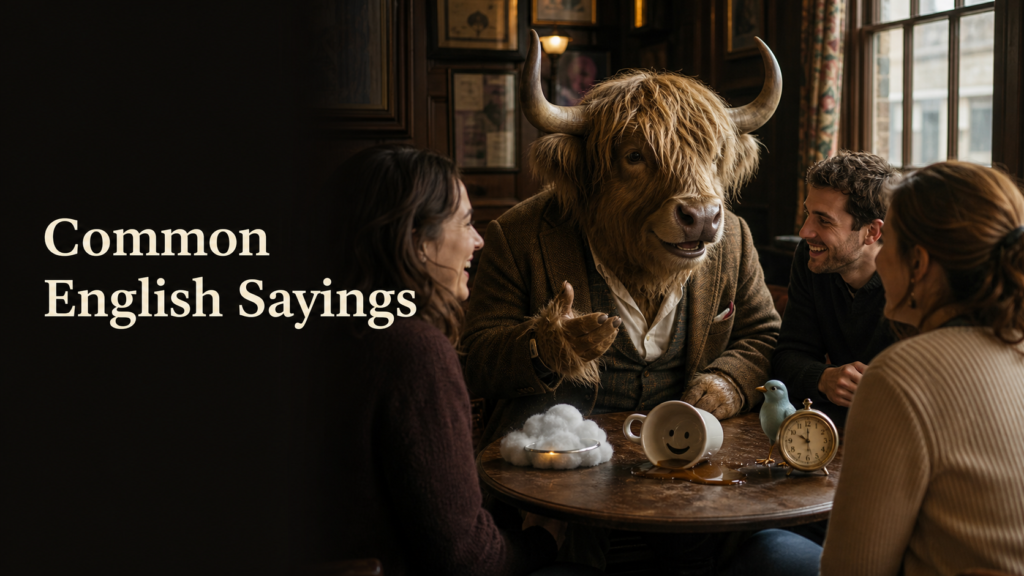
Sayings are the spice in everyday English — you catch them in films, overhear them at the coffee shop, and maybe even use a few without knowing their full flavor. This list gathers around 250 common English sayings so you can stop guessing and start using them naturally. Whether you’re a beginner hungry for real-world phrases or a confident learner aiming to sound more like a local, these expressions will add color to your conversations.
What makes sayings so useful for learners? They pack a whole idea into a few quick words. That means you can express yourself faster and sound more natural without memorizing lengthy grammar rules. Browse the table, play the audio, and steal these little bundles of wisdom for your own chats.
Ready for a quick stroll through everyday English? Scroll to the bottom of the article to grab the free printable common English sayings vocabulary list PDF and the free downloadable printable common English sayings flashcards — because memorizing idioms is easier when your study stack is doing a little of the work for you.
Phrases are handy, but real talk flows better when you have flexible chunks — not just single words. Our free chunk-based English lessons teach you natural expressions with clear audio and speaking practice. Start with Lesson 1 — First Greetings and hear the difference chunking makes.
English Sayings Quiz
Fancy a quick challenge? Jump into the quiz below and see how many sayings you already know cold. It’s a low-pressure way to spot which ones need a second look.
Keep building your English
Choose a practical next step when you are ready.
English Sayings List with Meanings
| Expression | IPA | Meaning | Example |
|---|---|---|---|
| Easier said than done | /ˈiːziər sɛd ðæn dʌn/ | Something is more difficult to do than to talk about. | Losing weight is easier said than done. |
| Enough said | ɪˈnʌf sɛd | No more needs to be said; the point is clear. | He's never on time. Enough said. |
| Every now and then | ˈɛvri naʊ ænd ðɛn | Occasionally; from time to time. | Every now and then, I like to go hiking. |
| Fair enough | /fɛr ɪˈnʌf/ | That is reasonable or acceptable. | A: I can't go tonight. B: Fair enough. |
| Fair point | fɛr pɔɪnt | Acknowledging that someone's argument is reasonable or valid. | A: But it costs too much. B: Fair point. |
| First world problems | fɜːrst wɜːrld ˈprɑbləmz | Trivial complaints from people in privileged societies. | My phone battery only lasts 10 hours — such a first world problem. |
| Food for thought | fuːd fɔːr θɔːt | Something worth thinking about seriously. | His speech gave us a lot of food for thought. |
| For real | /fɔr ril/ | Really; seriously. | A: I won the lottery. B: For real? |
| For the time being | fɔr ðə taɪm ˈbiɪŋ | Temporarily; for now. | For the time being, we'll work from home. |
| For what it's worth | /fɔr wʌt ɪts wɜrθ/ | Used to offer an opinion that may not be valued. | For what it's worth, I think you're right. |
| Game changer | ɡeɪm ˈtʃeɪndʒər | Something that significantly alters the current situation or outcome. | The new software was a game changer for our productivity. |
| Get a grip | ɡɛt ə ɡrɪp | Regain control of your emotions or composure. | Stop panicking and get a grip. |
| Get a life | ɡɛt ə laɪf | Used to tell someone to find more interesting or meaningful activities. | You've been gaming for 12 hours. Get a life. |
| Get over it | ɡɛt ˈoʊvər ɪt | Accept and move on from a disappointment or problem. | You lost the game. Get over it. |
| Get real | ɡɛt riːl | Be realistic; stop being naive or delusional. | You expect to finish in one hour? Get real. |
| Go figure | /goʊ ˈfɪgjər/ | That is ironic or unexpected. | I studied all night and failed. Go figure. |
| Good point | ɡʊd pɔɪnt | An expression that someone has made a valid or insightful observation. | A: We should consider the environmental impact. B: Good point. |
| Good talking to you | ɡʊd ˈtɔkɪŋ tu ju | Enjoyed the conversation; polite farewell. | A: Good talking to you, see you later. B: Same here. |
| Good to see you | ɡʊd tuː siː juː | Pleasure in meeting someone. | Good to see you again! |
| Got the message | ɡɑt ðə ˈmɛsɪdʒ | I understand the hint or information. | A: I've been dropping hints all day. B: I got the message. |
| Guess what | /gɛs wʌt/ | Used to introduce surprising news. | Guess what? I got the job! |
| Hard agree | hɑrd əˈɡri | I strongly agree. | A: This is the best pizza in town. B: Hard agree. |
| Hard disagree | hɑrd ˌdɪsəˈɡri | I strongly disagree. | A: The movie was great. B: Hard disagree. |
| Hard pass | hɑrd pæs | A strong refusal. | Q: Try this spicy dish? A: Hard pass. |
| Hate to break it to you | heɪt tuː breɪk ɪt tuː juː | Used to preface bad news or a disappointing truth. | I hate to break it to you, but your flight has been canceled. |