My first German job application died because of a comma.
Well, not exactly a comma—more like a whole army of mysterious symbols. The HR lady wrote back:
„Bitte benutzen Sie einen Doppelpunkt, keinen Bindestrich.“
I stared at the sentence for five full yak minutes thinking:
Which one of these little worms is the Doppelpunkt again?!
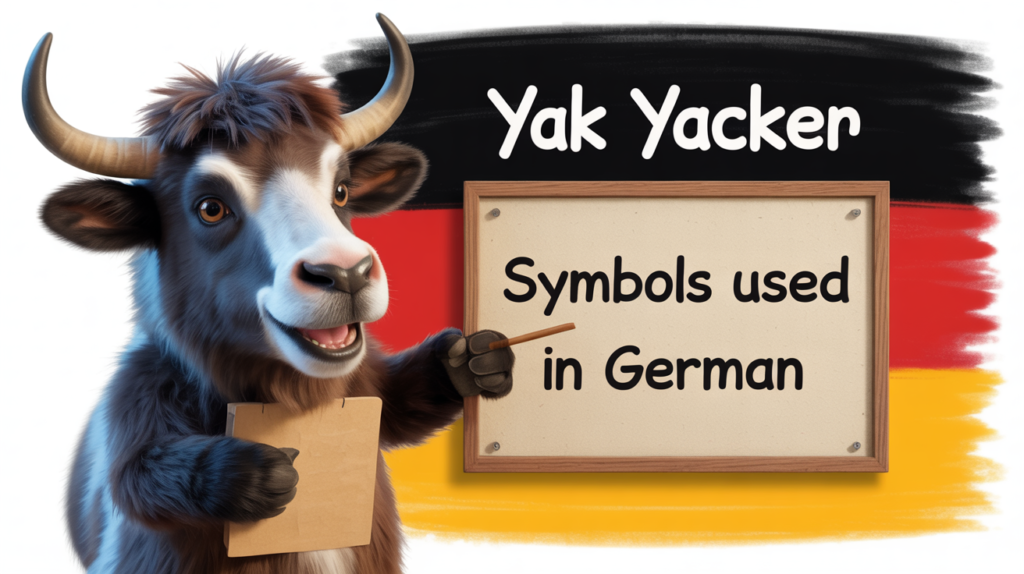
If you’ve ever looked at @, #, §, –, … and thought, “I know what you do, I just don’t know what you’re called in German,” this is your survival guide.
Let’s name the symbols, learn how Germans say them out loud, and see how they’re actually used in real life.
Quick Primer: How Symbols Behave In German
A few big-picture rules before we zoom in:
- Germans love precise names: Bindestrich /ˈbɪndəʃtʁɪç/ vs Gedankenstrich /ɡəˈdaŋkn̩ˌʃtʁɪç/.
- Many symbols are used in math, coding, email, texting, and formal writing.
- For reading aloud, Germans often say the symbol name as a word:
- : → Doppelpunkt /ˈdɔpl̩ˌpʊŋkt/
- @ → At-Zeichen /ˈɛtˌt͡saɪ̯çn̩/ or Klammeraffe /ˈklamɐˌʔafə/(kittyingermany.com)
- : → Doppelpunkt /ˈdɔpl̩ˌpʊŋkt/
You don’t need every name on day one—but knowing the essentials makes emails, forms, and German keyboard life much easier.
Core Punctuation Symbols (Punkt, Komma, Fragezeichen…)
Let’s start with the punctuation you’ll see in every message, book, and angry YouTube comment.
| Symbol | German | IPA | English |
| . | der Punkt | /deːɐ̯ pʊŋkt/ | full stop, period |
| , | das Komma | /das ˈkɔma/ | comma |
| ! | das Ausrufezeichen | /das ˈaʊ̯sˌʁuːfəˌt͡saɪ̯çn̩/ | exclamation mark |
| ? | das Fragezeichen | /das ˈfʁaːɡəˌt͡saɪ̯çn̩/ | question mark |
| : | der Doppelpunkt | /deːɐ̯ ˈdɔpl̩ˌpʊŋkt/ | colon |
| ; | das Semikolon | /das ˌzeːmiˈkoːlɔn/ | semicolon |
| … | die Auslassungspunkte | /diː ˈaʊ̯sˌlasʊŋsˌpʊŋktə/ | ellipsis |
Examples:
- Ich komme später.
I’ll come later. - Kommst du mit?
Are you coming along? - Vorsicht!
Careful!
How Germans read them aloud:
- „Er sagte: ‚Komm sofort!‘“
Read as: Er sagte Doppelpunkt Komm sofort Ausrufezeichen.(German Language Stack Exchange)
Dashes, Hyphens, And Friends
Yes, German really has feelings about different lines.
| Symbol | German | IPA | English |
| – | der Bindestrich | /deːɐ̯ ˈbɪndəʃtʁɪç/ | hyphen |
| – | der Gedankenstrich | /deːɐ̯ ɡəˈdaŋkn̩ˌʃtʁɪç/ | en dash (pause dash) |
Bindestrich:
- Used inside compounds:
Deutsch-Englisch-Wörterbuch – German–English dictionary.
Gedankenstrich:
- Used like an English “long dash” to show a pause or afterthought:
Ich war müde – aber glücklich.
On a German QWERTZ keyboard, you mostly see –, but in typeset text you’ll run into both forms.(Zeitvogel IT GmbH)
Quotation Marks And Brackets
Anführungszeichen – Quotation Marks
German uses its own typographical quotes:
- „…“ – normal German style
- »…« – also common, especially in books or Swiss texts
Names:
| Symbol | German | IPA | English |
| „ “ | die Anführungszeichen | /diː ˈanˌfyːʁʊŋsˌt͡saɪ̯çn̩/ | quotation marks |
| ‚ ‘ | die einfachen Anführungszeichen | /ˈaɪ̯nfaxən…/ | single quotation marks |
When reading aloud, Germans sometimes say:
- Anführungszeichen unten – opening quote
- Anführungszeichen oben – closing quote(German Language Stack Exchange)
Klammern – Brackets
| Symbol | German | IPA | English |
| ( ) | runde Klammern | /ˈʁʊndə ˈklamn̩/ | round brackets, parentheses |
| [ ] | eckige Klammern | /ˈɛkɪɡə ˈklamn̩/ | square brackets |
| { } | geschweifte Klammern | /ɡəˈʃvaɪ̯ftə ˈklamn̩/ | curly brackets |
| < > | spitze Klammern | /ˈʃpɪt͡sə ˈklamn̩/ | angle brackets |
Examples:
- Bitte füllen Sie das Formular (Seite 2) aus.
Please fill out the form (page 2). - [Optional] is often written literally in English, even in German documents.
Slashes, Underscores, And The Asterisk
These symbols live in URLs, file names, and little grammar tricks.
| Symbol | German | IPA | English |
| / | der Schrägstrich | /deːɐ̯ ˈʃʁɛːkˌʃtʁɪç/ | slash |
| \ | der umgekehrte Schrägstrich | /ʊmɡəˈkeːʁtə…/ | backslash |
| _ | der Unterstrich | /ˈʊntɐˌʃtʁɪç/ | underscore |
| * | das Sternchen | /das ˈʃtɛʁnçən/ | asterisk |
| ~ | die Tilde | /diː ˈtɪldə/ | tilde |
Use cases:
- E-Mail-Adresse:
max_muster@test.de
Germans say: max Unterstrich muster at test Punkt de. - Gendern / inclusive writing:
Student*in – used to include all genders.
Read as Student Sternchen in. - File paths:
C:\Benutzer\Dokumente
Read as: C Backslash Benutzer Backslash Dokumente.(Zeitvogel IT GmbH)
The Famous @, #, %, & And Friends
These are the stars of email, social media, and math.
| Symbol | German | IPA | English |
| @ | das At-Zeichen / der Klammeraffe | /das ˈɛtˌt͡saɪ̯çn̩/, /deːɐ̯ ˈklamɐˌʔafə/ | at sign |
| # | die Raute / das Doppelkreuz | /diː ˈʁaʊ̯tə/, /das ˈdɔpl̩ˌkʁɔʏ̯t͡s/ | hash, pound, sharp |
| % | das Prozentzeichen | /das pʁoˈt͡sɛntˌt͡saɪ̯çn̩/ | percent sign |
| & | das Und-Zeichen / der Et | /das ʊntˌt͡saɪ̯çn̩/, /deːɐ̯ eːt/ | ampersand |
| § | das Paragraphenzeichen | /das paʁaˈɡʁaːfn̩ˌt͡saɪ̯çn̩/ | section sign |
| ° | das Gradzeichen | /das ˈɡʁaːtˌt͡saɪ̯çn̩/ | degree sign |
Use cases:
- E-Mail:
info@test.de
→ info at test Punkt de. - Hashtags:
#Berlin → Raute Berlin or simply Hashtag Berlin. - Legal texts:
§ 5 → Paragraph fünf. - Temperature:
20 °C → zwanzig Grad Celsius.(Zeitvogel IT GmbH)
Math Symbols: Plus, Minus, Gleich, Größer Als
Math time—German loves clear names here too.
| Symbol | German | IPA | English |
| + | das Pluszeichen | /das plʊsˌt͡saɪ̯çn̩/ | plus sign |
| − | das Minuszeichen | /das ˈmiːnʊsˌt͡saɪ̯çn̩/ | minus sign |
| = | das Gleichheitszeichen | /das ˈɡlaɪ̯çhaɪ̯tsˌt͡saɪ̯çn̩/ | equals sign |
| × / · | das Malzeichen | /das ˈmaːlˌt͡saɪ̯çn̩/ | multiplication sign |
| ÷ / : | das Geteiltzeichen | /das ɡəˈtaɪ̯ltˌt͡saɪ̯çn̩/ | division sign |
| < | kleiner-als-Zeichen | /ˈklaɪ̯nɐʔalsˌt͡saɪ̯çn̩/ | less-than sign |
| > | größer-als-Zeichen | /ˈɡʁøːsɐʔalsˌt͡saɪ̯çn̩/ | greater-than sign |
Example phrases:
- 3 + 5 = 8
→ drei plus fünf gleich acht - x > 10
→ x ist größer als zehn - a < b
→ a ist kleiner als b
German Special Letters: Ä, Ö, Ü, ß, €
They’re not “symbols” in the same way as @ or #, but they are special characters you’ll type a lot.
| German | IPA | English |
| das Ä / ä | /ɛː/ /ɛ/ | Ä, ä – umlaut |
| das Ö / ö | /øː/ /œ/ | Ö, ö – umlaut |
| das Ü / ü | /yː/ /ʏ/ | Ü, ü – umlaut |
| das Eszett / ß | /das ˈɛsˌt͡sɛt/ | ß – sharp s |
| das Eurozeichen / € | /ˈɔʏ̯ʁoˌt͡saɪ̯çn̩/ | euro sign |
Usage:
- Straße – street
- schön – beautiful
- für – for
On a German keyboard, Ä, Ö, Ü and ß have their own keys; on other layouts you often use Alt-codes or long-press options.(Wikipedia)
How Germans Read Symbols Out Loud
A few handy “reading patterns” you’ll hear constantly:
Email:
max_muster@example.de
→ max Unterstrich muster at example Punkt de
File name:
Bericht_2025-03-01.pdf
→ Bericht Unterstrich zweitausendfünfundzwanzig Bindestrich null drei Bindestrich null eins Punkt pdf
Time:
20:15 Uhr
→ zwanzig Uhr fünfzehn (not “zwanzig Doppelpunkt fünfzehn” unless you’re literally spelling it out).
Quoted text:
Er sagte: „Hallo.“
→ Er sagte Doppelpunkt Anführungszeichen unten Hallo Punkt Anführungszeichen oben.(German Language Stack Exchange)
Mini Dialogues: Symbols In Real Life
Dialogue 1 – Spelling An Email Address
Wie ist Ihre E-Mail-Adresse?
/viː ɪst ˈiːʁə ˈʔiːmeːl aˈdʁɛsə/
What is your email address?
Sie ist: info@beispiel.de.
/ziː ʔɪst ˈɪnfoʔat ˈbaɪ̯ʃpiːl pʊŋkt deː/
It’s: info@example.de.
Könnten Sie das bitte buchstabieren?
/ˈkœntən ziː das ˈbʊxʃtaˌbiːʁən/
Could you spell that, please?
Gern: i-n-f-o, At-Zeichen, b-e-i-s-p-i-e-l, Punkt d-e.
/ɡɛʁn… atˌt͡saɪ̯çn̩… pʊŋkt…/
Sure: i-n-f-o, at sign, e-x-a-m-p-l-e, dot d-e.
Dialogue 2 – Talking About A Password
Dein Passwort braucht ein Sonderzeichen.
/daɪ̯n ˈpasvɔʁt bʁaʊ̯xt aɪ̯n ˈzɔndɐˌt͡saɪ̯çn̩/
Your password needs a special character.
Geht ein Sternchen oder eine Raute?
/ɡeːt aɪ̯n ˈʃtɛʁnçən ˈoːdɐ ˈaɪ̯nə ˈʁaʊ̯tə/
Does an asterisk or a hash work?
Ja, Sternchen, Raute oder Unterstrich.
/jaː ˈʃtɛʁnçən ˈʁaʊ̯tə ˈoːdɐ ˈʊntɐˌʃtʁɪç/
Yes, asterisk, hash, or underscore.
Dialogue 3 – Giving A Temperature
Wie kalt ist es draußen?
/viː kalt ɪst ɛs ˈdʁaʊ̯sn̩/
How cold is it outside?
Ungefähr 3 °C.
/ˈʊnɡəˌfɛːɐ̯ dʁaɪ̯ ɡʁaːt ˈt͡sɛlzi̯ʊs/
Around 3 °C.
Brr, unter null Grad gehe ich nicht raus.
/bʁ̩ ʊntɐ nʊl ɡʁaːt ˈɡeːə ɪç nɪçt ʁaʊ̯s/
Brr, below zero degrees I’m not going out.
Quick Reference: Top Symbols You Actually Need
| Symbol | German Name | IPA | English |
| . | Punkt | /pʊŋkt/ | period |
| , | Komma | /ˈkɔma/ | comma |
| ? | Fragezeichen | /ˈfʁaːɡəˌt͡saɪ̯çn̩/ | question mark |
| ! | Ausrufezeichen | /ˈaʊ̯sˌʁuːfəˌt͡saɪ̯çn̩/ | exclamation mark |
| : | Doppelpunkt | /ˈdɔpl̩ˌpʊŋkt/ | colon |
| – | Bindestrich | /ˈbɪndəˌʃtʁɪç/ | hyphen |
| – | Gedankenstrich | /ɡəˈdaŋkn̩ˌʃtʁɪç/ | dash |
| / | Schrägstrich | /ˈʃʁɛːkˌʃtʁɪç/ | slash |
| \ | umgekehrter Schrägstrich | /ʊmɡəˈkeːʁtɐ…/ | backslash |
| _ | Unterstrich | /ˈʊntɐˌʃtʁɪç/ | underscore |
| * | Sternchen | /ˈʃtɛʁnçən/ | asterisk |
| @ | At-Zeichen / Klammeraffe | /ˈɛtˌt͡saɪ̯çn̩/, /ˈklamɐˌʔafə/ | at sign |
| # | Raute | /ˈʁaʊ̯tə/ | hash |
| % | Prozentzeichen | /pʁoˈt͡sɛntˌt͡saɪ̯çn̩/ | percent sign |
| § | Paragraphenzeichen | /paʁaˈɡʁaːfn̩ˌt͡saɪ̯çn̩/ | section sign |
| € | Eurozeichen | /ˈɔʏ̯ʁoˌt͡saɪ̯çn̩/ | euro sign |
Five-Minute Practice Plan
- Email Reading Drill (1 minute)
Take an address like:
max_meier-01@test.de
Say it out loud in German:
max Unterstrich meier Bindestrich null eins at test Punkt de. - Three Symbol Sentences (1 minute)
Say these aloud, naming the symbols:- § 5 ist wichtig.
- Bitte Punkt am Satzende nicht vergessen.
- Schau mal nach unter Punkt drei.
- § 5 ist wichtig.
- Math Mini-Set (1 minute)
Read aloud:- 3 + 4 = 7
- 10 – 2 = 8
- x > 5
Use plus, minus, gleich, größer als.
- 3 + 4 = 7
- File Name Gym (1 minute)
Imagine a file:
Rechnung_2025-01-15.pdf
Read it slowly in German, naming every symbol. - Dialogue Shadowing (30–60 seconds)
Pick one mini-dialogue above and shadow it:
listen with your eyes, repeat with your mouth. Focus on At-Zeichen, Unterstrich, Raute, Sternchen.
From Punkt To Klammeraffe: Your Symbol Superpower
Once you know that # is a Raute, @ is an At-Zeichen (or a cheeky Klammeraffe), and * is a Sternchen, suddenly German emails, forms, and tech instructions stop looking like secret code.
Your inner yak can now confidently spell addresses, read passwords, and survive German bureaucracy—with the quiet power of someone who knows exactly which tiny symbol is which.