This A1 Beginner retelling of 愚公移山 keeps the plot clear for learners while still giving the story some atmosphere and momentum.
This version teaches Traditional Chinese through English and includes clickable word help inside the story, full story audio, and lesson notes after the reading. It is free to use on Yak Yacker and is designed to feel natural, readable, and manageable for learners.
從前,有一個老人,名叫愚公。他家前面有兩座大山,進出很不方便。
有一天,愚公說:「我要把山移走!」
一個鄰居笑他:「你太老了,不可能!」
愚公說:「我死了,有兒子;兒子死了,有孫子。山不會長高,我們可以慢慢移。」
海邊。
天神看到了,很感動。
天神派人把山搬走了。從此,愚公家前面了,大家都很高興。
Once upon a time, there was an old man named Yu Gong. In front of his house stood two great mountains, making it very inconvenient to go in and out.
One day, Yu Gong said, 'I will move these mountains!'
A neighbor laughed at him, 'You are too old, impossible!'
Yu Gong said, 'When I die, there are my sons; when sons die, there are grandsons. The mountains won't grow taller, so we can move them slowly.'
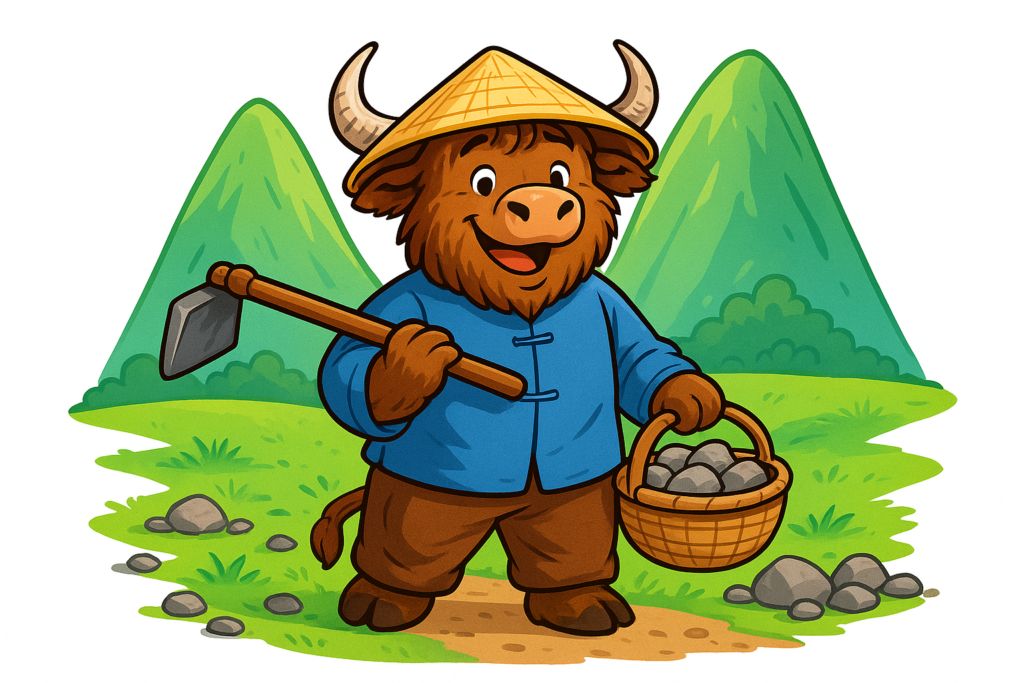
They began digging the mountains, carrying the stones to the seaside.
The heavenly gods saw this and were deeply moved.
The gods sent someone to move the mountains away. From then on, the area in front of Yu Gong's house was flat, and everyone was very happy.
This story uses simple words for family, mountains, and moving things. A few key words help you follow the action and enjoy the joke in the title.
Try noticing how the story repeats important ideas. Repetition is a friendly helper in beginner stories.
- 老人 = old man
- 山 = mountain
- 鄰居 = neighbor
- 兒子 / 孫子 = son / grandson
- 搬走 = move away
The old man has a big problem: two mountains block the way in front of his home. He does not give up, even when other people laugh at him.
The story is a classic lesson about patience and teamwork. Big jobs can feel impossible, but small steps over time can make a difference.
- 進出不方便 means it is not easy to go in and out
- 笑他 means to laugh at him
- 慢慢 means slowly
- 大家都很高興 means everyone is happy
Chinese often uses short, clear sentences. In this story, you can see a pattern like "有一天…" and "從此…", which helps the story move forward.
You also see "我死了,有兒子;兒子死了,有孫子。" This is a simple way to show one thing after another. The meaning is easy to follow, even if the sentence is long.
- 有一天 = one day
- 從此 = from then on
- 可以 = can / be able to
- 不可能 = impossible
- 慢慢移 = move slowly, little by little
Read the story again and look for the words that repeat. Repeated words are often the most important ones for beginners.
If you want, try saying the story in very short English first, then match a few Chinese words to it. That is a calm way to build confidence, mountain by mountain.
- Find 3 repeated words
- Say the main events in order
- Notice who speaks and who acts
- Keep it slow and steady
愚公移山 comes from the Chinese / idiom story tradition and is best known as a idiom/fable. This Yak Yacker article is an original learner retelling based on Ancient Chinese tale; public domain, so the wording here is simplified for modern learners rather than copied from one old edition.
Older printings, translations, and retellings of this story can vary quite a bit. The original audience was usually kids/general, but this version is adapted for A1 Beginner learners studying Traditional Chinese. Excellent perseverance story; use simple mountain/family vocabulary.
If you want to look into the source tradition, start with Wikisource.
If you want to keep going, browse more in our Traditional Chinese section. After that, try Essential Traditional Chinese Grammar Words for another useful next step.