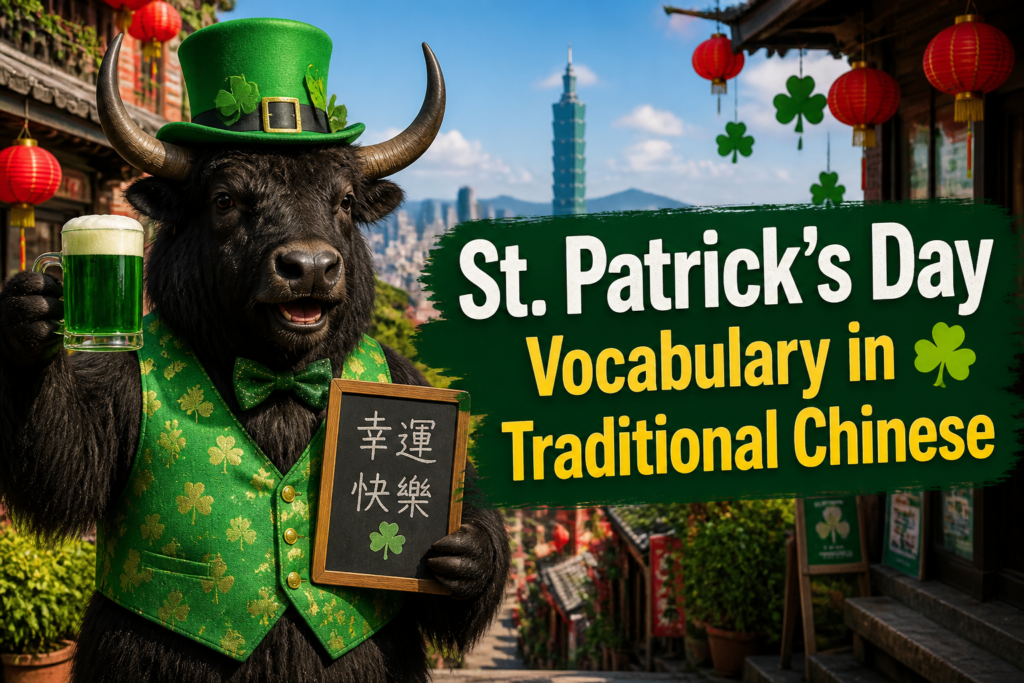
St. Patrick’s Day in Traditional Chinese is 聖派翠克節 Shèng Pài-cuì-kè Jié, and yes, English loves a holiday with green clothes, loud music, and a saint who somehow became a pop-culture mascot. If you want to talk about this day in Mandarin, you need more than just “green.” You need the words for parades, beer, shamrocks, and all the cheerful nonsense that comes with them.
For the broader learning path, visit our parent guide.
This guide gives you beginner-friendly Traditional Chinese words and phrases for St. Patrick’s Day, with pinyin and easy English meanings. You will also see real example sentences, so the vocabulary does not sit there looking pretty and useless.
And yes, the color green matters a lot here. If you want a quick side trip into color words, there is a neat companion guide on colors in Traditional Chinese.
小提醒:聖派翠克節不是台灣的主要節日,但在國際學校、酒吧、觀光活動、英文課,還是很常出現。
Xiǎo tíxǐng: Shèng Pài-cuì-kè Jié bú shì Táiwān de zhǔyào jiérì, dàn zài guójì xuéxiào, jiǔbā, guānguāng huódòng, Yīngwén kè, hái shì hěn cháng chūxiàn.
Small note: St. Patrick’s Day is not a major holiday in Taiwan, but it still shows up a lot in international schools, bars, tourist events, and English classes.
Core Holiday Words
Here are the essential words first. If you only learn one thing today, make it the green stuff. No holiday survives without the green stuff.
| Traditional Chinese | Pinyin | Meaning | Example (ZH) | Example (Pinyin) | Translation (EN) |
|---|---|---|---|---|---|
| 聖派翠克節 | Shèng Pài-cuì-kè Jié | St. Patrick’s Day | 我們學校有聖派翠克節活動。 | Wǒmen xuéxiào yǒu Shèng Pài-cuì-kè Jié huódòng. | Our school has a St. Patrick’s Day event. |
| 愛爾蘭 | Ài’ěrlán | Ireland | 愛爾蘭和聖派翠克節有很深的關係。 | Ài’ěrlán hé Shèng Pài-cuì-kè Jié yǒu hěn shēn de guānxì. | Ireland has a very close connection with St. Patrick’s Day. |
| 綠色 | lǜsè | green | 大家今天都穿綠色的衣服。 | Dàjiā jīntiān dōu chuān lǜsè de yīfú. | Everyone is wearing green clothes today. |
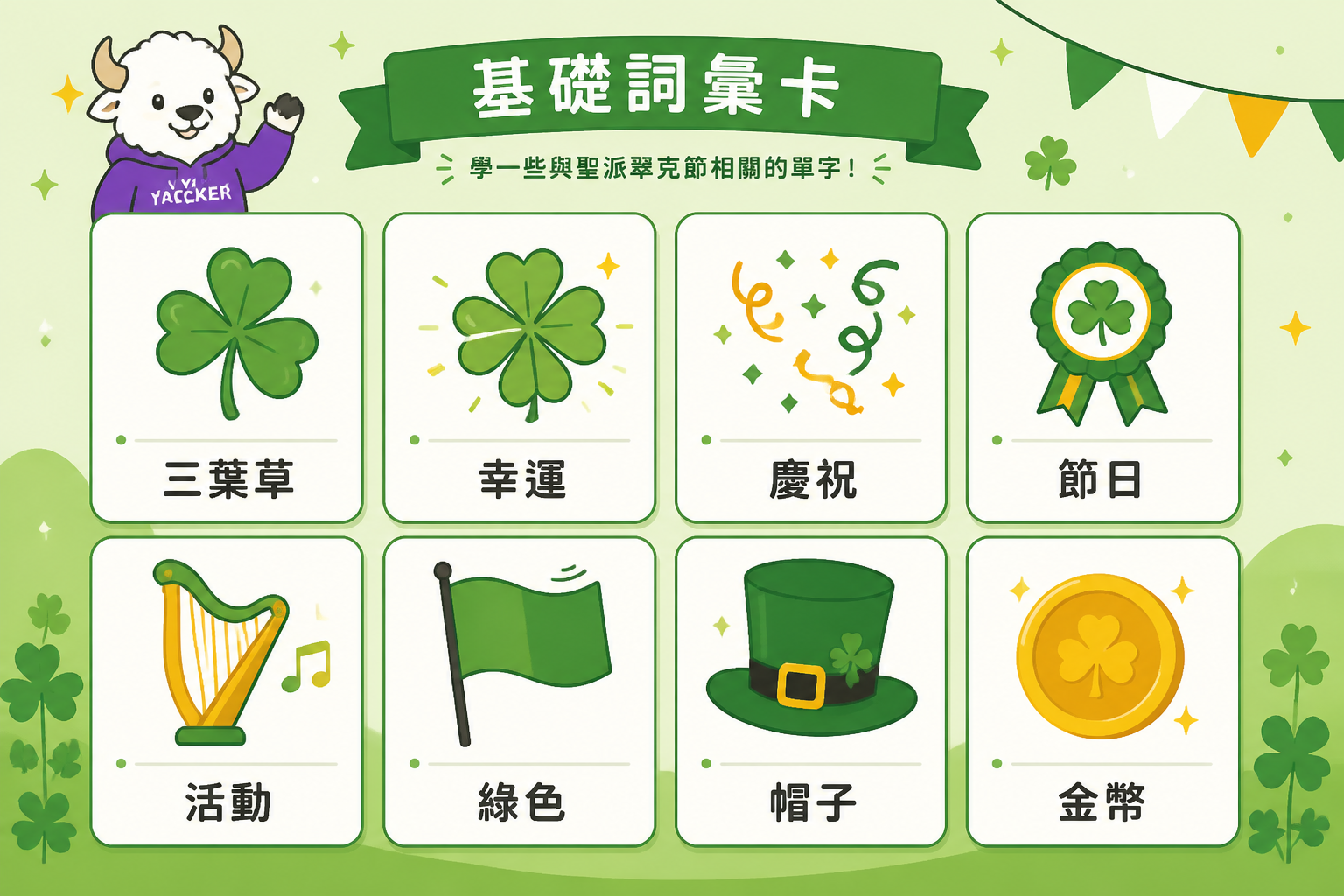
| 三葉草 | sānyècǎo | shamrock; clover | 三葉草是很有名的節日象徵。 | Sānyècǎo shì hěn yǒumíng de jiérì xiàngzhēng. | The shamrock is a famous holiday symbol. |
| 幸運 | xìngyùn | luck; lucky | 今天大家都想要一點幸運。 | Jīntiān dàjiā dōu xiǎng yào yìdiǎn xìngyùn. | Today everyone wants a little luck. |
| 慶祝 | qìngzhù | to celebrate | 我們一起慶祝聖派翠克節。 | Wǒmen yìqǐ qìngzhù Shèng Pài-cuì-kè Jié. | We celebrate St. Patrick’s Day together. |
| 節日 | jiérì | holiday; festival | 這個節日很熱鬧。 | Zhège jiérì hěn rènào. | This holiday is lively. |
| 活動 | huódòng | event; activity | 今晚有很多節日活動。 | Jīnwǎn yǒu hěn duō jiérì huódòng. | There are many holiday events tonight. |
Useful Phrases For Real Life
These phrases are the practical stuff: what you might say at a party, in class, or while staring at someone’s aggressively green outfit and pretending you are not impressed.
| Traditional Chinese | Pinyin | Meaning | Example (ZH) | Example (Pinyin) | Translation (EN) |
|---|---|---|---|---|---|
| 今天是聖派翠克節。 | Jīntiān shì Shèng Pài-cuì-kè Jié. | Today is St. Patrick’s Day. | 今天是聖派翠克節,我們晚上要出去玩。 | Jīntiān shì Shèng Pài-cuì-kè Jié, wǒmen wǎnshàng yào chūqù wán. | Today is St. Patrick’s Day, and we’re going out tonight. |
| 我喜歡綠色。 | Wǒ xǐhuān lǜsè. | I like green. | 我喜歡綠色,所以我今天穿綠色上衣。 | Wǒ xǐhuān lǜsè, suǒyǐ wǒ jīntiān chuān lǜsè shàngyī. | I like green, so I’m wearing a green top today. |
| 你有穿綠色嗎? | Nǐ yǒu chuān lǜsè ma? | Are you wearing green? | 你有穿綠色嗎?沒有的話,可能會被提醒喔。 | Nǐ yǒu chuān lǜsè ma? Méiyǒu de huà, kěnéng huì bèi tíxǐng ou. | Are you wearing green? If not, you might get reminded. |
| 我們去看遊行吧。 | Wǒmen qù kàn yóuxíng ba. | Let’s go watch the parade. | 我們去看遊行吧,聽說晚上很熱鬧。 | Wǒmen qù kàn yóuxíng ba, tīngshuō wǎnshàng hěn rènào. | Let’s go watch the parade. I heard it gets lively at night. |
| 那裡有很多人。 | Nàlǐ yǒu hěn duō rén. | There are a lot of people there. | 那裡有很多人,所以我們早點去。 | Nàlǐ yǒu hěn duō rén, suǒyǐ wǒmen zǎodiǎn qù. | There are a lot of people there, so let’s go early. |
| 這個節日很有趣。 | Zhège jiérì hěn yǒuqù. | This holiday is fun. | 我覺得這個節日很有趣。 | Wǒ juéde zhège jiérì hěn yǒuqù. | I think this holiday is fun. |
| 大家都在拍照。 | Dàjiā dōu zài pāizhào. | Everyone is taking photos. | 大家都在拍照,因為裝飾很漂亮。 | Dàjiā dōu zài pāizhào, yīnwèi zhuāngshì hěn piàoliang. | Everyone is taking photos because the decorations are pretty. |
| 我們一起喝一杯吧。 | Wǒmen yìqǐ hē yì bēi ba. | Let’s have a drink together. | 如果你有空,我們一起喝一杯吧。 | Rúguǒ nǐ yǒu kòng, wǒmen yìqǐ hē yì bēi ba. | If you’re free, let’s have a drink together. |
| 祝你節日快樂! | Zhù nǐ jiérì kuàilè! | Happy holiday! | 祝你節日快樂!今天玩得開心喔。 | Zhù nǐ jiérì kuàilè! Jīntiān wán de kāixīn ou. | Happy holiday! Have fun today. |
| 乾杯! | Gānbēi! | Cheers! | 來,乾杯! | Lái, gānbēi! | Come on, cheers! |
If you are looking for more festive greetings in Chinese, the same kind of playful energy shows up in Christmas greetings in Traditional Chinese. Different holiday, same human need to say something nice and eat something sweet.
Food, Drink, And Party Words
St. Patrick’s Day often comes with snacks, drinks, and a little bit of noise. Naturally. Here are the words you will actually hear when people are socializing instead of just posing near a green balloon.
| Traditional Chinese | Pinyin | Meaning | Example (ZH) | Example (Pinyin) | Translation (EN) |
|---|---|---|---|---|---|
| 啤酒 | píjiǔ | beer | 他喝了一杯啤酒。 | Tā hē le yì bēi píjiǔ. | He drank a glass of beer. |
| 蘇打麵包 | sūdǎ miànbāo | soda bread | 我們點了蘇打麵包一起吃。 | Wǒmen diǎn le sūdǎ miànbāo yìqǐ chī. | We ordered soda bread to eat together. |
| 點心 | diǎnxīn | snack; dessert | 節日活動有很多點心。 | Jiérì huódòng yǒu hěn duō diǎnxīn. | The holiday event has lots of snacks. |
| 飲料 | yǐnliào | drink; beverage | 你要什麼飲料? | Nǐ yào shénme yǐnliào? | What drink do you want? |
| 派對 | pàiduì | party | 今晚有一個小派對。 | Jīnwǎn yǒu yí gè xiǎo pàiduì. | There is a small party tonight. |
| 音樂 | yīnyuè | music | 現場的音樂很好聽。 | Xiànchǎng de yīnyuè hěn hǎotīng. | The live music sounds great. |
| 舞蹈 | wǔdǎo | dance | 大家跟著音樂跳舞蹈。 | Dàjiā gēnzhe yīnyuè tiào wǔdǎo. | Everyone dances along with the music. |
| 熱鬧 | rènào | lively; bustling | 這裡很熱鬧。 | Zhèlǐ hěn rènào. | This place is lively. |
| 開心 | kāixīn | happy | 大家都很開心。 | Dàjiā dōu hěn kāixīn. | Everyone is happy. |
| 歡樂 | huānlè | joyful; cheerful | 節日氣氛很歡樂。 | Jiérì qìfēn hěn huānlè. | The holiday atmosphere is cheerful. |
Colors And Symbols You Will Hear A Lot
St. Patrick’s Day is basically a public love letter to green. If you can talk about colors and symbols, you can describe almost any decoration you see.
| Traditional Chinese | Pinyin | Meaning | Example (ZH) | Example (Pinyin) | Translation (EN) |
|---|---|---|---|---|---|
| 綠色 | lǜsè | green | 這件衣服是綠色的。 | Zhè jiàn yīfú shì lǜsè de. | This piece of clothing is green. |
| 金色 | jīnsè | golden; gold | 裝飾上有金色的亮片。 | Zhuāngshì shàng yǒu jīnsè de liàngpiàn. | The decorations have gold glitter. |
| 彩色 | cǎisè | colorful | 他們做了彩色的海報。 | Tāmen zuò le cǎisè de hǎibào. | They made colorful posters. |
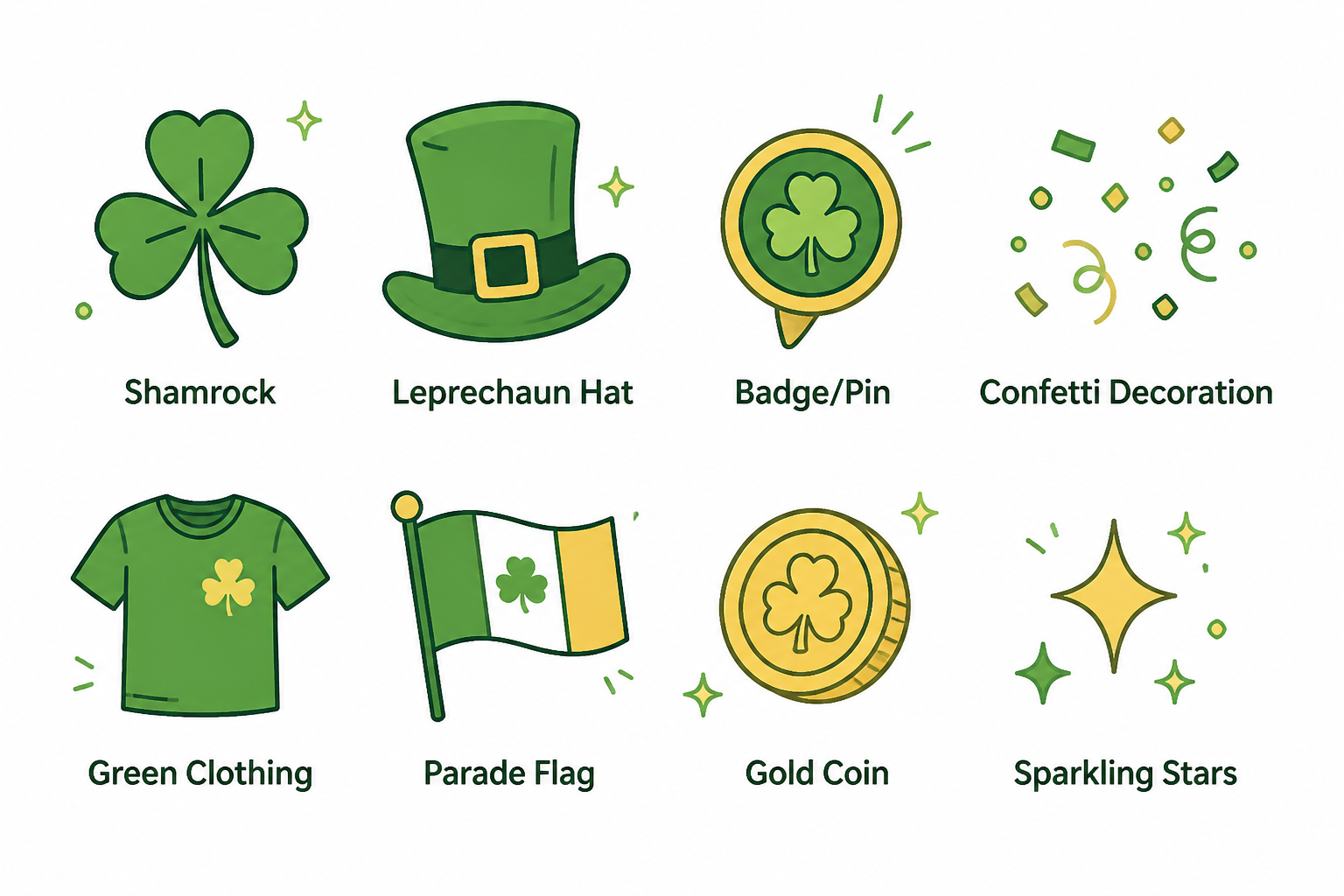
| 符號 | fúhào | symbol | 三葉草是這個節日的重要符號。 | Sānyècǎo shì zhège jiérì de zhòngyào fúhào. | The shamrock is an important symbol of this holiday. |
| 裝飾 | zhuāngshì | decoration | 店裡的裝飾很漂亮。 | Diàn lǐ de zhuāngshì hěn piàoliang. | The shop decorations are pretty. |
| 帽子 | màozi | hat | 他戴了一頂綠色帽子。 | Tā dài le yì dǐng lǜsè màozi. | He wore a green hat. |
| 衣服 | yīfú | clothes | 大家都穿著節日衣服。 | Dàjiā dōu chuānzhe jiérì yīfú. | Everyone is wearing holiday clothes. |
| 徽章 | huīzhāng | badge; pin | 她別了一個三葉草徽章。 | Tā bié le yí gè sānyècǎo huīzhāng. | She pinned on a shamrock badge. |
People, Places, And Parade Words
These are the words for crowds, events, and the things you point at while trying to sound informed.
| Traditional Chinese | Pinyin | Meaning | Example (ZH) | Example (Pinyin) | Translation (EN) |
|---|---|---|---|---|---|
| 遊行 | yóuxíng | parade | 遊行開始了。 | Yóuxíng kāishǐ le. | The parade has started. |
| 人群 | rénqún | crowd | 人群很多,走路要小心。 | Rénqún hěn duō, zǒulù yào xiǎoxīn. | The crowd is big, so be careful walking. |
| 觀眾 | guānzhòng | audience; spectators | 觀眾都在拍手。 | Guānzhòng dōu zài pāishǒu. | The spectators are all clapping. |
| 朋友 | péngyǒu | friend | 我和朋友一起去看活動。 | Wǒ hé péngyǒu yìqǐ qù kàn huódòng. | I went to the event with friends. |
| 家人 | jiārén | family | 我跟家人一起吃晚餐。 | Wǒ gēn jiārén yìqǐ chī wǎncān. | I ate dinner with my family. |
| 店家 | diànjiā | store owner; shop | 店家準備了節日特別活動。 | Diànjiā zhǔnbèi le jiérì tèbié huódòng. | The shop prepared a special holiday event. |
| 街道 | jiēdào | street | 街道上有很多裝飾。 | Jiēdào shàng yǒu hěn duō zhuāngshì. | There are many decorations on the street. |
| 舞台 | wǔtái | stage | 表演在舞台上開始。 | Biǎoyǎn zài wǔtái shàng kāishǐ. | The performance starts on the stage. |
| 表演 | biǎoyǎn | performance | 這個表演很精彩。 | Zhège biǎoyǎn hěn jīngcǎi. | This performance is wonderful. |
| 活動中心 | huódòng zhōngxīn | community center; activity center | 活動中心有節日展覽。 | Huódòng zhōngxīn yǒu jiérì zhǎnlǎn. | The community center has a holiday exhibition. |
Feeling Words And Holiday Mood
Holiday language is not just objects. It is also how people feel. Useful, because no one says “I am currently experiencing festival joy” in normal life. They just say they are happy.