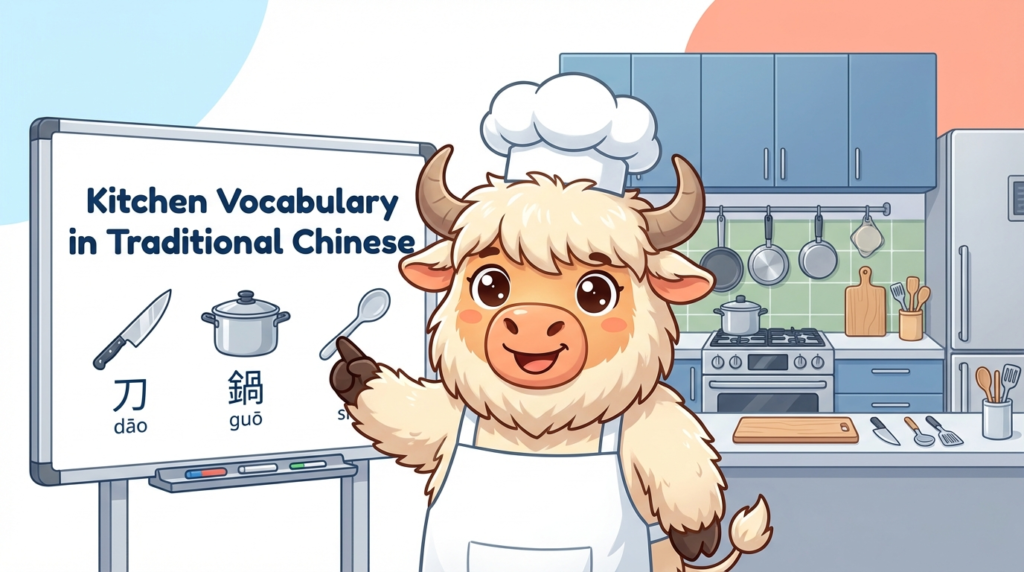
Kitchen Vocabulary in Traditional Chinese: 90+ Words (No Chef Ego)
廚房詞彙:90+ 個實用單字與句子(繁體中文 + 拼音)
Traditional: 繁體中文
Pinyin: tone marks
Every item has an example
Audio buttons included
Here’s the kitchen vocab you actually use: Traditional Chinese characters, pinyin with tone marks, plain-English meanings, and short real-life examples.
Tap the 🔊 buttons to hear the Mandarin (Taiwan accent). Then go label your kitchen and pretend you’re organized. It’s fine.
🦬Yak Snark
If you can say 開火 (turn on the heat) and 關火 (turn it off), you’re already ahead of 50% of real kitchens. Yes, including mine.
The “I Need This Daily” Kitchen Cards
廚房
kitchen
我在廚房做早餐。
Wǒ zài chúfáng zuò zǎocān.
I’m making breakfast in the kitchen.
冰箱
refrigerator
牛奶在冰箱裡。
Niúnǎi zài bīngxiāng lǐ.
The milk is in the fridge.
瓦斯爐
gas stove
請把瓦斯爐關掉。
Qǐng bǎ wǎsīlú guān diào.
Please turn off the gas stove.
刀
knife
這把刀很利。
Zhè bǎ dāo hěn lì.
This knife is sharp.
砧板
cutting board
把菜放在砧板上切。
Bǎ cài fàng zài zhēnbǎn shàng qiē.
Put the vegetables on the cutting board to chop.
平底鍋
frying pan
用平底鍋煎蛋很快。
Yòng píngdǐguō jiān dàn hěn kuài.
Frying eggs in a pan is quick.
水槽
sink
碗先放水槽裡泡一下。
Wǎn xiān fàng shuǐcáo lǐ pào yíxià.
Soak the bowls in the sink first.
碗
bowl
給我一個碗,好嗎?
Gěi wǒ yí ge wǎn, hǎo ma?
Can you give me a bowl?
Useful Kitchen Phrases You’ll Actually Say Short, practical, and perfect for not setting something on fire.
開火
turn on the heat
你可以幫我開火嗎?
Nǐ kěyǐ bāng wǒ kāi huǒ ma?
Can you turn on the heat for me?
關火
turn off the heat
水滾了,記得關火。
Shuǐ gǔn le, jìde guān huǒ.
The water’s boiling—remember to turn off the heat.
大火
high heat
先用大火煮兩分鐘。
Xiān yòng dà huǒ zhǔ liǎng fēnzhōng.
Boil on high heat for two minutes first.
中火
medium heat
用中火慢慢炒。
Yòng zhōng huǒ mànmàn chǎo.
Stir-fry slowly over medium heat.
小火
low heat
改小火再燉十分鐘。
Gǎi xiǎo huǒ zài dùn shí fēnzhōng.
Turn to low heat and simmer for ten more minutes.
先預熱
preheat first
先預熱烤箱到一百八十度。
Xiān yùrè kǎoxiāng dào yìbǎi bāshí dù.
Preheat the oven to 180°C first.
煮滾
bring to a boil
把水煮滾再下麵條。
Bǎ shuǐ zhǔ gǔn zài xià miàntiáo.
Bring the water to a boil before adding noodles.
翻面
flip it over
煎到金黃就翻面。
Jiān dào jīnhuáng jiù fān miàn.
Flip it when it turns golden.
切成小塊
cut into small pieces
把豆腐切成小塊。
Bǎ dòufu qiē chéng xiǎo kuài.
Cut the tofu into small pieces.
攪一攪
give it a stir
醬料要攪一攪。
Jiàngliào yào jiǎo yì jiǎo.
Give the sauce a quick stir.
加一點鹽
add a little salt
這個菜加一點鹽就好。
Zhège cài jiā yìdiǎn yán jiù hǎo.
Just add a little salt to this dish.
加點醬油
add some soy sauce
不夠鹹的話加點醬油。
Bù gòu xián de huà jiā diǎn jiàngyóu.
If it’s not salty enough, add some soy sauce.
冰起來
put it in the fridge
吃不完就冰起來。
Chī bù wán jiù bīng qǐlái.
If you can’t finish it, put it in the fridge.
洗碗
wash the dishes
我做菜,你洗碗。
Wǒ zuò cài, nǐ xǐ wǎn.
I’ll cook; you wash the dishes.
端上桌
serve it to the table
菜好了,可以端上桌。
Cài hǎo le, kěyǐ duān shàng zhuō.
The food’s ready—you can serve it to the table.
Small Taiwan note: In Taiwan you’ll often hear 瓦斯 for “gas” and see 流理臺 for “countertop.” Same kitchen, same mess—just different labels.
Kitchen Setup & Storage
| Traditional | Pinyin | Meaning | Example (ZH + pinyin) | Translation (EN) | Audio |
|---|---|---|---|---|---|
流理臺 | countertop | 請把菜放在流理臺上。 Qǐng bǎ cài fàng zài liúlǐtái shàng. | Please put the vegetables on the counter. | ||
櫥櫃 | cabinet | 碗都在那個櫥櫃裡。 Wǎn dōu zài nàge chúguì lǐ. | The bowls are in that cabinet. | ||
抽屜 | drawer | 刀子在左邊的抽屜。 Dāozi zài zuǒbiān de chōutì. | The knives are in the drawer on the left. | ||
置物架 | shelf / rack | 我把香料放在置物架上。 Wǒ bǎ xiāngliào fàng zài zhìwùjià shàng. | I put the spices on the rack. | ||
冷凍庫 | freezer | 冰淇淋在冷凍庫裡。 Bīngqílín zài lěngdòngkù lǐ. | The ice cream is in the freezer. | ||
垃圾桶 | trash can | 請把蛋殼丟進垃圾桶。 Qǐng bǎ dànké diū jìn lājītǒng. | Please throw the eggshells into the trash can. | ||
回收桶 | recycling bin | 這個瓶子要放回收桶。 Zhège píngzi yào fàng huíshōutǒng. | This bottle goes in the recycling bin. | ||
保鮮盒 | food container | 剩菜放進保鮮盒。 Shèngcài fàng jìn bǎoxiānhé. | Put leftovers into a container. | ||
保鮮膜 | plastic wrap | 用保鮮膜把碗包起來。 Yòng bǎoxiānmó bǎ wǎn bāo qǐlái. | Cover the bowl with plastic wrap. | ||
鋁箔紙 | aluminum foil | 烤魚的時候用鋁箔紙。 Kǎo yú de shíhou yòng lǚbózhǐ. | Use foil when baking fish. | ||
烘焙紙 | parchment paper | 鋪一張烘焙紙比較不黏。 Pū yì zhāng hōngbèi zhǐ bǐjiào bù nián. | Lining with parchment paper helps prevent sticking. |
Appliances
| Traditional | Pinyin | Meaning | Example (ZH + pinyin) | Translation (EN) | Audio |
|---|---|---|---|---|---|
電磁爐 | induction cooker | 這台電磁爐很快就熱。 Zhè tái diàncílú hěn kuài jiù rè. | This induction cooker heats up fast. | ||
烤箱 | oven | 把披薩放進烤箱。 Bǎ pīsà fàng jìn kǎoxiāng. | Put the pizza in the oven. | ||
微波爐 | microwave | 我用微波爐加熱便當。 Wǒ yòng wēibōlú jiārè biàndāng. | I heat my lunchbox in the microwave. | ||
電鍋 | rice cooker (Taiwan-style electric cooker) | 用電鍋煮飯最省事。 Yòng diànguō zhǔ fàn zuì shěngshì. | Cooking rice in a rice cooker is the easiest. | ||
熱水壺 | electric kettle | 熱水壺裡有水嗎? Rèshuǐhú lǐ yǒu shuǐ ma? | Is there water in the kettle? | ||
果汁機 | blender | 用果汁機打香蕉牛奶。 Yòng guǒzhījī dǎ xiāngjiāo niúnǎi. | Use the blender to make banana milk. | ||
烤麵包機 | toaster | 早上我用烤麵包機烤吐司。 Zǎoshang wǒ yòng kǎo miànbāo jī kǎo tǔsī. | In the morning I toast bread in the toaster. | ||
抽油煙機 | range hood | 炒菜記得開抽油煙機。 Chǎo cài jìde kāi chōuyóuyānjī. | When stir-frying, remember to turn on the hood. |
Cookware & Tools
| Traditional | Pinyin | Meaning | Example (ZH + pinyin) | Translation (EN) | Audio |
|---|---|---|---|---|---|
湯鍋 | soup pot | 我用湯鍋煮味噌湯。 Wǒ yòng tāngguō zhǔ wèicēng tāng. | I use the soup pot to cook miso soup. | ||
炒鍋 | wok | 這個炒鍋不容易黏。 Zhège chǎoguō bù róngyì nián. | This wok doesn’t stick easily. | ||
蒸鍋 | steamer | 用蒸鍋蒸包子。 Yòng zhēngguō zhēng bāozi. | Steam buns with a steamer. | ||
砂鍋 | clay pot | 砂鍋煲湯很香。 Shāguō bāo tāng hěn xiāng. | Clay pot soup smells amazing. | ||
烤盤 | baking tray | 把餅乾放在烤盤上。 Bǎ bǐnggān fàng zài kǎopán shàng. | Put the cookies on the baking tray. | ||
鍋蓋 | lid | 煮的時候蓋上鍋蓋。 Zhǔ de shíhou gài shàng guōgài. | Put the lid on while it cooks. | ||
鍋鏟 | wok spatula | 用鍋鏟把菜翻一翻。 Yòng guōchǎn bǎ cài fān yì fān. | Use the spatula to toss the vegetables. | ||
鍋杓 | ladle | 用鍋杓舀一碗湯。 Yòng guōsháo yǎo yì wǎn tāng. | Use a ladle to scoop a bowl of soup. | ||
漏勺 | slotted spoon / skimmer | 麵條煮好用漏勺撈起來。 Miàntiáo zhǔ hǎo yòng lòusháo lāo qǐlái. | When the noodles are done, lift them out with a skimmer. | ||
夾子 | tongs | 用夾子夾烤肉比較安全。 Yòng jiāzi jiā kǎoròu bǐjiào ānquán. | Using tongs for grilled meat is safer. | ||
打蛋器 | whisk | 用打蛋器把蛋打散。 Yòng dǎdànqì bǎ dàn dǎ sàn. | Use a whisk to beat the eggs. | ||
刨刀 | peeler | 用刨刀削馬鈴薯皮。 Yòng páodāo xiāo mǎlíngshǔ pí. | Use a peeler to peel potatoes. | ||
濾網 | strainer | 把湯過一下濾網。 Bǎ tāng guò yíxià lǜwǎng. | Strain the soup through a strainer. | ||
量杯 | measuring cup | 用量杯量牛奶。 Yòng liángbēi liáng niúnǎi. | Use a measuring cup to measure milk. | ||
量匙 | measuring spoon | 用量匙加一匙糖。 Yòng liángchí jiā yì chí táng. | Use a measuring spoon to add one spoonful of sugar. |
Tableware
| Traditional | Pinyin | Meaning | Example (ZH + pinyin) | Translation (EN) | Audio |
|---|---|---|---|---|---|
盤子 | plate | 把菜放到盤子裡。 Bǎ cài fàng dào pánzi lǐ. | Put the food on the plate. | ||
筷子 | chopsticks | 你會用筷子嗎? Nǐ huì yòng kuàizi ma? | Can you use chopsticks? | ||
叉子 | fork | 給我一支叉子。 Gěi wǒ yì zhī chāzi. | Give me a fork. | ||
餐刀 | table knife | 牛排要用餐刀切。 Niúpái yào yòng cāndāo qiē. | Steak should be cut with a table knife. | ||
杯子 | cup | 這個杯子是熱的。 Zhège bēizi shì rè de. | This cup is hot. | ||
馬克杯 | mug | 我用馬克杯喝咖啡。 Wǒ yòng mǎkèbēi hē kāfēi. | I drink coffee in a mug. | ||
托盤 | tray | 我用托盤端茶。 Wǒ yòng tuōpán duān chá. | I carry tea on a tray. | ||
餐巾 | napkin | 餐巾在你右邊。 Cānjīn zài nǐ yòubiān. | The napkin is on your right. |
Ingredients & Seasonings
| Traditional | Pinyin | Meaning | Example (ZH + pinyin) | Translation (EN) | Audio |
|---|---|---|---|---|---|
鹽 | salt | 這湯太淡了,放點鹽。 Zhè tāng tài dàn le, fàng diǎn yán. | This soup is too bland—add some salt. | ||
糖 | sugar | 我咖啡不加糖。 Wǒ kāfēi bù jiā táng. | I don’t add sugar to my coffee. | ||
醬油 | soy sauce | 我喜歡在飯上淋醬油。 Wǒ xǐhuān zài fàn shàng lín jiàngyóu. | I like drizzling soy sauce on rice. | ||
醋 | vinegar | 水餃沾醋很好吃。 Shuǐjiǎo zhān cù hěn hǎochī. | Dumplings dipped in vinegar are delicious. | ||
蠔油 | oyster sauce | 青菜加一點蠔油就很香。 Qīngcài jiā yìdiǎn háoyóu jiù hěn xiāng. | Greens taste great with a bit of oyster sauce. | ||
胡椒 | pepper | 撒點胡椒更有味道。 Sā diǎn hújiāo gèng yǒu wèidào. | Sprinkle pepper for more flavor. | ||
辣椒 | chili pepper | 我不太能吃辣椒。 Wǒ bù tài néng chī làjiāo. | I can’t really handle spicy chili. | ||
食用油 | cooking oil | 鍋熱了再倒食用油。 Guō rè le zài dào shíyòngyóu. | Add cooking oil after the pan is hot. | ||
芝麻油 | sesame oil | 起鍋前滴幾滴芝麻油。 Qǐ guō qián dī jǐ dī zhīmáyóu. | Add a few drops of sesame oil before turning off the heat. | ||
奶油 | butter | 吐司抹奶油最好吃。 Tǔsī mǒ nǎiyóu zuì hǎochī. | Toast with butter tastes best. | ||
麵粉 | flour | 這個麵粉用來做鬆餅。 Zhège miànfěn yòng lái zuò sōngbǐng. | This flour is for making pancakes. | ||
米 | rice (uncooked) | 我買了一包米。 Wǒ mǎi le yì bāo mǐ. | I bought a bag of rice. | ||
麵條 | noodles | 晚餐吃麵條吧。 Wǎncān chī miàntiáo ba. | Let’s have noodles for dinner. | ||
雞蛋 | egg | 冰箱裡還有雞蛋嗎? Bīngxiāng lǐ hái yǒu jīdàn ma? | Are there any eggs left in the fridge? | ||
牛奶 | milk | 我早上喝牛奶。 Wǒ zǎoshang hē niúnǎi. | I drink milk in the morning. | ||
薑 | ginger | 加一片薑去腥。 Jiā yí piàn jiāng qù xīng. | Add a slice of ginger to remove the fishy smell. |
Cleaning & Safety
| Traditional | Pinyin | Meaning | Example (ZH + pinyin) | Translation (EN) | Audio |
|---|---|---|---|---|---|
洗碗精 | dish soap | 洗碗精用一點點就夠。 Xǐwǎnjīng yòng yìdiǎndiǎn jiù gòu. | Just a little dish soap is enough. | ||
海綿 | sponge | 用海綿把盤子刷乾淨。 Yòng hǎimián bǎ pánzi shuā gānjìng. | Use a sponge to scrub the plate clean. | ||
抹布 | dishcloth | 抹布記得常常換。 Mǒbù jìde chángcháng huàn. | Remember to change the dishcloth often. | ||
手套 | gloves | 戴手套洗碗比較不傷手。 Dài shǒutào xǐ wǎn bǐjiào bù shāng shǒu. | Wearing gloves while washing dishes is gentler on your hands. | ||
清潔劑 | cleaner | 這個清潔劑可以去油。 Zhège qīngjiéjì kěyǐ qù yóu. | This cleaner can remove grease. | ||
圍裙 | apron | 做菜前先穿圍裙。 Zuò cài qián xiān chuān wéiqún. | Put on an apron before cooking. | ||
隔熱墊 | trivet / hot pad | 鍋子很燙,要放隔熱墊。 Guōzi hěn tàng, yào fàng gérèdiàn. | The pot is hot—put it on a trivet. |
Optional: Super-Useful Measure Words
| Traditional | Pinyin | Meaning | Example (ZH + pinyin) | Translation (EN) | Audio |
|---|---|---|---|---|---|
一把刀 | a knife (classifier: 把) | 我需要一把刀。 Wǒ xūyào yì bǎ dāo. | I need a knife. | ||
一口鍋 | a pot (classifier: 口) | 我買了一口鍋。 Wǒ mǎi le yì kǒu guō. | I bought a pot. | ||
一支湯匙 | a spoon (classifier: 支) | 給我一支湯匙。 Gěi wǒ yì zhī tāngchí. | Give me a spoon. | ||
一雙筷子 | a pair of chopsticks (classifier: 雙) | 桌上有一雙筷子。 Zhuō shàng yǒu yì shuāng kuàizi. | There’s a pair of chopsticks on the table. | ||
一個保鮮盒 | a food container (classifier: 個) | 把水果放進一個保鮮盒。 Bǎ shuǐguǒ fàng jìn yí ge bǎoxiānhé. | Put the fruit into a container. | ||
一片吐司 | a slice of toast (classifier: 片) | 早上我吃一片吐司。 Zǎoshang wǒ chī yí piàn tǔsī. | I eat a slice of toast in the morning. | ||
一顆雞蛋 | an egg (classifier: 顆) | 我只要一顆雞蛋。 Wǒ zhǐ yào yì kē jīdàn. | I only want one egg. | ||
一匙糖 | a spoonful of sugar (classifier: 匙) | 咖啡裡加一匙糖。 Kāfēi lǐ jiā yì chí táng. | Add a spoonful of sugar to the coffee. |
🦬Yak Snark
Kitchen confidence isn’t about fancy vocabulary. It’s about saying 小火 at the right time… and knowing where the 洗碗精 is when things go wrong.