


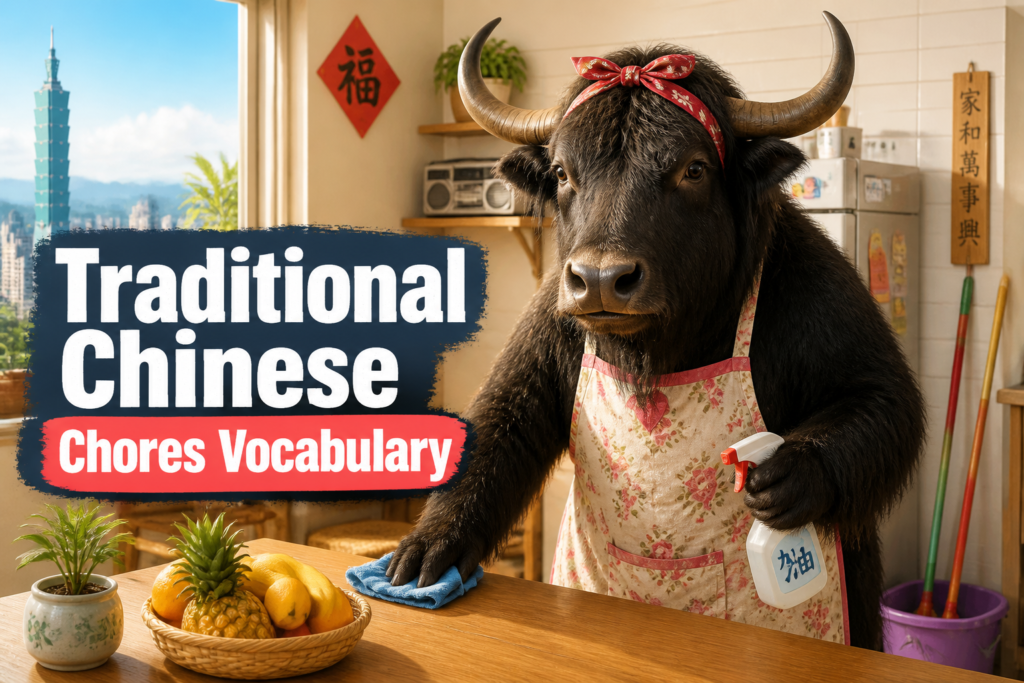
家事 jiā shì — chores, housework, the glamorous stuff nobody really wants to do, but somehow still has to do.
If you live in a Mandarin-speaking home, chores come up fast. You clean the floor, take out the trash, wash dishes, sort laundry, and maybe pretend you did not see that mysterious sticky spot on the counter. This guide gives you practical Traditional Chinese vocabulary for daily chores, plus the patterns you need to actually talk about them naturally.
Use it for home life, dorm life, shared apartments, or just understanding when someone says, “先把地板拖一拖吧。” That sentence is not a suggestion from a fairy godmother. It means mop the floor. Now.
Back to the main Traditional Chinese learning hub.
Useful Chores Phrases
Here are the everyday phrases you will hear the most. These are the ones that save you from blankly smiling while holding a broom like a confused tourist.
| Traditional Chinese | Pinyin | English Meaning | Example (ZH) | Example (Pinyin) | Translation (EN) |
|---|---|---|---|---|---|
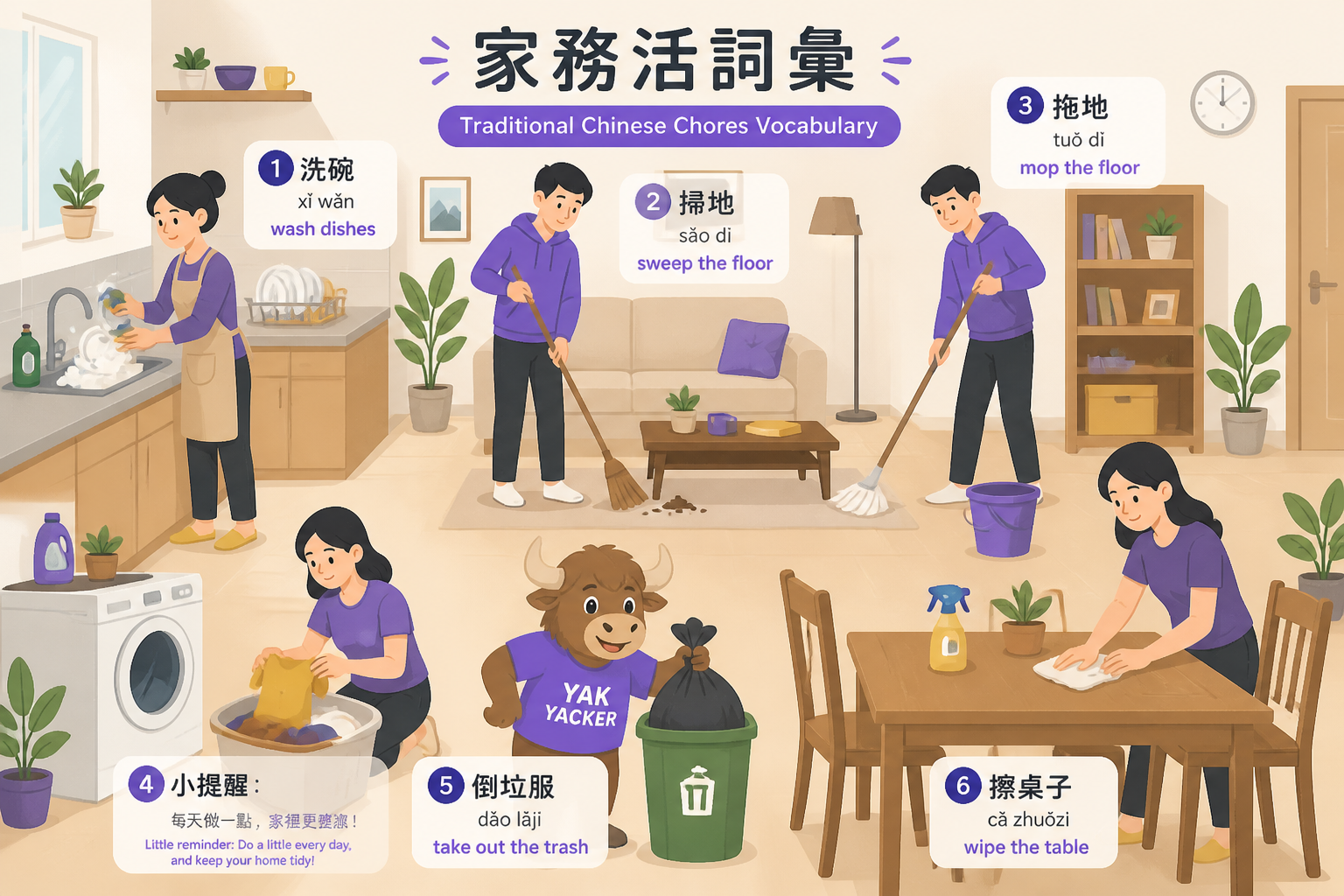
| 做家事 | zuò jiā shì | to do housework | 我週末常常做家事。 | Wǒ zhōumò chángcháng zuò jiā shì. | I often do housework on weekends. |
| 打掃 | dǎ sǎo | to clean; to tidy up | 你可以先打掃房間嗎? | Nǐ kěyǐ xiān dǎsǎo fángjiān ma? | Can you clean the room first? |
| 掃地 | sǎo dì | to sweep the floor | 我先掃地,再拖地。 | Wǒ xiān sǎo dì, zài tuō dì. | I sweep the floor first, then mop it. |
| 拖地 | tuō dì | to mop the floor | 客廳的地板要拖一拖。 | Kètīng de dìbǎn yào tuō yī tuō. | The living room floor needs to be mopped. |
| 吸地 | xī dì | to vacuum the floor | 我今天會吸地。 | Wǒ jīntiān huì xī dì. | I will vacuum today. |
| 擦桌子 | cā zhuōzi | to wipe the table | 吃完飯後,請擦桌子。 | Chī wán fàn hòu, qǐng cā zhuōzi. | After eating, please wipe the table. |
| 洗碗 | xǐ wǎn | to wash dishes | 今天輪到我洗碗。 | Jīntiān lún dào wǒ xǐ wǎn. | It’s my turn to wash the dishes today. |
| 晾衣服 | liàng yīfu | to hang clothes to dry | 我把衣服晾在陽台。 | Wǒ bǎ yīfu liàng zài yángtái. | I hung the clothes on the balcony. |
| 洗衣服 | xǐ yīfu | to wash clothes | 她每週洗衣服兩次。 | Tā měi zhōu xǐ yīfu liǎng cì. | She washes clothes twice a week. |
| 摺衣服 | zhé yīfu | to fold clothes | 你可以幫我摺衣服嗎? | Nǐ kěyǐ bāng wǒ zhé yīfu ma? | Can you help me fold the clothes? |
| 倒垃圾 | dào lèsè | to take out the trash | 晚上九點前要倒垃圾。 | Wǎnshàng jiǔ diǎn qián yào dào lèsè. | The trash needs to be taken out before 9 p.m. |
| 整理房間 | zhěnglǐ fángjiān | to organize the room | 我想先整理房間。 | Wǒ xiǎng xiān zhěnglǐ fángjiān. | I want to organize the room first. |
More Handy Chores Words
This next group gives you the building blocks for talking about cleaning, fixing, and general domestic survival.
| Traditional Chinese | Pinyin | Meaning | Example (ZH) | Example (Pinyin) | Translation (EN) |
|---|---|---|---|---|---|
| 地板 | dìbǎn | floor | 地板很髒。 | Dìbǎn hěn zāng. | The floor is dirty. |
| 桌子 | zhuōzi | table | 桌子上有水。 | Zhuōzi shàng yǒu shuǐ. | There is water on the table. |
| 碗 | wǎn | bowl; dish | 這些碗要洗嗎? | Zhèxiē wǎn yào xǐ ma? | Do these dishes need washing? |
| 衣服 | yīfu | clothes | 衣服還沒乾。 | Yīfu hái méi gān. | The clothes are not dry yet. |
| 垃圾 | lèsè | trash; garbage | 垃圾桶滿了。 | Lèsè tǒng mǎn le. | The trash can is full. |
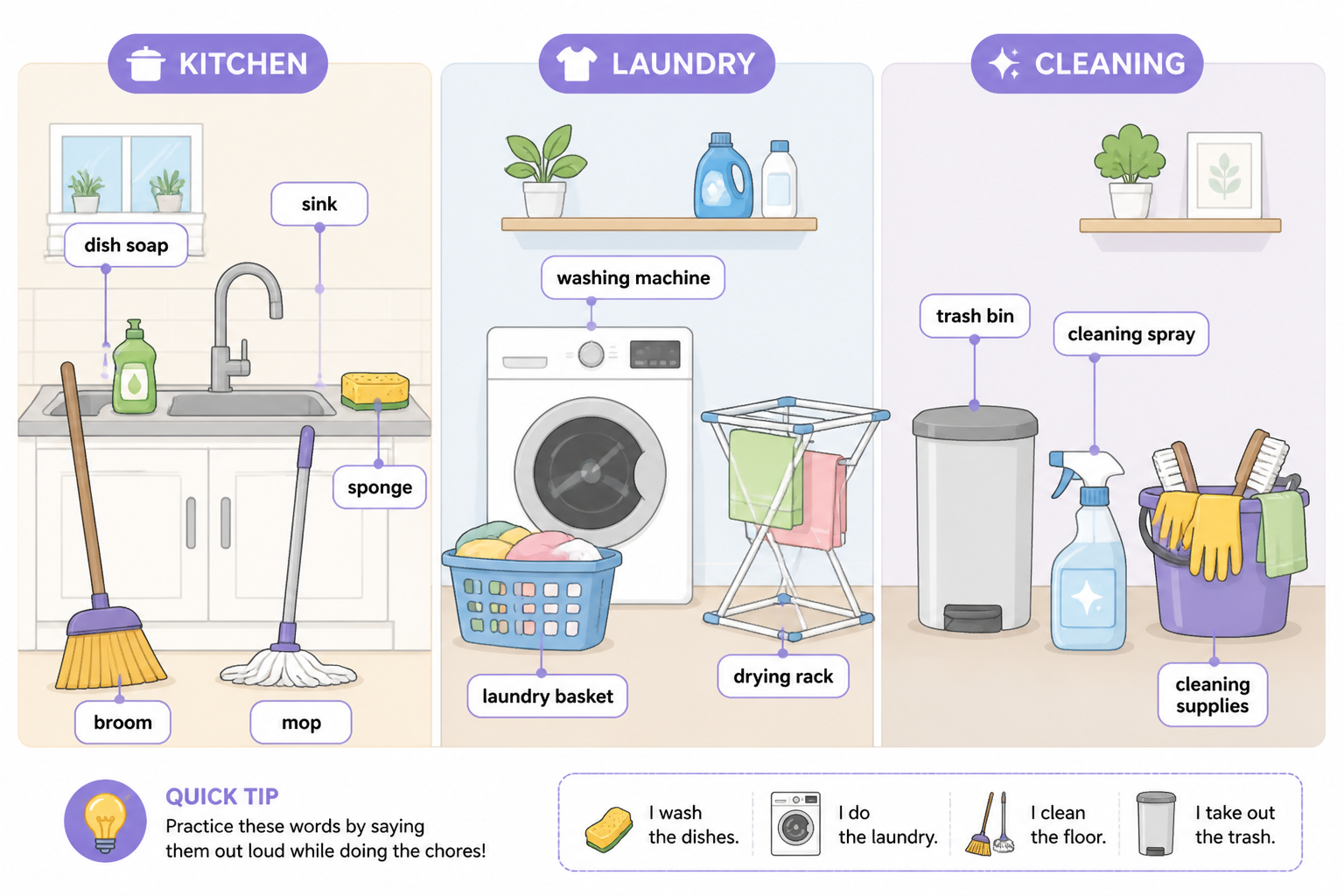
| 掃把 | sàobǎ | broom | 掃把在哪裡? | Sàobǎ zài nǎlǐ? | Where is the broom? |
| 拖把 | tuōbǎ | mop | 拖把在陽台旁邊。 | Tuōbǎ zài yángtái pángbiān. | The mop is next to the balcony. |
| 洗衣機 | xǐyījī | washing machine | 洗衣機在洗衣間。 | Xǐyījī zài xǐyī jiān. | The washing machine is in the laundry room. |
| 洗衣粉 | xǐyīfěn | laundry detergent powder | 洗衣粉快沒了。 | Xǐyīfěn kuài méi le. | The detergent powder is almost gone. |
| 洗衣精 | xǐyījīng | liquid laundry detergent | 我比較常用洗衣精。 | Wǒ bǐjiào cháng yòng xǐyījīng. | I usually use liquid detergent. |
| 洗碗精 | xǐwǎnjīng | dish soap | 洗碗精放在水槽旁邊。 | Xǐwǎnjīng fàng zài shuǐcáo pángbiān. | The dish soap is next to the sink. |
| 水槽 | shuǐcáo | sink | 水槽有點堵住了。 | Shuǐcáo yǒudiǎn dǔ zhù le. | The sink is a little blocked. |
| 抹布 | mābù | rag; cleaning cloth | 請拿抹布來擦桌子。 | Qǐng ná mābù lái cā zhuōzi. | Please bring a rag to wipe the table. |
| 垃圾桶 | lèsè tǒng | trash can | 垃圾桶在哪裡? | Lèsè tǒng zài nǎlǐ? | Where is the trash can? |
| 紙巾 | zhǐjīn | tissue; paper towel | 桌上有紙巾。 | Zhuō shàng yǒu zhǐjīn. | There are tissues on the table. |
| 清潔劑 | qīngjiéjì | cleaning agent; cleaner | 這個清潔劑可以擦廚房。 | Zhège qīngjiéjì kěyǐ cā chúfáng. | This cleaner can be used in the kitchen. |
| 除塵 | chú chén | to dust; remove dust | 我每週會除塵一次。 | Wǒ měi zhōu huì chú chén yī cì. | I dust once a week. |
| 消毒 | xiāo dú | to disinfect | 疫情後大家更常消毒。 | Yìqíng hòu dàjiā gèng cháng xiāo dú. | After the pandemic, people disinfect more often. |
Bathroom Vocabulary in Traditional Chinese is a useful side trip if you want to expand the cleaning zone without guessing what every sink thing is called.
Chores By Task
Some chore words are verbs, some are objects, and some are the kind of words you only learn after someone asks you to help and you freeze. Here is a bigger set of useful vocabulary.
| Traditional Chinese | Pinyin | Meaning | Example (ZH) | Example (Pinyin) | Translation (EN) |
|---|---|---|---|---|---|
| 洗窗戶 | xǐ chuānghù | to wash the windows | 今天適合洗窗戶。 | Jīntiān shìhé xǐ chuānghù. | Today is a good day to wash the windows. |
| 擦窗戶 | cā chuānghù | to wipe the windows | 我先擦窗戶,再掃地。 | Wǒ xiān cā chuānghù, zài sǎo dì. | I wipe the windows first, then sweep the floor. |
| 擦地板 | cā dìbǎn | to wipe the floor | 地板有點油,得擦一擦。 | Dìbǎn yǒudiǎn yóu, děi cā yī cā. | The floor is a bit greasy, so it needs wiping. |
| 清理 | qīnglǐ | to clean up; to clear out | 請清理桌面。 | Qǐng qīnglǐ zhuōmiàn. | Please clear the desk. |
| 收拾 | shōushi | to tidy up; to put away | 你先把書包收拾好。 | Nǐ xiān bǎ shūbāo shōushi hǎo. | Put your backpack away first. |
| 歸位 | guī wèi | to put back in place | 看完記得歸位。 | Kàn wán jìde guī wèi. | Remember to put it back after using it. |
| 分類 | fēnlèi | to sort; to classify | 回收要先分類。 | Huíshōu yào xiān fēnlèi. | Recycling needs to be sorted first. |
| 回收 | huíshōu | recycle; recycling | 紙箱可以回收。 | Zhǐxiāng kěyǐ huíshōu. | The cardboard box can be recycled. |
| 丟掉 | diū diào | to throw away | 這個壞掉了,可以丟掉。 | Zhège huài diào le, kěyǐ diū diào. | This is broken, so it can be thrown away. |
| 擦乾 | cā gān | to wipe dry | 洗完盤子要擦乾。 | Xǐ wán pánzi yào cā gān. | After washing plates, dry them. |
| 擺好 | bǎi hǎo | to arrange neatly | 把鞋子擺好。 | Bǎ xiézi bǎi hǎo. | Arrange the shoes neatly. |
| 對齊 | duì qí | to align; to line up | 請把椅子對齊。 | Qǐng bǎ yǐzi duì qí. | Please line up the chairs. |
| 整理床鋪 | zhěnglǐ chuángpù | to make the bed | 我早上會整理床鋪。 | Wǒ zǎoshang huì zhěnglǐ chuángpù. | I make the bed in the morning. |
| 鋪床 | pū chuáng | to make the bed; to lay bedding | 房間整理好後再鋪床。 | Fángjiān zhěnglǐ hǎo hòu zài pū chuáng. | Make the bed after the room is tidy. |
| 更換床單 | gēnghuàn chuángdān | to change the bedsheets | 我們今天要更換床單。 | Wǒmen jīntiān yào gēnghuàn chuángdān. | We need to change the bedsheets today. |
| 曬被子 | shài bèizi | to air out blankets in the sun | 天氣好時可以曬被子。 | Tiānqì hǎo shí kěyǐ shài bèizi. | When the weather is good, you can air out the blankets in the sun. |
| 收衣服 | shōu yīfu | to bring in clothes from drying | 下雨了,快收衣服。 | Xiàyǔ le, kuài shōu yīfu. | It’s raining, hurry and bring the clothes in. |
| 補貨 | bǔ huò | to restock | 超商會定期補貨。 | Chāoshāng huì dìngqí bǔ huò. | The convenience store restocks regularly. |
Small note: in Taiwan, 垃圾 lèsè is the standard word for trash, and you will often hear very specific trash schedules. Yes, trash in Taiwan has more discipline than many people.
Handy Sentence Patterns
These patterns let you build your own sentences instead of just memorizing a giant pile of words and hoping for the best.
| Pattern | Meaning | Example (ZH) | Pinyin | English |
|---|---|---|---|---|
| 先…,再… | first…, then… | 我先掃地,再拖地。 | Wǒ xiān sǎo dì, zài tuō dì. | I sweep the floor first, then mop it. |
| 把 + object + verb | to handle something directly | 請把垃圾丟掉。 | Qǐng bǎ lèsè diū diào. | Please throw away the trash. |
| 要…了 | about to; needs to | 地板要擦了。 | Dìbǎn yào cā le. | The floor needs wiping. |
| 得 + verb | must; have to | 碗得先洗。 | Wǎn děi xiān xǐ. | The dishes have to be washed first. |
| 幫我 + verb | help me do something | 你可以幫我倒垃圾嗎? | Nǐ kěyǐ bāng wǒ dào lèsè ma? | Can you help me take out the trash? |
| 輪到 + someone + 了 | it’s someone’s turn | 今天輪到你洗碗了。 | Jīntiān lún dào nǐ xǐ wǎn le. | It’s your turn to wash dishes today. |
| 記得 + verb | remember to… | 記得把衣服收進來。 | Jìde bǎ yīfu shōu jìnlái. | Remember to bring the clothes in. |
| 已經 + verb + 了 | already did something | 我已經洗完碗了。 | Wǒ yǐjīng xǐ wán wǎn le. | I already finished washing the dishes. |
| 還沒 + verb | not yet | 我還沒整理房間。 | Wǒ hái méi zhěnglǐ fángjiān. | I have not organized the room yet. |
| 可以…嗎? | canMore Traditional Chinese to explore How to Type Traditional Chinese Best graded readers for Traditional Chinese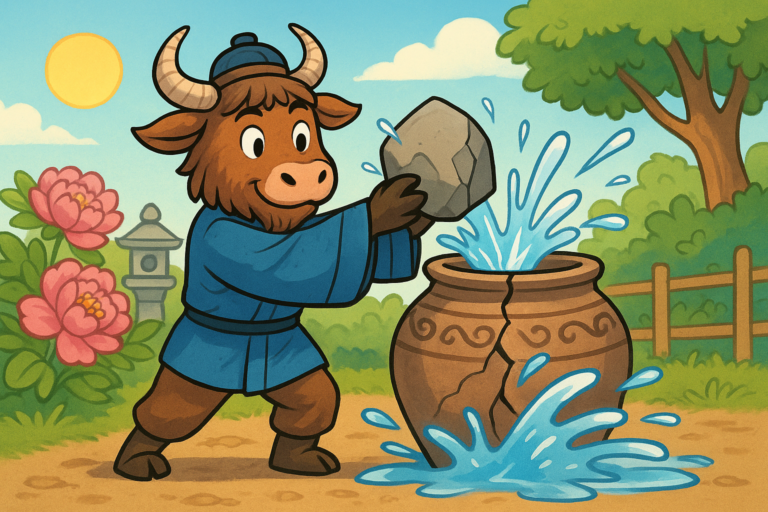 Sima Guang Breaks the Vat: A Beginner Chinese Story with Audio – A1 Level Nezha Conquers the Dragon King: A2 Elementary Traditional Chinese Story with Audio |