Traditional Chinese Habitats Vocabulary: 70+ Easy Words (Not the “Nature Documentary” Ones)
Learn habitats in 繁體中文 with pinyin, clear meanings, and real example sentences.
繁體中文主題:棲息地與自然環境詞彙
Want to say “forest,” “wetland,” “coast,” and “this animal lives here” in Traditional Chinese—without turning it into a biology thesis?
Below you’ll get Traditional characters + pinyin (tone marks) + meaning + example sentences, plus little 🔊 buttons to hear the Mandarin (zh-TW).
Quick Visual Cards: the habitats you’ll actually say
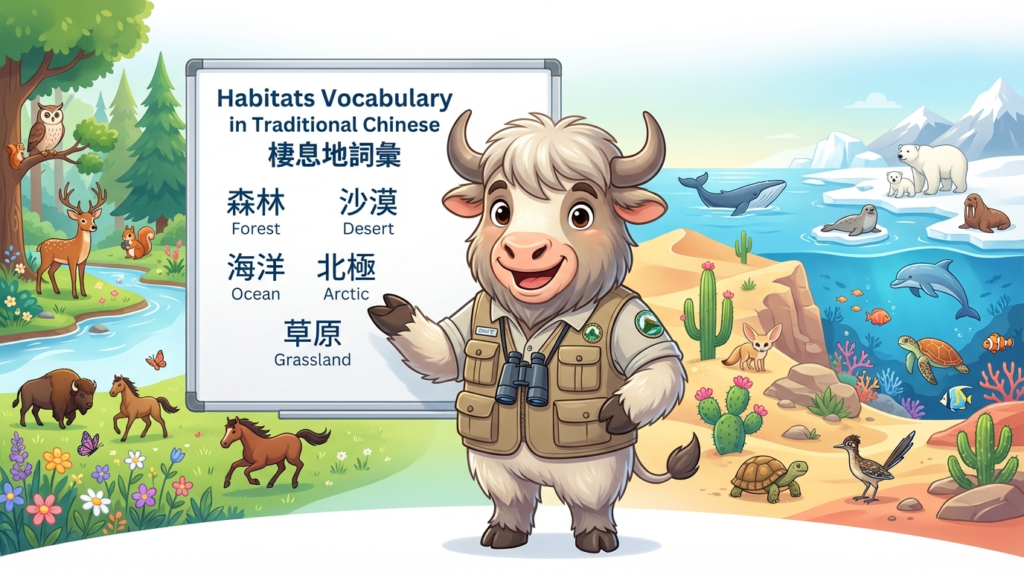
森林
forest
我們週末去森林健行。
Wǒmen zhōumò qù sēnlín jiànxíng.
We went hiking in the forest this weekend.
沙漠
desert
這個沙漠白天很熱。
Zhège shāmò báitiān hěn rè.
This desert is very hot in the daytime.
草原
grassland / prairie
草原上有很多牛羊。
Cǎoyuán shàng yǒu hěn duō niúyáng.
There are lots of cattle and sheep on the grassland.
熱帶雨林
tropical rainforest
熱帶雨林裡的昆蟲很多。
Rèdài yǔlín lǐ de kūnchóng hěn duō.
There are lots of insects in the rainforest.
海洋
ocean
海洋保護很重要。
Hǎiyáng bǎohù hěn zhòngyào.
Ocean protection is important.
山區
mountain area
山區晚上比較冷。
Shānqū wǎnshàng bǐjiào lěng.
Mountain areas are cooler at night.
濕地
wetland
這片濕地是候鳥的家。
Zhè piàn shīdì shì hòuniǎo de jiā.
This wetland is home to migratory birds.
珊瑚礁
coral reef
珊瑚礁附近的魚很漂亮。
Shānhújiāo fùjìn de yú hěn piàoliang.
The fish near the coral reef are beautiful.
Useful habitat phrases (copy-paste friendly)
棲息地
habitat (where an animal lives)
這裡是海龜的棲息地。
Zhèlǐ shì hǎiguī de qīxīdì.
This is a sea turtle habitat.
生活在
to live in (a place)
企鵝生活在南極。
Qǐ’é shēnghuó zài Nánjí.
Penguins live in Antarctica.
分布於
to be distributed in / found in
這種樹分布於溫帶地區。
Zhè zhǒng shù fēnbù yú wēndài dìqū.
This tree is found in temperate regions.
適合…生存
to be suitable for … to survive
這種氣候適合仙人掌生存。
Zhè zhǒng qìhòu shìhé xiānrénzhǎng shēngcún.
This climate is suitable for cacti to survive.
瀕危物種
endangered species
黑面琵鷺是瀕危物種。
Hēimiàn pílù shì bīnwēi wùzhǒng.
The black-faced spoonbill is an endangered species.
生物多樣性
biodiversity
這座島的生物多樣性很高。
Zhè zuò dǎo de shēngwù duōyàngxìng hěn gāo.
Biodiversity is high on this island.
保護區
protected area / reserve
這個保護區禁止狩獵。
Zhège bǎohùqū jìnzhǐ shòuliè.
Hunting is prohibited in this protected area.
國家公園
national park
我們想去國家公園走步道。
Wǒmen xiǎng qù guójiā gōngyuán zǒu bùdào.
We want to hike the trails in a national park.
外來種
invasive (non-native) species
外來種可能破壞生態。
Wàilái zhǒng kěnéng pòhuài shēngtài.
Invasive species can damage ecosystems.
食物鏈
food chain
塑膠會影響海洋食物鏈。
Sùjiāo huì yǐngxiǎng hǎiyáng shíwùliàn.
Plastic can affect the ocean food chain.
氣候變遷
climate change
氣候變遷讓乾旱更常見。
Qìhòu biànqiān ràng gānhàn gèng chángjiàn.
Climate change makes droughts more common.
遷徙
to migrate (animals moving seasonally)
候鳥每年都會遷徙。
Hòuniǎo měinián dōu huì qiānxǐ.
Migratory birds migrate every year.
How these words are built (so you can guess new ones)
More habitat words
Forests & plant-heavy habitats
| Traditional Chinese | Pinyin | Meaning (EN) | Example (ZH + pinyin) | Translation (EN) | 🔊 |
|---|---|---|---|---|---|
| 樹林 | shùlín | woods / woodland | 那片樹林很安靜。 Nà piàn shùlín hěn ānjìng. | That patch of woods is very quiet. | |
| 叢林 | cónglín | jungle (dense forest) | 叢林裡路不太好走。 Cónglín lǐ lù bú tài hǎo zǒu. | The jungle paths aren’t easy to walk. | |
| 竹林 | zhúlín | bamboo grove | 我們在竹林旁邊拍照。 Wǒmen zài zhúlín pángbiān pāizhào. | We took photos next to the bamboo grove. | |
| 針葉林 | zhēnyèlín | coniferous forest | 針葉林的味道很清新。 Zhēnyèlín de wèidào hěn qīngxīn. | Conifer forests smell really fresh. | |
| 落葉林 | luòyèlín | deciduous forest | 秋天落葉林很漂亮。 Qiūtiān luòyèlín hěn piàoliang. | Deciduous forests look beautiful in autumn. | |
| 灌木叢 | guànmùcóng | shrubland / bushes | 小鳥躲在灌木叢裡。 Xiǎoniǎo duǒ zài guànmùcóng lǐ. | The little bird hides in the bushes. |
Grasslands & open land
| Traditional Chinese | Pinyin | Meaning (EN) | Example (ZH + pinyin) | Translation (EN) | 🔊 |
|---|---|---|---|---|---|
| 草地 | cǎodì | grassy area / lawn | 孩子在草地上跑來跑去。 Háizi zài cǎodì shàng pǎo lái pǎo qù. | The kids run around on the grass. | |
| 平原 | píngyuán | plain | 平原適合種稻米。 Píngyuán shìhé zhòng dàomǐ. | Plains are suitable for growing rice. | |
| 高原 | gāoyuán | plateau | 高原的空氣比較稀薄。 Gāoyuán de kōngqì bǐjiào xībó. | The air on a plateau is thinner. | |
| 苔原 | táiyuán | tundra | 苔原冬天非常冷。 Táiyuán dōngtiān fēicháng lěng. | The tundra is extremely cold in winter. | |
| 牧場 | mùchǎng | pasture / ranch | 這個牧場有很多乳牛。 Zhège mùchǎng yǒu hěn duō rǔniú. | This ranch has many dairy cows. | |
| 農田 | nóngtián | farmland | 農田旁邊常有青蛙。 Nóngtián pángbiān cháng yǒu qīngwā. | There are often frogs near farmland. |
Deserts & dry places
| Traditional Chinese | Pinyin | Meaning (EN) | Example (ZH + pinyin) | Translation (EN) | 🔊 |
|---|---|---|---|---|---|
| 荒漠 | huāngmò | desert / barren land | 荒漠裡的水很珍貴。 Huāngmò lǐ de shuǐ hěn zhēnguì. | Water is precious in the desert. | |
| 沙丘 | shāqiū | sand dune | 風把沙丘的形狀吹變了。 Fēng bǎ shāqiū de xíngzhuàng chuī biàn le. | The wind changed the dune’s shape. | |
| 綠洲 | lǜzhōu | oasis | 大家在綠洲附近休息。 Dàjiā zài lǜzhōu fùjìn xiūxí. | Everyone rests near the oasis. | |
| 乾旱 | gānhàn | drought / dry conditions | 乾旱讓河水變少。 Gānhàn ràng héshuǐ biàn shǎo. | Drought makes river water decrease. | |
| 峽谷 | xiágǔ | canyon | 峽谷的風聲很大。 Xiágǔ de fēngshēng hěn dà. | The wind in the canyon is loud. |
Mountains & cold regions
| Traditional Chinese | Pinyin | Meaning (EN) | Example (ZH + pinyin) | Translation (EN) | 🔊 |
|---|---|---|---|---|---|
| 山脈 | shānmài | mountain range | 遠方的山脈很壯觀。 Yuǎnfāng de shānmài hěn zhuàngguān. | The mountain range in the distance is spectacular. | |
| 山谷 | shāngǔ | valley | 山谷裡有一條小河。 Shāngǔ lǐ yǒu yì tiáo xiǎohé. | There’s a small river in the valley. | |
| 雪線 | xuěxiàn | snowline | 雪線以上常年有雪。 Xuěxiàn yǐshàng chángnián yǒu xuě. | Above the snowline, there’s snow year-round. | |
| 冰河 | bīnghé | glacier | 這條冰河正在慢慢移動。 Zhè tiáo bīnghé zhèngzài mànman yídòng. | This glacier is slowly moving. | |
| 北極 | běijí | the Arctic | 北極的海冰正在減少。 Běijí de hǎibīng zhèngzài jiǎnshǎo. | Sea ice in the Arctic is decreasing. |
Freshwater habitats
| Traditional Chinese | Pinyin | Meaning (EN) | Example (ZH + pinyin) | Translation (EN) | 🔊 |
|---|---|---|---|---|---|
| 河流 | héliú | river | 這條河流穿過城市。 Zhè tiáo héliú chuānguò chéngshì. | This river runs through the city. | |
| 溪流 | xīliú | stream | 溪流的水很冰。 Xīliú de shuǐ hěn bīng. | The stream water is very cold. | |
| 湖泊 | húpō | lake | 湖泊旁邊有很多鳥。 Húpō pángbiān yǒu hěn duō niǎo. | There are many birds by the lake. | |
| 池塘 | chítáng | pond | 池塘裡有蝌蚪。 Chítáng lǐ yǒu kēdǒu. | There are tadpoles in the pond. | |
| 沼澤 | zhǎozé | swamp / marsh | 沼澤地走路要小心。 Zhǎozé dì zǒulù yào xiǎoxīn. | Be careful walking in swampy areas. | |
| 三角洲 | sānjiǎozhōu | river delta | 三角洲常有豐富的濕地。 Sānjiǎozhōu cháng yǒu fēngfù de shīdì. | Deltas often have rich wetlands. |
Marine & coastal habitats
| Traditional Chinese | Pinyin | Meaning (EN) | Example (ZH + pinyin) | Translation (EN) | 🔊 |
|---|---|---|---|---|---|
| 海岸 | hǎi’àn | coast | 海岸線很長,很美。 Hǎi’ànxiàn hěn cháng, hěn měi. | The coastline is long and beautiful. | |
| 海灘 | hǎitān | beach | 我們在海灘撿貝殼。 Wǒmen zài hǎitān jiǎn bèiké. | We collected seashells on the beach. | |
| 潮間帶 | cháojiāndài | intertidal zone | 退潮時可以看潮間帶。 Tuìcháo shí kěyǐ kàn cháojiāndài. | You can see the intertidal zone at low tide. | |
| 海灣 | hǎiwān | bay | 海灣裡的浪比較小。 Hǎiwān lǐ de làng bǐjiào xiǎo. | The waves are smaller inside the bay. | |
| 深海 | shēnhǎi | deep sea | 深海生物很特別。 Shēnhǎi shēngwù hěn tèbié. | Deep-sea creatures are fascinating. | |
| 海草床 | hǎicǎo chuáng | seagrass bed | 海草床是小魚的避風港。 Hǎicǎo chuáng shì xiǎoyú de bìfēnggǎng. | Seagrass beds are a safe haven for small fish. | |
| 紅樹林 | hóngshùlín | mangrove | 紅樹林能保護海岸。 Hóngshùlín néng bǎohù hǎi’àn. | Mangroves can protect the coast. |
Climate zones & seasons
| Traditional Chinese | Pinyin | Meaning (EN) | Example (ZH + pinyin) | Translation (EN) | 🔊 |
|---|---|---|---|---|---|
| 熱帶 | rèdài | tropics | 熱帶一年到頭都很暖。 Rèdài yìnián dàotóu dōu hěn nuǎn. | The tropics are warm all year. | |
| 溫帶 | wēndài | temperate zone | 溫帶四季比較分明。 Wēndài sìjì bǐjiào fēnmíng. | The temperate zone has clearer seasons. | |
| 雨季 | yǔjì | rainy season | 雨季出門要帶雨具。 Yǔjì chūmén yào dài yǔjù. | Bring rain gear during the rainy season. | |
| 旱季 | hànjì | dry season | 旱季河水可能變少。 Hànjì héshuǐ kěnéng biàn shǎo. | Rivers may shrink during the dry season. | |
| 季風 | jìfēng | monsoon | 季風會帶來大量降雨。 Jìfēng huì dàilái dàliàng jiàngyǔ. | Monsoons bring a lot of rainfall. |
Human-made habitats (yes, animals live here too)
| Traditional Chinese | Pinyin | Meaning (EN) | Example (ZH + pinyin) | Translation (EN) | 🔊 |
|---|---|---|---|---|---|
| 城市 | chéngshì | city | 城市裡也有很多鳥。 Chéngshì lǐ yě yǒu hěn duō niǎo. | There are lots of birds in the city too. | |
| 郊區 | jiāoqū | suburbs | 郊區比較容易看到蝴蝶。 Jiāoqū bǐjiào róngyì kàndào húdié. | It’s easier to see butterflies in the suburbs. | |
| 住宅區 | zhùzháiqū | residential area | 住宅區附近有公園。 Zhùzháiqū fùjìn yǒu gōngyuán. | There’s a park near the residential area. | |
| 工業區 | gōngyèqū | industrial area | 工業區的空氣可能比較差。 Gōngyèqū de kōngqì kěnéng bǐjiào chà. | Air quality may be worse in industrial areas. |
Ecology verbs & key terms
| Traditional Chinese | Pinyin | Meaning (EN) | Example (ZH + pinyin) | Translation (EN) | 🔊 |
|---|---|---|---|---|---|
| 棲息 | qīxī | to inhabit / live (animals) | 很多水鳥棲息在濕地。 Hěn duō shuǐniǎo qīxī zài shīdì. | Many water birds inhabit wetlands. | |
| 繁殖 | fánzhí | to breed / reproduce | 春天是很多動物繁殖的季節。 Chūntiān shì hěn duō dòngwù fánzhí de jìjié. | Spring is the breeding season for many animals. | |
| 覓食 | mìshí | to forage / look for food | 松鼠早上出來覓食。 Sōngshǔ zǎoshang chūlái mìshí. | Squirrels come out to forage in the morning. | |
| 躲藏 | duǒcáng | to hide | 小動物會躲藏在草叢裡。 Xiǎo dòngwù huì duǒcáng zài cǎocóng lǐ. | Small animals hide in the grass. | |
| 生態系 | shēngtàixì | ecosystem | 一個生態系需要平衡。 Yí gè shēngtàixì xūyào pínghéng. | An ecosystem needs balance. | |
| 保育 | bǎoyù | conservation / to conserve | 我們應該保育珍貴的物種。 Wǒmen yīnggāi bǎoyù zhēnguì de wùzhǒng. | We should conserve valuable species. | |
| 污染 | wūrǎn | pollution | 污染會傷害海洋生物。 Wūrǎn huì shānghài hǎiyáng shēngwù. | Pollution harms marine life. |
Polite/casual variants & handy measure words
| What you want | Traditional Chinese | Pinyin | Meaning / note | 🔊 |
|---|---|---|---|---|
| “Forest” (general vs smaller woods) | 森林 / 樹林 | sēnlín / shùlín | 森林 feels bigger; 樹林 can be a smaller wooded area. | |
| “Wetland” vs “swamp” | 濕地 / 沼澤 | shīdì / zhǎozé | 濕地 is broader; 沼澤 can feel muddier/swampier. | |
| Classic measure words you’ll hear | 一片森林 / 一座山 / 一條河 | yí piàn sēnlín / yí zuò shān / yì tiáo hé | 片 for areas, 座 for big “lumps” (mountains), 條 for long things (rivers). |