


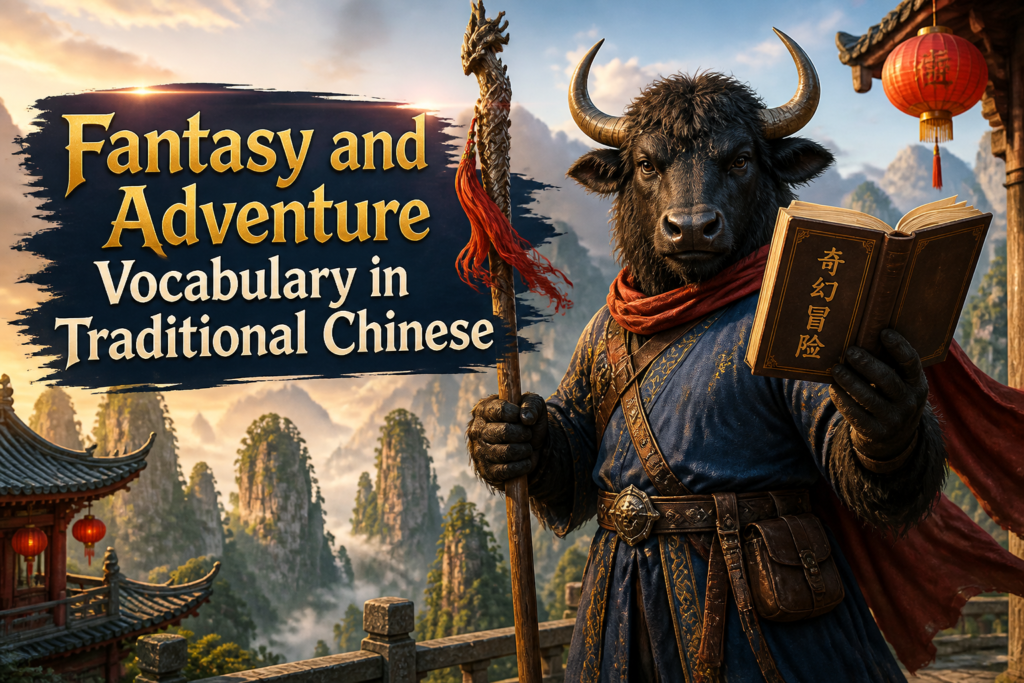
Fantasy and Adventure Vocabulary in Traditional Chinese helps you read stories with dragons, swords, quests, and the kind of mysterious caves that always look more dangerous than they should. If you like novels, games, RPG dialogue, or movie subtitles, this word set is pure gold. Or at least bronze with dramatic lighting.
This guide teaches Traditional Chinese words with pinyin, clear English meanings, and real example sentences. You will also see Taiwan-friendly usage where it naturally matters. By the end, you should be able to understand common fantasy scenes, talk about adventure plots, and stop guessing whether a “monster” is a beast, a demon, or just a very rude fox.
For a broader language-learning map, you can also explore Traditional Chinese learning guides. And if you want a boring-but-useful reference for word checking, a dictionary resource is never a bad idea.
Core Fantasy And Adventure Words
| Traditional Chinese | Pinyin | English Meaning | Example (ZH) | Example (Pinyin) | Translation (EN) |
|---|---|---|---|---|---|
| 奇幻 | qíhuàn | fantasy, fantastical | 這部小說是奇幻題材。 | Zhè bù xiǎoshuō shì qíhuàn tímái. | This novel is fantasy genre. |
| 冒險 | màoxiǎn | adventure | 他很喜歡冒險故事。 | Tā hěn xǐhuan màoxiǎn gùshì. | He really likes adventure stories. |
| 勇者 | yǒngzhě | hero, brave hero | 勇者必須通過考驗。 | Yǒngzhě bìxū tōngguò kǎoyàn. | The hero must pass the trial. |
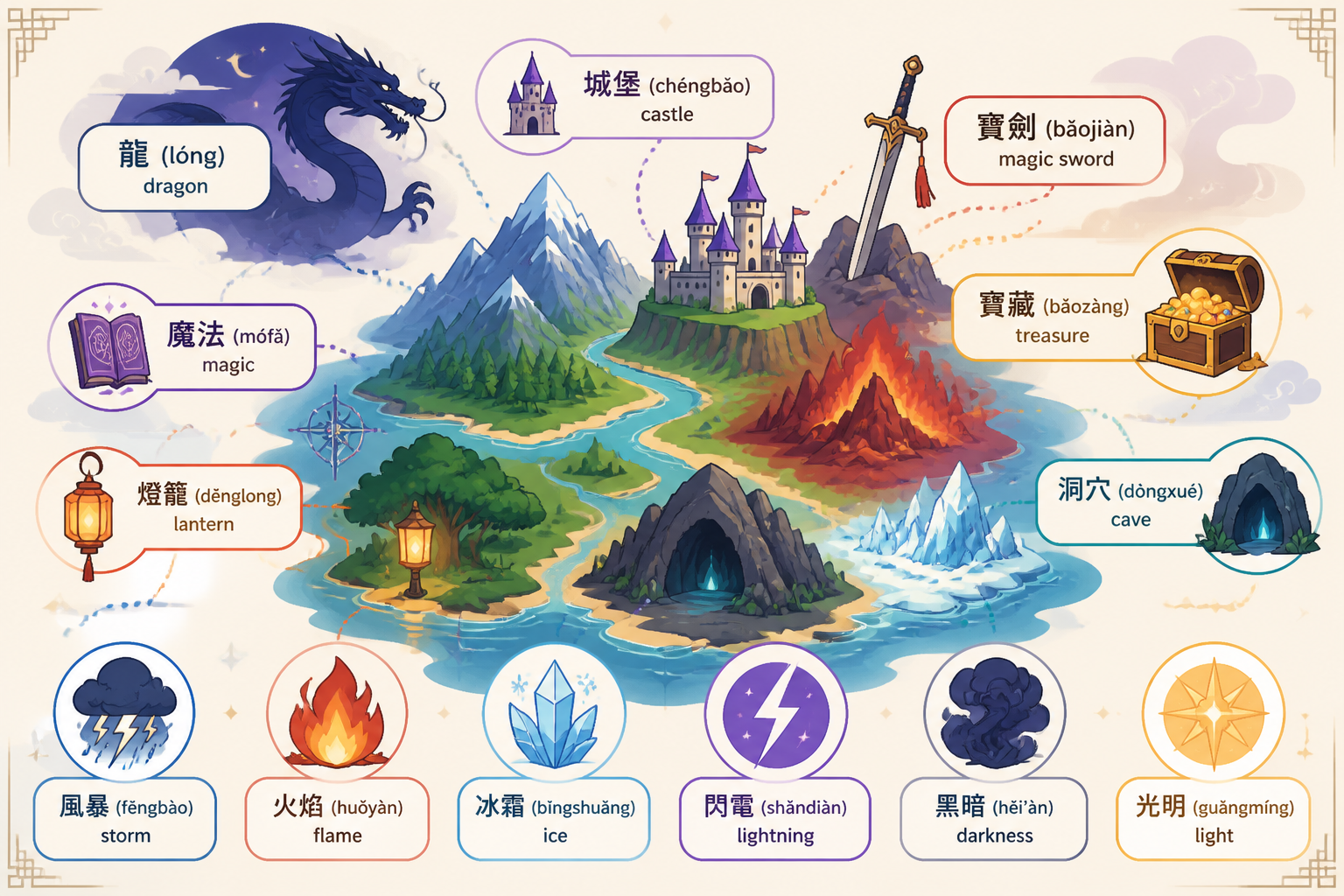
| 魔法 | mófǎ | magic | 她會使用魔法。 | Tā huì shǐyòng mófǎ. | She can use magic. |
| 咒語 | zhòuyǔ | spell, incantation | 他低聲唸出咒語。 | Tā dīshēng niàn chū zhòuyǔ. | He quietly recited the spell. |
| 傳說 | chuánshuō | legend | 這座山有古老的傳說。 | Zhè zuò shān yǒu gǔlǎo de chuánshuō. | This mountain has an ancient legend. |
| 神秘 | shénmì | mysterious | 那扇門看起來很神秘。 | Nà shàn mén kàn qǐlái hěn shénmì. | That door looks mysterious. |
| 迷宮 | mígōng | maze, labyrinth | 他們在迷宮裡走了很久。 | Tāmen zài mígōng lǐ zǒu le hěn jiǔ. | They walked in the maze for a long time. |
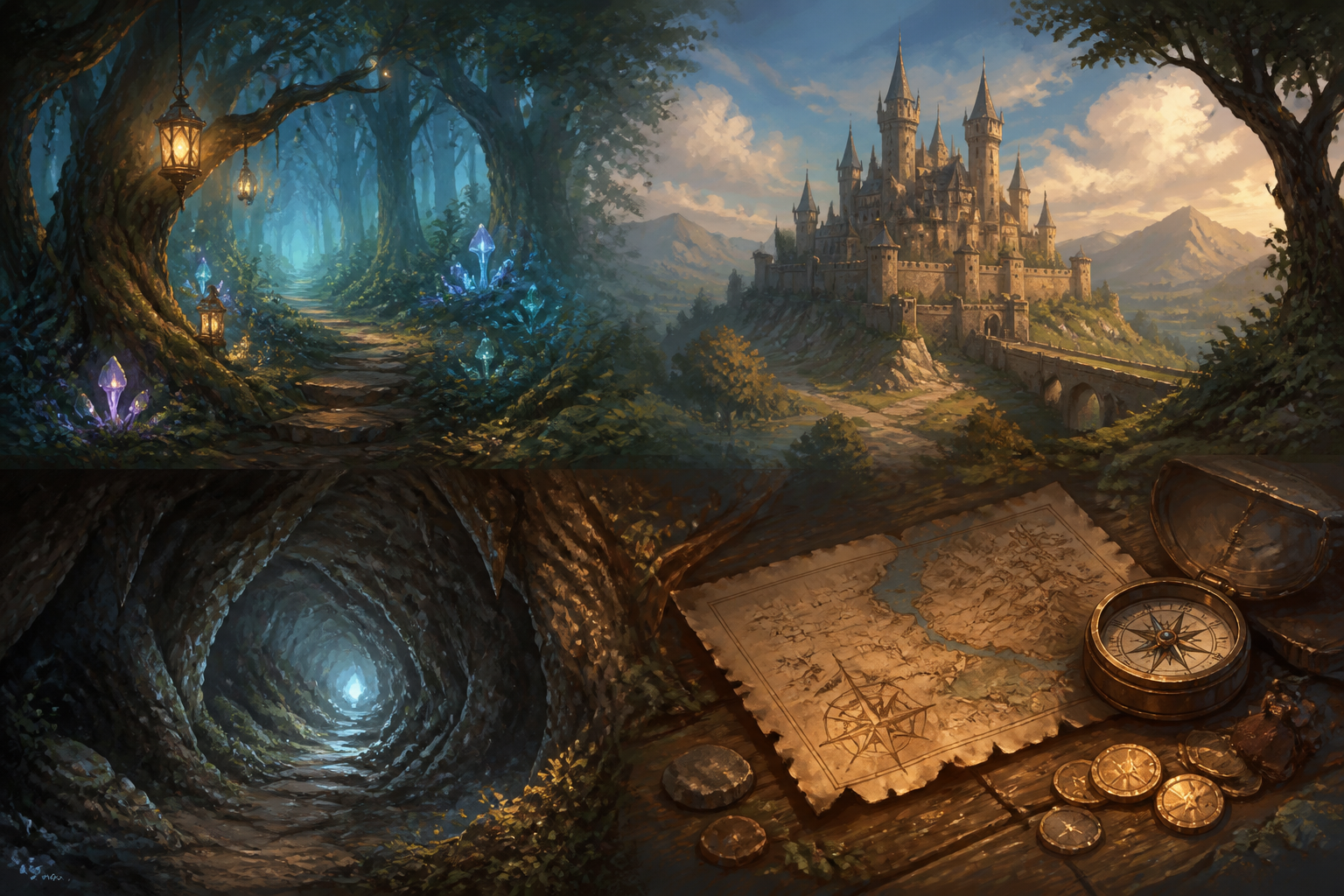
| 寶藏 | bǎozàng | treasure | 大家都在找寶藏。 | Dàjiā dōu zài zhǎo bǎozàng. | Everyone is looking for treasure. |
| 地圖 | dìtú | map | 先看地圖再出發。 | Xiān kàn dìtú zài chūfā. | Check the map before setting off. |
| 任務 | rènwù | mission, task | 這是一個危險的任務。 | Zhè shì yí gè wēixiǎn de rènwù. | This is a dangerous mission. |
| 考驗 | kǎoyàn | trial, test | 真正的考驗還在後面。 | Zhēnzhèng de kǎoyàn hái zài hòumiàn. | The real test is still ahead. |
| 敵人 | dírén | enemy | 敵人正在接近。 | Dírén zhèngzài jiējìn. | The enemy is approaching. |
| 盟友 | méngyǒu | ally | 我們需要新的盟友。 | Wǒmen xūyào xīn de méngyǒu. | We need new allies. |
| 武器 | wǔqì | weapon | 他的武器是一把劍。 | Tā de wǔqì shì yì bǎ jiàn. | His weapon is a sword. |
| 盔甲 | kuījiǎ | armor | 盔甲很重,但很安全。 | Kuījiǎ hěn zhòng, dàn hěn ānquán. | The armor is heavy, but safe. |
| 城堡 | chéngbǎo | castle | 城堡在山上。 | Chéngbǎo zài shān shàng. | The castle is on the mountain. |
| 森林 | sēnlín | forest | 夜晚的森林很安靜。 | Yèwǎn de sēnlín hěn ānjìng. | The forest at night is very quiet. |
| 山洞 | shāndòng | cave | 他們躲進山洞裡。 | Tāmen duǒ jìn shāndòng lǐ. | They hid inside the cave. |
More Iconic Adventure Words
| Traditional Chinese | Pinyin | English Meaning | Example (ZH) | Example (Pinyin) | Translation (EN) |
|---|---|---|---|---|---|
| 龍 | lóng | dragon | 龍從雲霧中飛出來。 | Lóng cóng yúnwù zhōng fēi chūlái. | The dragon flew out of the mist. |
| 騎士 | qíshì | knight | 騎士守護著王國。 | Qíshì shǒuhù zhe wángguó. | The knight protects the kingdom. |
| 王國 | wángguó | kingdom | 王國正在面對危機。 | Wángguó zhèngzài miànduì wēijī. | The kingdom is facing a crisis. |
| 公主 | gōngzhǔ | princess | 公主被困在高塔裡。 | Gōngzhǔ bèi kùn zài gāotǎ lǐ. | The princess is trapped in the tower. |
| 高塔 | gāotǎ | tower | 那座高塔非常醒目。 | Nà zuò gāotǎ fēicháng xǐngmù. | That tower is very eye-catching. |
| 詛咒 | zǔzhòu | curse | 村子裡流傳著詛咒。 | Cūnzi lǐ liúchuán zhe zǔzhòu. | A curse is spreading through the village. |
| 預言 | yùyán | prophecy | 古老的預言即將成真。 | Gǔlǎo de yùyán jíjiāng chéngzhēn. | The ancient prophecy is about to come true. |
| 靈魂 | línghún | soul | 傳說那裡住著靈魂。 | Chuánshuō nàlǐ zhù zhe línghún. | Legend says souls live there. |
| 怪物 | guàiwù | monster | 怪物從黑暗中衝出來。 | Guàiwù cóng hēi’àn zhōng chōng chūlái. | The monster rushed out of the darkness. |
| 巨人 | jùrén | giant | 巨人一步就跨過河。 | Jùrén yí bù jiù kuàguò hé. | The giant crossed the river in one step. |
| 巫師 | wūshī | wizard, sorcerer | 巫師正在調製藥水。 | Wūshī zhèngzài tiáozhì yàoshuǐ. | The wizard is mixing a potion. |
| 精靈 | jīnglíng | spirit, elf | 森林裡有精靈的傳說。 | Sēnlín lǐ yǒu jīnglíng de chuánshuō. | There are legends of spirits in the forest. |
| 翅膀 | chìbǎng | wings | 那隻鳥有金色的翅膀。 | Nà zhī niǎo yǒu jīnsè de chìbǎng. | That bird has golden wings. |
| 火焰 | huǒyàn | flame | 火焰照亮了山洞。 | Huǒyàn zhàoliàng le shāndòng. | The flame lit up the cave. |
| 冰霜 | bīngshuāng | frost, ice | 冰霜覆蓋了地面。 | Bīngshuāng fùgài le dìmiàn. | Frost covered the ground. |
| 雷電 | léidiàn | thunder and lightning | 雷電劃破夜空。 | Léidiàn huà pò yèkōng. | Lightning split the night sky. |
| 黑暗 | hēi’àn | darkness | 黑暗中傳來腳步聲。 | Hēi’àn zhōng chuánlái jiǎobùshēng. | Footsteps came from the darkness. |
| 光明 | guāngmíng | light, brightness | 光明終於出現了。 | Guāngmíng zhōngyú chūxiàn le. | The light finally appeared. |
Useful Phrases For Storytelling
| Traditional Chinese | Pinyin | English Meaning | Example (ZH) | Example (Pinyin) | Translation (EN) |
|---|---|---|---|---|---|
| 展開冒險 | zhǎnkāi màoxiǎn | begin an adventure | 他決定展開冒險。 | Tā juédìng zhǎnkāi màoxiǎn. | He decided to begin an adventure. |
| 踏上旅程 | tà shàng lǚchéng | set off on a journey | 主角踏上旅程了。 | Zhǔjué tà shàng lǚchéng le. | The main character set off on the journey. |
| 尋找真相 | xúnzhǎo zhēnxiàng | search for the truth | 她想尋找真相。 | Tā xiǎng xúnzhǎo zhēnxiàng. | She wants to search for the truth. |
| 拯救世界 | zhěngjiù shìjiè | save the world | 他們要拯救世界。 | Tāmen yào zhěngjiù shìjiè. | They are going to save the world. |
| 打敗敵人 | dǎbài dírén | defeat the enemy | 勇者打敗了敵人。 | Yǒngzhě dǎbài le dírén. | The hero defeated the enemy. |
| 解開謎團 | jiěkāi mítuán | solve the mystery | 最後他解開了謎團。 | Zuìhòu tā jiěkāi le mítuán. | In the end, he solved the mystery. |
| 穿越森林 | chuānyuè sēnlín | travel through the forest | 我們要穿越森林。 | Wǒmen yào chuānyuè sēnlín. | We need to travel through the forest. |
| 逃離危險 | táolí wēixiǎn | escape danger | 他們成功逃離危險。 | Tāmen chénggōng táolí wēixiǎn. | They successfully escaped danger. |
| 保護村莊 | bǎohù cūnzhuāng | protect the village | 騎士正在保護村莊。 | Qíshì zhèngzài bǎohù cūnzhuāng. | The knight is protecting the village. |
| 發現秘密 | fāxiàn mìmì | discover a secret | 她意外發現了秘密。 | Tā yìwài fāxiàn le mìmì. | She unexpectedly discovered a secret. |
| 面對挑戰 | miànduì tiǎozhàn | face a challenge | 他必須面對挑戰。 | Tā bìxū miànduì tiǎozhàn. | He must face the challenge. |
| 找到線索 | zhǎndào xiànsuǒ | find a clue | 他們找到重要線索。 | Tāmen zhǎndào zhòngyào xiànsuǒ. | They found an important clue. |
Story Atmosphere Words
| Traditional Chinese | Pinyin | English Meaning | Example (ZH) | Example (Pinyin) | Translation (EN) |
|---|---|---|---|---|---|
| 古老 | gǔlǎo | ancient | 這是一本古老的書。 | Zhè shì yì běn gǔlǎo de shū. | This is an ancient book. |
| 遙遠 | yáoyuǎn | distant, faraway | 他來自遙遠的國度。 | Tā láizì yáoyuǎn de guódù. | He comes from a faraway land. |
| 危機 | wēijī | crisis, danger | 整個城市陷入危機。 | Zhěnggè chéngshì xiànrù wēijī. | The whole city fell into crisis. |
| 詭異 | guǐyì | strange, eerie | 那裡的聲音很詭異。 | Nàlǐ de shēngyīn hěn guǐyì. | The sound there is very eerie. |
| 幽暗 | yōu’àn | dim, dark and gloomy | 幽暗的走廊沒有人。 | Yōu’àn de zǒuláng méi yǒu rén. | The dim hallway had no one in it. |
| 壯麗 | zhuànglì | magnificent | 他們看見壯麗的山景。 | Tāmen kànjiàn zhuànglì de shānjǐng. | They saw a magnificent mountain view. |
| 神聖 | shénshèng | sacred | 這個地方非常神聖。 | Zhège dìfāng fēicháng shénshèng. | This place is very sacred. |
| 殘破 | cánpò | broken, ruined | 城牆看起來很殘破。 | Chéngqiáng kàn qǐlái hěn cánpò. | The city wall looks ruined. |
Characters, Powers, And Creature Words
| Traditional Chinese | Pinyin | Meaning | Example (ZH) | Example (Pinyin) | Translation (EN) |
|---|---|---|---|---|---|
| 主角 | zhǔjué | main character | 主角很聰明,也很勇敢。 | Zhǔjué hěn cōngmíng, yě hěn yǒnggǎn. | The main character is smart and brave. |
| 反派 | fǎnpài | villain | 反派終於出現了。 | Fǎnpài zhMore Traditional Chinese to explore How to Type Traditional Chinese Best graded readers for Traditional Chinese Sima Guang Breaks the Vat: A Beginner Chinese Story with Audio – A1 Level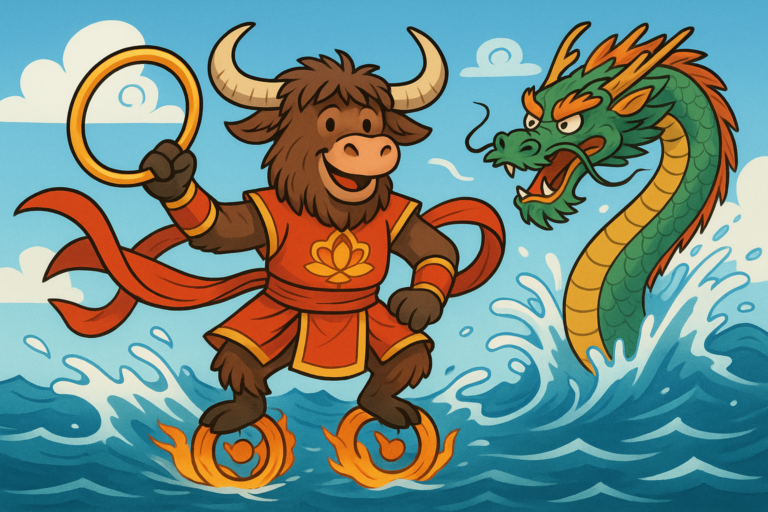 Nezha Conquers the Dragon King: A2 Elementary Traditional Chinese Story with Audio |