You land in Taipei (or anywhere Chinese is spoken) and your brain’s buzzing: “How do I say — uh — something useful, before I accidentally order ten bowls of extra-spicy noodles?” This cheat sheet is your linguistic Swiss Army knife: greetings, basic questions, survival phrases, polite-as-heck lines, and everyday conversation glue. Use it. Memorize a few. Then get ready to feel less like a tourist, more like someone who might just get invited back to the noodle shop.
Greetings & First Lines — Openers That Work
你好 (nǐ hǎo) — Hello
早安 (zǎo ān) — Good morning
下午好 (xiàwǔ hǎo) — Good afternoon
晚上好 (wǎnshàng hǎo) — Good evening
晚安 (wǎn ān) — Good night / Good night-bye
很高興認識你 (hěn gāoxìng rènshì nǐ) — Nice to meet you
你叫什麼名字? (nǐ jiào shénme míngzì?) — What’s your name?
我叫… (wǒ jiào…) — My name is …
These are your conversation ignition buttons. Drop one the moment you meet someone — everything else flows from there.
Politeness & Everyday Social Glue
請 (qǐng) — Please / “May I …”
謝謝 (xièxie) — Thank you
不客氣 (bú kèqi) — You’re welcome / No worries
對不起 (duìbùqǐ) — Sorry / excuse me / I made a mistake
不好意思 (bù hǎoyìsi) — Excuse me / Sorry (lighter, casual)
沒關係 (méi guānxi) — It’s okay / No problem
可以嗎? (kěyǐ ma?) — Is this OK? / May I?
請問… (qǐngwèn …) — May I ask …?
幫忙 (bāngmáng) — Help / Do me a favor
Politeness in Mandarin doesn’t take you a long detour — a few short words and you’re good. Handy for ordering, asking directions, or just being human.
Everyday Questions & Getting Around
你怎麼樣? (nǐ zěnmeyàng?) — How are you / How’s it going?
你吃飽了嗎? (nǐ chī bǎo le ma?) — Have you eaten? (common friendly greeting)
這是什麼? (zhè shì shénme?) — What is this?
多少錢? (duōshǎo qián?) — How much is it?
在哪裡?(…在哪裡? … zài nǎlǐ?) — Where is … ?
廁所在哪裡? (cèsuǒ zài nǎlǐ?) — Where’s the bathroom?
可以幫我…嗎? (kěyǐ bāng wǒ … ma?) — Can you help me … ?
你說英文嗎? (nǐ shuō Yīngwén ma?) — Do you speak English?
我不懂 (wǒ bù dǒng) — I don’t understand
請你慢一點說 (qǐng nǐ màn yìdiǎn shuō) — Please speak more slowly
These lines cover travel, shopping, bars, restaurants, directions, emergencies — basically life.
Survival Lines For Food, Transport, Shopping
菜單 (càidān) — Menu
我要這個 (wǒ yào zhè ge) — I want this one
不要辣 (bú yào là) — No spice / don’t make it spicy
可以刷卡嗎? (kěyǐ shuā kǎ ma?) — Can I pay by card?
車站 (chēzhàn) — Station
捷運 / 公車 / 火車 (jiéyùn / gōngchē / huǒchē) — MRT / Bus / Train
票 (piào) — Ticket
請問…怎麼去…? (qǐngwèn … zěnme qù …?) — Excuse me, how to get to …?
Perfect for ordering dumplings, catching the subway, or bargaining in night markets.
Basic Survival Grammar & Fill-In-the-Blank Templates
Subject + Verb + Object — just like English.
你 + 要 + … ? (Nǐ yào …?) — Do you want …?
這個 + 好吃嗎? (Zhè ge hǎo chī ma?) — Is this tasty?
… 在哪裡? (… zài nǎlǐ?) — … located where?
多少 + 名詞? (Duōshǎo + noun?) — How much / many + noun?
Simple patterns — no drama, just swap in nouns and verbs.
When You Mess Up — Recovery & Politeness Lines
對不起,我中文不好 (duìbùqǐ, wǒ zhōngwén bù hǎo) — Sorry, my Chinese isn’t good.
請你再說一次 (qǐng nǐ zài shuō yí cì) — Please say that again.
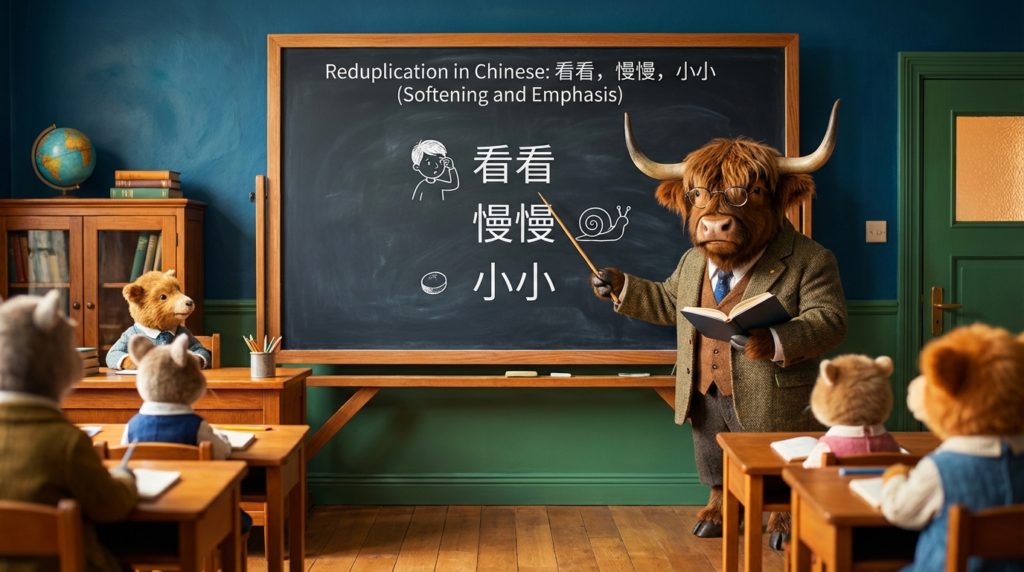
慢慢說 (màn màn shuō) — Speak slowly.
你可以幫我嗎? (nǐ kěyǐ bāng wǒ ma?) — Can you help me?
謝謝你的耐心 (xièxie nǐ de nàixīn) — Thanks for your patience.
Mistakes will happen. These help you fall on your feet — and often earn smiles instead of blank stares.
Everyday Conversation — Mini Dialogues
Meeting someone new
A:你好!我叫 Anna。你呢?
A: Nǐ hǎo! Wǒ jiào Anna. Nǐ ne?
B:你好!我叫 Li. 很高興認識你。
B: Nǐ hǎo! Wǒ jiào Li. Hěn gāoxìng rènshì nǐ.
Ordering at a night market
A:請問,這個多少錢?
A: Qǐngwèn, zhè ge duōshǎo qián?
B:五十元。要不要加辣?
B: Wǔshí yuán. Yào bú yào jiā là?
A:不要辣,謝謝。我要這個。
A: Bú yào là, xièxie. Wǒ yào zhè ge.
Asking for directions
A:不好意思,請問捷運站在哪裡?
A: Bù hǎoyìsi, qǐngwèn jiéyùn zhàn zài nǎlǐ?
B:直走,然後右轉。看到紅綠燈再左轉。
B: Zhí zǒu, ránhòu yòu zhuǎn. Kàndào hónglǜdēng zài zuǒ zhuǎn.
Make These Phrases Your Survival Toolkit — Not Wall Décor
Don’t treat this list like a textbook you’ll never open again. Think of it like a key-ring: pick 5–10 phrases this week, wear them everywhere, test them on real people. Make mistakes. Laugh. Learn. After enough rounds, those words don’t feel foreign — they feel like streetwear that fits wherever you go.