不 vs 沒: The Clear Rule For Negation In Traditional Chinese
Chinese topic: 不 vs 沒(bù vs méi)— the two negations beginners mix up in real life.
If you can say “I don’t…” vs “I didn’t…” in English, you can master 不 and 沒. This guide gives you one clean rule, the common exceptions, and lots of real Taiwan-style sentences with pinyin.
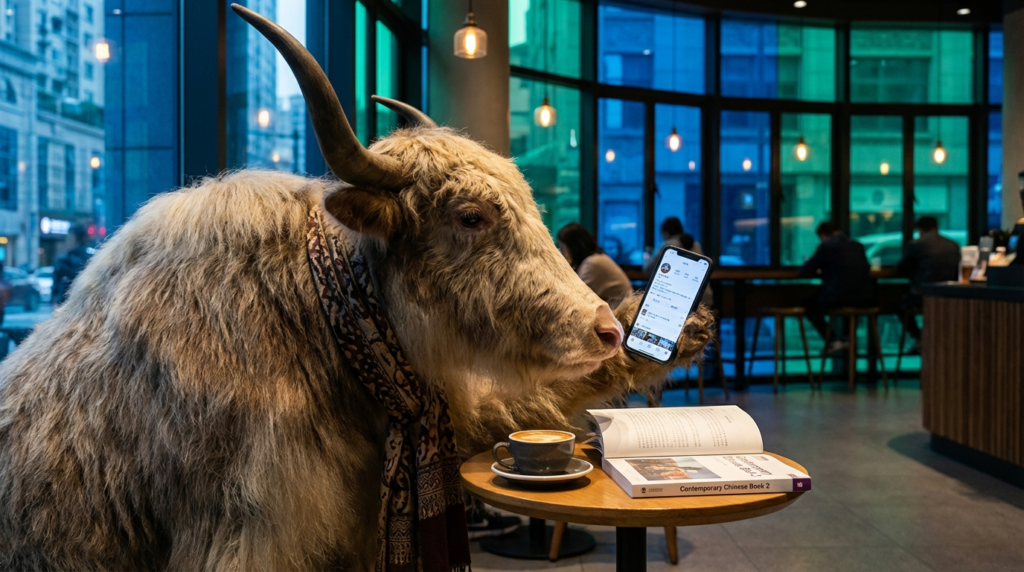
Yak Snark Box 🦬 If you randomly guess between 不 and 沒, you’ll be wrong exactly often enough to feel confident. Let’s fix that.
The One-Sentence Rule
Use 不 (bù) to negate habits, general facts, opinions, the present/future (and “don’t” commands).
Use 沒 / 沒有 (méi / méiyǒu) to negate past actions and having/existing (“didn’t” / “don’t have”).
Tone Note You’ll Actually Need
不 is usually bù, but before a 4th-tone syllable it becomes bú (tone sandhi). You’ll see it everywhere:
- 不是 — bú shì — “is not”
- 不要 — bú yào — “don’t (do it)”
- 不用 — bú yòng — “don’t need to”
- 不會 — bú huì — “won’t / don’t know how”
Quick Visual Cards: The Core Pieces
不
bù — not (general / now / future)
我不吃辣。
Wǒ bù chī là.
I don’t eat spicy food.
沒
méi — didn’t (past) / not (have)
我昨天沒去。
Wǒ zuótiān méi qù.
I didn’t go yesterday.
沒有
méiyǒu — don’t have / there isn’t
我沒有時間。
Wǒ méiyǒu shíjiān.
I don’t have time.
不是
bú shì — is not (negate 是)
他不是老師。
Tā bú shì lǎoshī.
He isn’t a teacher.
不要
bú yào — don’t (imperative)
不要講太快。
Bú yào jiǎng tài kuài.
Don’t speak too fast.
不用
bú yòng — don’t need to
不用擔心。
Bú yòng dānxīn.
No need to worry.
不會
bú huì — won’t / don’t know how
我不會游泳。
Wǒ bú huì yóuyǒng.
I can’t swim (don’t know how).
不能
bù néng — cannot / must not
這裡不能抽菸。
Zhèlǐ bù néng chōuyān.
You can’t smoke here.
When To Use 不 (bù)
Think 不 = “I don’t” (habit), “I’m not” (state/opinion), or “I won’t” (future). Here are the most useful patterns.
| Pattern | Meaning | Example (ZH) | Example (Pinyin) | Translation (EN) |
|---|---|---|---|---|
| 不 + 動詞 | don’t (habit / choice) | 我不喝咖啡。 | Wǒ bù hē kāfēi. | I don’t drink coffee. |
| 不 + 形容詞 | not (state/opinion) | 今天我不忙。 | Jīntiān wǒ bù máng. | I’m not busy today. |
| 不 + 會/想/要 | won’t / don’t want to | 我不想出去。 | Wǒ bù xiǎng chūqù. | I don’t want to go out. |
| 不 + 能/可以 | cannot / not allowed | 你不可以在這裡拍照。 | Nǐ bù kěyǐ zài zhèlǐ pāizhào. | You can’t take photos here. |
| 不是 | is not (negate 是) | 這不是我的。 | Zhè bú shì wǒ de. | This isn’t mine. |
When To Use 沒 / 沒有 (méi / méiyǒu)
Think 沒 / 沒有 = “didn’t” (past action didn’t happen) or “don’t have / there isn’t” (possession/existence). This is the one that pairs with 了, result complements, and “ever done.”
| Pattern | Meaning | Example (ZH) | Example (Pinyin) | Translation (EN) |
|---|---|---|---|---|
| 沒(有) + 動詞 | didn’t (past) | 我昨天沒看那部電影。 | Wǒ zuótiān méi kàn nà bù diànyǐng. | I didn’t watch that movie yesterday. |
| 沒(有) + 名詞 | don’t have / there isn’t | 我沒有錢。 | Wǒ méiyǒu qián. | I don’t have money. |
| 還沒 + 動詞 | not yet | 我還沒吃飯。 | Wǒ hái méi chīfàn. | I haven’t eaten yet. |
| 沒 + V + 到 | didn’t manage to | 我沒買到票。 | Wǒ méi mǎidào piào. | I didn’t manage to buy tickets. |
| 沒 + V + 完 | didn’t finish | 我沒做完作業。 | Wǒ méi zuòwán zuòyè. | I didn’t finish my homework. |
| 沒(有) + V + 過 | have never (done) | 我沒有去過日本。 | Wǒ méiyǒu qùguò Rìběn. | I’ve never been to Japan. |
The Most Useful Contrast Pairs
Same verb, different meaning. Memorize these pairs and you’ll stop guessing.
| Habit / Now / Future (不) | Pinyin | Past / Didn’t Happen (沒) | Pinyin | English Difference |
|---|---|---|---|---|
| 我不去。 | Wǒ bù qù. | 我沒去。 | Wǒ méi qù. | I’m not going (choice/plan) vs I didn’t go (past). |
| 我不看。 | Wǒ bù kàn. | 我沒看。 | Wǒ méi kàn. | I’m not watching vs I didn’t watch. |
| 我不吃牛肉。 | Wǒ bù chī niúròu. | 我今天沒吃牛肉。 | Wǒ jīntiān méi chī niúròu. | I don’t eat beef (habit) vs I didn’t eat beef today. |
| 我不買。 | Wǒ bù mǎi. | 我沒買。 | Wǒ méi mǎi. | I’m not buying vs I didn’t buy. |
| 我不做。 | Wǒ bù zuò. | 我沒做。 | Wǒ méi zuò. | I’m not doing it vs I didn’t do it. |
Useful Phrases & Real-Life Sentences
Here are high-frequency phrases you’ll actually hear and use in Taiwan. Each one is a “grab and go” chunk.
- 不知道 — bù zhīdào — don’t know
我不知道他在哪裡。
Wǒ bù zhīdào tā zài nǎlǐ.
I don’t know where he is. - 不懂 — bù dǒng — don’t understand
我不懂這句話。
Wǒ bù dǒng zhè jù huà.
I don’t understand this sentence. - 不一定 — bù yídìng — not necessarily
明天不一定會下雨。
Míngtiān bù yídìng huì xiàyǔ.
It won’t necessarily rain tomorrow. - 不太 — bù tài — not very (soft negation)
我不太餓。
Wǒ bù tài è.
I’m not very hungry. - 不可能 — bù kěnéng — impossible
這不可能。
Zhè bù kěnéng.
That’s impossible. - 不再 — bù zài — no longer (from now on)
我不再熬夜了。
Wǒ bù zài áoyè le.
I’m not staying up late anymore. - 不能 — bù néng — can’t / mustn’t
你不能這樣說。
Nǐ bù néng zhèyàng shuō.
You can’t say it like that. - 不要緊 — bú yàojǐn — it’s okay / no big deal
不要緊,我可以等。
Bú yàojǐn, wǒ kěyǐ děng.
It’s okay, I can wait.
- 沒有 — méiyǒu — don’t have / there isn’t
我沒有現金。
Wǒ méiyǒu xiànjīn.
I don’t have cash. - 沒空 — méi kòng — not free / no time
我今天沒空。
Wǒ jīntiān méi kòng.
I’m not free today. - 沒關係 — méi guānxì — it’s okay / no worries
沒關係,下次再說。
Méi guānxì, xiàcì zài shuō.
No worries, we’ll talk next time. - 沒問題 — méi wèntí — no problem
沒問題,我來處理。
Méi wèntí, wǒ lái chǔlǐ.
No problem, I’ll handle it. - 沒事 — méi shì — it’s nothing / I’m fine
我沒事,謝謝。
Wǒ méi shì, xièxie.
I’m fine, thanks. - 還沒 — hái méi — not yet
我還沒準備好。
Wǒ hái méi zhǔnbèi hǎo.
I’m not ready yet. - 沒想到 — méi xiǎngdào — didn’t expect
我沒想到會這麼冷。
Wǒ méi xiǎngdào huì zhème lěng.
I didn’t expect it to be this cold. - 從來沒 — cónglái méi — never (up to now)
我從來沒看過那部片。
Wǒ cónglái méi kànguò nà bù piàn.
I’ve never seen that movie.
Common Confusions (And The Fix)
- Negating “to be” (是): use 不是 (bú shì), not 沒是.
這不是我的手機。
Zhè bú shì wǒ de shǒujī.
This isn’t my phone. - Negating “have” (有): use 沒有 (méiyǒu), not 不有.
我沒有車。
Wǒ méiyǒu chē.
I don’t have a car. - With past time words (昨天/上週) and actions: default to 沒.
我昨天沒打給你。
Wǒ zuótiān méi dǎ gěi nǐ.
I didn’t call you yesterday. - Adjectives can be flexible: you’ll hear 昨天我不忙 (state) too. If you mean “it didn’t get that busy,” use a “not that…” style with 沒.
昨天其實沒那麼忙。
Zuótiān qíshí méi nàme máng.
Yesterday actually wasn’t that busy. - “Not yet” is almost always 還沒: it’s a set combo.
他還沒回我。
Tā hái méi huí wǒ.
He hasn’t replied to me yet.
Tables Of Words (Grouped, Not A Mega-Table)
Group 1: Everyday Verbs With 不 vs 沒
| Hanzi | Pinyin | Meaning | Example (ZH) | Example (Pinyin) | Translation (EN) |
|---|---|---|---|---|---|
| 不去 | bù qù | not going (choice/plan) | 我今天不去健身房。 | Wǒ jīntiān bù qù jiànshēnfáng. | I’m not going to the gym today. |
| 沒去 | méi qù | didn’t go (past) | 我昨天沒去健身房。 | Wǒ zuótiān méi qù jiànshēnfáng. | I didn’t go to the gym yesterday. |
| 不吃 | bù chī | don’t eat (habit/choice) | 我不吃宵夜。 | Wǒ bù chī xiāoyè. | I don’t eat late-night snacks. |
| 沒吃 | méi chī | didn’t eat | 我今天忙到現在都沒吃。 | Wǒ jīntiān máng dào xiànzài dōu méi chī. | I’ve been busy all day and still haven’t eaten. |
| 不看 | bù kàn | won’t watch / don’t watch | 我不看恐怖片。 | Wǒ bù kàn kǒngbùpiàn. | I don’t watch horror movies. |
| 沒看 | méi kàn | didn’t watch | 那集我沒看。 | Nà jí wǒ méi kàn. | I didn’t watch that episode. |
| 不買 | bù mǎi | not buying | 太貴了,我不買。 | Tài guì le, wǒ bù mǎi. | It’s too expensive, I’m not buying it. |
| 沒買 | méi mǎi | didn’t buy | 我忘了,所以沒買。 | Wǒ wàng le, suǒyǐ méi mǎi. | I forgot, so I didn’t buy it. |
Group 2: Results, Completion, And “Ever Done” (Mostly 沒)
| Hanzi | Pinyin | Meaning | Example (ZH) | Example (Pinyin) | Translation (EN) |
|---|---|---|---|---|---|
| 沒看到 | méi kàndào | didn’t see (result) | 我剛剛沒看到你的訊息。 | Wǒ gānggāng méi kàndào nǐ de xùnxí. | I didn’t see your message just now. |
| 沒聽到 | méi tīngdào | didn’t hear | 抱歉,我沒聽到你說什麼。 | Bàoqiàn, wǒ méi tīngdào nǐ shuō shénme. | Sorry, I didn’t hear what you said. |
| 沒買到 | méi mǎidào | didn’t manage to buy | 票太快賣完了,我沒買到。 | Piào tài kuài màiwán le, wǒ méi mǎidào. | The tickets sold out too fast, I didn’t get any. |
| 沒做完 | méi zuòwán | didn’t finish | 我沒做完,明天交可以嗎? | Wǒ méi zuòwán, míngtiān jiāo kěyǐ ma? | I didn’t finish—can I hand it in tomorrow? |
| 沒做過 | méi zuòguò | have never done | 這道菜我沒做過。 | Zhè dào cài wǒ méi zuòguò. | I’ve never cooked this dish. |
| 沒想過 | méi xiǎngguò | never thought about | 我沒想過你會來。 | Wǒ méi xiǎngguò nǐ huì lái. | I never thought you’d come. |
Group 3: “Don’t Have / There Isn’t” (沒有 + Noun)
| Hanzi | Pinyin | Meaning | Example (ZH) | Example (Pinyin) | Translation (EN) |
|---|---|---|---|---|---|
| 沒有錢 | méiyǒu qián | don’t have money | 我現在沒有錢。 | Wǒ xiànzài méiyǒu qián. | I don’t have money right now. |
| 沒有時間 | méiyǒu shíjiān | don’t have time | 今天真的沒有時間。 | Jīntiān zhēn de méiyǒu shíjiān. | I really don’t have time today. |
| 沒有人 | méi yǒu rén | there is nobody | 外面沒有人。 | Wàimiàn méi yǒu rén. | There’s nobody outside. |
| 沒有辦法 | méiyǒu bànfǎ | have no way / can’t help it | 下雨了,沒有辦法。 | Xiàyǔ le, méiyǒu bànfǎ. | It’s raining—can’t be helped. |
| 沒有興趣 | méiyǒu xìngqù | not interested (lit. don’t have interest) | 我對這個沒有興趣。 | Wǒ duì zhège méiyǒu xìngqù. | I’m not interested in this. |
| 沒有用 | méiyǒu yòng | not useful | 這樣做沒有用。 | Zhèyàng zuò méiyǒu yòng. | Doing it like this is useless. |
Optional Variants That Sound Natural
Same idea, slightly different vibe (polite, softer, or more “Taiwan daily life”).
| Phrase | Pinyin | Meaning | Example (ZH) | Example (Pinyin) | Translation (EN) |
|---|---|---|---|---|---|
| 不用 | bú yòng | don’t need to | 不用客氣。 | Bú yòng kèqì. | No need to be polite / You’re welcome. |
| 不需要 | bù xūyào | don’t need (more explicit) | 這個不需要帶。 | Zhège bù xūyào dài. | You don’t need to bring this. |
| 沒辦法 | méi bànfǎ | can’t help it | 我今天加班,沒辦法去。 | Wǒ jīntiān jiābān, méi bànfǎ qù. | I’m working overtime, so I can’t go. |
| 絕不 | jué bù | absolutely not (strong) | 我絕不會說出去。 | Wǒ jué bù huì shuō chūqù. | I absolutely won’t tell anyone. |
| 從來不 | cónglái bù | never (habit) | 他從來不遲到。 | Tā cónglái bù chídào. | He never arrives late. |
| 從來沒 | cónglái méi | never (up to now) | 我從來沒喝過這個。 | Wǒ cónglái méi hēguò zhège. | I’ve never drunk this before. |
Practice: Pick 不 Or 沒
Fill in the blank with 不 (bù) or 沒/沒有 (méi/méiyǒu).
- 我昨天 ___ 去上課。
Wǒ zuótiān ___ qù shàngkè.
I ___ go to class yesterday. - 我平常 ___ 喝酒。
Wǒ píngcháng ___ hē jiǔ.
I ___ drink alcohol normally. - 我現在 ___ 時間。
Wǒ xiànzài ___ shíjiān.
I ___ have time right now. - 他 ___ 是我老闆。
Tā ___ shì wǒ lǎobǎn.
He ___ my boss. - 我還 ___ 吃飯。
Wǒ hái ___ chīfàn.
I haven’t eaten yet. - 我 ___ 想再等了。
Wǒ ___ xiǎng zài děng le.
I ___ want to wait anymore. - 我昨天 ___ 看到你。
Wǒ zuótiān ___ kàndào nǐ.
I ___ see you yesterday. - 這個方法 ___ 有用。
Zhège fāngfǎ ___ yǒu yòng.
This method ___ useful.
Answer Key
- 我昨天沒去上課。
Wǒ zuótiān méi qù shàngkè.
I didn’t go to class yesterday. - 我平常不喝酒。
Wǒ píngcháng bù hē jiǔ.
I don’t drink alcohol normally. - 我現在沒有時間。
Wǒ xiànzài méiyǒu shíjiān.
I don’t have time right now. - 他不是我老闆。
Tā bú shì wǒ lǎobǎn.
He isn’t my boss. - 我還沒吃飯。
Wǒ hái méi chīfàn.
I haven’t eaten yet. - 我不想再等了。
Wǒ bù xiǎng zài děng le.
I don’t want to wait anymore. - 我昨天沒看到你。
Wǒ zuótiān méi kàndào nǐ.
I didn’t see you yesterday. - 這個方法沒有用。
Zhège fāngfǎ méiyǒu yòng.
This method isn’t useful.
Common Mistakes & Fast Fixes
- Mistake: *不有時間* → Fix: 沒有時間 (méiyǒu shíjiān)
我沒有時間。
Wǒ méiyǒu shíjiān.
I don’t have time. - Mistake: *沒是* → Fix: 不是 (bú shì)
這不是你要的。
Zhè bú shì nǐ yào de.
This isn’t what you want. - Mistake: Using 不 for completed results (*不看到*) → Fix: 沒看到 (méi kàndào)
我沒看到。
Wǒ méi kàndào.
I didn’t see it. - Mistake: Forgetting 還沒 for “not yet” → Fix: 還沒 (hái méi)
我還沒開始。
Wǒ hái méi kāishǐ.
I haven’t started yet.
Quick Reference Summary
- 不 (bù) = don’t / not (habit, opinion, now, future).
我不去。
Wǒ bù qù.
I’m not going. - 沒 / 沒有 (méi / méiyǒu) = didn’t / don’t have / there isn’t.
我沒去。
Wǒ méi qù.
I didn’t go. - Negate 是 with 不是 (bú shì).
他不是學生。
Tā bú shì xuéshēng.
He isn’t a student. - “Not yet” = 還沒 (hái méi).
我還沒睡。
Wǒ hái méi shuì.
I haven’t slept yet.
Final Yak Box 🦬 The fastest win: when you feel “didn’t” or “don’t have,” grab 沒/沒有. When you feel “don’t” (habit/choice) or “won’t,” grab 不. Your brain already knows the difference—you just needed the Chinese buttons.
Want to level up? Next, learn how to combine negation with questions: 是不是 (shì bú shì) and 有沒有 (yǒu méiyǒu) — the polite, natural way to ask “right?” and “do you have…?”