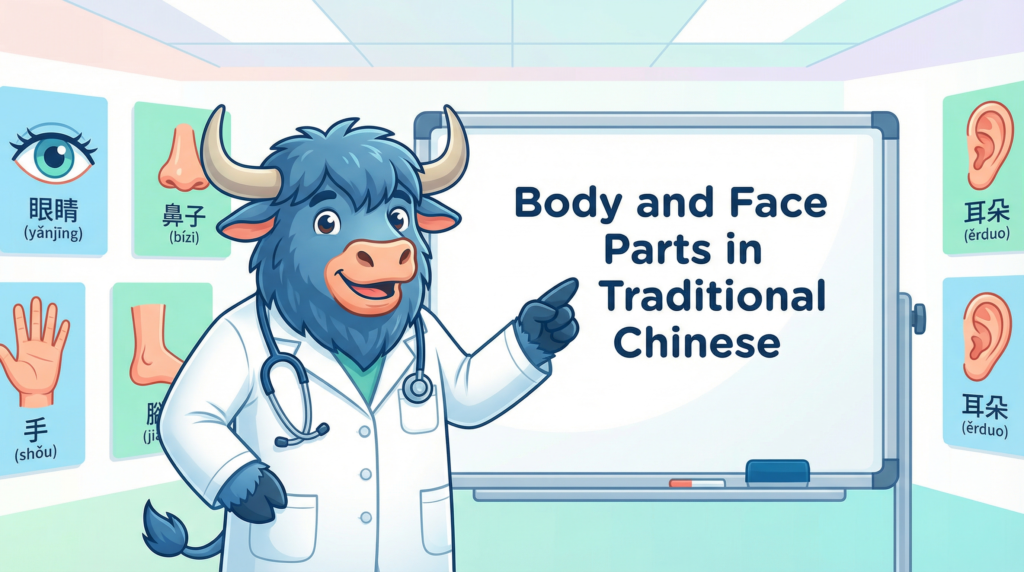
Body and Face Parts in Traditional Chinese
身體和臉部部位(繁體中文)
70+ everyday words, plus the grammar patterns you need for “ow,” “itch,” and “wait—where?”
You’ll learn the most common body and face parts in Traditional Chinese, with pinyin (tone marks), clear meanings, and real sentences you can actually say out loud.
Then we’ll add a few super-useful grammar patterns (like how to say something hurts) so you can complain politely. Or dramatically. Your choice.
Section 1: The “Point at Yourself” Starter Pack
Tip: In casual speech, 腳 can mean “foot” or “leg,” depending on context. Languages are fun like that.
Section 1.01: Useful phrases (pain, clinics, and “please don’t poke that”)
你哪裡不舒服?
Where do you feel unwell?
我頭痛。
I have a headache.
我肚子痛。
My stomach hurts.
我的喉嚨很痛。
My throat really hurts.
我流鼻水。
I have a runny nose.
我咳嗽。
I’m coughing.
我發燒。
I have a fever.
我流汗。
I’m sweating.
我扭到腳踝了。
I sprained my ankle.
我受傷了。
I’m injured.
張開嘴巴。
Open your mouth.
深呼吸。
Take a deep breath.
把手舉起來。
Raise your hand.
把頭低下。
Lower your head.
Section 1.1: Common grammar patterns for body parts
1) (我) + 身體部位 + 疼 / 痛
Drop “my” and go straight to the drama. Very common in speech.
2) 我的 + 部位 + 很 + 形容詞
Use this for dry, itchy, swollen, sore… all the fun stuff.
3) 部位 + 上/下/裡/外 + 有…
Great for describing where something is (a cut, a bruise, a mosquito bite).
4) 在 + 部位 + 上 + 做動作
Put the action on the body part: apply, stick, rub, put on.
5) 用 + 身體部位 + 做…
“Use (a body part) to do something.” Simple and super practical.
6) 把 + 部位 + 動作(口令感)
Sounds like instructions: doctors, trainers, parents, and very bossy friends.
Section 2: More body and face words (with real sentences)
Face & head details
| Traditional | Pinyin | Meaning (EN) | Example (ZH) | Translation (EN) | Audio |
|---|---|---|---|---|---|
| 額頭 | forehead | 我額頭上有汗。 Wǒ étóu shàng yǒu hàn. | There’s sweat on my forehead. | ||
| 眉毛 | eyebrows | 她的眉毛很濃。 Tā de méimáo hěn nóng. | Her eyebrows are thick. | ||
| 睫毛 | eyelashes | 我的睫毛上有水。 Wǒ de jiémáo shàng yǒu shuǐ. | There’s water on my eyelashes. | ||
| 眼皮 | eyelid | 我眼皮在跳。 Wǒ yǎnpí zài tiào. | My eyelid is twitching. | ||
| 眼珠 | eyeball (casual) | 小孩的眼珠很亮。 Xiǎohái de yǎnzhū hěn liàng. | The kid’s eyes look bright. | ||
| 瞳孔 | pupil | 醫生看我的瞳孔。 Yīshēng kàn wǒ de tóngkǒng. | The doctor checks my pupils. | ||
| 眼角 | corner of the eye | 她眼角有笑紋。 Tā yǎnjiǎo yǒu xiàowén. | She has smile lines at the corners of her eyes. | ||
| 鼻孔 | nostril | 你兩個鼻孔都通嗎? Nǐ liǎng ge bíkǒng dōu tōng ma? | Are both nostrils clear? | ||
| 鼻樑 | bridge of the nose | 他的鼻樑很挺。 Tā de bíliáng hěn tǐng. | He has a prominent nose bridge. | ||
| 臉頰 | cheek | 他臉頰鼓起來。 Tā liǎnjiá gǔ qǐ lái. | He puffs out his cheeks. | ||
| 酒窩 | dimple | 她笑的時候有酒窩。 Tā xiào de shíhou yǒu jiǔwō. | She has dimples when she smiles. | ||
| 下巴 | chin | 我下巴上長了一顆痘痘。 Wǒ xiàba shàng zhǎng le yì kē dòudou. | I got a pimple on my chin. | ||
| 太陽穴 | temple (side of head) | 我太陽穴有點痛。 Wǒ tài yáng xué yǒudiǎn tòng. | My temples hurt a bit. | ||
| 嘴唇 | lips | 天氣冷,我的嘴唇很乾。 Tiānqì lěng, wǒ de zuǐchún hěn gān. | When it’s cold, my lips get dry. | ||
| 牙齒 | teeth | 我刷牙保護牙齒。 Wǒ shuā yá bǎohù yáchǐ. | I brush my teeth to protect them. | ||
| 牙齦 | gums | 他的牙齦在流血。 Tā de yáyín zài liúxuè. | His gums are bleeding. | ||
| 舌頭 | tongue | 不要咬到舌頭。 Búyào yǎo dào shétou. | Don’t bite your tongue. | ||
| 喉嚨 | throat | 我喉嚨很癢。 Wǒ hóulóng hěn yǎng. | My throat feels itchy. | ||
| 口水 | saliva / drool | 小狗一直流口水。 Xiǎogǒu yìzhí liú kǒushuǐ. | The puppy keeps drooling. | ||
| 耳垂 | earlobe | 她戴耳環在耳垂上。 Tā dài ěrhuán zài ěrchuí shàng. | She wears earrings on her earlobes. | ||
| 頭髮 | hair | 我的頭髮太長了。 Wǒ de tóufǎ tài cháng le. | My hair is too long. | ||
| 頭皮 | scalp | 這個洗髮精對頭皮很溫和。 Zhège xǐfàjīng duì tóupí hěn wēnhé. | This shampoo is gentle on the scalp. | ||
| 鬍子 | beard | 他留鬍子。 Tā liú húzi. | He grows a beard. |
Neck & upper body
| Traditional | Pinyin | Meaning (EN) | Example (ZH) | Translation (EN) | Audio |
|---|---|---|---|---|---|
| 脖子 | neck | 我脖子很酸。 Wǒ bózi hěn suān. | My neck is sore. | ||
| 肩膀 | shoulder | 他肩膀上背著包。 Tā jiānbǎng shàng bēi zhe bāo. | He carries a bag on his shoulder. | ||
| 鎖骨 | collarbone | 她的鎖骨很明顯。 Tā de suǒgǔ hěn míngxiǎn. | Her collarbones are noticeable. | ||
| 胸口 | chest (front, “chest area”) | 我胸口悶悶的。 Wǒ xiōngkǒu mēn mēn de. | My chest feels tight/heavy. | ||
| 胸部 | chest (body part) | 他胸部受傷了。 Tā xiōngbù shòushāng le. | He injured his chest. | ||
| 腋下 | armpit | 夏天腋下很容易流汗。 Xiàtiān yèxià hěn róngyì liúhàn. | In summer, armpits sweat easily. | ||
| 背 | back | 我的背好痛。 Wǒ de bèi hǎo tòng. | My back hurts a lot. | ||
| 腰 | waist / lower back | 他腰扭到了。 Tā yāo niǔ dào le. | He twisted his lower back/waist. |
Arms & hands
| Traditional | Pinyin | Meaning (EN) | Example (ZH) | Translation (EN) | Audio |
|---|---|---|---|---|---|
| 手臂 | arm | 我手臂很酸。 Wǒ shǒubì hěn suān. | My arms are sore. | ||
| 手肘 | elbow | 他手肘擦破皮了。 Tā shǒuzhǒu cā pò pí le. | He scraped his elbow. | ||
| 手腕 | wrist | 我手腕戴手錶。 Wǒ shǒuwàn dài shǒubiǎo. | I wear a watch on my wrist. | ||
| 手掌 | palm (the whole palm area) | 他的手掌很熱。 Tā de shǒuzhǎng hěn rè. | His palms are warm. | ||
| 手背 | back of the hand | 手背上有一個小傷口。 Shǒubèi shàng yǒu yí ge xiǎo shāngkǒu. | There’s a small cut on the back of my hand. | ||
| 手指 | finger | 我手指被紙割到了。 Wǒ shǒuzhǐ bèi zhǐ gē dào le. | I got a paper cut on my finger. | ||
| 大拇指 | thumb | 我用大拇指按讚。 Wǒ yòng dà mǔ zhǐ àn zàn. | I use my thumb to “like.” | ||
| 食指 | index finger | 不要用食指指人。 Búyào yòng shízhǐ zhǐ rén. | Don’t point at people with your index finger. | ||
| 中指 | middle finger | 他中指貼了OK繃。 Tā zhōngzhǐ tiē le OK bēng. | He put a bandage on his middle finger. | ||
| 無名指 | ring finger | 她把戒指戴在無名指上。 Tā bǎ jièzhǐ dài zài wúmíngzhǐ shàng. | She wears the ring on her ring finger. | ||
| 小指 | pinky | 他小指很短。 Tā xiǎozhǐ hěn duǎn. | His pinky is short. | ||
| 指甲 | fingernail | 記得剪指甲。 Jìde jiǎn zhǐjiǎ. | Remember to trim your nails. | ||
| 掌心 | center of the palm | 我掌心都出汗了。 Wǒ zhǎngxīn dōu chūhàn le. | My palms are sweaty. | ||
| 指紋 | fingerprint | 手機用指紋解鎖。 Shǒujī yòng zhǐwén jiěsuǒ. | The phone unlocks with a fingerprint. | ||
| 關節 | joint | 天氣變冷,我的關節會痛。 Tiānqì biàn lěng, wǒ de guānjié huì tòng. | When it gets cold, my joints hurt. |
Torso & hips
| Traditional | Pinyin | Meaning (EN) | Example (ZH) | Translation (EN) | Audio |
|---|---|---|---|---|---|
| 肚子 | belly / stomach (casual) | 我肚子餓了。 Wǒ dùzi è le. | I’m hungry (literally: my belly is hungry). | ||
| 腹部 | abdomen (more formal) | 這個動作要收緊腹部。 Zhège dòngzuò yào shōu jǐn fùbù. | This movement requires tightening your abdomen. | ||
| 肚臍 | belly button | 你的肚臍周圍要保持乾淨。 Nǐ de dùqí zhōuwéi yào bǎochí gānjìng. | Keep the area around your belly button clean. | ||
| 屁股 | butt (casual) | 坐久了屁股好麻。 Zuò jiǔ le pìgǔ hǎo má. | After sitting too long, my butt is numb. | ||
| 臀部 | hips / buttocks (more formal) | 深蹲會訓練臀部。 Shēndūn huì xùnliàn túnbù. | Squats train your glutes/hips. |
Legs & feet
| Traditional | Pinyin | Meaning (EN) | Example (ZH) | Translation (EN) | Audio |
|---|---|---|---|---|---|
| 大腿 | thigh | 我大腿有點酸。 Wǒ dàtuǐ yǒudiǎn suān. | My thighs are a bit sore. | ||
| 膝蓋 | knee | 他膝蓋擦傷了。 Tā xīgài cāshāng le. | He scraped his knee. | ||
| 小腿 | calf / lower leg | 我小腿抽筋。 Wǒ xiǎotuǐ chōujīn. | I have a calf cramp. | ||
| 腳踝 | ankle | 我腳踝腫了。 Wǒ jiǎohuái zhǒng le. | My ankle is swollen. | ||
| 腳跟 | heel | 鞋子磨到腳跟。 Xiézi mó dào jiǎogēn. | The shoes are rubbing my heel. | ||
| 腳趾 | toe | 我的腳趾撞到了。 Wǒ de jiǎozhǐ zhuàng dào le. | I stubbed my toe. | ||
| 腳掌 | sole of the foot | 走太久腳掌會痛。 Zǒu tài jiǔ jiǎozhǎng huì tòng. | If I walk too long, my soles hurt. | ||
| 腳背 | top of the foot | 蚊子叮了我的腳背。 Wénzi dīng le wǒ de jiǎobèi. | A mosquito bit the top of my foot. |
Skin & “inside parts” you hear a lot
| Traditional | Pinyin | Meaning (EN) | Example (ZH) | Translation (EN) | Audio |
|---|---|---|---|---|---|
| 皮膚 | skin | 這個乳液對皮膚很好。 Zhège rǔyè duì pífū hěn hǎo. | This lotion is great for skin. | ||
| 骨頭 | bone | 摔倒後要確認骨頭有沒有受傷。 Shuāidǎo hòu yào quèrèn gǔtou yǒu méiyǒu shòushāng. | After falling, check whether any bones are injured. | ||
| 肌肉 | muscle | 我運動完肌肉很酸。 Wǒ yùndòng wán jīròu hěn suān. | After exercising, my muscles are sore. | ||
| 血 | blood | 看到血我有點怕。 Kàn dào xuè wǒ yǒudiǎn pà. | I’m a bit scared when I see blood. | ||
| 血管 | blood vessel | 醫生說要保護血管。 Yīshēng shuō yào bǎohù xuèguǎn. | The doctor said to protect your blood vessels. | ||
| 心臟 | heart | 跑步時心臟跳很快。 Pǎobù shí xīnzàng tiào hěn kuài. | When I run, my heart beats fast. | ||
| 肺 | lungs | 抽菸對肺不好。 Chōuyān duì fèi bù hǎo. | Smoking is bad for your lungs. | ||
| 胃 | stomach (organ) | 我胃不舒服。 Wǒ wèi bù shūfu. | My stomach feels unwell. | ||
| 腸子 | intestines (casual) | 吃壞肚子,腸子會不舒服。 Chī huài dùzi, chángzi huì bù shūfu. | If you eat something bad, your intestines feel upset. | ||
| 肝 | liver | 少喝酒,對肝比較好。 Shǎo hē jiǔ, duì gān bǐjiào hǎo. | Drink less alcohol; it’s better for your liver. | ||
| 腎 | kidneys | 多喝水對腎有幫助。 Duō hē shuǐ duì shèn yǒu bāngzhù. | Drinking more water helps your kidneys. | ||
| 腦 | brain | 睡不夠,腦會變慢。 Shuì bù gòu, nǎo huì biàn màn. | If you don’t sleep enough, your brain slows down. |
Section 3: Variants & measure words (so you sound human)
| What you’ll hear | Pinyin | Meaning / When to use | Example (ZH) | Translation (EN) | Audio |
|---|---|---|---|---|---|
| 嘴 / 嘴巴 | Both mean “mouth.” 嘴巴 is extra common in daily speech. | 他說話很快,嘴巴停不下來。 Tā shuōhuà hěn kuài, zuǐba tíng bù xià lái. | He talks fast—his mouth won’t stop. | ||
| 脖子 / 頸 | 脖子 is everyday. 頸 feels more formal (you’ll see it in signs/medical talk). | 我脖子卡卡的,想伸展一下。 Wǒ bózi kǎ kǎ de, xiǎng shēnzhǎn yíxià. | My neck feels stiff; I want to stretch. | ||
| 肚子 / 胃 | 肚子 = belly (casual). 胃 = the stomach organ (more specific). | 我肚子不舒服,但不是胃痛。 Wǒ dùzi bù shūfu, dàn bú shì wèitòng. | My belly feels off, but it’s not stomach-organ pain. | ||
| 屁股 / 臀部 | 屁股 is casual. 臀部 is more polite/formal (gyms, clinics). | 深蹲做多了,屁股超酸。 Shēndūn zuò duō le, pìgǔ chāo suān. | Too many squats—my butt is super sore. | ||
| 痛 / 疼 | Both “hurt.” 痛 often sounds stronger; 疼 is super common with body parts. | 我手肘很疼,先不要碰。 Wǒ shǒuzhǒu hěn téng, xiān búyào pèng. | My elbow really hurts—don’t touch it yet. | ||
| 一雙眼睛 | “A pair of eyes.” Very natural phrasing. | 他有一雙很漂亮的眼睛。 Tā yǒu yì shuāng hěn piàoliang de yǎnjīng. | He has a very pretty pair of eyes. | ||
| 一顆牙齒 | “One tooth.” 顆 is the common measure word here. | 我有一顆牙齒在痛。 Wǒ yǒu yì kē yáchǐ zài tòng. | One of my teeth hurts. | ||
| 一根手指 | “One finger.” 根 is common for long, thin things. | 我只割到一根手指。 Wǒ zhǐ gē dào yì gēn shǒuzhǐ. | I only cut one finger. | ||
| 一條腿 | “One leg.” 條 is common for long things (legs, roads, fish… welcome to classifiers). | 他一條腿受傷了,走路很慢。 Tā yì tiáo tuǐ shòushāng le, zǒulù hěn màn. | One of his legs is injured, so he walks slowly. |