


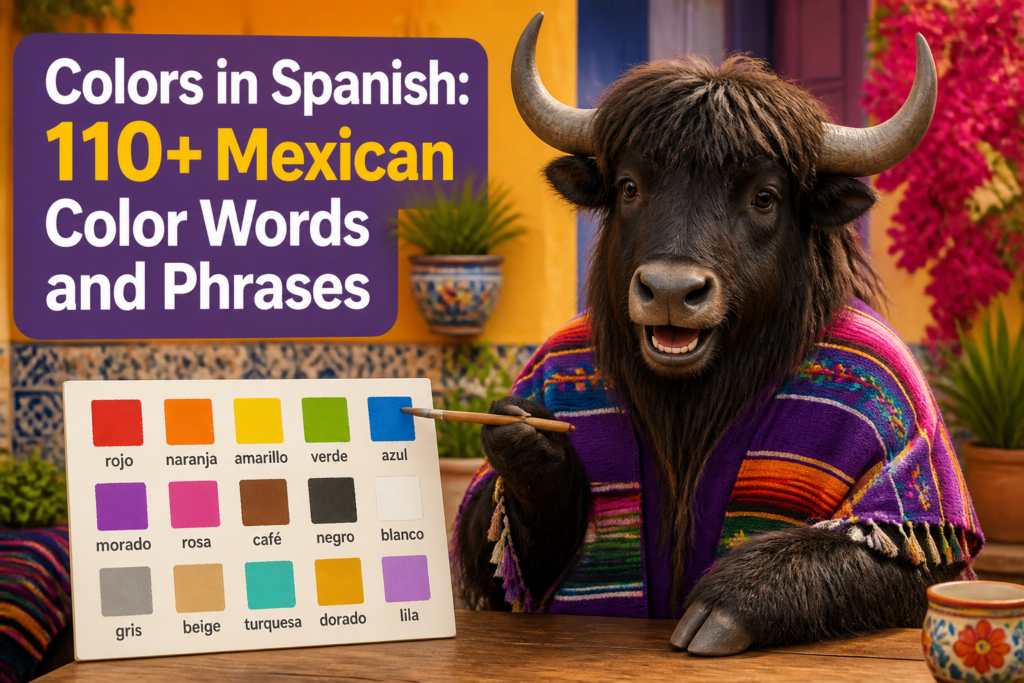
If you have ever wanted to describe a shirt, a car, a wall, or that suspiciously neon juice box in Spanish, colors are one of the first things you need. In Mexican Spanish, the basics are very close to standard Latin American Spanish, which is great news: less memorizing, fewer headaches, and only a small chance of accidentally calling your pants “somehow blue.”
For the broader learning path, visit our parent guide.
Colors also show up everywhere in real life: shopping, describing people and animals, talking about clothes, choosing school supplies, and making sense of directions like la casa amarilla or el coche rojo. So yes, this is useful. Annoyingly useful.
By the end, you’ll know how to name common colors, use them in real sentences, and avoid the classic beginner traps with gender, number, and adjective agreement. Tiny grammar gremlins, be gone.
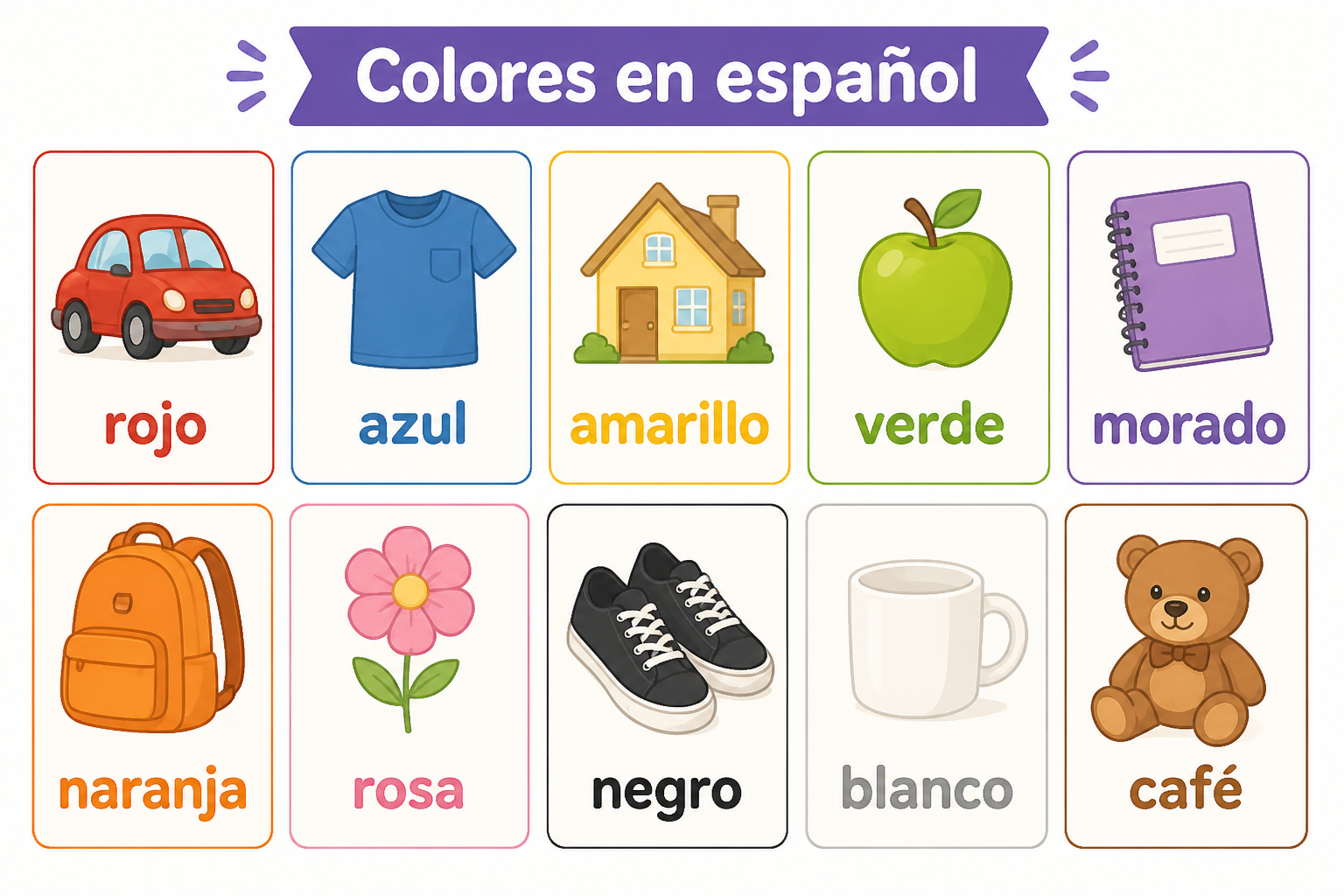
Quick Basics: How Colors Work In Spanish
Most color words in Spanish behave like adjectives. That means they often change to match the noun they describe.
For example:
| Pattern | Meaning | Spanish Example | English Translation | Learner Note |
|---|---|---|---|---|
| el coche rojo | the red car | El coche rojo es mío. | The red car is mine. | rojo matches masculine singular coche. |
| la camisa roja | the red shirt | La camisa roja me gusta. | I like the red shirt. | roja matches feminine singular camisa. |
| los coches rojos | the red cars | Los coches rojos son nuevos. | The red cars are new. | rojos is plural masculine. |
| las camisas rojas | the red shirts | Las camisas rojas son caras. | The red shirts are expensive. | rojas is plural feminine. |
Important note: some color words do not change, especially many colors that come from nouns, like naranja and rosa. Spanish likes exceptions. It’s basically a hobby.
Rule of thumb: if the color acts like a normal adjective, it agrees with the noun. If it behaves like a fixed word, it often stays the same.
Essential Color Words In Mexican Spanish
Here are the most common colors you’ll actually use in Mexico and across Latin America. The pronunciation help is simple on purpose. No need to frighten beginners before breakfast.
| Spanish | Pronunciation | Meaning | Example Sentence | Translation | Learner Note |
|---|---|---|---|---|---|
| rojo / roja / rojos / rojas | RO-ho | red | Mi mochila roja es nueva. | My red backpack is new. | Changes with gender and number. |
| azul | ah-SOOL | blue | El cielo está azul hoy. | The sky is blue today. | Usually does not change in form. |
| verde | VEHR-deh | green | La pared verde se ve bonita. | The green wall looks nice. | Common in homes, clothes, and nature. |
| amarillo / amarilla | ah-mah-REE-yo | yellow | Compré flores amarillas. | I bought yellow flowers. | Changes like a normal adjective. |
| negro / negra | NEH-gro | black | El perro negro duerme mucho. | The black dog sleeps a lot. | Very common for clothing and animals. |
| blanco / blanca | BLAHN-ko | white | La camiseta blanca está limpia. | The white T-shirt is clean. | Easy beginner word. |
| gris | GREES | gray | El gato gris está en la silla. | The gray cat is on the chair. | Usually invariable. |
| morado / morada | moh-RAH-doh | purple | Quiero una chaqueta morada. | I want a purple jacket. | Very common in Mexico. |
| violeta | bee-oh-LEH-tah | violet / purple | Compré lápices violeta. | I bought violet pencils. | Can be used as a color word and often stays the same. |
| rosa | ROH-sah | pink | La blusa rosa es de mi hermana. | The pink blouse is my sister’s. | Usually invariable in modern usage. |
Mexican Spanish note: In Mexico, morado is often the most natural everyday word for “purple.” You’ll also hear violeta, especially for a lighter or more formal shade. Both are fine.
And yes, rosa works for pink. No need to say color de rosa every time unless you’re being poetic, dramatic, or oddly committed to floral metaphors.
More Useful Colors For Real Life
Once you know the basics, these extra colors help a lot when shopping, describing objects, or talking about design and style.
| Spanish | Pronunciation | Meaning | Example Sentence | Translation | Learner Note |
|---|---|---|---|---|---|
| café | kah-FEH | brown | Mi perro es café. | My dog is brown. | Can also mean coffee, so context matters. |
| beige | BEH-hay | beige | La silla beige combina con la mesa. | The beige chair matches the table. | Common in home decor. |
| celeste | seh-LEHS-teh | light blue / sky blue | Quiero una camisa celeste. | I want a light blue shirt. | Very common and natural in Latin America. |
| turquesa | toor-KEH-sah | turquoise | Mi botella es turquesa. | My bottle is turquoise. | Often used for bright blue-green shades. |
| naranja | nah-RAHN-hah | orange | La playera naranja está en la cama. | The orange T-shirt is on the bed. | Usually invariable when used as a color. |
| dorado / dorada | doh-RAH-doh | golden | Compré unos aretes dorados. | I bought some gold earrings. | Can mean golden or gold-colored. |
| plateado / plateada | plah-teh-AH-doh | silver / silvery | El coche plateado se ve elegante. | The silver car looks elegant. | Useful for jewelry, cars, and decor. |
| cobrizo | koh-BREE-so | copper-colored | Su cabello es cobrizo. | Her hair is copper-colored. | Good for hair and metal tones. |
| crema | KREH-mah | cream | La pared crema se ve cálida. | The cream wall looks warm. | Often used for paint and clothing. |
| lila | LEE-lah | lilac | Compré una falda lila. | I bought a lilac skirt. | Nice for soft purple shades. |
| coral | koh-RAHL | coral | Ese labial coral me gusta. | I like that coral lipstick. | Common in fashion and makeup. |
| burdeos | boor-DEH-os | burgundy | La botella es burdeos. | The bottle is burgundy. | Often used for wine-colored shades. |
| mostaza | moh-STAH-sah | mustard yellow | Compré una chaqueta mostaza. | I bought a mustard jacket. | Very common in clothing. |
| plateado | plah-teh-AH-doh | silver-colored | Las uñas plateadas brillan mucho. | The silver nails shine a lot. | Great for beauty and fashion vocabulary. |
| oscuro / oscura | ohs-KOO-roh | dark | Prefiero el azul oscuro. | I prefer dark blue. | Works with many colors: verde oscuro, rojo oscuro. |
| claro / clara | KLAH-roh | light / pale | Quiero un verde claro. | I want a light green. | Also used for light shades: azul claro, gris claro. |
| vivo / viva | BEE-boh | bright / vivid | Trae una blusa rosa viva. | She wears a bright pink blouse. | Not for beginners every day, but useful in descriptions. |
| pastel | pahs-TEHL | pastel | Me gustan los colores pastel. | I like pastel colors. | Often used in plural as a category. |
Small pronunciation tip: Spanish vowels stay clean and steady. a-e-i-o-u do not slur together the way English vowels sometimes do. So morado is roughly mo-RAH-doh, not “muh-RAH-doh.”
Colors With Common Everyday Things
Colors become much easier when you attach them to stuff you actually talk about. Like clothes. Or toys. Or animals. Or, let’s be honest, the odd mystery stain.
| Spanish | Pronunciation | Meaning | Example Sentence | Translation | Learner Note |
|---|---|---|---|---|---|
| camisa blanca | kah-MEE-sah BLAHN-kah | white shirt | Busco una camisa blanca. | I’m looking for a white shirt. | Great shopping phrase. |
| pantalones negros | pahn-tah-LOH-nes NEH-gros | black pants | Mis pantalones negros son cómodos. | My black pants are comfortable. | Pantalones is plural in Spanish. |
| zapatos cafés | sah-PAH-tohs kah-FEHS | brown shoes | Quiero unos zapatos cafés. | I want some brown shoes. | Cafés can be used as a color form in some everyday speech. |
| libreta azul | lee-BREH-tah ah-SOOL | blue notebook | Mi libreta azul está en la mesa. | My blue notebook is on the table. | Useful for school items. |
| pelota roja | peh-LOH-tah RO-hah | red ball | La pelota roja es de mi hijo. | The red ball is my son’s. | Good for toys and games. |
| muñeca rosa | moon-YEH-kah ROH-sah | pink doll | La muñeca rosa está encima de la cama. | The pink doll is on top of the bed. | Great toy vocabulary. |
| gato gris | GAH-toh GREES | gray cat | El gato gris no quiere salir. | The gray cat does not want to go out. | Perfect for animal descriptions. |
| perro negro | PEH-rroh NEH-groh | black dog | Vimos un perro negro en el parque. | We saw a black dog in the park. | Simple and natural. |
| plumaje verde | ploo-MAH-heh VEHR-deh | green feathers / plumage | El pájaro tiene plumaje verde. | The bird has green plumage. | Good for animal-name practice. |
| vestido amarillo | behs-TEE-doh ah-mah-REE-yo | yellow dress | Mi hermana compró un vestido amarillo. | My sister bought a yellow dress. | Very common clothing phrase. |
| sombrero café | sohm-BREH-roh kah-FEH | brown hat | El sombrero café me gusta más. | I like the brown hat more. | Useful for outfit descriptions. |
| carro rojo | KAH-rroh RO-ho | red car | Ese carro rojo es muy bonito. | That red car is very nice. | In Mexico, carro is very common for “car.” |
Want more practice with clothing words? Pair this lesson with clothing and accessories in Spanish. Colors and clothes go together like peanut butter and panic when you forget the adjective agreement.
Mexican Spanish Color Phrases You’ll Hear A Lot
These phrases are practical, natural, and the kind of thing people actually say when shopping, describing objects, or giving directions.
| Spanish | Pronunciation | Meaning | Example Sentence | Translation | Learner Note |
|---|---|---|---|---|---|
| de color azul | deh koh-LOR ah-SOOL | blue / in blue color | La caja es de color azul. | The box is blue. | Useful when you want a slightly more descriptive phrase. |
| en rojo | en RO-ho | in red | Escribí la fecha en rojo. | I wrote the date in red. | Very common for markers, ink, and labels. |
| verde claro | BEHR-deh KLAH-roh | light green | Prefiero un verde claro para las paredes. | I prefer a light green for the walls. | claro usually follows the main color. |
| azul oscuro | ah-SOOL ohs-KOO-roh | dark blue | Quiero un suéter azul oscuro. | I want a dark blue sweater. | Very common color pattern. |
| color pastel | koh-LOR pahs-TEHL | pastel color | Los colores pastel están de moda. | Pastel colors are in style. | Often used in plural for a whole style. |
| tono neutro | TOH-noh NEH-oo-troh | neutral tone | Busco un tono neutro para la sala. | I’m looking for a neutral tone for the living room. | Useful in home decor and design stores. |
| muy claro | mwee KLAH-roh | very light | Ese azul es muy claro. | That blue is very light. | Simple intensifier. |
| muy oscuro | mwee ohs-KOO-roh | very dark | El café está muy oscuro. | The coffee is very dark. | Works for colors and drinks too. |
| más bien morado | mahs bee-EN moh-RAH-doh | more like purple | La blusa es más bien morada. | The blouse is more like purple. | Great for “kind of” color descriptions. |
| medio verde | MEH-dee-oh BEHR-deh | somewhat green | La pared está medio verde. | The wall is somewhat green. | Casual, everyday speech. |
If you want a reliable reference for how Spanish color words behave, the Real Academia Española is the classic boring-but-solid place to look. Boring is good when grammar is involved. Less drama, fewer surprises.
Common Grammar Patterns With Colors
Colors in Spanish are not hard, but they do have rules. Let’s keep them simple and useful.
| Pattern | Meaning | Spanish Example | English Translation | Learner Note |
|---|---|---|---|---|
| noun + color | the usual order | Una falda roja | A red skirt | Most common structure. |
| color + noun | less common, sometimes poetic or fixed | La blanca nieve | The white snow | Can sound literary or emphasized. |
| color stays the same | some color words do not change | Camisas rosa | Pink shirts | rosa often stays the same. |
| color changes | regular adjective agreement | More Spanish to explore Best graded readers for Spanish The Boy and the Sheep: A1 Beginner Spanish Story with Audio Martina the Little Cockroach: A1 Beginner Spanish Story with Audio Marianela: A B1 Intermediate Spanish Story with Audio |